Interviews and press conferences
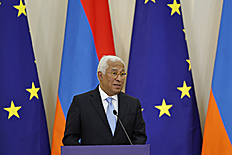
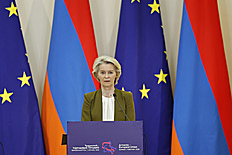
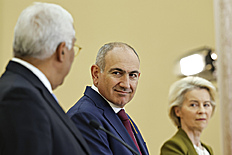
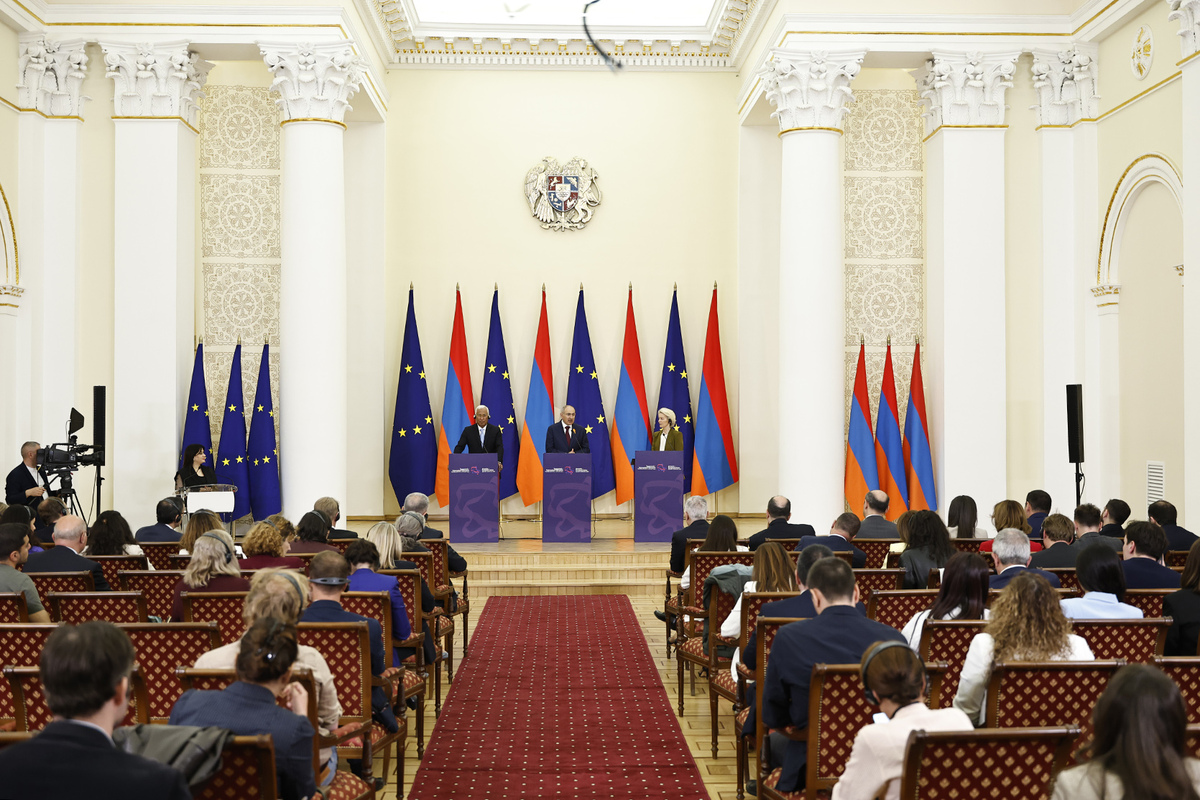
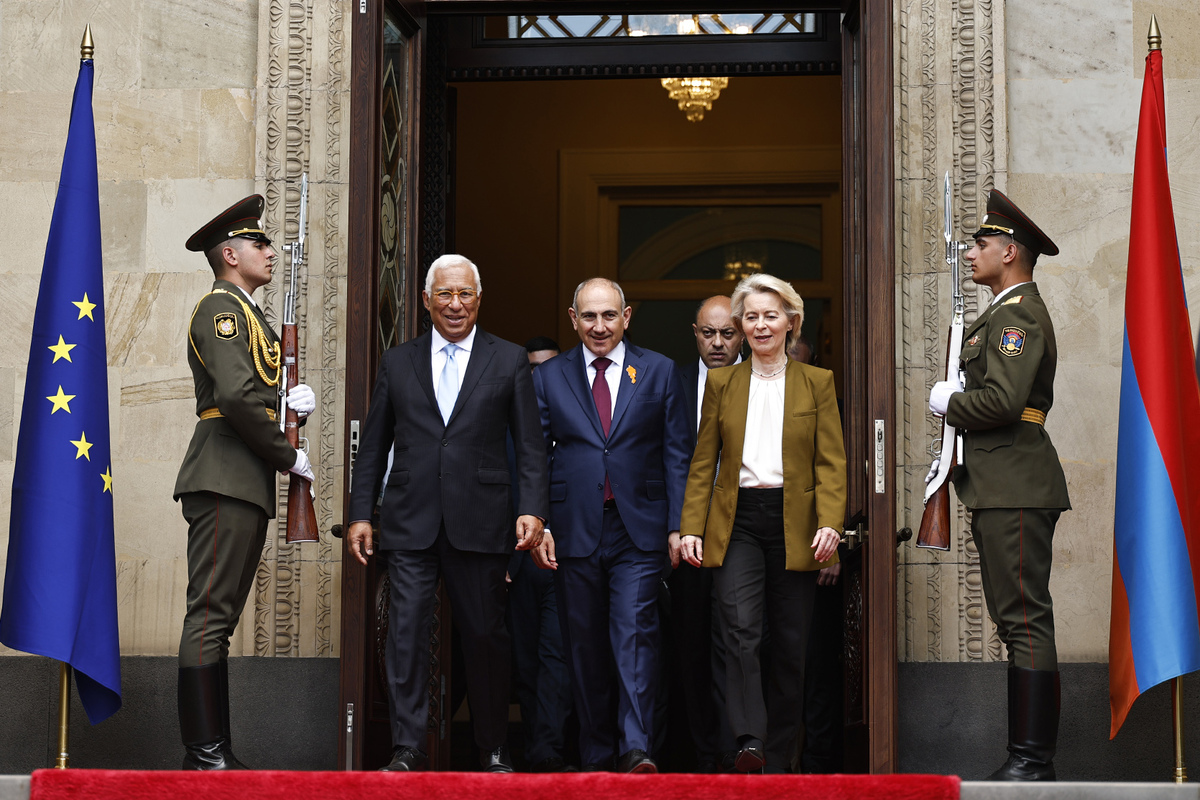
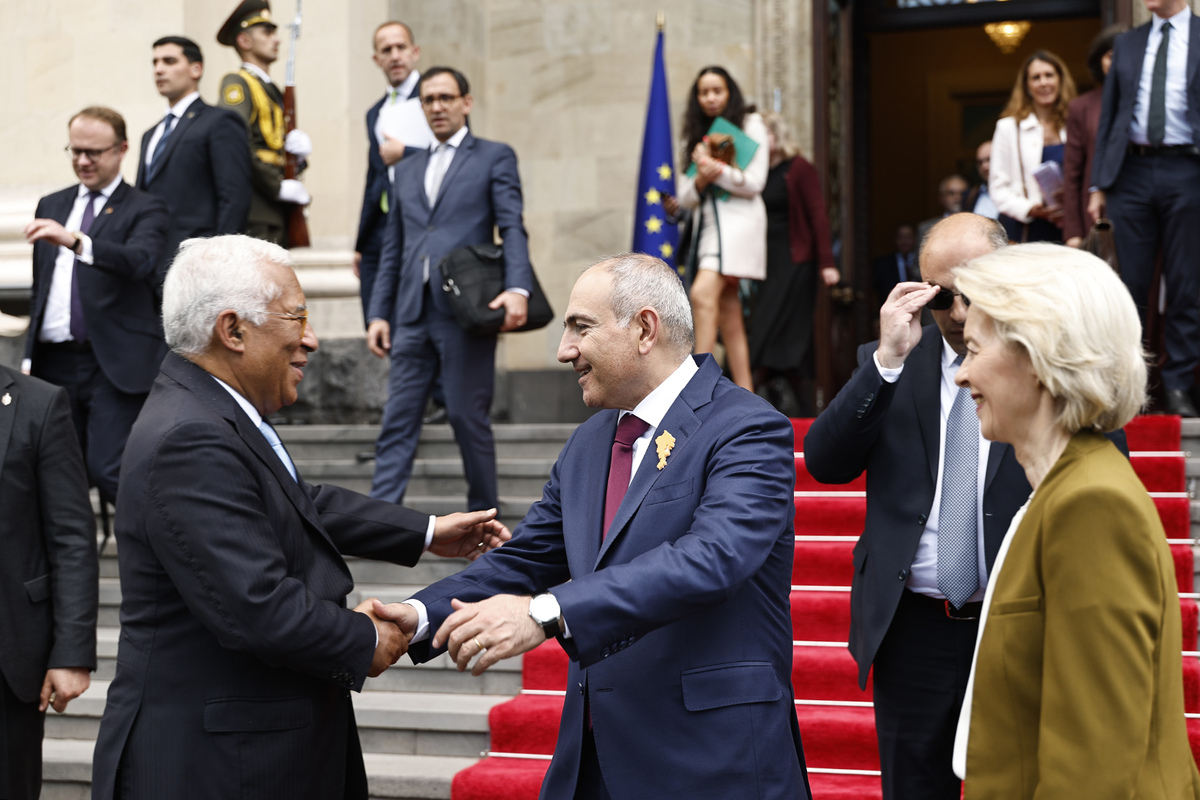
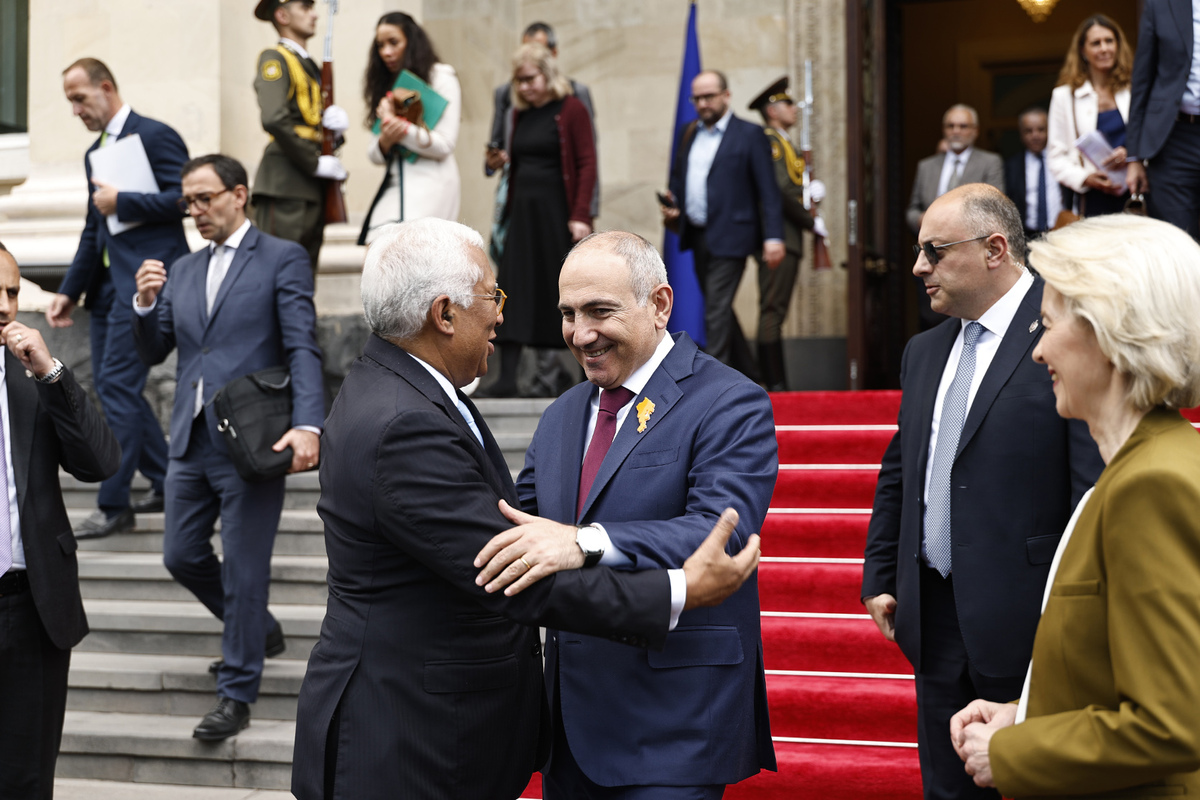
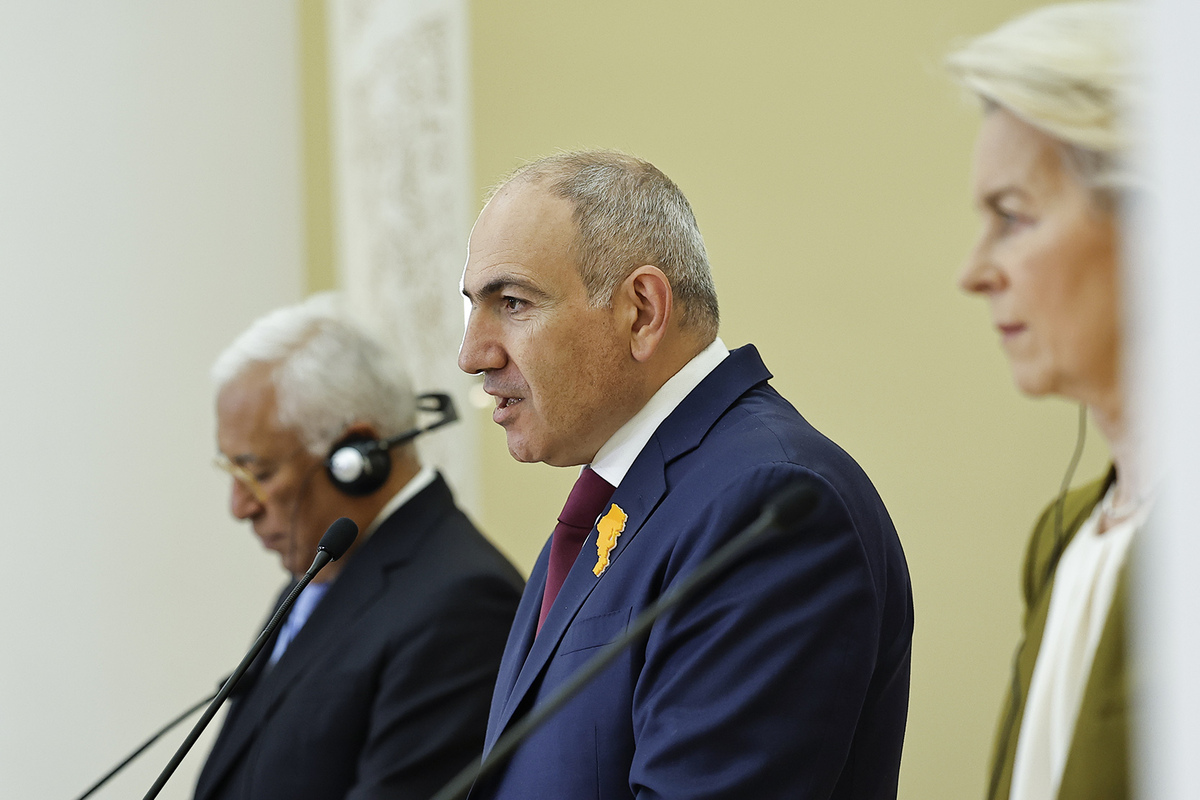
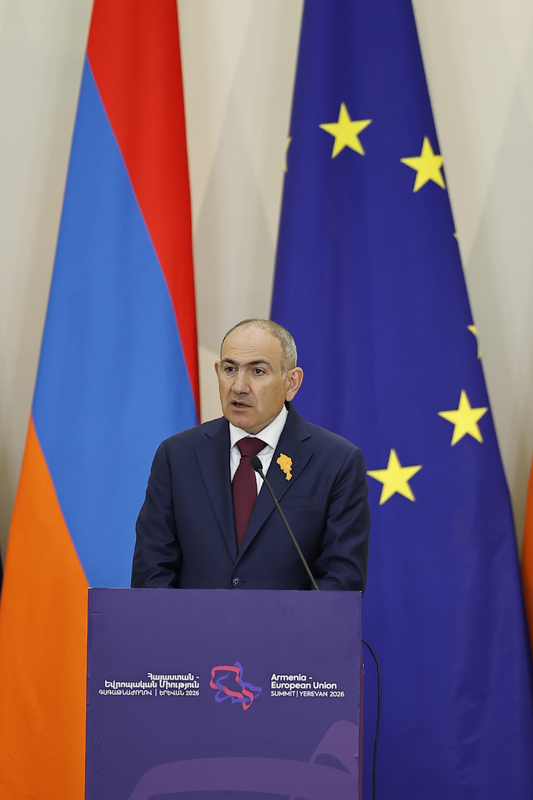
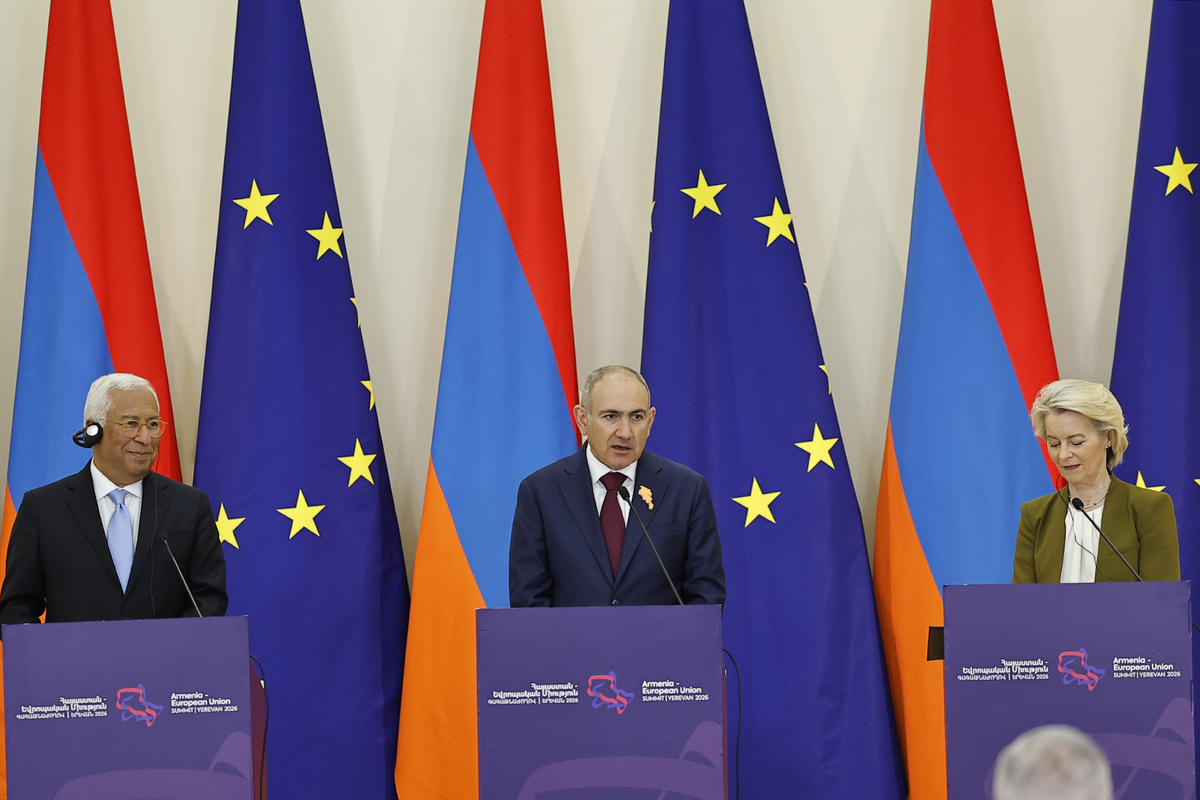
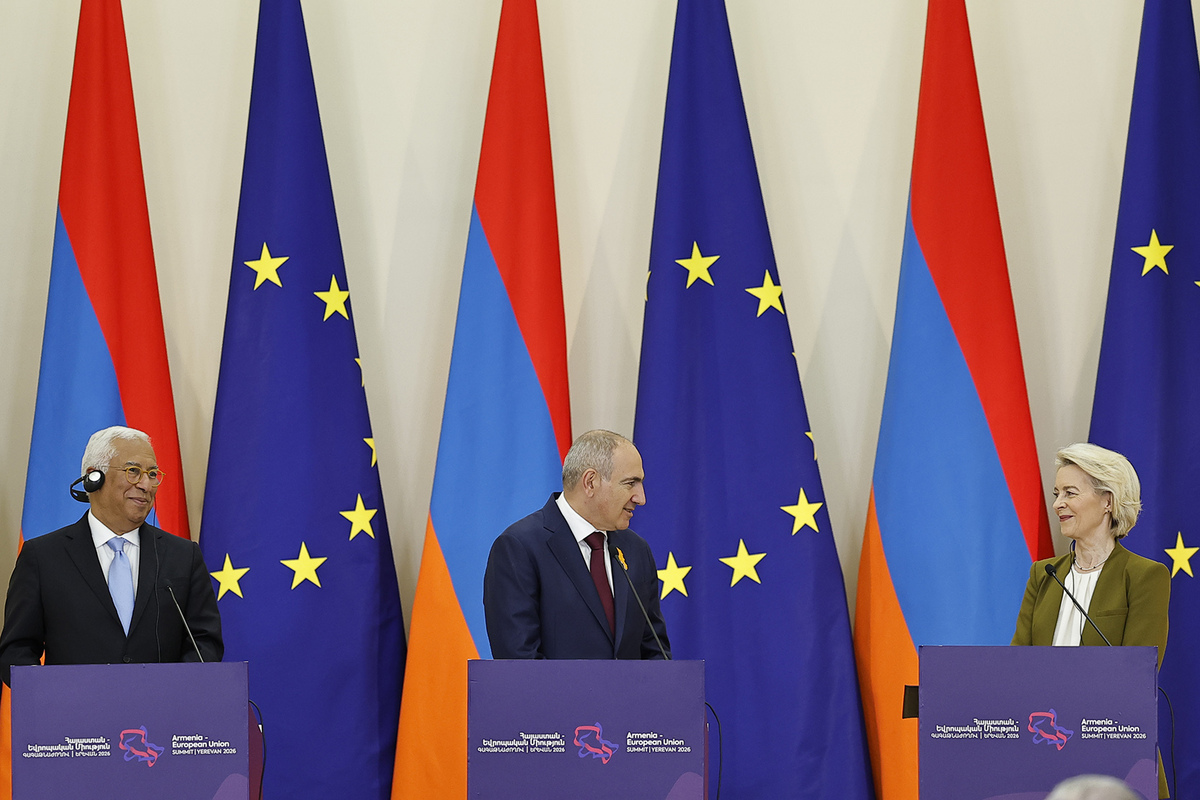
Nikol Pashinyan, António Costa and Ursula von der Leyen make statements summing up the inaugural Armenia-EU summit
 1670x1113px - 837 Kb
 1670x1113px - 601 Kb
 1670x1113px - 525 Kb
 1670x1113px - 754 Kb
 1670x1113px - 769 Kb
 1670x1113px - 761 Kb
 1670x1113px - 554 Kb
 1670x1113px - 575 Kb
 1670x1113px - 566 Kb
 1670x1113px - 479 Kb
 1670x1113px - 480 Kb
 1670x1113px - 468 Kb
 1670x1113px - 499 Kb
 1113x1670px - 477 Kb
 1670x1113px - 529 Kb
 1670x1113px - 555 Kb
 1670x1113px - 472 Kb
 1670x1113px - 491 Kb
 1670x1113px - 485 Kb
 1670x1113px - 453 Kb


more 17 photos
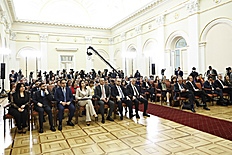
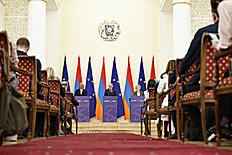
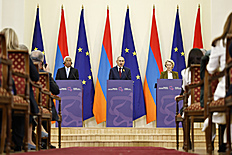
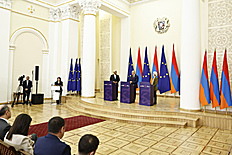
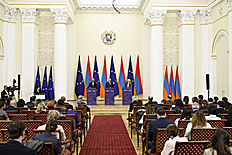
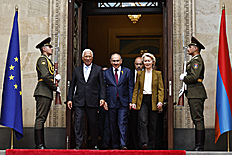
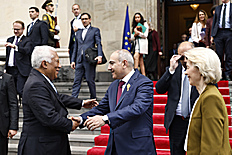
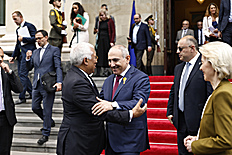
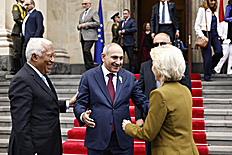
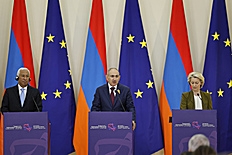
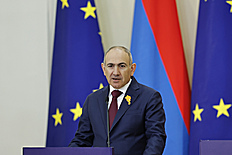
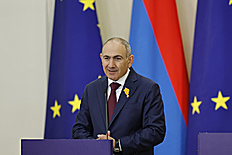
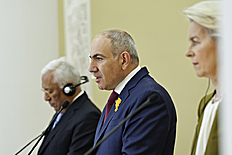
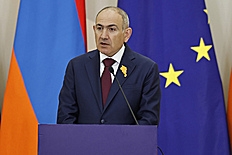
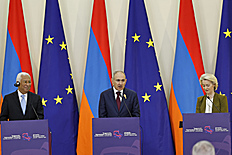
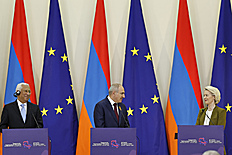
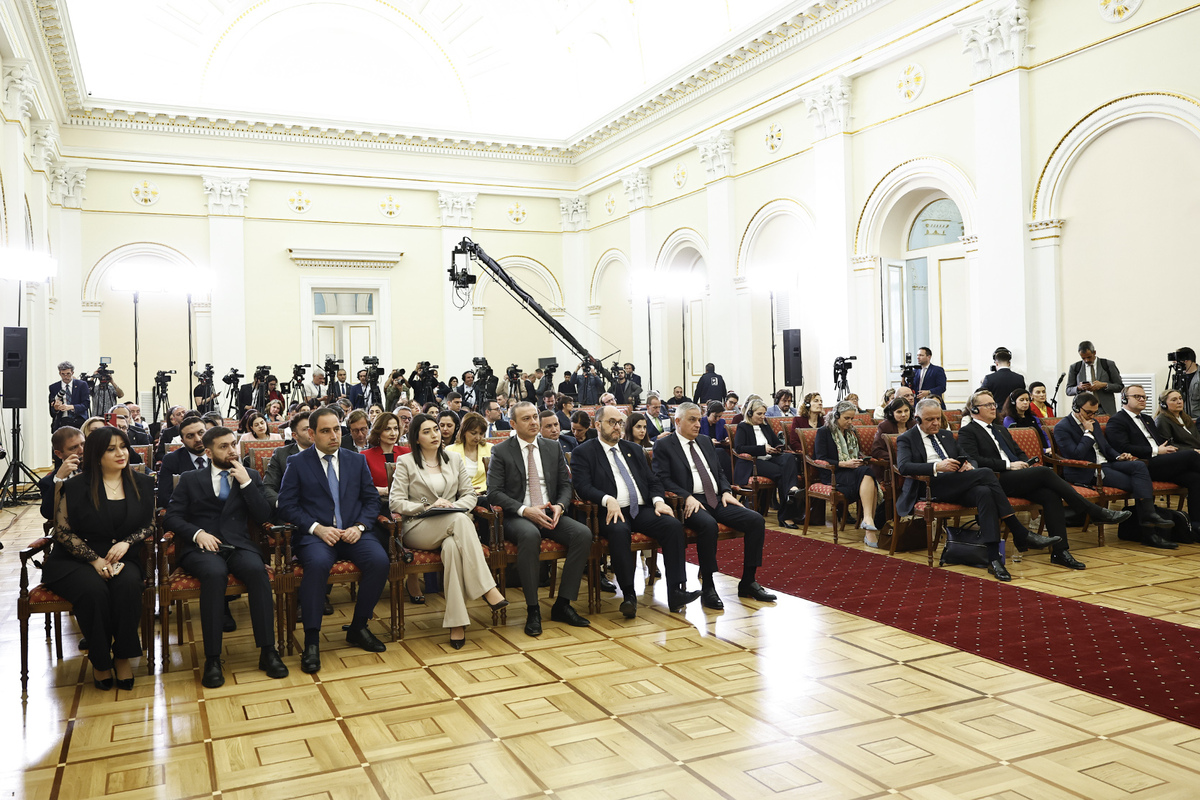
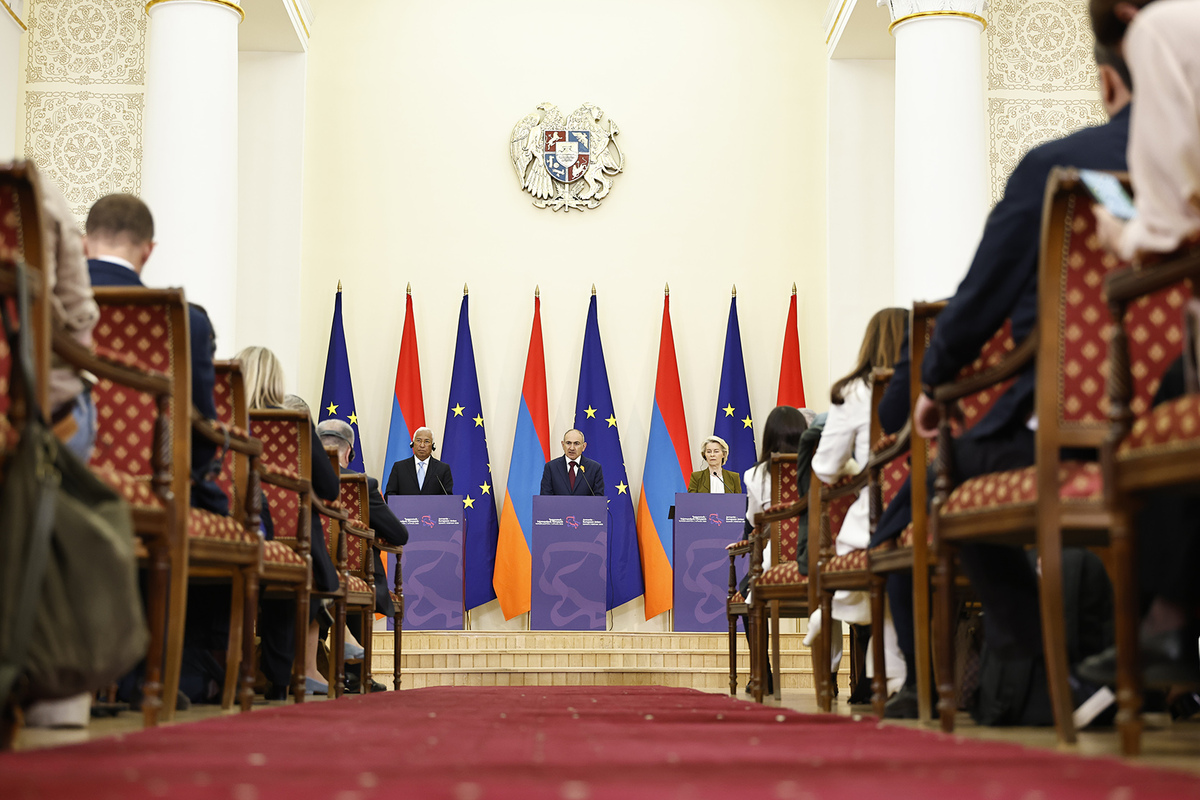
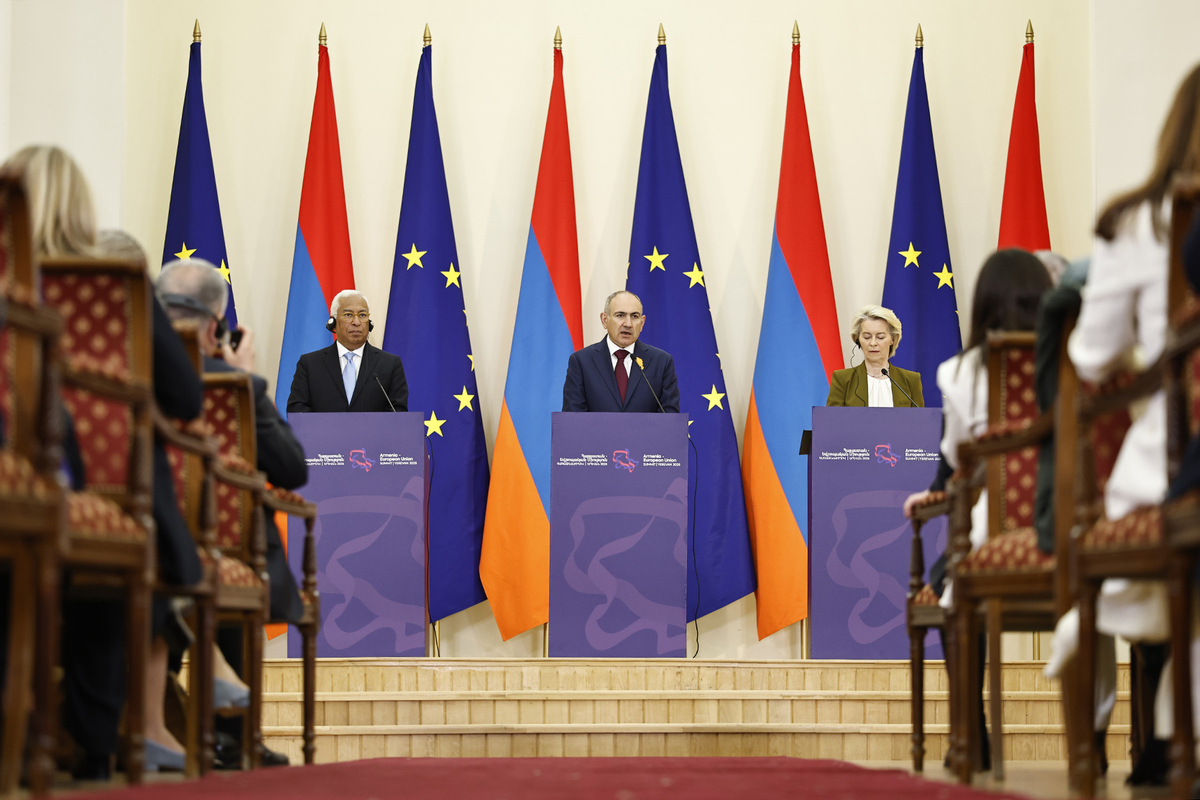
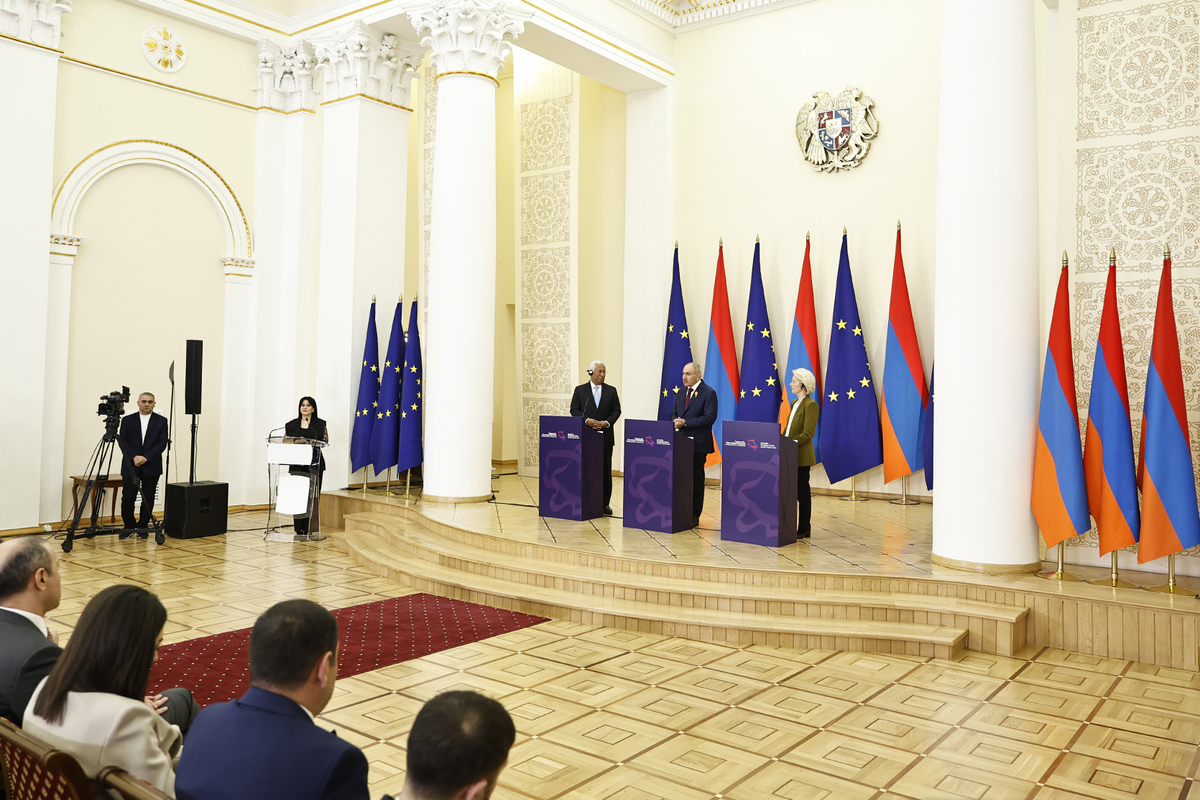
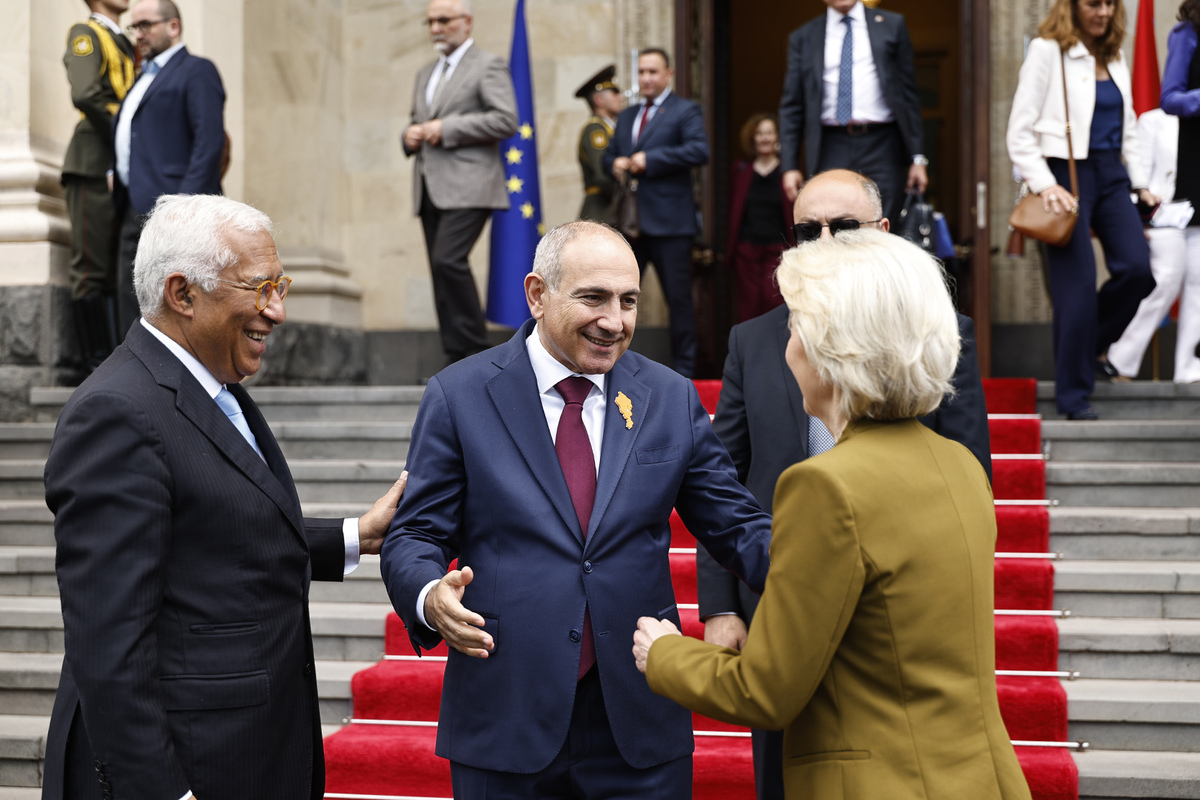
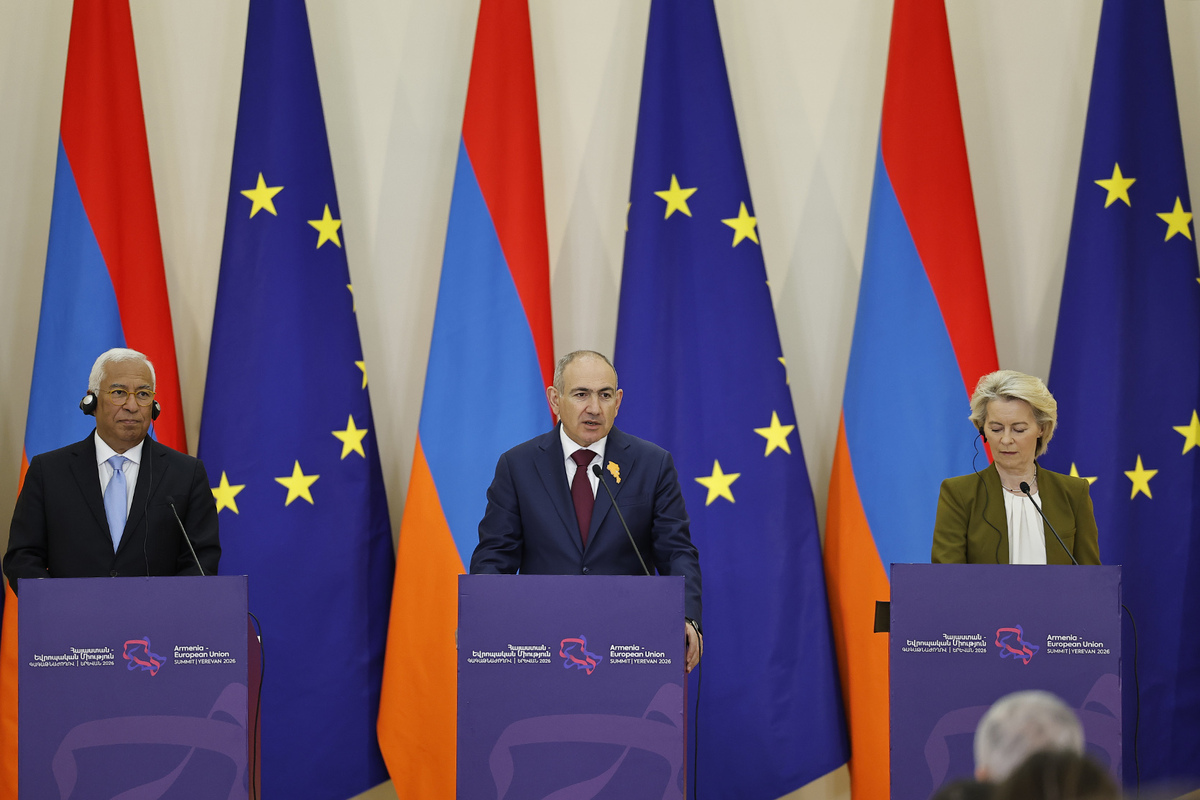
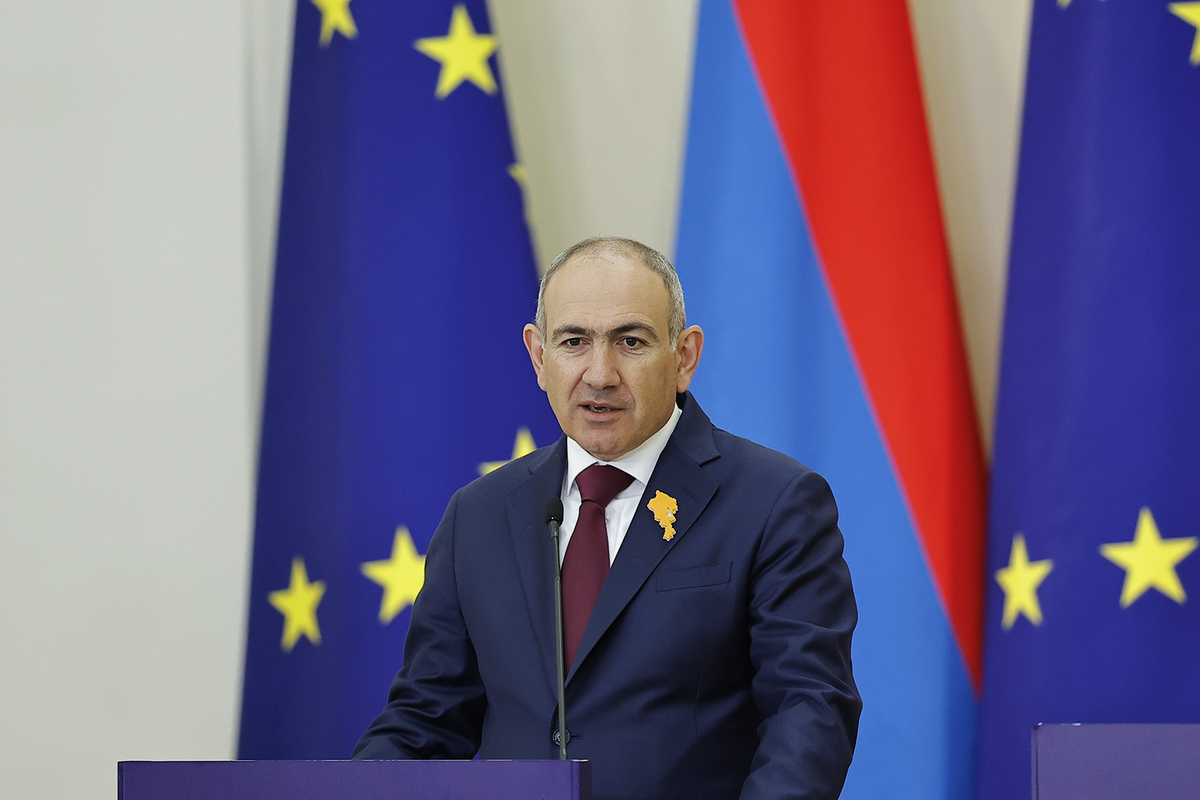
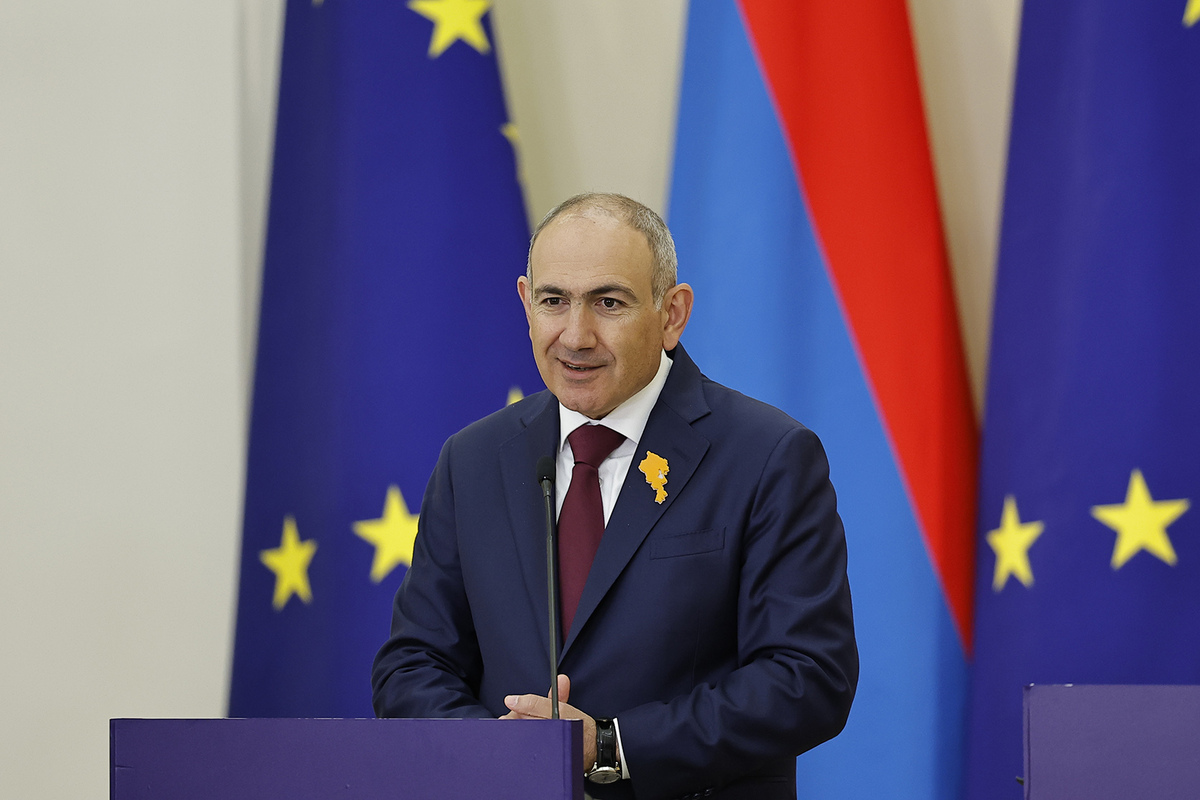
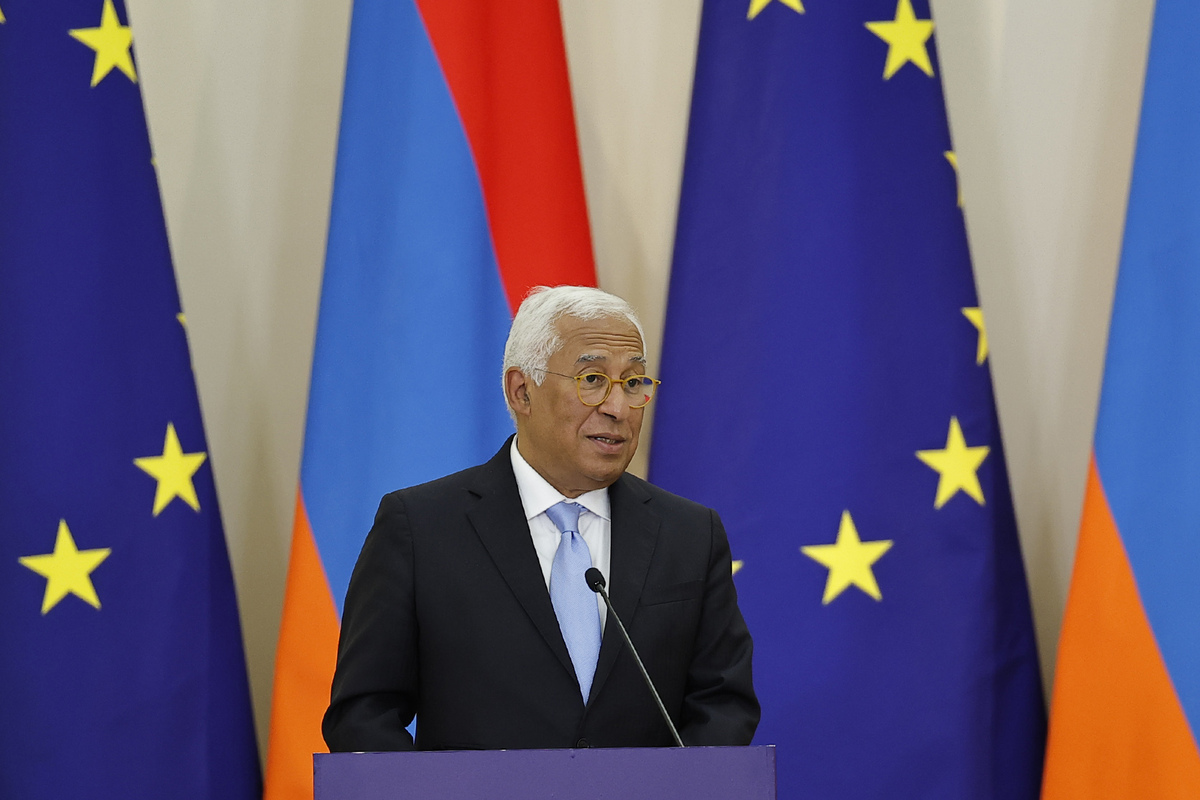
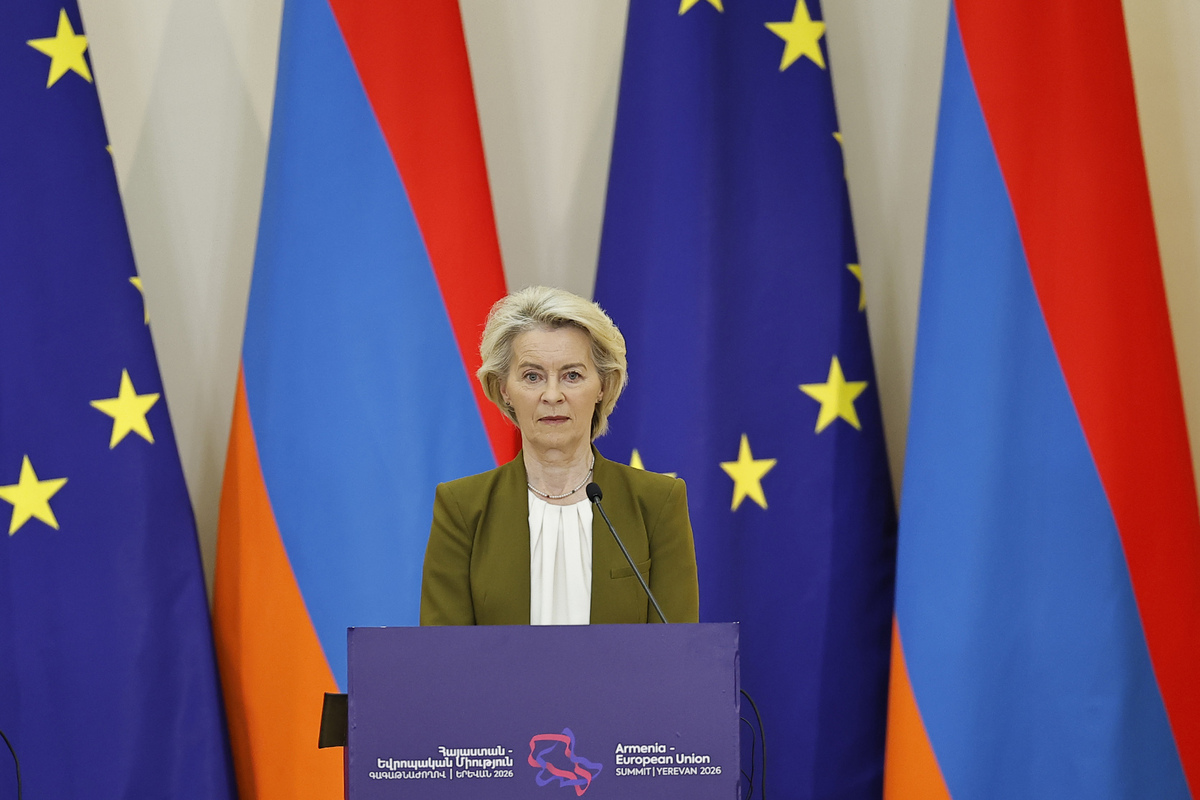
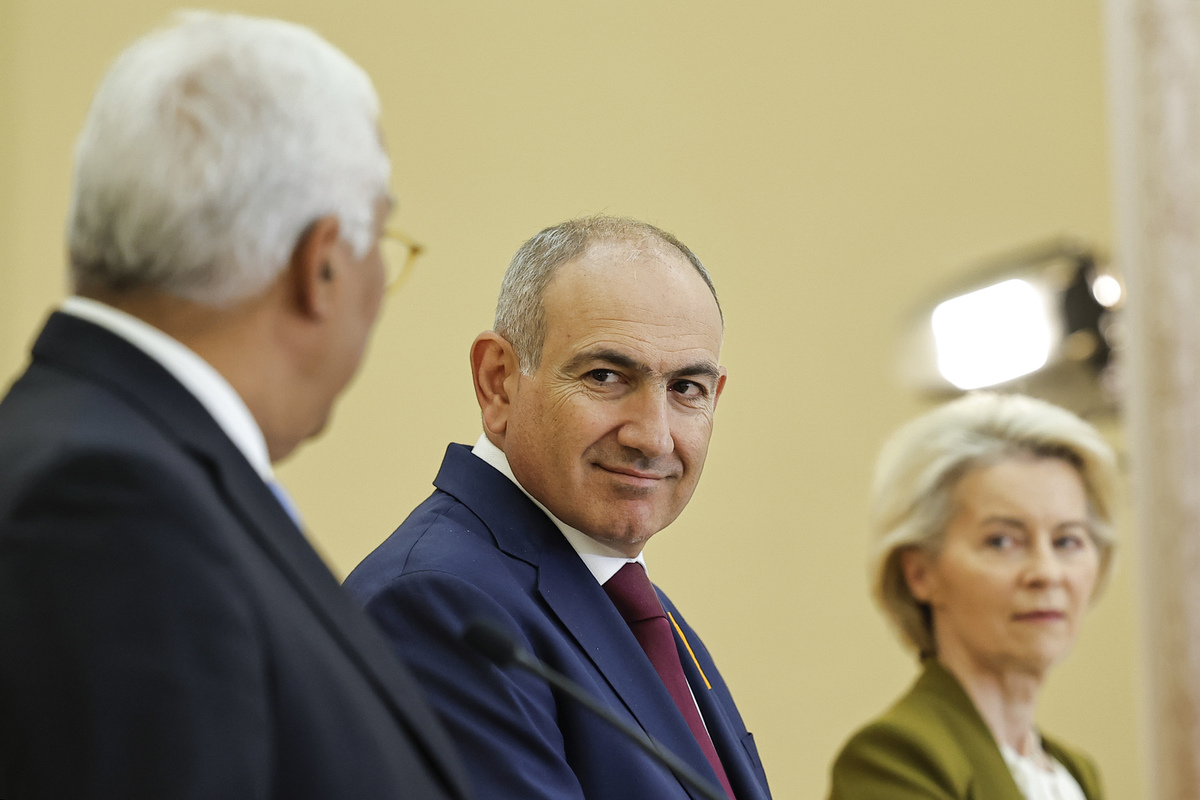
Prime Minister Nikol Pashinyan, President of the European Council António Costa and President of the European Commission Ursula von der Leyen made statements summing up the inaugural Armenia-EU summit.
Prime Minister Nikol Pashinyan – Honorable President of the European Council, Honorable President of the European Commission,
I welcome you again on the occasion of the first Armenia-EU summit.
We have already noted several times that we are dealing with a historic event. But I also want to emphasize the new layers of that word historic that emerged during our discussions.
In general, I have also told our partners that in our reality there is a historical perception that the Republic of Armenia is in a bad or sometimes even terrible geographical position. And today it was very symbolic to hear from our partners in the European Union that the Republic of Armenia has an excellent geographical position and, in particular, is located between the East and the West or on the shortest route connecting the East and the West. This perhaps expresses the change of the historical period, and these formulations express the change of the historical period, when we, being in the same place, naturally, the country has not moved anywhere, as a result of political processes we are moving from a historically bad and sometimes terrible geographical position to an excellent geographical position. From the geographical position that served or was used to explain all our problems, now that same geographical position serves and must obviously serve to realize the vision of having a sovereign, free, prosperous, secure country. This is truly a historical change.
But this is not the only nuance of the historical changes taking place. Today, the European Union adopted a statement calling on business entities to invest in the economy of the Republic of Armenia. Usually, throughout the entire preceding period, since independence, the Republic of Armenia has been considered a risky investment zone. Now, the European Union is calling and inviting business entities, investors, to invest in the Republic of Armenia at the highest level. This is also a fact of historical significance, because never before have we sent such a call, such a message, or heard such a call from many of our international partners.
We discussed a very wide range of issues today, and I must state that meeting and having a discussion in the summit format stems from the simple reality that the Armenia-European Union agenda has expanded so much and gained so much weight that, in essence, the formation of this format was inevitable, which, we must admit, was formed in a natural way, that is, as a result of developments, where, of course, the political will and political commitment of the parties were of great importance.
In the energy sector, we have very serious joint projects and programs aimed at combining Armenia's resources with the technologies that are available to the European Union.
I had occasion to say that here too, by the way, historical changes have taken place for the Republic of Armenia. The Republic of Armenia has historically been considered a country with limited energy resources, that is, a country without energy resources, and in that regard, naturally, it has been ranked among energy-dependent countries. But in recent times, it has turned out that Armenia has unlimited energy resources, because in Armenia we have regions where the number of sunny days exceeds 300. This means that there are unlimited opportunities for the development of solar energy in our country. What we lack are storage stations, and I am grateful to our partners in the European Union for their willingness to support us in developing storage stations in Armenia.
Of course, these are the first and upcoming steps in the energy sector. But I must also note that there are other storage technologies that are based on the accumulation of water during the day and its use in night hours. Of course, we are also working with the European Union to develop green hydrogen production technologies and in other possible directions. But strategically, we are convinced that if we rely on the right architecture, Armenia can be not only a self-sufficient country in terms of energy, but can also further develop its energy export potential.
Of course, transport connectivity plays a very significant role in our joint agenda, because precisely due to the change in geographical position that I mentioned, it is obvious that the Republic of Armenia can, in cooperation with neighboring countries, of course, because in this case, isolated approaches simply will not work, we can integrate into international supply chains, rail transportation, automobile transportation. Of course, in modern terminology, transport is also considered the transportation of Internet connections and the transportation of electricity. In this regard, of course, there are expanded opportunities and potential for cooperation.
I would like to conclude with the point from where Armenia-European Union relations have begun to develop. I am talking, of course, about democratic reforms. We are grateful to the European Union for the support it has provided us during this period, for the progress made in the process of democratic reforms. But we also note that in a number of areas, including independent judiciary, a more systematic fight against corruption, the introduction of more effective mechanisms of the integrity systems, in all these areas we expect to receive continued support from the European Union. This is, of course, very important in the sense that our economic partnership is based on a common value base, which, of course, is reflected in our political statements. But in addition to political statements, we also adopted last year the law on the start of the process of accession of the Republic of Armenia to the European Union, which, let me remind you, was initiated by civil society, and the political majority at some point also joined that initiative, and that initiative received the force of law. I think this is a very good and additional incentive to breathe new life into democratic and institutional reforms in general, so that we can achieve the status of a country that complies with European Union standards as quickly as possible.
I have said it before, and I want to emphasize it now, this is our main intermediate goal, because we understand that no country can become a full and complete member of the European Union without complying with the standards of the European Union. Therefore, our primary task is to first comply with the standards of the European Union, of course, with the support of our partners in the European Union. When we are already fully compliant with the standards of the European Union, in that case we have two options: either we will be admitted to the European Union... Why do I emphasize this? Because it is a matter of a political decision, the European Union must make decisions. We do not know yet, the European Union may also decide not to expand further for any reason. But if we are admitted to the European Union, we will be happy and content with it, if we are not admitted to the European Union, in any case we will still be in a winning position, because the Republic of Armenia will be a country compliant with European standards, with all the positive results steming from it.
In conclusion, I would like to take this opportunity to express my gratitude to President Costa and President von der Leyen for their individual efforts and personal support in developing and deepening Armenia-EU relations.
Dear colleagues,
Throughout this time, we have felt your support, we have also felt the reliability of your word, because I remember the statements we adopted just a few years ago, the main meaning of which was that the Republic of Armenia and the European Union would move forward shoulder to shoulder on the path of reforms and developing resilience and developing the economy. Looking back today, it is even unbelievable and unrealistic to see what path we have traveled and what progress we have made during this time.
Dear Mr. President,
Dear Madam President,
That progress would have been impossible without your personal interest, without your personal contribution, without your personal support. On behalf of the Republic of Armenia and on my own behalf, I would like to thank you for your contribution.
Thank you.
President of the European Council António Costa – Dear Prime Minister, dear Ursula, allow me to extend my warmest congratulations to Prime Minister Pashinyan on yesterday’s European Political Community Summit, as well as today’s historic, first-ever European Union-Armenia Summit. These are remarkable achievements and are a testament to your leadership. I would also like to thank you and your team for the generous and exceptional hospitality shown to us in Yerevan.
Today’s Summit is an important milestone in the deepening of the partnership between the European Union and Armenia. It reflects the significant achievements of recent years and our shared ambition to deliver tangible benefits to citizens, businesses and societies.
It is true, dear Nikol, that Armenia’s geographical location has not changed, but you have radically transformed the conditions in your country. I would like to commend you on your vision for a democratic, resilient and prosperous Armenia.
The European Union strongly supports Armenia's socio-economic reform agenda, including through our technical and financial assistance. You have also shown courage and statesmanship in prioritizing peace and a better future for the country.
President Aliyev’s participation in the European Political Community Summit yesterday is a testament to the new atmosphere between your two countries. A stable and prosperous South Caucasus is the key to Armenia’s future, and the European Union will continue to support regional peace and normalization, working alongside you to build that future together. Armenia has become a hub of connectivity between Europe and Asia. The European Union is a major and long-term partner for Armenia and the wider region. Through stronger transport and energy connectivity, we can foster trust, create jobs and bring our neighbours closer together through shared prosperity, which is the most effective basis for lasting peace.
Armenia can count on the European Union to walk this path together. We are equally committed to supporting Armenia’s resilience and national security. The EU’s new partnership mission in Armenia will help strengthen its crisis response capacity and contribute to the country’s long-term stability. As we conclude the summit, I would like to highlight the achievements of our joint progress, the common goals we pursue: stability, democracy, peace, and prosperity for Armenia. We will continue to direct our efforts in those directions.
Prime Minister Pashinyan, thank you again for hosting us and for the collaborative spirit of our discussions. We look forward to continuing this vital work together in the years to come.
Many thanks.
President of the European Commission Ursula von der Leyen – I also want to thank you, Prime Minister, dear Nikol, for the warm reception you have given to my friend António and me receiving us here. And I also want to congratulate you both for hosting a very successful European political community yesterday and for your peace oriented agenda.
Armenia has long been a valued member of our broader European family. Your peaceful velvet revolution in 2018 demonstrated your country's commitment to core European values, that is democracy, the respect of the rule of law, and fundamental freedoms.
And today I want to express our firm support and partnership with Armenia. We all live in a volatile geopolitical context, and in this challenging environment, the first ever EU-Armenia summit could not be more timely. It is an opportunity to deepen our bonds and take our unique partnership to the next level. And we will do so along four key priorities.
The first is connectivity. We've just signed a connectivity partnership. It brings us indeed to a new level of ambition to our cooperation. And if I start with the first pillar of the three, that is transport. Few countries are as uniquely positioned as Armenia. Your ''Crossroads of Peace'' initiative has the potential to link Europe with the South Caucasus and Central Asia. And thus, as you described, to turn Armenia into a key transport hub.
We're ready to work on rebuilding border crossing points as your frontiers reopen with neighboring countries. We know how important it is for Armenia to be firmly integrated into the regional transport network. And this is why we will support your integration into key transport networks like the Transcaspian Corridor. It is a route that is also of strategic importance for Europe, also given the growing flows of trade between our two regions. And this is why today we are launching a high-level dialogue on transport. Transport and transport networks are the driving force for competitiveness.
The second pillar is as you mentioned energy. Armenia's rapid expansion of solar energy is remarkable. It is a clear sign of your commitment to diversifying Armenia's energy sphere and it is of paramount importance, if we look at, for example, the energy crisis we are all facing. We are supporting projects to further boost your energy independence, specifically in view of the precious renewable resources you were describing. This already includes 25 million euros for the Caucasus transmission networks and investment in energy storage for your security of supply.
Now turning to the third pillar, that is digital. Armenia has an amazing emerging AI and engineering ecosystem. It is a strength and we want to build on this one. And together we have identified a wide set of projects and we all here in this room have witnessed the signature of several letters of intent with leading companies. So we are strongly encouraging European companies to invest here where talent and opportunities come together. Armenia is the place to be.
The second priority we've been discussing today is stronger cooperation on security. Under the European Peace Facility, we are supporting the Armenian armed forces, but Armenia has also to counter foreign information, manipulation, hybrid threats, interference. Our new EU partnership mission will support you in countering these hybrid threats and disinformation. Because one thing is absolutely clear. The only legitimate power source of power in this country is the Armenian people's will.
The third priority is cooperation on visa policy and home affairs. Visa liberalization is a priority that matters deeply to the Armenian people and rightly so, since we all know it's a key vehicle to bring our people closer together.
So we are pleased to present the first progress report and congratulations. It's very positive. It shows good work and progress since last November and I'm absolutely convinced we're going to get there. Also today, we are setting a new working arrangement between Frontex and Armenia. It will strengthen the corporation on border and migration management.
Last but certainly not least, the fourth priority is economic support and social resilience. Two years ago, we launched the Resilience and Growth Plan for Armenia with €270 million. Its implementation is progressing well. We now expect the plan to leverage 2.5 billion euros in mobilized investments. We're supporting Armenian businesses, helping them grow and innovate and access new markets. And we are investing in skills and employment, but also, for example, on de-mining, which is vital for safety and security. And we are providing the much needed support, including housing to those displaced from Karabakh.
So, a wide range of topics, I've just touched on the most important ones, but this dear Nikol and dear António, shows the width and the depth of our corporation and I'm very much looking forward to the next summit we will have. Thank you very much. Thank you.
* * *
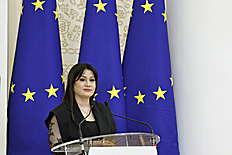
Prime Minister Nikol Pashinyan, President of the European Council António Costa, and President of the European Commission Ursula von der Leyen also answered questions from media representatives.