Press releases
The Prime Minister holds working discussion with ENA interim manager Romanos Petrosyan


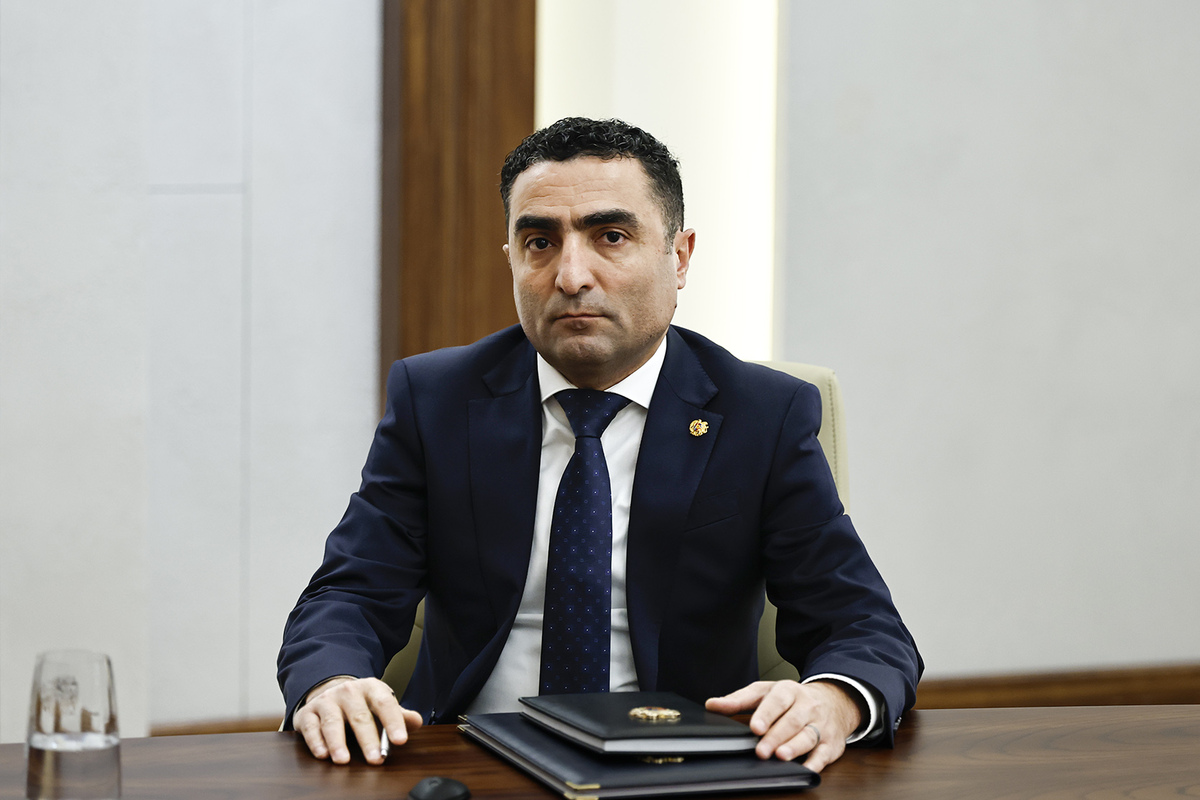


Prime Minister Nikol Pashinyan had a working discussion with Electric Networks of Armenia (ENA) CJSC interim manager Romanos Petrosyan regarding the financial condition of ENA, changes in the remuneration system for non-senior employees, and ongoing activities.
Romanos Petrosyan first reported that as a result of the voluntary refusal of bonuses by top management, branch directors, general directors, and deputies, savings of several tens of millions of drams have been formed. “From the very first month of appointment, by a separate order of the manager, we established additional bonuses of 20 thousand drams for ENA employees with a gross income of up to 200 thousand drams, and this is already the 4th month that more than 1,700 employees have been using it. On average, there has been a salary increase of 10 to 20% in fact," said Romanos Petrosyan, adding that this will continue until it is possible to review the salary and positions, since that power is reserved for the board of directors.
The interim manager of the ENA noted that the average salary in the Republic of Armenia is 320 thousand drams, half of the ENA's 6800 employees, 3400 employees, are paid less than 300 thousand drams. More than 1700 of them do not overcome the threshold of 200 thousand drams, and it is this most vulnerable group that receives an additional bonus of 20 thousand drams.
The interim manager of the ENA noted that as a result of the studies, facts of electricity consumption over-registration and under-registration were revealed, on the basis of which criminal proceedings were initiated, these facts were put at the basis of one of the 6 important points for depriving the license.
According to Romanos Petrosyan, according to this year's plan, the PSRC has set an averaged permissible loss threshold of up to 7 percent. "This is the difference between the amount of electricity received from producers and the amount of electricity consumed. 7 percent is the acceptable regulatory limit. At first, those numbers seemed strange to me. When we study international statistics of advanced countries, we are in the top 50 countries with this indicator, next to France, Denmark, and Sweden. It was very surprising. Without having infrastructures like those in these countries, such indicators are being drawn in the ENA."
The interim manager of the ENA reported that studies have shown that in many cases, the electricity generated by autonomous power producers from solar power plants was underregistered, that is, a larger amount of electricity was pumped into the network by the producers than was calculated and paid for. Romanos Petrosyan explained that as a result of the shadow circulation of a certain amount of electricity, certain monetization transactions could have taken place. “More than 1.5 dozen criminal proceedings have been initiated at the moment. We also have the detention of an inspector in one of the networks, who had added more than 1 million in electricity fee to the meter of a community non-profit organization. This is how they reduce technical losses, bring them closer to the established indicator of 7 percent, and also generate certain shadow circulation of electricity at the expense of the public or state and community institutions. In other words, the state budget paid more than the institution actually consumed,” said the interim manager of the ENA. Moreover, state and community companies made up a very large number in such deals.
Romanos Petrosyan also noted that according to the established rules of the electricity market distribution network, the PSRC must be given access and guarantees to all information collected in the system formed from electronic meters of electricity consumed by subscribers, citizens, and legal entities. According to him, the entire database from 2018 to November 2024 was deleted. At the moment, it is being investigated what action led to this, and criminal proceedings have also been initiated on this fact.
He considered it noteworthy that ones the directors and managers hid this fact from the PSRC, although an internal investigation was appointed, and a circle of culprits was brought out.
Reference was also made to the price changes related to new connections. “We must present the substantiation, the logic to our citizens. The price should be effective to ensure the normal functioning of the system and, of course, its development. This is very important, because anything more than that is not justified. The citizen will ask a logical question: why am I paying so much? We need to find the answer to this question," the Prime Minister said and inquired whether work is being done in that direction.
Romanos Petrosyan informed that at the moment they already have a certain idea of to what extent they will be able to revise the price and expressed hope that at least from the beginning of the year they will make the decisions of revisions.
Summing up the working discussion, Nikol Pashinyan noted: “The main issue is our strategic future approach to the ENA. We have discussed it and there are two possible options, which I have publicly talked about. Option one is that we, through established legal procedures, completely turn the ENA into state property, after which we invite a professional manager of the sector to manage it. In other words, according to the concession principle, the infrastructure remains state property, becomes state property and is managed by a professional company, of course, under the control of the government. The second option, if we see that this is unavailable for some reason, because, nevertheless, we must make a payment to take over the company, this payment is actually an expense of the state budget. If we see that this expense is not justified by the state budget, then we must attract a new investor through transparent procedures."
The Prime Minister emphasized that this issue will be resolved by analyzing the information provided and, of course, consulting with the Public Services Regulation Commission.
“Please, pay special attention to the shortcomings of the previous period of the ENA regarding consumer rights, so that people also feel the positive impact of the activities and these changes on themselves,” said Nikol Pashinyan, wishing Romanos Petrosyan success in this matter.