Press releases
Activity report 2025 of the Ministry of Education, Science, Culture and Sports was discussed
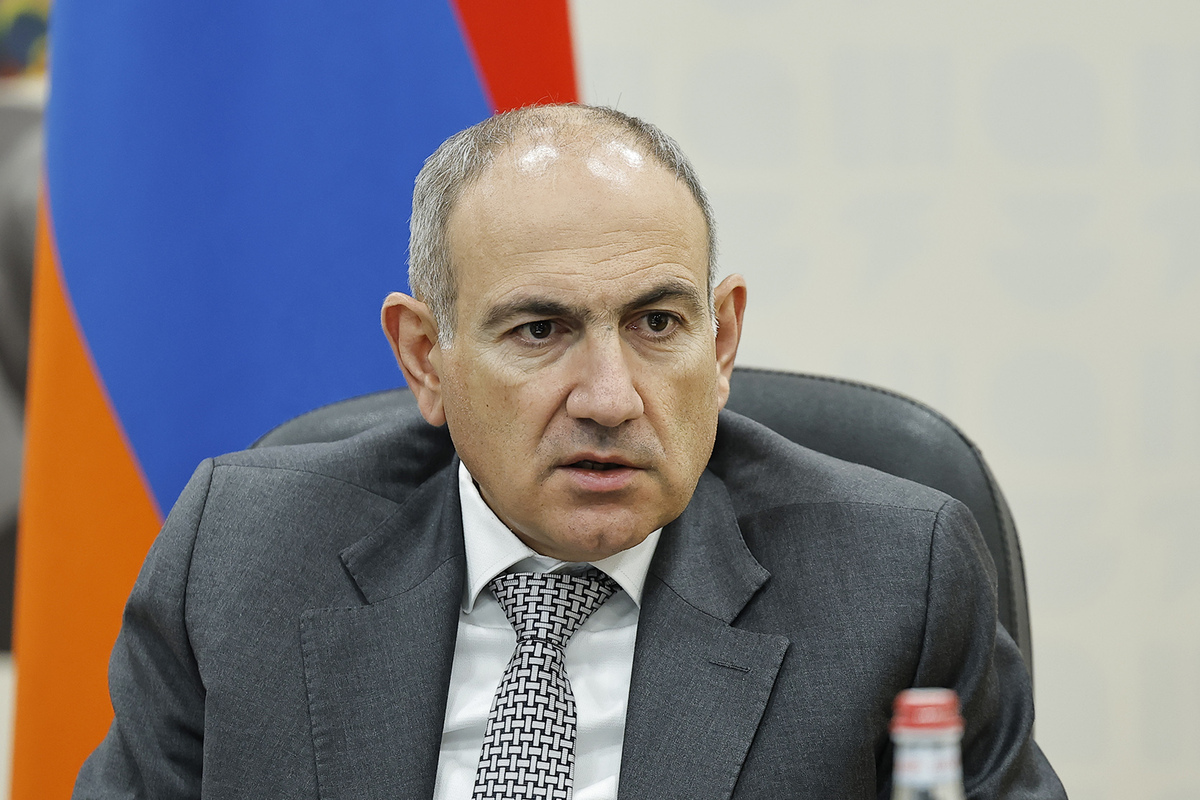


more 6 photos
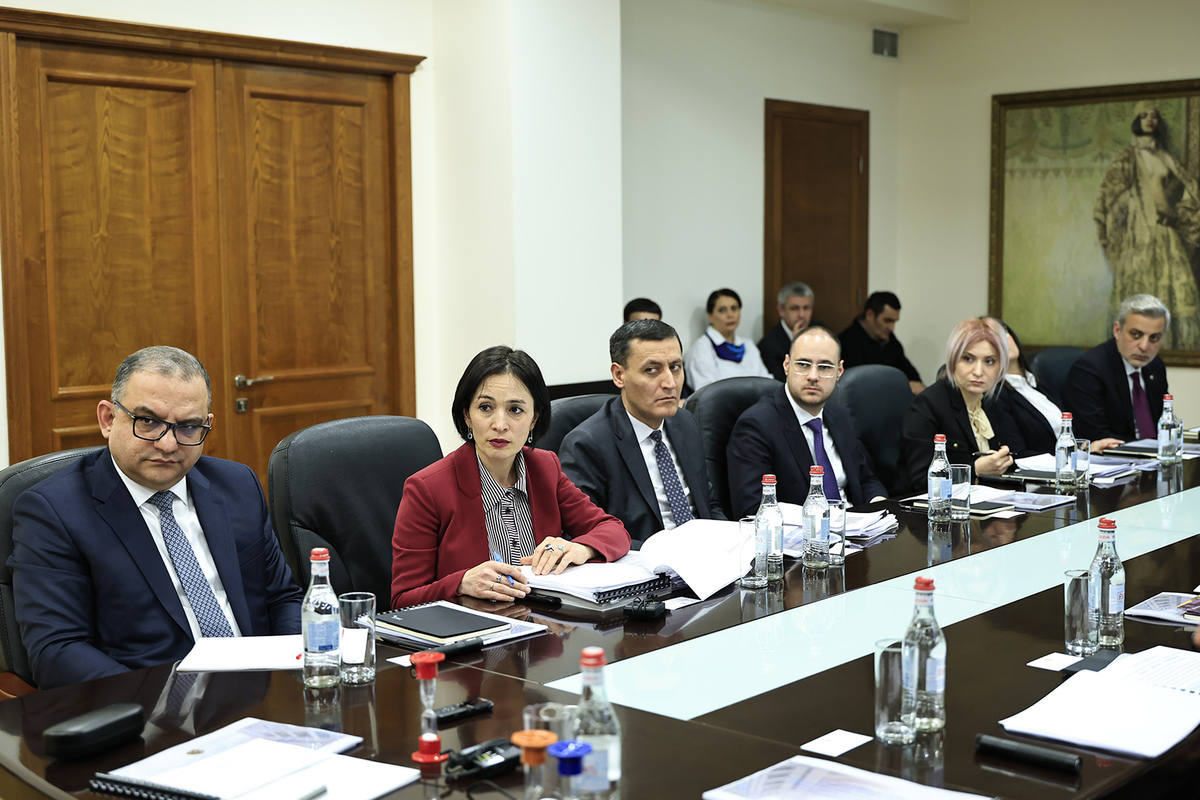
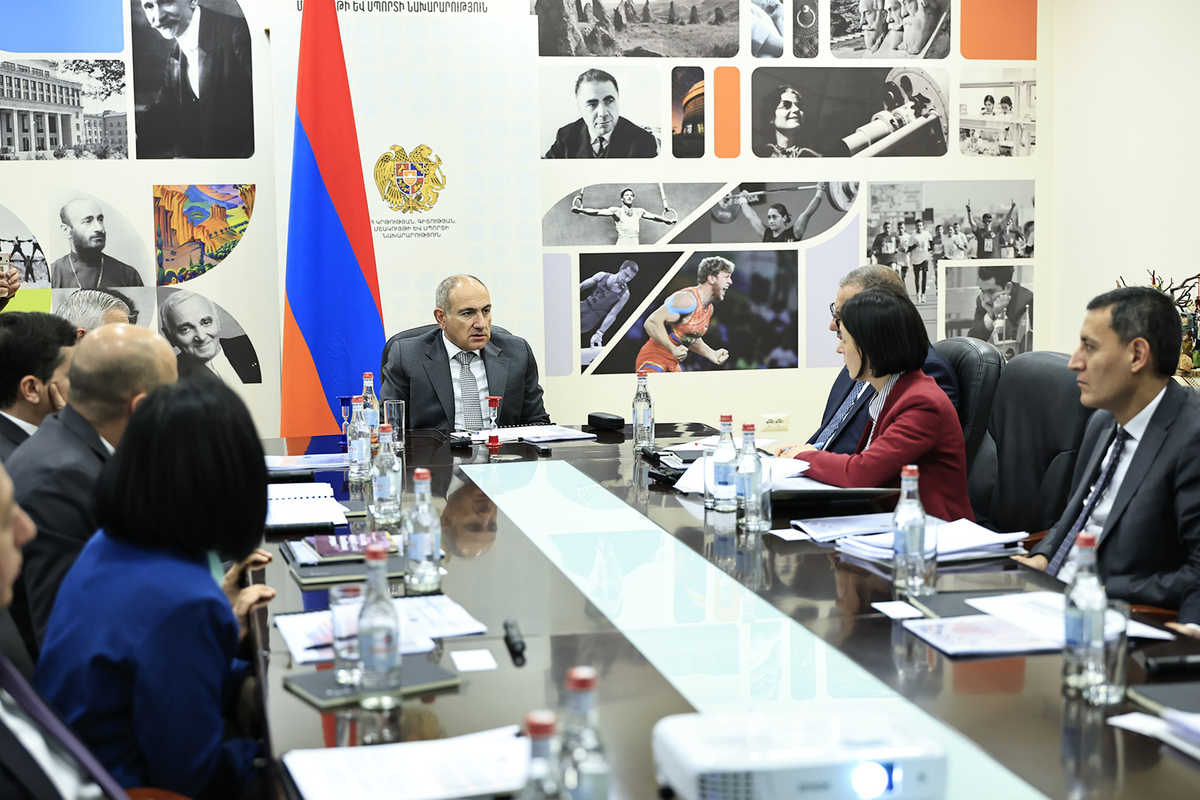
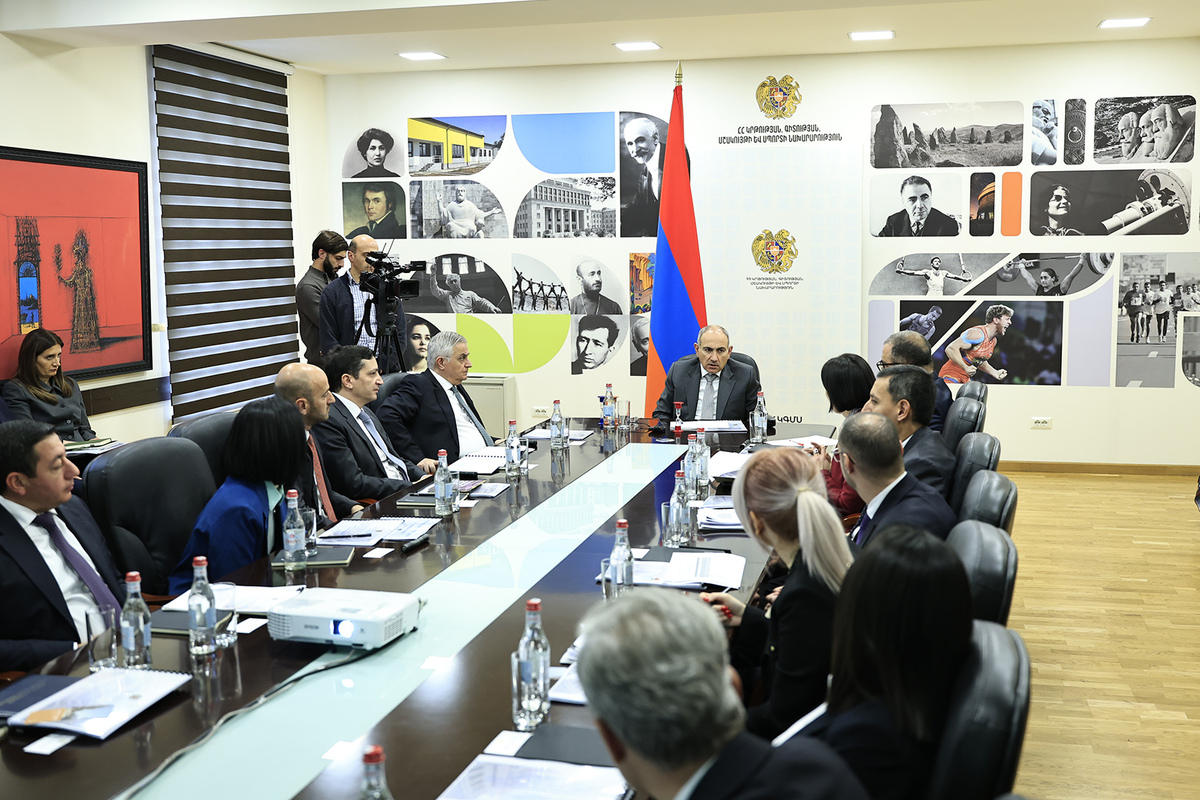
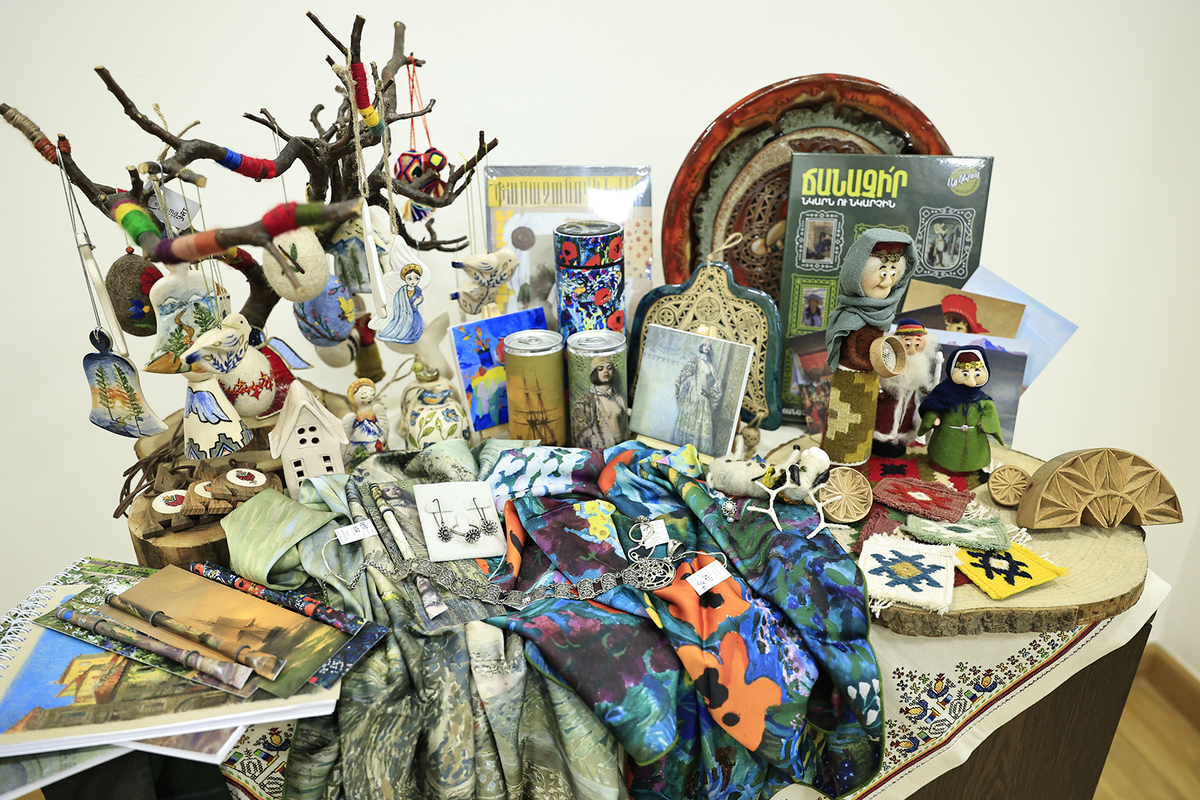
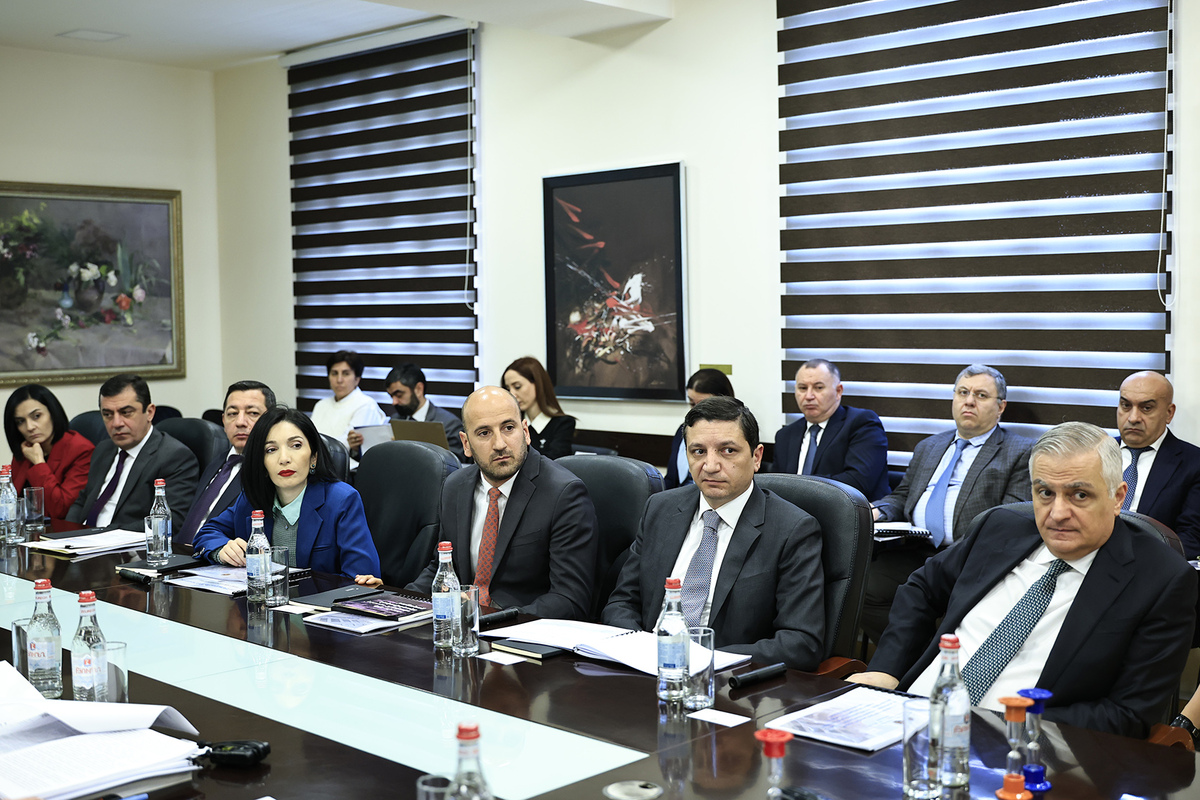
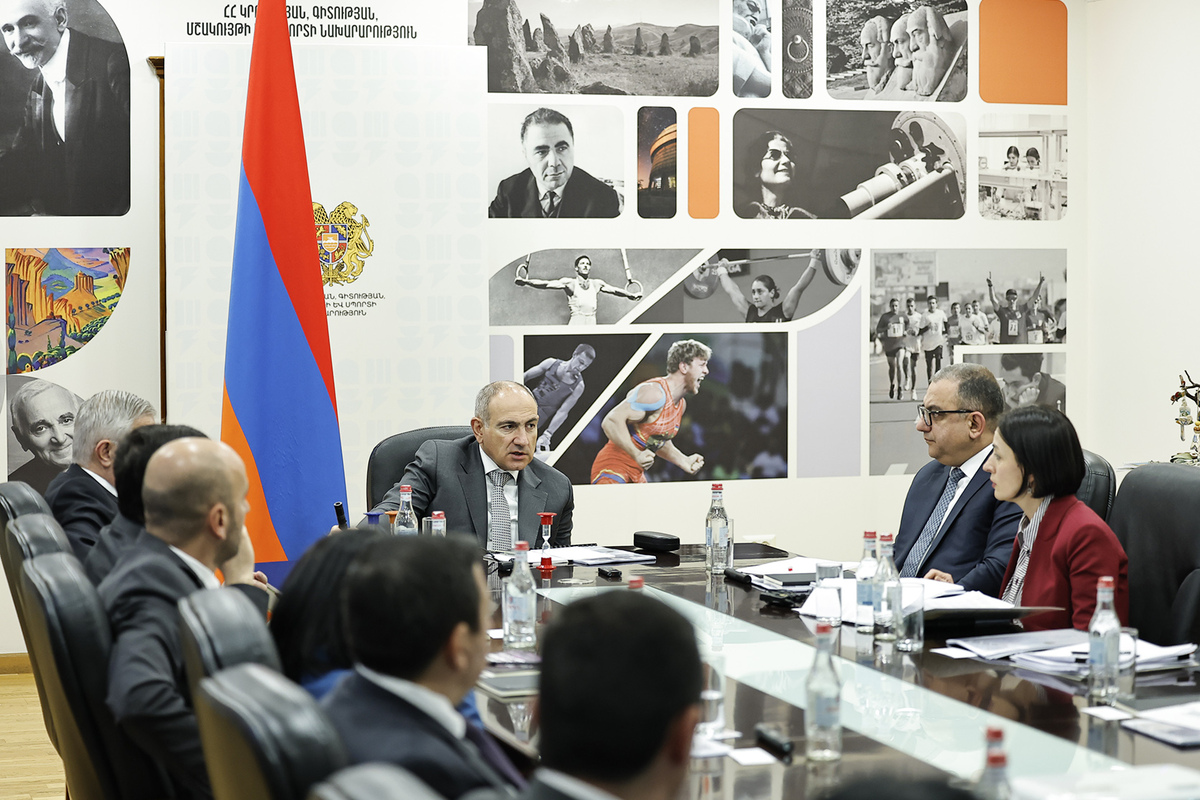
Prime Minister Nikol Pashinyan visited the Ministry of Education, Science, Culture and Sports to discuss the ministry’s 2025 activity report.
Minister of Education, Science, Culture and Sports Zhanna Andreasyan noted that during the reporting period, the ministry’s priority tasks were implemented in the areas of digitalization, increasing the competitiveness and efficiency of education and science, and economizing culture.
It was reported that the digitalization work included the fields of education, culture and sports. In particular, in 2025, the electronic processes of transition from kindergarten to school were digitized and school admissions were improved, thanks to which the traceability of a person’s educational path will become visible.
The "I Am" national identification system has been integrated into the electronic school admission system, the requirement to submit up to 6 documents has been removed, saving the parent up to a week of time for this, the "one data, one time" principle has been adopted, as a result of which the requirement to enter the data of a child having attended kindergarten has been removed, when registering 2 or more children, only the data of 1 child will be entered. In 2026, high school admission will also be digitalized.
Prime Minister Pashinyan emphasized the importance of ensuring the traceability of a person's educational path. "That traceability must occur from the first second. If traceability begins after six months, it is not traceability, because during those six months the data may be generated somewhere else. That process must be linked to financing, health insurance. In other words, it is the system that will exclude that any child remains out of our sight, because if he is a beneficiary of health insurance, he must appear somewhere, somewhere: he goes to kindergarten, does not go to kindergarten, goes to school, does not go, or if he goes to school, he is not in the health insurance system. The system must tell us that there is a discrepancy in the data of so many children here, so that we can manage the situation in the long term," the Prime Minister said.
Next, Zhanna Andreasyan noted that digitalization processes have also gained new momentum in the cultural sector. Work has begun on the introduction of 4 electronic systems in the sector. In particular, the Unified Electronic Ticketing System of Museums has been improved and expanded, as a result of which 18 more museum branches have joined the system, bringing the number of museums and branches connected to the system to 44. In 2026, 20 devices and 10 super-sensitive QR readers will be installed in the museums connected to the system.
A unified platform for ticket sales of theater and concert organizations has been launched in cooperation with the private sector. It operates in a pilot format in 2 organizations. It is expected that the unified platform will significantly reduce the potential shadow in the sector, increase the transparency and accountability of the sector, allow for accurate statistics and develop data-based policies.
Zhanna Andreasyan reported that the new General Education Standard has been introduced in grades 1-11 of all schools in the Republic of Armenia since September 2025. Along with the introduction of the standard, new textbooks have been created, new educational content has been developed. As a result of competitive procedures, the cost of one textbook has decreased by 23-26% on average. Moreover, within the framework of the universal declaration of income, an annual social credit of 3,000 drams has also been established for parents of students in grades 5-12 for textbook rent and reimbursement, which applies for 300,000 children.
In 2025, a significant increase in financing for general education continued, based on the implementation of a new standard for general education and creating solid prerequisites for ensuring quality education. Thus, about 128.8 billion drams were allocated for school maintenance alone, which is about 56.9% more than in 2018.
As of the end of 2025, about 70 percent of the republic's schools, or about 800 schools, are equipped with modern natural science (Geography, Biology, Physics, Chemistry) and engineering (Informatics) laboratories. In 2026, the program for equipping all schools with laboratories will be completed.
Within the framework of the large-scale program "300 Schools, 500 Kindergartens", work was carried out in more than 320 schools and more than 490 preschool institutions. By the end of 2025, work had been completed in more than 100 schools and about 280 kindergartens and preschools.
Prime Minister Pashinyan, emphasizing the importance of the school construction and renovation program, considered it necessary to fully use the new infrastructures, including by community residents. “The task is as follows: we want to get rid of the logic of closing the school door. If the school principal, staff, students, parents are so active that they constantly keep the school active, much better. But on the other hand, if this is not the case, these areas should be used, first of all, for educational purposes, and if the educational goals are solved, then they should be used for the purposes of organizing community life, public life. The school doors should be open, who said that at 9 pm there cannot be some kind of event at school? People can gather, discuss, talk about various issues - professional, community, etc.,” the Prime Minister said.
As of 2025, 9,602 people have successfully passed the voluntary certification and are now certified, or every 3rd teacher or about 31 percent of teachers. As a result of teacher professional development and incentive programs, the salaries of many teachers have increased: currently, 2,952 teachers receive a salary of 300,000 - 400,000 drams, 1,362 teachers receive 400,000 - 500,000 drams, 220 teachers receive 500,000 - 600,000 drams, 70 teachers receive 600,000 - 700,000 drams, and 13 teachers receive a salary of 700,000 drams or more.
In the field of preschool education, the enrollment rate has improved in recent years. In 2025, the enrollment of 3-5 year olds in the preschool education system was 81%, which increased by about 17% compared to the 64.3% rate in 2021.
As a result of the consistent steps taken by the Government of the Republic of Armenia, the attractiveness of the vocational education and training system is significantly increasing. As of 2025, more than 47 thousand students are studying in colleges; compared to 2021, the number of students has increased by more than 28%, and the enrollment rate has improved by about 29%. The growth is especially significant in the priority professions of construction, industry and agriculture, for which a scholarship program of at least 50 thousand drams per month has been in effect since 2023.
Last year, the cleaning of the Academic City area began, the first stage of which cleared an area of 2.7 hectares, freeing the area from about 10,000 cubic meters of garbage, the next stages of the work will continue in 2026. Excavations of ancient settlements and burial grounds have also begun in the Academic City area, the first results of which indicate that a unique environment of historical and cultural heritage can also be formed in the Academic City. At the same time, with the involvement of reputable international partners, as well as a specialized local partner, the master plan package of the Academic City was completed in accordance with the legislation of the Republic of Armenia, which has been submitted for approval.
According to the Minister, in 2025, in the field of culture, emphasis was placed on the creation of institutional mechanisms for the economicization of culture, including those aimed at increasing the own income of cultural organizations, new forms of cooperation with cultural production and the private sector, as well as the digitalization of the sector, internationalization, and decentralization of cultural life.
Zhanna Andreasyan added that the process of introducing a new model for financing cultural institutions has continued, which has made it possible to carry out more intensive cultural activities: in particular, the number of performances shown at the Opera Theater has doubled (from 130 in 2023 to 260 performances), the number of spectators has also doubled, from 90,000 to 180,000 spectators, ensuring up to 20% annual revenue growth and a 37% increase in wages. The number of performances at the Puppet Theater has increased by 334 (from 497 to 831), the number of spectators has also significantly increased, from 73,000 to 119,600, ensuring up to 35% annual revenue growth and a 50% increase in wages. The number of performances at the Chamber Theater has increased by 78 (from 165 to 243), the number of spectators has also increased significantly, from 19,342 to 29,390, ensuring an annual income increase of up to 22% and an increase in salaries of up to 50%.
In the sidelines of the new financing model, almost all theater and concert organizations have recorded an increase in their own income, including regional theaters, by up to 30%. From 2026, 1 more theater and concert organization will join the new model.
In general, the own revenues of theaters in 2025 increased by 1.75 billion drams or 1.5 times compared to 2022, as a result of which the share of own revenues in the total volume of financing increased from 1.15 billion drams to 2.9 billion drams In general, the own revenues of theaters in 2025 increased by 1.75 billion drams or 1.5 times compared to 2022, as a result of which the share of own revenues in the total volume of financing increased from 1.15 billion drams to 2.9 billion drams, increasing from 25% to 38%.
The own revenues of concert organizations in 2025 increased by 745 million drams or 1.5 times compared to 2022, as a result of which the share of own revenues in the total volume of financing increased from 486 million drams to 1.23 billion drams, increasing from 12% to 24.5%. The museums' own revenues increased by 859 million drams or 112% in 2025 compared to 2022, as a result of which the share of own revenues in the total volume of financing increased from 770 million drams to 1.63 billion drams, increasing from 26% to 37.9%.
The Prime Minister emphasized the importance of the economization process of cultural institutions, adding that today's tools provide this opportunity to attract as many visitors as possible. "We need to focus on strengthening the logic of economizing our museums. Now, for example, when we ask the director of the Berd Art Gallery what do you do, what are you doing, what is the essence of your work, what will he answer?. And his correct answer is that he "sells" a painting. But he does not sell it in the sense that a person can take it to his home, he sells that painting so that a person can come and see it and pay for it. Museums, for example, do not have this perception; if you ask them, they will say anything but that. In other words, both the leaders and employees of all our institutions should know that they are engaged in sales, they are engaged in the sale of paintings, exhibits, and there is nothing wrong with that," the Prime Minister noted.
The Minister of Education, Science, Culture and Sport reported that in 2025, prerequisites were also created for the economicization of sports, which will continue in 2026. The design work of typical sports complexes equipped with modern sports equipment and other conditions that meet international standards, was carried out in the cities of Yeghegnadzor, Martuni and Ararat through a state-private partnership. It is planned that the typical sports complexes will be built with state funds by an organization selected through a tender, handing over to the private sector for further accredited management with clear criteria.
Within the framework of state-private partnership, the state financing program for swimming courses for school-age children in private pools, launched in 2024, has been expanded, the number of beneficiaries of which in 2025 amounted to 198 instead of 22 beneficiaries in the starting year, becoming available in the regions of Aragatsotn, Armavir, Kotayk, Tavush and Lori. At the same time, in 2025, amendments were made to the Law on Physical Culture and Sports, which have made it possible to promote other sports in private infrastructure. The expansion of sports will be implemented in 2026.
Prime Minister Pashinyan noted that the Government’s strategic goal should be to ensure that the number of children involved in sports is almost identical to the number of children attending school. “For example, what is the reason why a child should not go in for football, basketball, or tennis? Let’s look at extracurricular education – we should set a strategic goal for all children to be included in some extracurricular education group. Let someone attend a literature group, in general, what percentage of our children can play a musical instrument? Let’s record in our strategy, set a goal that a schoolchild should be involved in some way,” the Prime Minister said, adding that this involvement can take place right at school, where the necessary infrastructure is being created.
Nikol Pashinyan emphasized the importance of ensuring access to music schools. “We need to have a model project for a music school, and there we need to put the same principle of providing it with property,” the Prime Minister said, emphasizing the importance of implementing the same program in art schools. “We should start the construction of music and art schools in the next stage, hoping, of course, that the construction of sports centers will gain momentum with the private sector and the results will be at a greater scale,” the Prime Minister said.
The development of a business model for the operation of large sports infrastructures has begun, which is being implemented within the framework of a contract signed with an experienced international organization that has undertaken the design and project management of the reconstruction of the Vanadzor city stadium in accordance with UEFA standards.
In order to increase the competitiveness and efficiency of science, the Strategic Program for the Development of the Science Sector for 2026-2030, as well as the priority directions for the science and technology sector for 2026-2030 were developed and submitted for approval during the reporting period. Within the framework of bilateral cooperation, 23 joint programs were implemented with Italy, Germany, Moldova and Georgia.
As of the end of 2025, within the framework of the EU “Horizon Europe” framework program for research and innovation, a total of 183 applications were submitted by the Republic of Armenia (39 applications more than the previous year), another 8 funding agreements were signed, bringing the total number of agreements to 25, with a total budget of about 8.33 million euros, which exceeds the total budget for 2021-2024 (7.6 million euros) by 9.6%.
In parallel with the increase in the total volume of funding, in 2025 the expansion of funds provided on a competitive basis has continued. The proportion of competitive funding in total funding has doubled over the past ten years, exceeding 50%.