Press releases
Armenia’s foreign policy and security stances must be based on an internationally recognized, legitimate framework: Prime Minister


more 10 photos
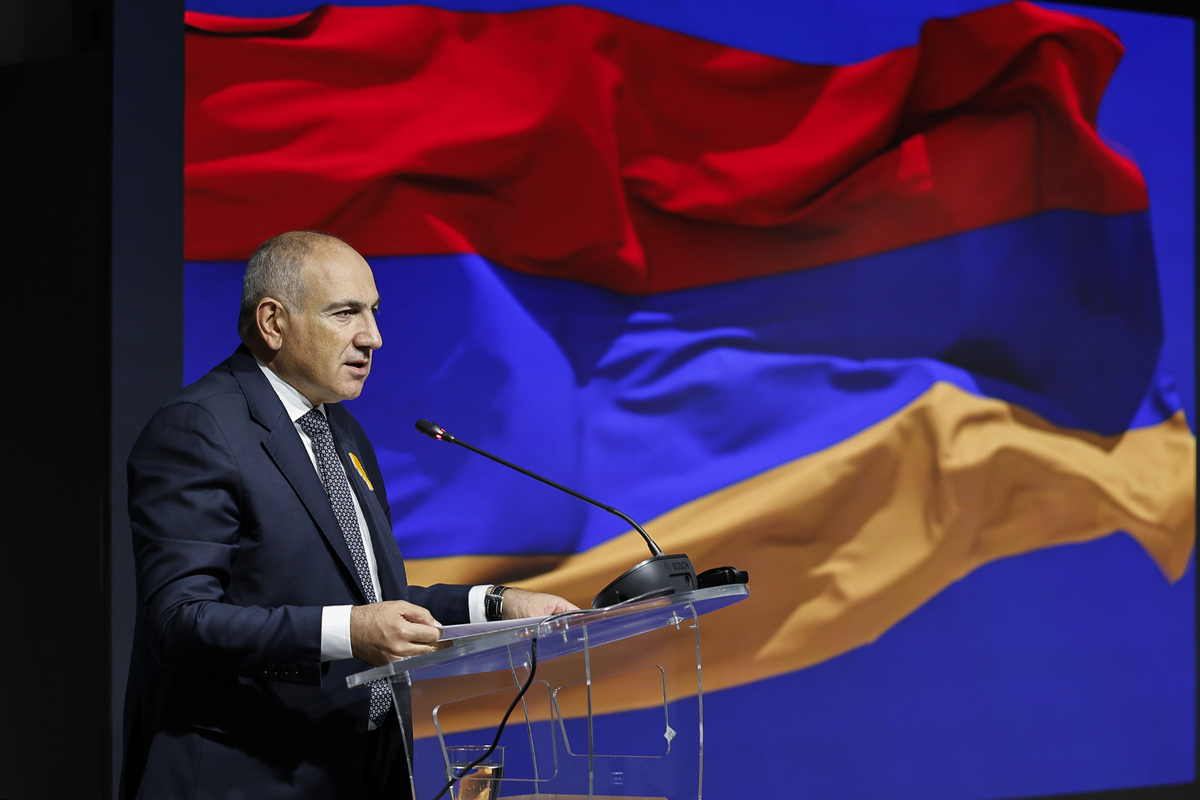
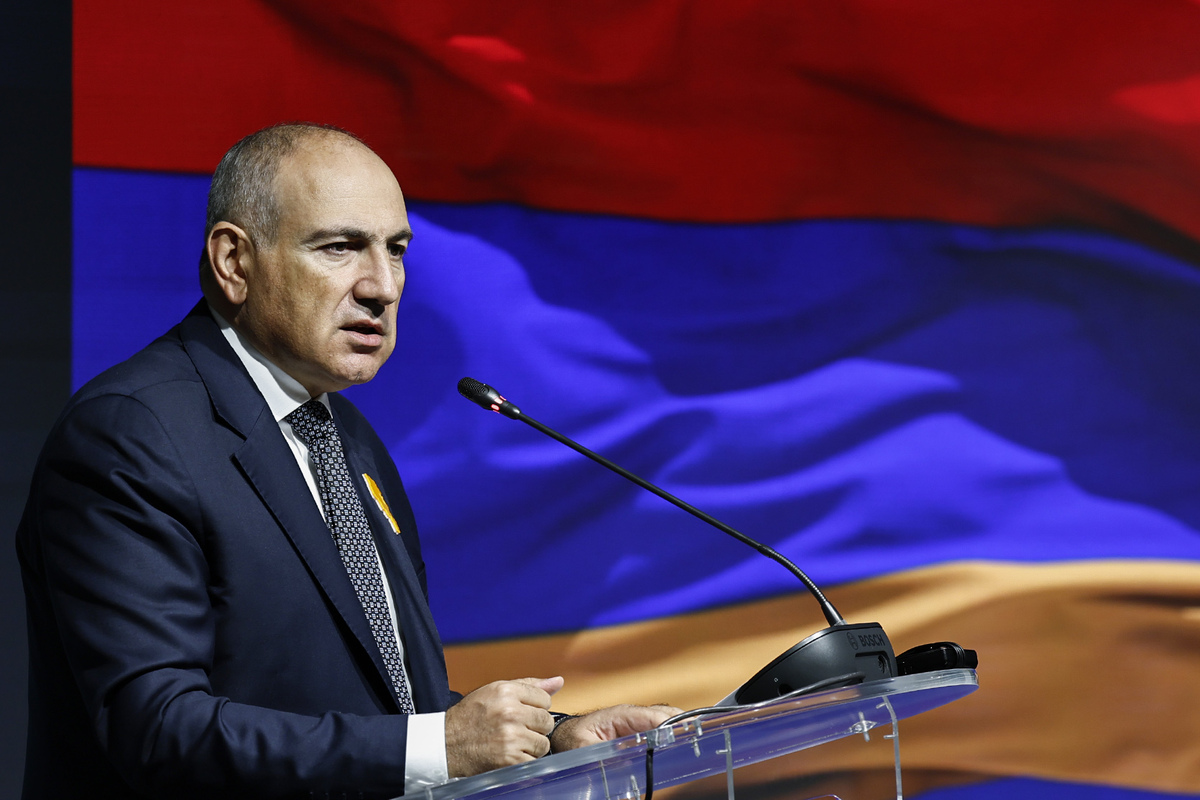
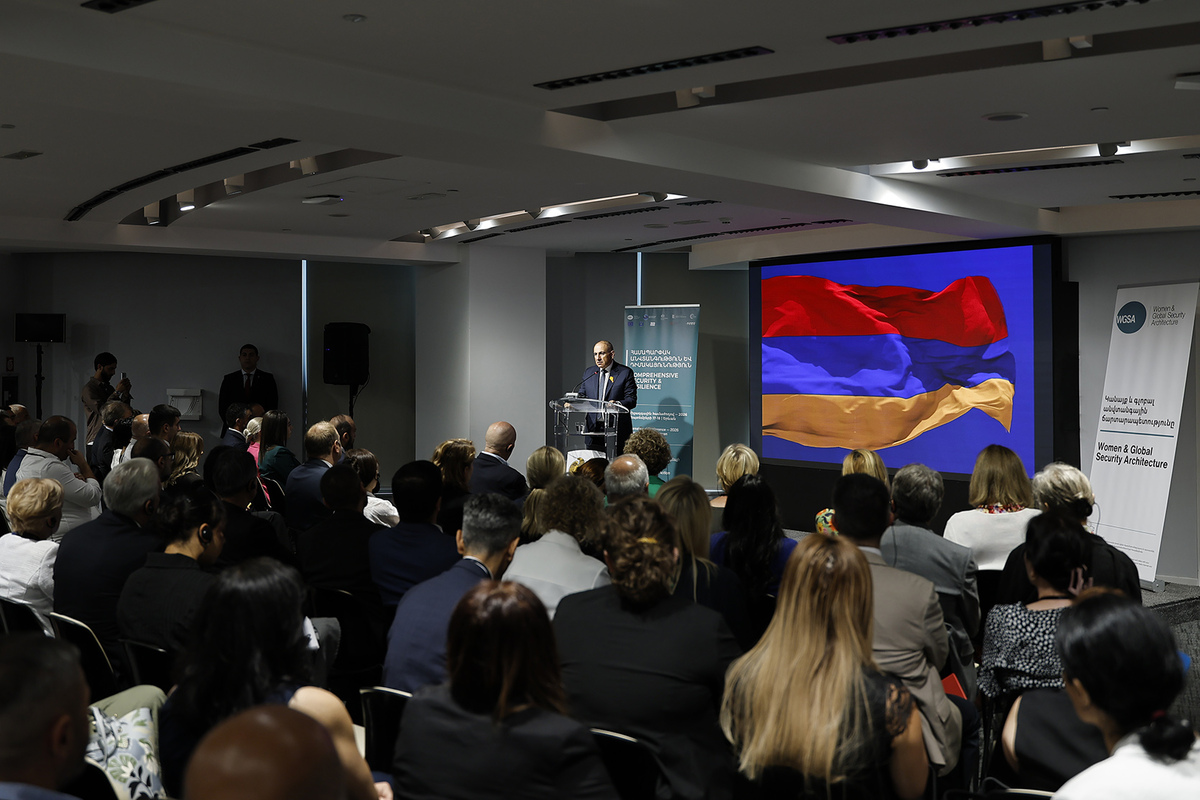
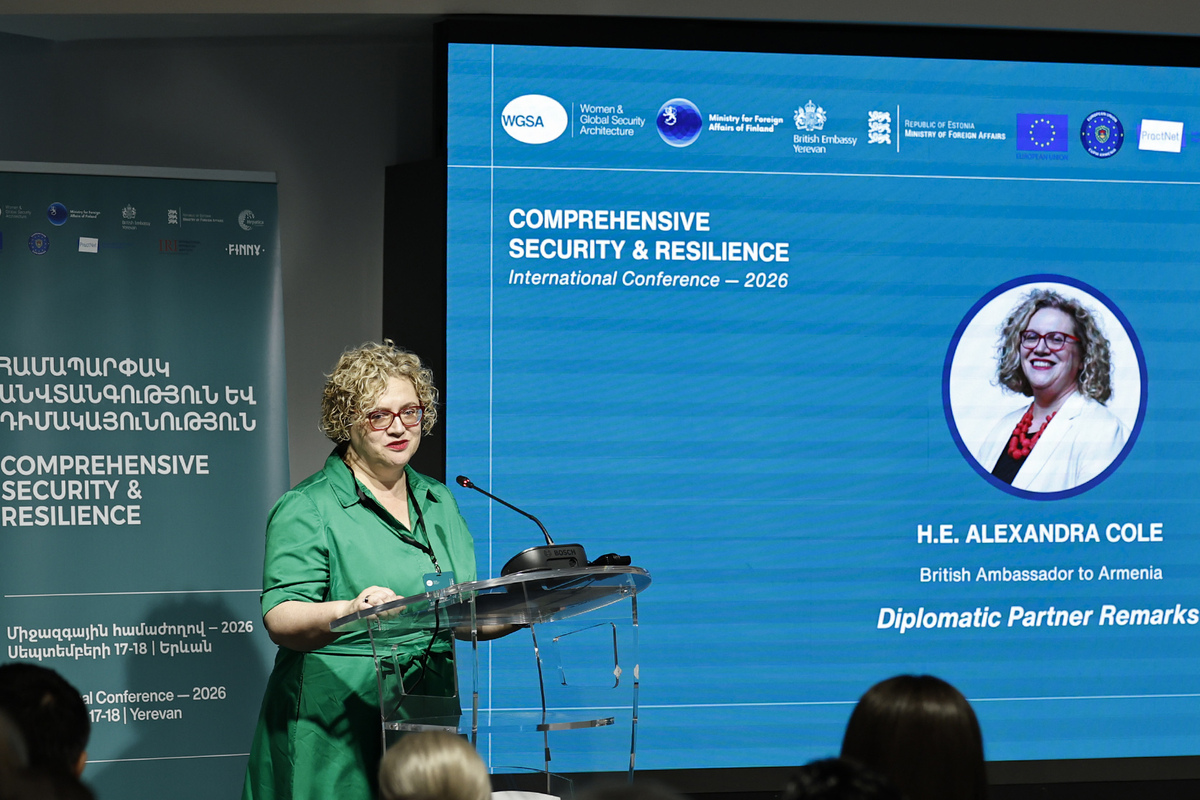
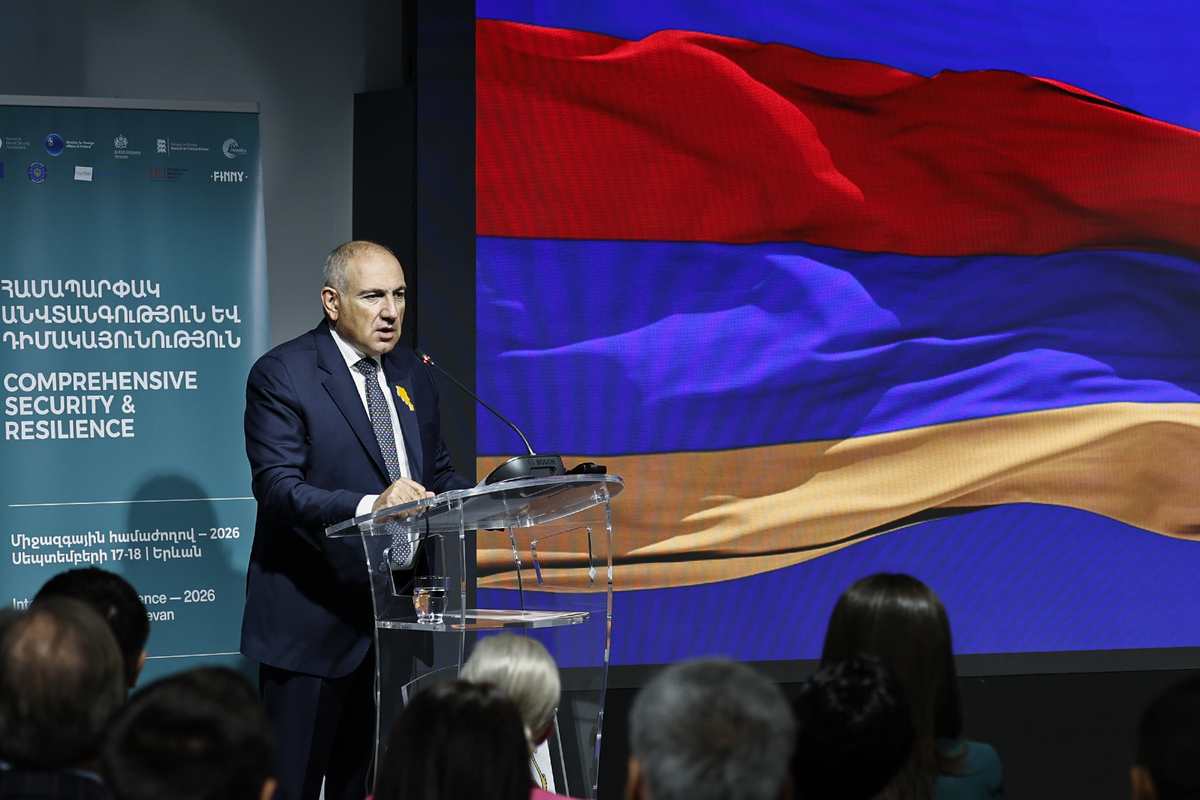
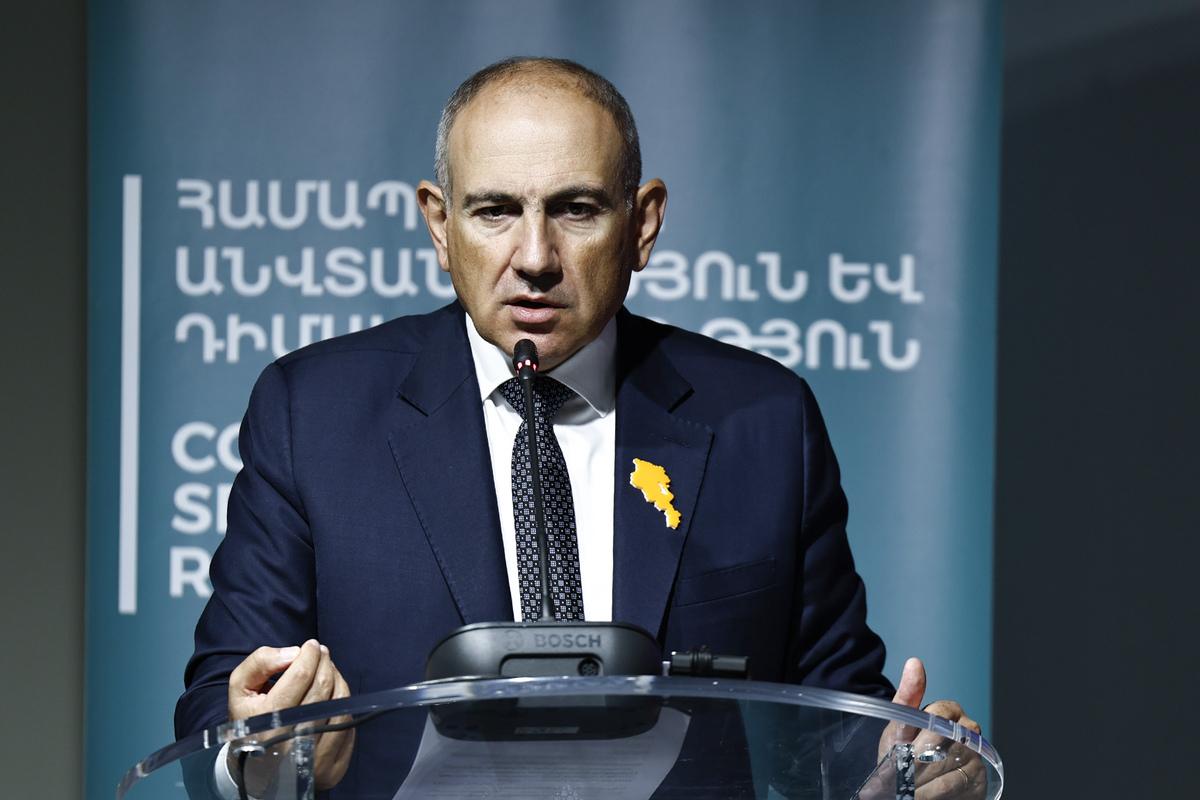
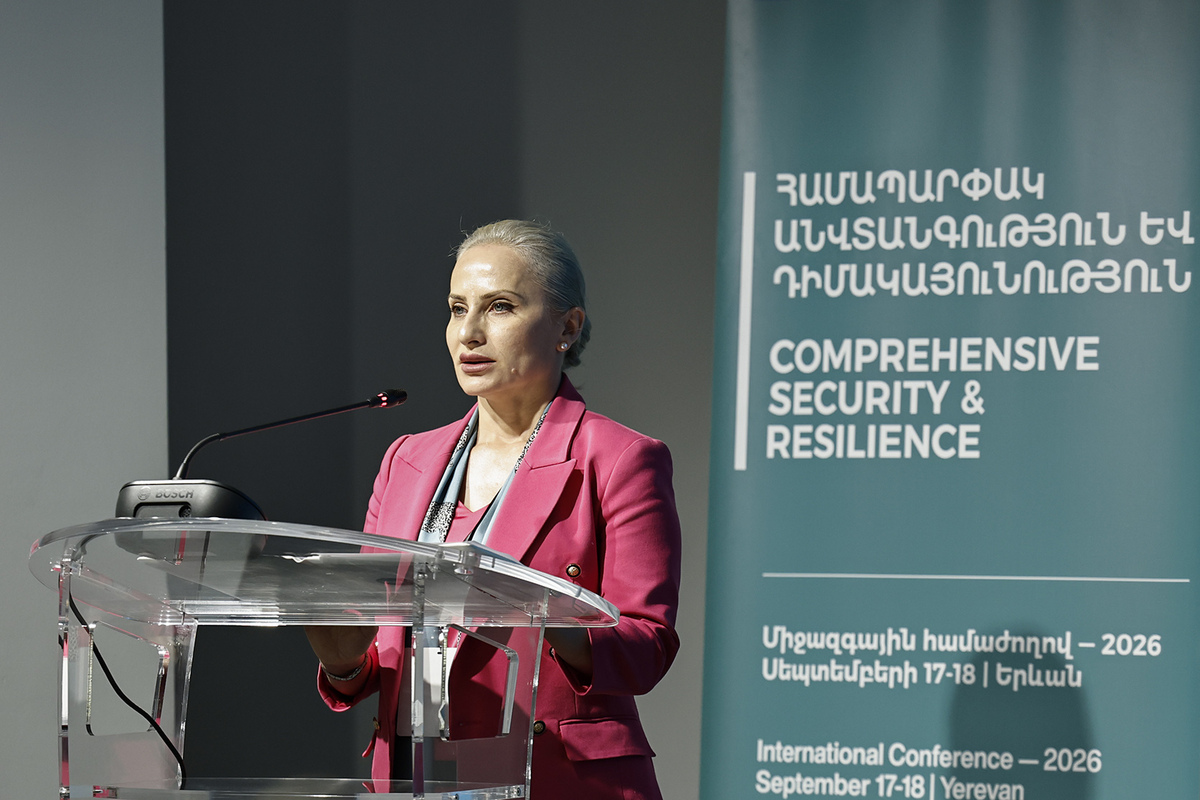
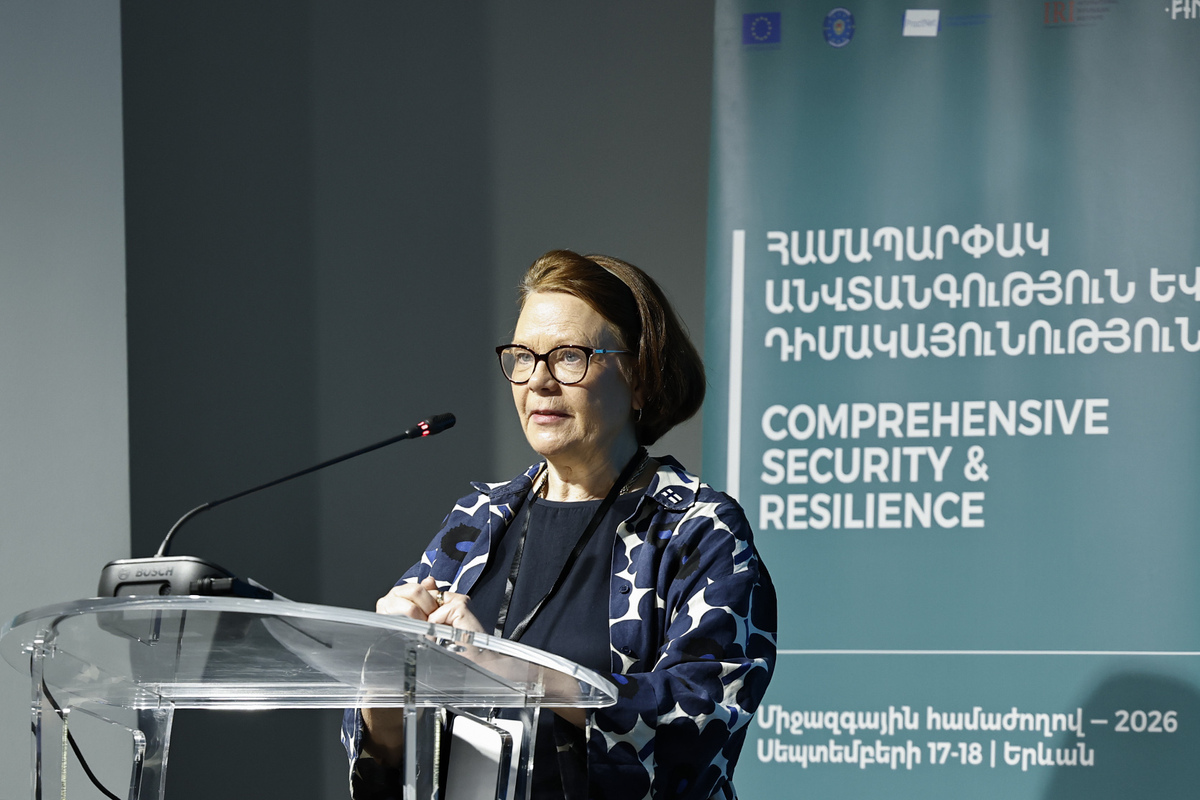
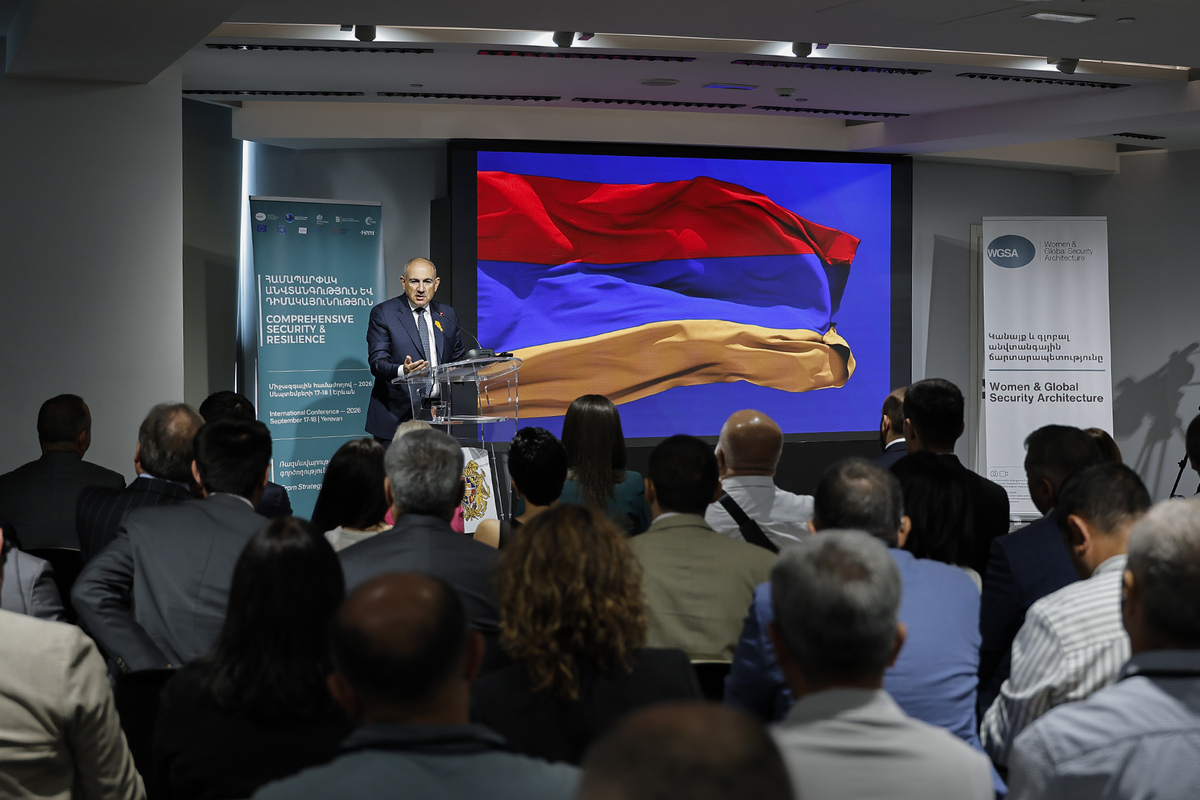
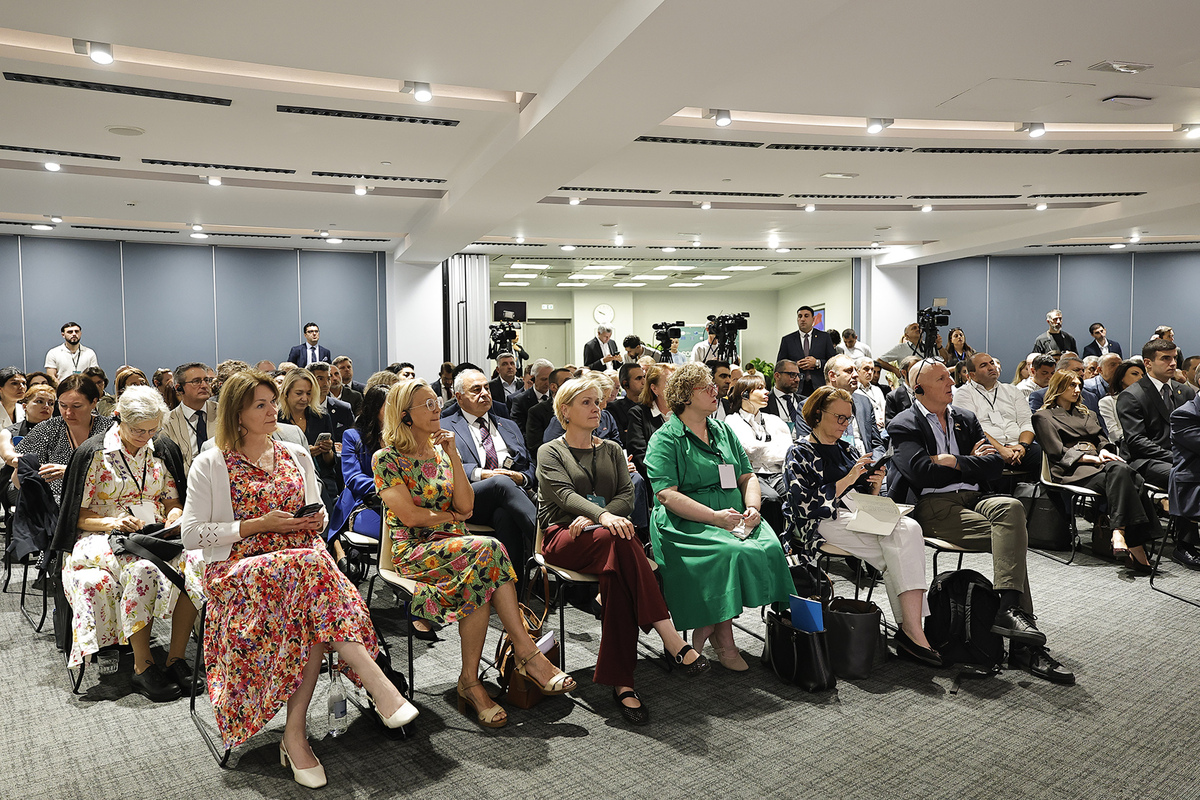
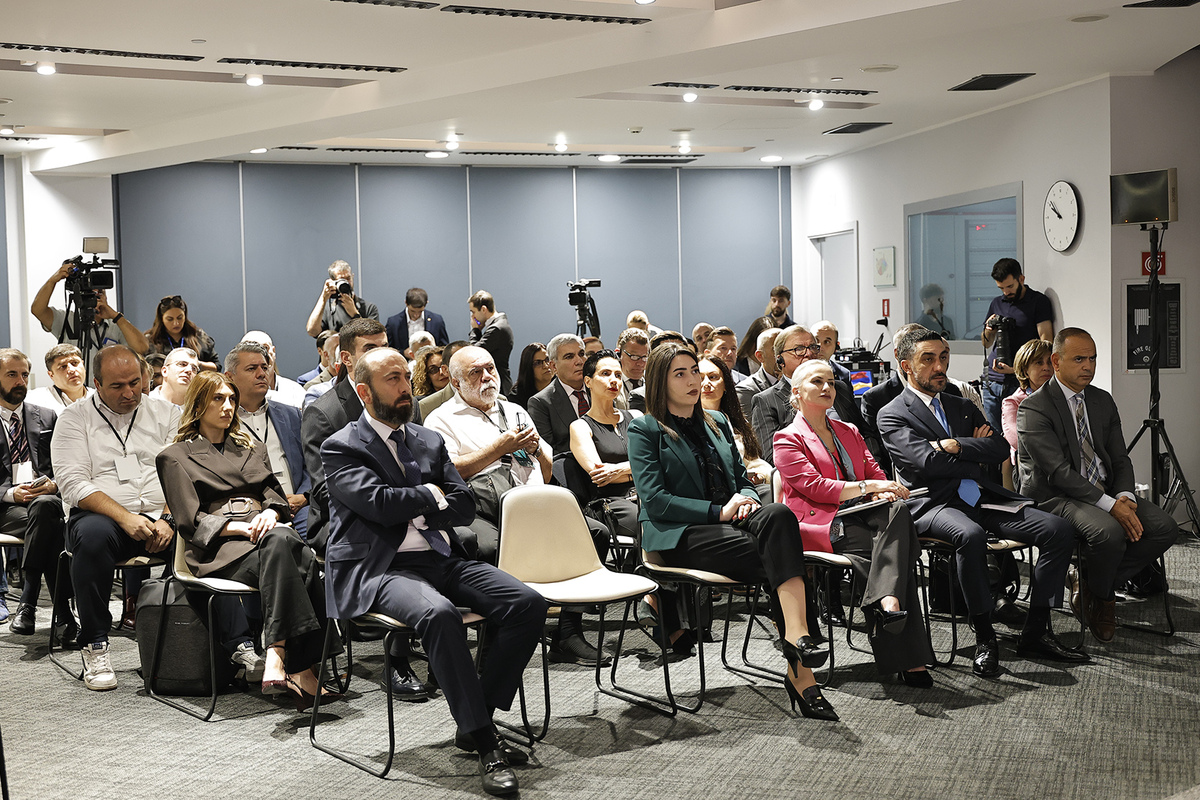
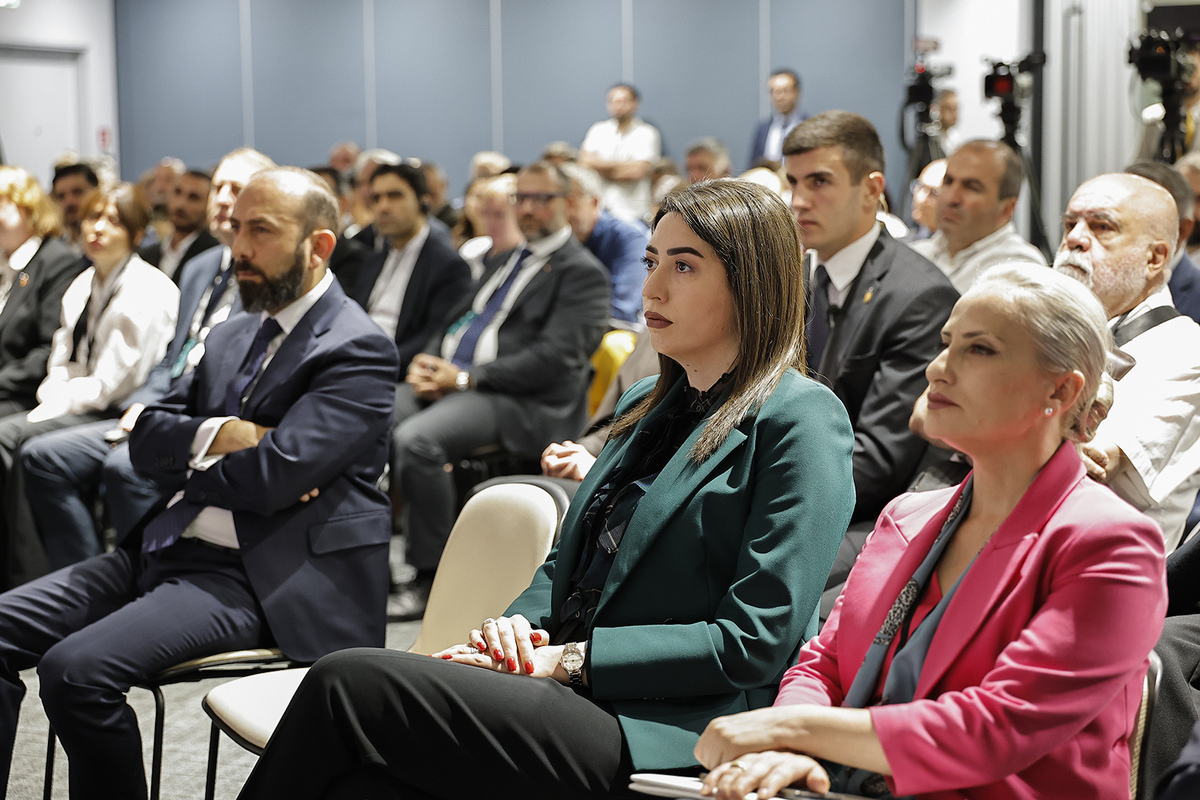
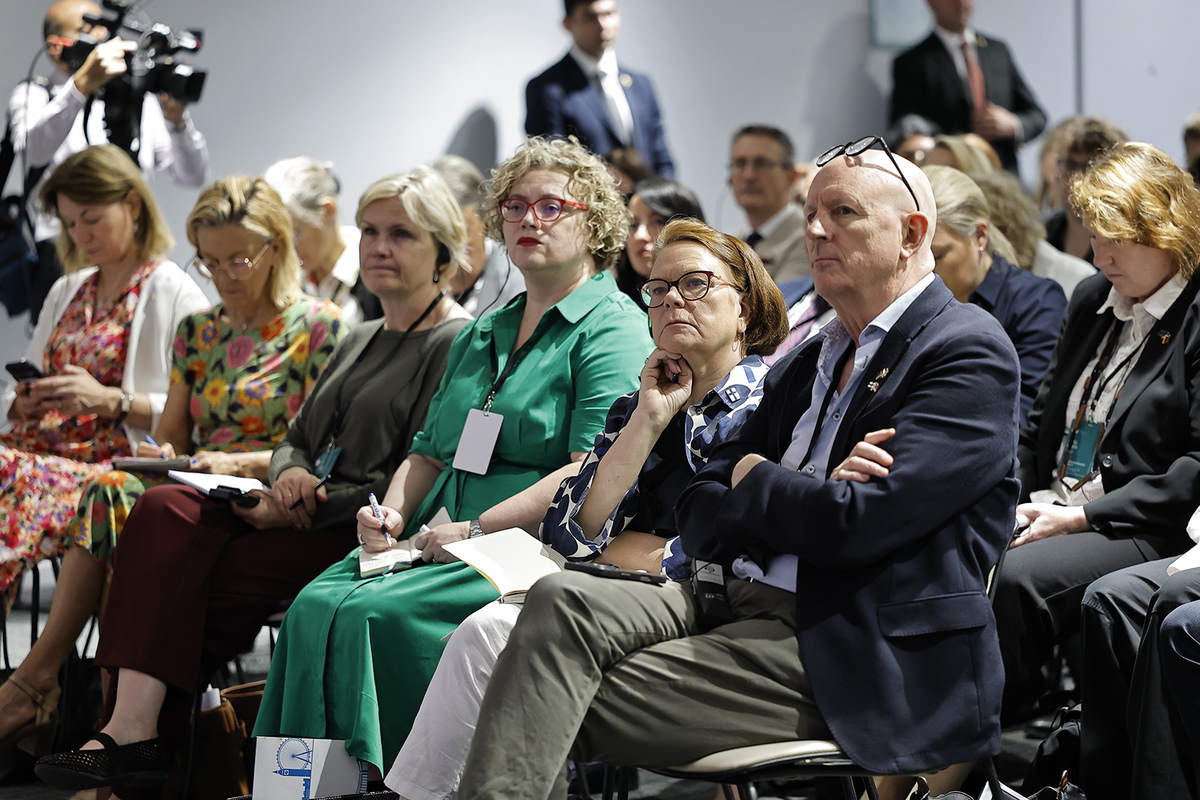
Prime Minister Nikol Pashinyan attended a conference in Yerevan titled "Comprehensive Security and Resilience." Participants included Minister of Foreign Affairs and International Trade Ararat Mirzoyan, Minister of Internal Affairs Arpine Sargsyan, Chair of the National Assembly Standing Committee on Defense and Security Vilen Gabrielyan, Ambassador of Finland to Armenia Kirsti Narinen, Ambassador of the United Kingdom of Great Britain and Northern Ireland to Armenia Alexandra Cole, President of the "Women and Global Security Architecture" think tank Armine Margaryan, as well as experts and others.
Prime Minister Pashinyan delivered a speech, addressing the system of comprehensive security and resilience and its various components. According to the country's leader, in this context, one must take into account everything that might—in one way or another—impact the security system. Nikol Pashinyan addressed the question of where to seek security, where to begin building the security system, and where security-related issues should be resolved or where one might pursue such solutions.
"I have come to the conclusion that, on the path to building comprehensive security, our mindset—how we think and how we perceive issues in general—is crucial. In the spring of 2024, I delivered a speech in the National Assembly and, for the first time, articulated the ideology of 'Real Armenia.' Afterward, I learned that one of the MPs present in the hall had reacted in a striking way; upon hearing the specific points I emphasized, the MP had said: ''Is he trying to say that Mush and Van don't belong to us?'' At first glance, this might seem like a very strange reaction, but in reality, it provides answers to questions that are vital for us—while also posing a question in itself—because it may turn out that many of our security problems originate in our minds and in our perceptions of reality and our environment, and this very problem exists in the Republic of Armenia today," the Prime Minister said.
The Prime Minister noted that during a recent meeting with a group of citizens, one of the participants said: "You talk all day about the 'Real Armenia,' but yesterday my child came home from school and recounted how their history teacher told them: 'Children, know that you must grow up and go liberate Mush and Van." Nikol Pashinyan observed that these are phenomena that are perhaps not frequently discussed. "More than a year after the initialing of the peace agreement, there is talk—and an agenda is being pursued—on prominent platforms and podiums in Armenia that we must, as it is phrased, grow strong and liberate the Republic of Artsakh." What I mean is that these phenomena and issues are not being addressed publicly in the Republic of Armenia; this is, in fact, a fundamental problem—one we also encountered throughout the entire process of resolving the Karabakh issue, when parallel discourses and perceptions existed.
"Within the Republic of Armenia—in our domestic affairs—we raised different issues and emphasized different points, whereas at the negotiating table, entirely different matters were discussed based on a completely different logic. It is also important to note the point at which this modus operandi could no longer be sustained and ceased to have any potential for continuation. However, we are now facing different challenges, where we deal with the parallel existence of public and non-public discourses and formulations; in my view, this is precisely where grave security challenges arise that we must address," the Prime Minister said.
According to the Prime Minister, similar processes are simultaneously unfolding in Azerbaijan—specifically the "Western Azerbaijan" narrative—which poses a serious challenge and a security threat to the Republic of Armenia, regional security, and the established peace. "The main issue now is how we envision addressing these problems. It is important to note that we already have a framework in place for how we intend to resolve these issues. There is much discussion in Armenia regarding the so-called principle of reciprocity—that Armenia should take steps corresponding to those taken by others, and that others should take steps corresponding to those taken by Armenia. I believe this logic will never lead to a change in the situation. And we saw this happen—specifically in 2024," the Prime Minister said.
Nikol Pashinyan noted: "When did the successful conclusion of the peace agreement negotiations between Armenia and Azerbaijan take place? It happened when we decided to move away from the principle of mechanical reciprocity—that is, when we realized there was no longer any potential to improve the text of the peace agreement through a 'ping-pong' exchange. We faced a choice: continue that 'ping-pong' of reciprocity or pursue a different logic—and we chose the latter. We asked ourselves a very simple question: if we were to imagine the peace agreement—in its state at that moment—being agreed upon, signed, and ratified, would it create problems for Armenia, or would it solve them? In other words, would the situation be better or worse as a result of the signing and ratification? We saw that the situation would be better. So, we decided to agree to this text, after which the well-known events took place," the Prime Minister emphasized.
As noted by Nikol Pashinyan, the logic of reciprocity is frequently discussed in our current reality—particularly by the opposition—pointing out that while Armenia says and does certain things, Azerbaijan does not. "The most obvious example regarding this situation is that Azerbaijan's railway is open to the Republic of Armenia—specifically in both directions—whereas Armenia's railway is not currently being used by Azerbaijan. In other words, if we were to follow that logic, the Azerbaijani railway should not be open to Armenia at this moment. Therefore, mindsets and the transformation of thinking are crucial; what we have achieved during this period is the result of refining our own ways of thinking and adopting new models of thought. Unfortunately, life itself has led to this logic; specifically, the events of September 2022 have made it clear to us that unless we adopt a new model of thinking, we will—in the literal sense of the word—lose the Republic of Armenia," the Prime Minister emphasized.
Speaking about comprehensive security and resilience, Nikol Pashinyan noted that it cannot consist of a single component. The Prime Minister observed that it is crucial to understand that security is a multifaceted phenomenon. "International legitimacy regarding external security is a vital component of ensuring security. Any relationship—provided it is legitimate—does not pose a security threat. What do we mean by international legitimacy? We mean that the positions of the Republic of Armenia regarding foreign policy and security must be based on an internationally recognized, legitimate framework. This is why we speak of the Republic of Armenia’s sovereign territory of 29,743 square kilometers.
For instance, for a long time, we have not heard assessments from the international community or various stakeholders regarding the development of the Republic of Armenia’s army or its arms acquisitions. What is the reason for this? The reason is legitimacy; today, we operate based on political and legal stances centered on the principle that the Republic of Armenia’s army is developing to protect its internationally recognized sovereign territory and security. Deviating even a millimeter from this logic implies two things: the Republic of Armenia would face major difficulties in developing its armed forces, and it would become vulnerable to potential actions by others by creating a certain realm of legitimacy (for them-edited). The recently much-discussed issue of Kyarki is also linked to this; the logic is quite straightforward when we state—and indeed, it is not merely our statement but a binding legal obligation for both Armenia and Azerbaijan—that the Alma-Ata Declaration serves as the fundamental principle for the delimitation of the border between the two countries. The initialed peace agreement and the Washington Declaration both stem from this premise, which implies that Armenia’s sovereign territory is precisely identical to the territory of the Armenian SSR. The figure of 29,743 square kilometers originates from this fact—a figure that the Republic of Armenia itself has accepted de jure.
Long before 2018, whenever the Government approved the land balance of the Republic of Armenia, it was recorded that Armenia’s territory measured 29,743 square kilometers. If we step outside the logic of that 29,743-square-kilometer—and claiming that Kyarki does not exist amounts to doing exactly that, because the well-known enclaves are not included in that 29,743 figure (Artsvashen is included, but the Soviet-era enclaves are not)—and if, for instance, we base our position on a different logic, it implies that the sovereign territory of the Republic of Armenia is not 29,743 square kilometers, but rather 29,753. In other words, we are stepping 10 square kilometers beyond the scope of international legitimacy; at whose expense are we doing this? At someone else's. This means we are effectively handing someone else a degree of legitimacy to take action against us. And conversely, by relying on our international legitimacy, we deprive everyone of the legitimacy to take actions against us. That is the logic," said Nikol Pashinyan.
Among the key layers of comprehensive security, the Prime Minister also highlighted the principle of interconnectedness. "The good news is that, due to both objective and subjective circumstances, Armenia has gained a historic opportunity to be part of such an interconnected framework—in the sidelines of the established peace, the TRIPP project, and the opening of regional communications in general. Moreover, this is significant from a regional perspective as well; the situation is vastly different when countries like Armenia, Azerbaijan, Georgia, Türkiye, and the Islamic Republic of Iran do not generate revenue together—meaning their state revenues and public well-being are not mutually linked. This implies that these countries lack a strong interest in one another's stability and prosperity. Today, our security architecture is based on the logic that we must build relationships with our neighbors in such a way that our mutual stability and economic prosperity are mutually beneficial. Moreover, there must be a shared interest—a formula whereby the more prosperous your neighbor is, the more prosperous you are, and the more prosperous you are, the more prosperous your neighbor is.
And the 'Crossroads of Peace' project is entirely grounded in this understanding—that we can achieve such a situation with our neighbors," the Prime Minister said. He added that for this to happen—and for others to have at least some level of interest in our prosperity and development—the next component comes into play: long-term predictability.
"Because, given the circumstances I mentioned earlier, if our neighbors—and the international community—believe that the logic operating in Armenia is 'we will play peace now, use that peace to develop, and then go to liberate Mush and Van,' then the entire previously described architecture collapses. After all, why would Mush and Van help us so that we could go and liberate Mush and Van? On the contrary, they would do everything possible to keep the Republic of Armenia as far away as possible from ever turning that theoretical possibility into practical reality. And that is the reason I have come here today, and why I am essentially beginning my remarks by discussing what our history or literature teachers say in schools. In other words, while we have made progress in other areas, if we neglect this aspect, our entire security architecture will collapse; for even without intelligence services—simply by monitoring the internet—these deep-seated, subversive processes will become obvious to everyone and turn into a primary threat to our security," the Prime Minister emphasized.
At the same time, Nikol Pashinyan emphasized that, following the election results, the ideology of "Real Armenia" has become the ruling ideology in the Republic of Armenia for the first time, and the entire state system must position itself accordingly—both tactically and strategically. "For instance, nothing that contradicts the ideology of 'Real Armenia' should be voiced in our schools; moreover, the Government must take concrete action against such things, as they pose a threat to the Republic of Armenia," the Prime Minister stated.
Turning to the next layer of security, the country's leader noted that only peace can guarantee security; there is no other factor capable of guaranteeing it. Addressing the question of why the Government simultaneously speaks so much about—and invests such effort in—developing Armenia's armed forces and army, Nikol Pashinyan pointed out that there is a very important and fundamental reason for this. ''A country lacking a capable army can, quite apart from other factors, simply prove tempting for aggression—it can become a target that invites aggression—and within the framework of our security architecture, a capable army operates strictly according to the logic of international legitimacy. We have stated that, in our view, the army will operate solely within the logic of defending the internationally recognized territory of the Republic of Armenia''.
Concluding his remarks, Prime Minister Pashinyan added that energy security plays a far-from-secondary role within the framework of comprehensive security. "These are historic times for the Republic of Armenia, as the country can now become 100% energy self-sufficient, thanks to the development of energy technologies."
The Head of the Government also highlighted food security as a component of national security—an area where the Government has significantly revised its approach.
Turning to internal security, the Prime Minister noted that the principles governing it closely resemble those of external security. "Just as legitimacy is a cornerstone of external security, it is also a pivotal factor for internal security. For instance, consider the events of 2020–21 and what followed—a fact acknowledged by both our international partners and experts—the stability of the Republic of Armenia remained largely intact. In other words, with the exception of a few hours on November 9, all processes in the Republic of Armenia following 2020 unfolded within the framework of democratic stability. There was only one reason for this: the legitimacy of the authorities of the Republic of Armenia. Conversely, in the preceding period, we witnessed situations where—despite the absence of challenges of such magnitude or nature—it proved impossible to ensure stability in Armenia. The reason for this was a lack of legitimacy. I believe we must pay significant, institutional attention to the issue of legitimacy, and there is a infallible formula for ensuring legitimacy domestically. The infallible formula is this: the processes taking place must have an organic connection to the founder of the state—that is, the people—and to their will, desires, and aspirations," noted Nikol Pashinyan.