Statements and messages of the Prime Minister of RA
Prime Minister Nikol Pashinyan addresses the nation
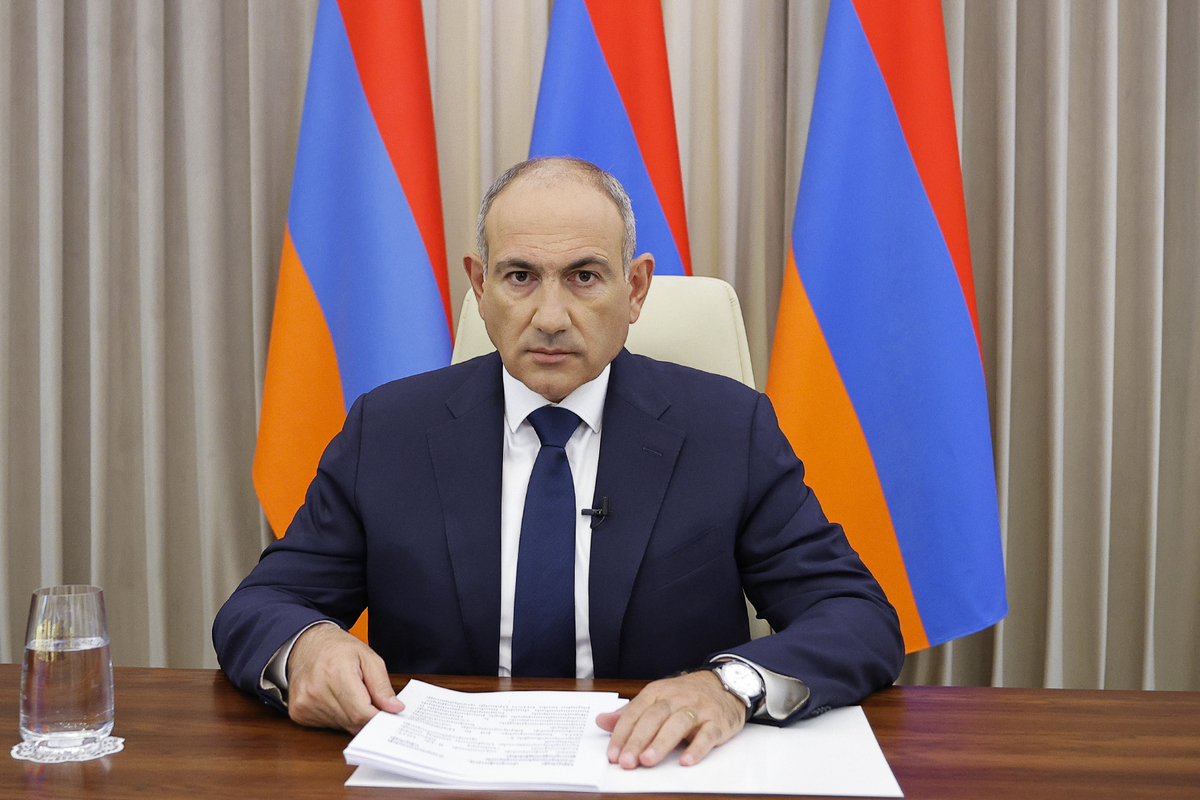

Dear people, dear citizens of the Republic of Armenia,
The summit hosted by US President Donald Trump at the White House on August 8, 2025, is a turning point.
In the presence of the US President, the President of Azerbaijan and myself, the Foreign Ministers initialed the “Agreement on the Establishment of Peace and Interstate Relations between the Republic of Armenia and the Republic of Azerbaijan,” as well as a joint application to the Organization for Security and Cooperation in Europe on the dissolution of the OSCE Minsk process and related structures.
We adopted the Joint Declaration of the President of the Republic of Azerbaijan and the Prime Minister of the Republic of Armenia on the results of the meeting held in Washington, D.C., the capital of the United States of America, which was also signed by President Trump.
The Declaration set out key agreements. The President of Azerbaijan and I acknowledged the need to continue further efforts to achieve the signing and final ratification of the Peace Agreement and stressed the importance of maintaining and strengthening peace between our two countries.
We reaffirmed the importance of unlocking communications between the two countries for domestic, bilateral and international transport, based on respect for the sovereignty, territorial integrity and jurisdiction of states, in order to promote peace, stability and prosperity in the region and its vicinity. These efforts will include unhindered communication between the main part of the Republic of Azerbaijan and the Nakhchivan Autonomous Republic through the territory of the Republic of Armenia, with the mutual benefits of international and domestic communication for the Republic of Armenia.
Note: opening up communications between the two countries for domestic, bilateral and international transport, based on respect for the sovereignty, territorial integrity and jurisdiction of states. Unobstructed communication between the main part of the Republic of Azerbaijan and the Nakhchivan Autonomous Republic through the territory of the Republic of Armenia, with mutual advantages in international and domestic communication for the Republic of Armenia.
The Declaration states that the Republic of Armenia will work with the United States of America and mutually agreed upon third parties to define the framework for the implementation of the Trump Route for International Peace and Prosperity (TRIPP) communication program in the territory of the Republic of Armenia. At the same time, our determination to take all measures in good faith to achieve this goal as quickly as possible was emphasized.
We also recognized with the President of Azerbaijan the need to chart a path for a bright future, not predetermined by the conflict of the past, in accordance with the Charter of the United Nations and the 1991 Alma-Ata Declaration. We declared that after a conflict that caused untold human suffering, conditions have finally been created for our peoples to begin good-neighborly relations based on the principles of the inviolability of international borders and the inadmissibility of the use of force for the purpose of acquiring territory. We noted that this reality, which is not subject to and should never be subject to revision, paves the way for closing the page of hostility between our two peoples. We resolutely renounced and ruled out any attempt for revenge, now or in the future.
Dear people,
What I said is no longer something new, and has been at the core of our most active public-political-expert discussions over the past 10 days. But now, in this message, I consider it necessary to make an assessment of what the above-mentioned and quoted means in practice, what the political meaning and significance of what happened is.
Dear people, dear citizens of the Republic of Armenia,
The above means that peace has been established between the Republic of Armenia and the Republic of Azerbaijan. Dear people, peace has been established between the Republic of Armenia and the Republic of Azerbaijan.
Of course, the role of US President Donald Trump and his administration in this matter is invaluable. This is the reason why we have decided with the President of Azerbaijan to submit a joint application to the international Nobel Committee to award Mr. Trump the Nobel Peace Prize.
But I want to return to us and record that after August 8, we live in a completely different, completely new South Caucasus, we live in a completely different, completely new Republic of Armenia and this fact must be realized. I say this because it is not easy to realize, because it is an unfamiliar situation and reality for us.
We, the citizens of the Third Republic, do not know what peace is, we do not know what it means to live in peace, to work in peace. It is an unfamiliar feeling for us, because from the first day of our independence we have lived in an atmosphere of conflict, in a situation of war or “neither war, nor peace”.
People have, of course, dreamed of peace, but on the other hand, those who used the word peace have often been judged and criticized for using that same word.
And so, peace is an unfamiliar consciousness and an unfamiliar reality for us, peace is an unfamiliar and thus alien life for us and please, let us not underestimate this reality. This reality means that we have to learn practically from scratch what it means to live peacefully, to know what peace means, what it is like, and what it looks like.
It is when you think about this that you understand that peace will have such a look and image, what look and image we will convey to it, what we will build and create, of course, with Azerbaijan, and not alone.
But it is also a fact that established peace requires daily care and concern, just as a newborn baby requires daily care and concern, and not only a newborn child, just as a newly built and newly inhabited house requires daily care and concern, just as a new and beloved car requires daily care.
Of course, the well-being of a child depends not only on his parents, but also on the state of the healthcare, educational, legal system, neighborhood, and other factors, the condition of the house depends not only on us, but also on the weather, utilities, whether there will be an earthquake or a storm or a flood, the condition of our car depends not only on us, but also on other road users, the work of the police and road builders.
But none of us has the right not to take maximum care of our children, justifying it with the lack of trust in the educational, healthcare, or legal system. Not taking care of our own home for any reason rules out well-being and family peace. The behavior of any erratic driver cannot be justified by the excuse that traffic is very chaotic these days.
This is also the same for the peace between Armenia and Azerbaijan, which was established on August 8 with the support of US President Donald Trump. And we must take daily care of that peace.
This is a new life and we must live our new life anew, according to the New Testament saying that new wine is not put into old wineskins, as it is said in the Testament: “otherwise the wineskins burst, and the wine is spilled, and the wineskins are ruined. But new wine is put into new wineskins, and both are preserved.”
Our life, everyday life, narrative, reality are so permeated with conflict and war that we must manage even the risk of a clash between our reality and peace. This is a delicate, extremely delicate socio-psychological, public-political, managerial-economic work that we must do together, each in our place, in our measure, but together, with everyone, with the people, with everyone.
Even the way we venerate and sanctify our martyrs, our way of relating to their memory, must change drop by drop, millimeter by millimeter, because peace must comfort parents who have lost children, widowed women, husbands who have lost wives, and children who have lost parents. Peace must enlighten the souls of our martyrs, because here is the Republic of Armenia, as an increasingly reputable participant in international life, a more independent, more sovereign, more self-confident state, this is the goal for which our brothers and sisters fell, and we must overcome the grief of their sacrifice with the joy of peace, because our Christian-apostolic faith tells us that they are not dead, but are here right now, above our heads and smiling at us, because the future of the Republic of Armenia has come, about which we reached an agreement in 2021 before the bodies of our martyrs had yet to freeze.
That future has come and that future is today, and with daily care for peace, we will strengthen, build, and flourish that future, which we should never look for in tomorrow, but should see in today.
We must leave in the past our most common question in our reality or the appeal that we use the most, “it will be okay” or the interrogative phrase “will it be okay?”, because “it will be okay” is being replaced by “it is okay,” expressed in peace.
Dear people,
As a result of the Washington agreements, the Republic of Armenia is being released of the blockade after more than 30 years of blockade, a result that I think could have been considered unimaginable in the not-so-distant past.
Various questions are being raised about how and with what regulations the communication channels between Armenia and Azerbaijan should be opened, that is, what the opening of the roads will look like, which is also essentially an unfamiliar phenomenon for us.
The text of the Washington Declaration fully answers this question: territorial integrity, sovereignty, jurisdiction, inviolability of borders. These are the principles within the framework of which the opening of roads between Armenia and Azerbaijan should take place.
This means that in the areas of restoration and construction of communication routes, the state border between Armenia and Azerbaijan must first be clarified, demarcated and delimited. And the border already has its mandatory attributes: border guards, customs posts, and so on. Another thing is that even at the time of the presentation of the “Crossroads of Peace” project and to this day, we have expressed our readiness to simplify border crossings, and this is the issue that should become the subject of detailed discussion in the near future.
And does this not open the door to new concerns for us? Definitely not, because the third point of the Washington Declaration also enshrines the principle of reciprocity, and this is a guarantee that we will find balanced and mutually acceptable solutions with Azerbaijan. These agreements at the global level, as I already mentioned, are recorded in the Washington Declaration.
The above-mentioned principles of unblocking Aremenia are further strengthened by the bilateral memorandum on the “Crossroads of Peace” project that President Trump and I signed on August 8, in a bilateral format. That memorandum records the U.S. interest in the Armenian Government’s “Crossroads of Peace” project and the United States’ desire to invest in it, within the framework of the principles of Armenia’s territorial integrity, sovereignty, and inviolability of its borders.
The “Trump Route for International Peace and Prosperity” program stems from the “Crossroads of Peace” project and the mentioned memorandum, which promises major investments, financial benefits, economic development, and a further increase in the role of the Republic of Armenia.
As a result of the implementation of this program, international railways, highways, pipelines, and power lines will pass through the territory of our country. This program becomes one of the important components of the “Crossroads of Peace” project. With all this, Armenia becomes a Crossroads of Peace.
I am pleased that the concerns of a number of our regional partners regarding this program have now been allayed, although we will continue to work with them in an atmosphere of partnership and transparency.
Dear people, dear citizens,
In the last 10 days, there have been many questions about what happened or what will happen to the more than 200 square kilometers of occupied territories of Armenia when Armenia and Azerbaijan recognize each other's territorial integrity.
With the Washington Declaration and the initialed agreement, Armenia and Azerbaijan recognized the inviolability and territorial integrity of each other's borders on the basis of the Alma-Ata Declaration of 1991. This means that the parties accept that today the territory of the Republic of Armenia is exactly identical to the territory of the Armenian SSR and today the territory of the Republic of Azerbaijan is exactly identical to the territory of the Azerbaijani SSR.
This reality must be resolved in the demarcation process. But the logic of peace, the new logic is that when we say that there are sovereign territories of Armenia that are under Azerbaijani control today, we must also say that there are sovereign territories of Azerbaijan that are under our control, and this mutual issue must be resolved in the demarcation process.
Dear people, dear citizens: I know that this emphasis, this kind of emphasis may sound strange to our ears, and may perhaps strike a nerve, but this is the new logic of peace, this is the new wine that we must pour into new wineskins. We must look at our reality and the region as a whole and with a new perspective, because this is the care that we must take for peace.
Dear people, dear citizens,
On August 11, the initialed text of the “Agreement on the Establishment of Peace and Interstate Relations between the Republic of Armenia and the Republic of Azerbaijan” was published, and the conspiracy theories that had been formed around it for several years simply collapsed like a house of cards as a result of that publication. Our citizens have accepted the initialed text of the agreement with satisfaction. Of course, there are also substantive criticisms.
The first of these concerns to the failure to include the issue of our compatriots detained in Azerbaijan in the text of the Peace Agreement.
Negotiations on the text of the Peace Agreement began in the spring of 2022, and we have made serious efforts to include this issue in the Agreement. But as the negotiations dragged on, we realized that including the issue of our compatriots held in captivity in Azerbaijan in the text of the Agreement could be interpreted as meaning that their return is preconditioned by the signing and ratification of the Agreement, and we were not and are not guided by that assumption. And as a result of not being guided by that assumption, 58 of our compatriots have returned from captivity since the start of negotiations on the text of the Peace Agreement, and if the issue had been left to the Peace Agreement, this might not have happened and most likely would not have happened. Now, tremendous diplomatic work is being done to resolve this issue as quickly as possible, which you have recently witnessed.
The second substantive criticism is that the initialed text of the Peace Agreement closes the Karabakh issue.
In response to this criticism, I must remind you that back in March 2025, I made a statement on this occasion from the high rostrum of the National Assembly, and later, I addressed the people with a strange appeal for the Prime Minister. I said that we should not continue the Karabakh movement, I said that I would lead Armenia with this logic of not continuing the Karabakh movement, and if the people do not agree with this logic, I urged them to carry out a revolution.
The people, that is, you, dear citizens, did not carry out a revolution because you understood, like me, that peace is impossible without closing the Karabakh issue, that the Karabakh issue was indeed simply used by some forces as a tool to prevent Armenia’s independence, sovereignty, the establishment and development of statehood.
As for our compatriots displaced from Karabakh, I have publicly stated more than once that I do not consider their ideas about return to be realistic. And in general, I consider the discussion by both sides of the topic of return of those who have become refugees since the start of the conflict in Armenia and Azerbaijan to be a dangerous factor that damages the peace established between Armenia and Azerbaijan. Bilateral attempts to discuss these topics will not benefit the refugees themselves, but will become a new source of tension between the states. I have also shared this understanding with official Baku. And I note that yes, it is a dangerous and harmful topic for the newly born peace.
My perception is that all those people who disagree with this strategy, willy-nilly, find themselves in the logic of reviving the conflict. Many conflicts, including Karabakh, began with the raising of humanitarian, cultural, seemingly innocent and simple issues, but we remember and, unfortunately, have all experienced on our own skin what they turned into.
Our vision of the future of our compatriots displaced from Karabakh is as follows: with our and the international community’s support, they should settle in the Republic of Armenia and live, create, and accomplish here as full citizens of the Republic of Armenia.
Dear people, dear citizens of the Republic of Armenia,
The initialing and publication of the text of the Peace Agreement between Armenia and Azerbaijan, the Washington Summit, its results, the adopted Declaration, and the peace established as a result have many layers that cannot be explained in one message. On August 8 and 9, I gave an extensive interview from Washington itself, in Washington, and then answered questions from the Armenian media in the style of a press conference, but this clearly did not suffice, because as I said, the reality of peace is slow in being perceived, it brings up new perspectives, new nuances, new and old questions, which, rest assured, I will not miss any opportunity to address in detail in the near future, I will create those opportunities myself.
But the key point of my today’s message is that Peace has come, it is a dignified, state-centered, people-centered, region-centered peace, and I am more than excited by that fact.
In the 34-year history of our state, we have usually viewed all foreign policy and diplomatic milestones in the context of victories, defeats and resolutions. Every time, in our attempts to understand any diplomatic or foreign policy relationship, we have tried to assess whether it is a victory or a defeat.
Dear people, I must dare to say that this is a misunderstanding of reality, because if you are between the choice of victory and defeat, that is, your choice is either victory or defeat, your defeat is inevitable, because you can win once, twice, three times, even five or ten times, but in the end, your defeat is inevitable, and you will inevitably lose, because it is impossible to win endlessly.
Another thing is the formula of mutual consent, which promises success to all parties that agree. Accordingly, the Washington agreements are a success for both Armenia, Azerbaijan, and the United States. This is a peace of mutual consent and mutual benefit, and this formula makes peace reliable, stable and lasting.
It makes our state, our independence and sovereignty reliable, stable and lasting, it makes our prosperity and happiness realistic, which is the strategy of all our strategies, the dream of all dreams.
This peace is the triumph of the ideology of the Real Armenia, an ideology that is unique in our history in that it was not formulated by the elites and imposed on the people, but was formed by the people, formulated by the representatives of the people and is brought to life by the people, by everyone and all.
The Real Armenia in a peaceful region and in the real world. This is the formula for the permanence of our statehood.
Dear people, dear citizens of the Republic of Armenia,
Peace has been established, and our task is to take care of it and make it more and more institutional over time.
Glory to the martyrs and long live the Republic of Armenia.
Long live independence, long live sovereignty, long live statehood.
And long live us and our children, who live and will live in a Free and Happy Armenia. Thank you.