Statements and messages of the Prime Minister of RA
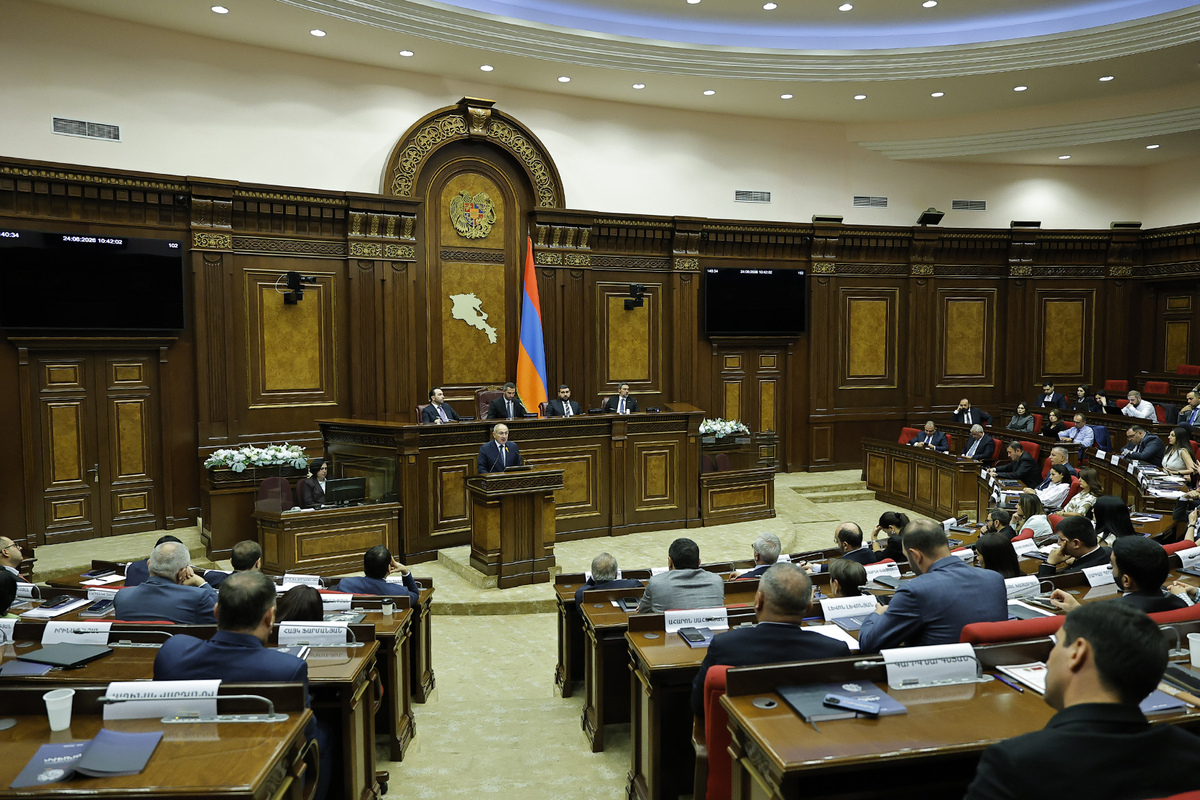
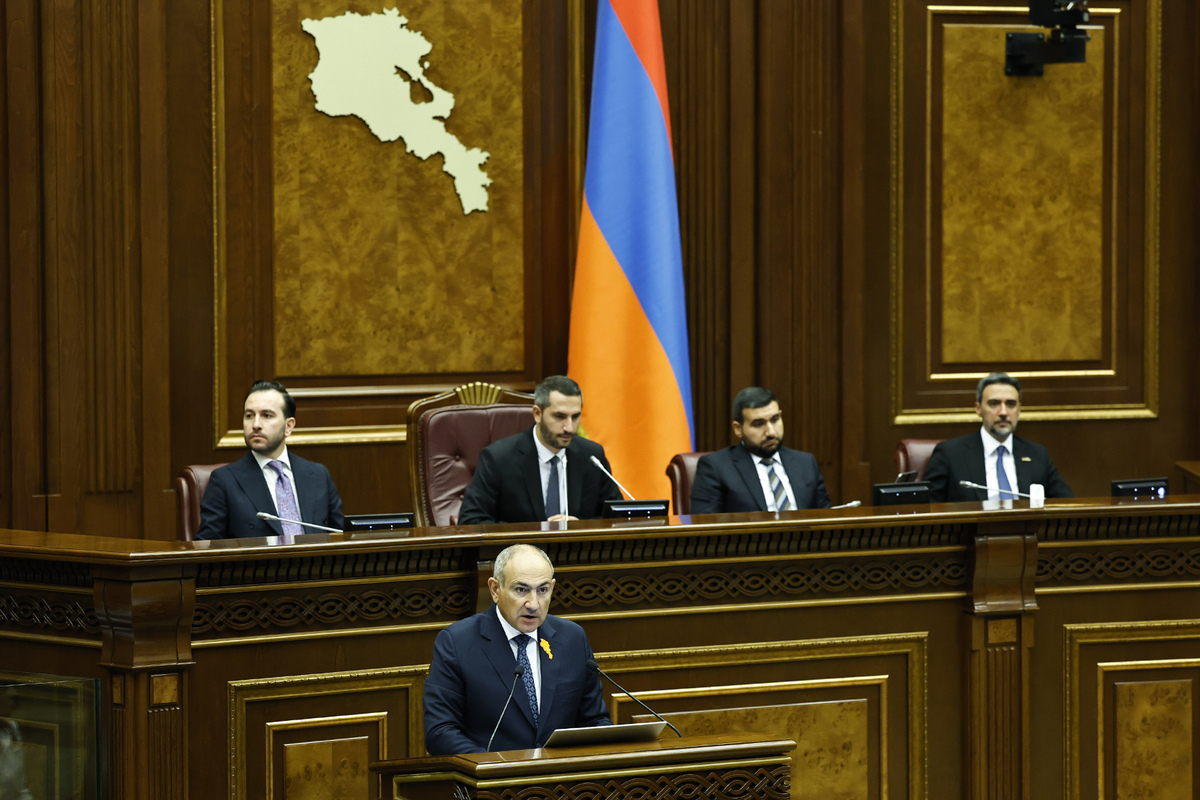
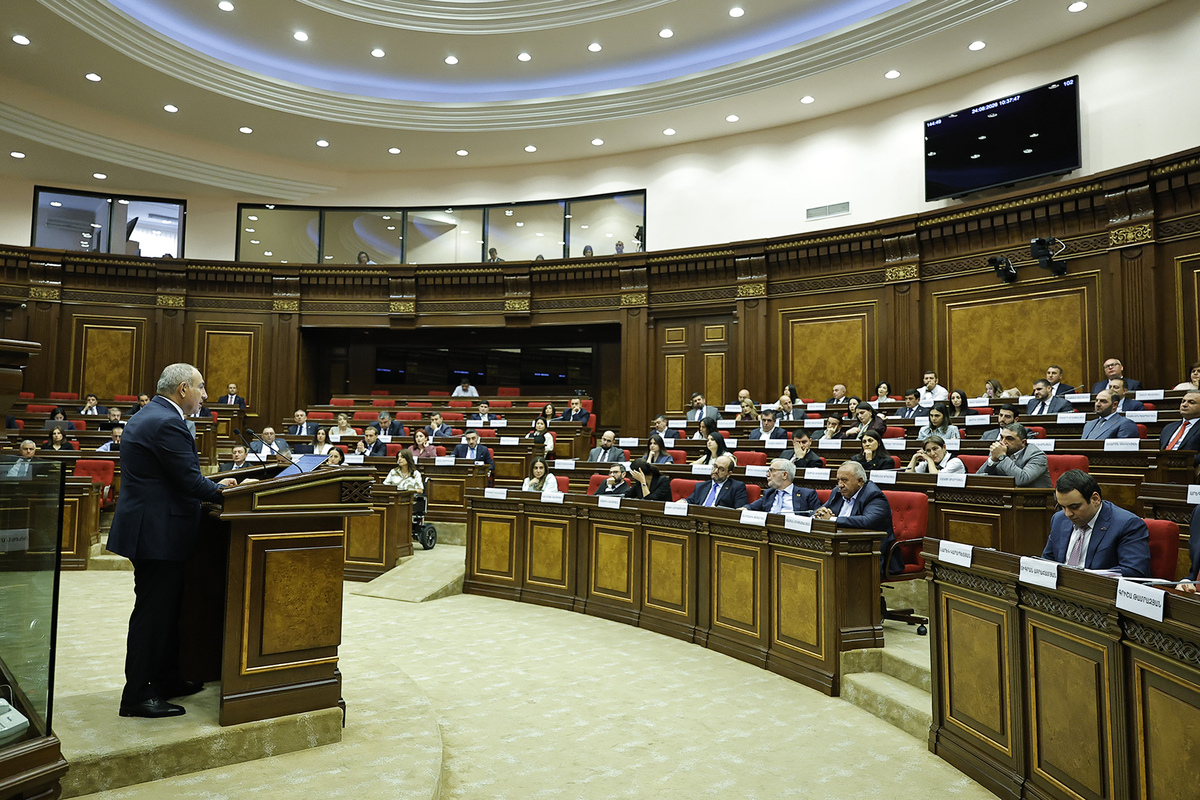
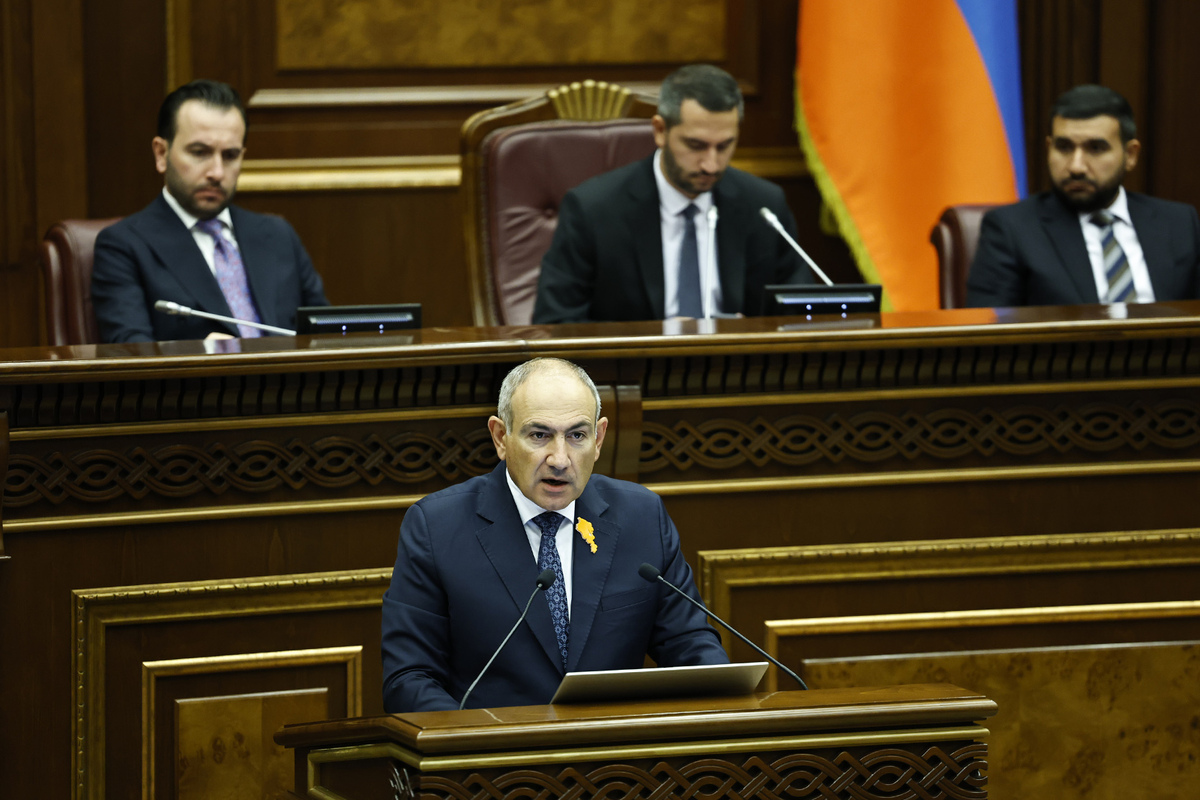
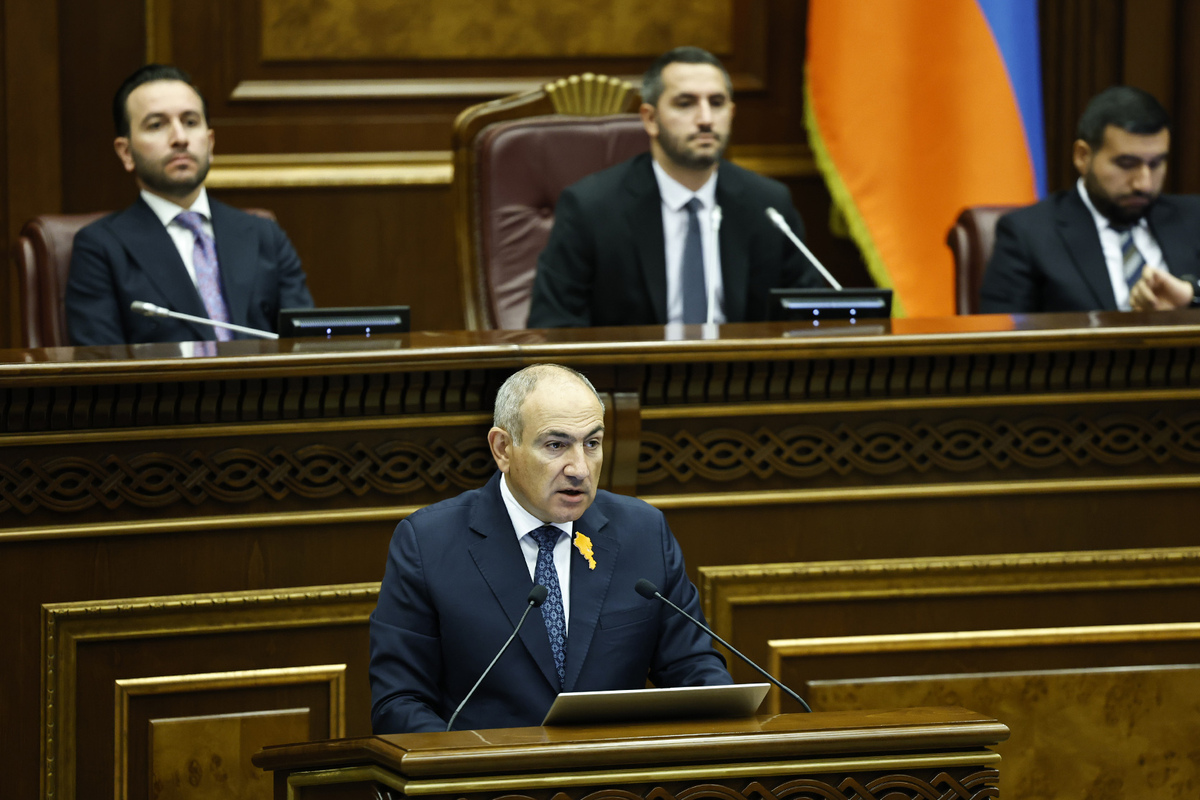
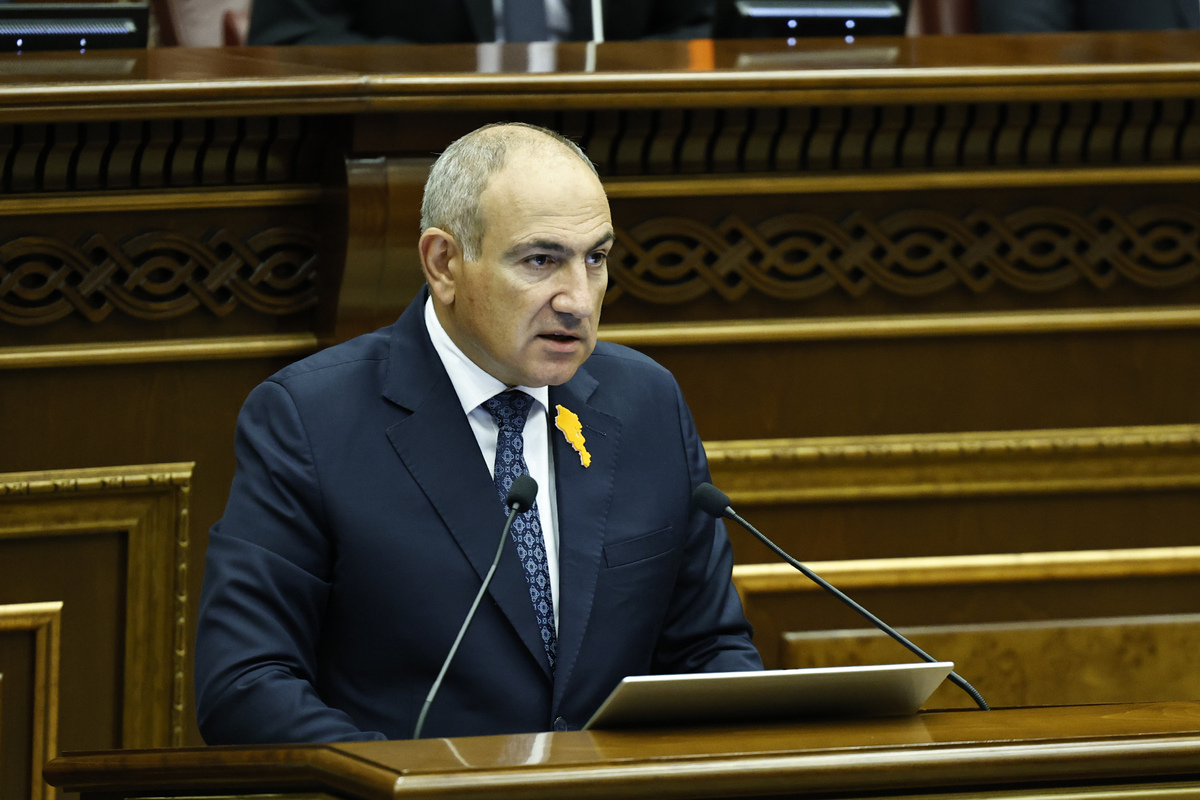
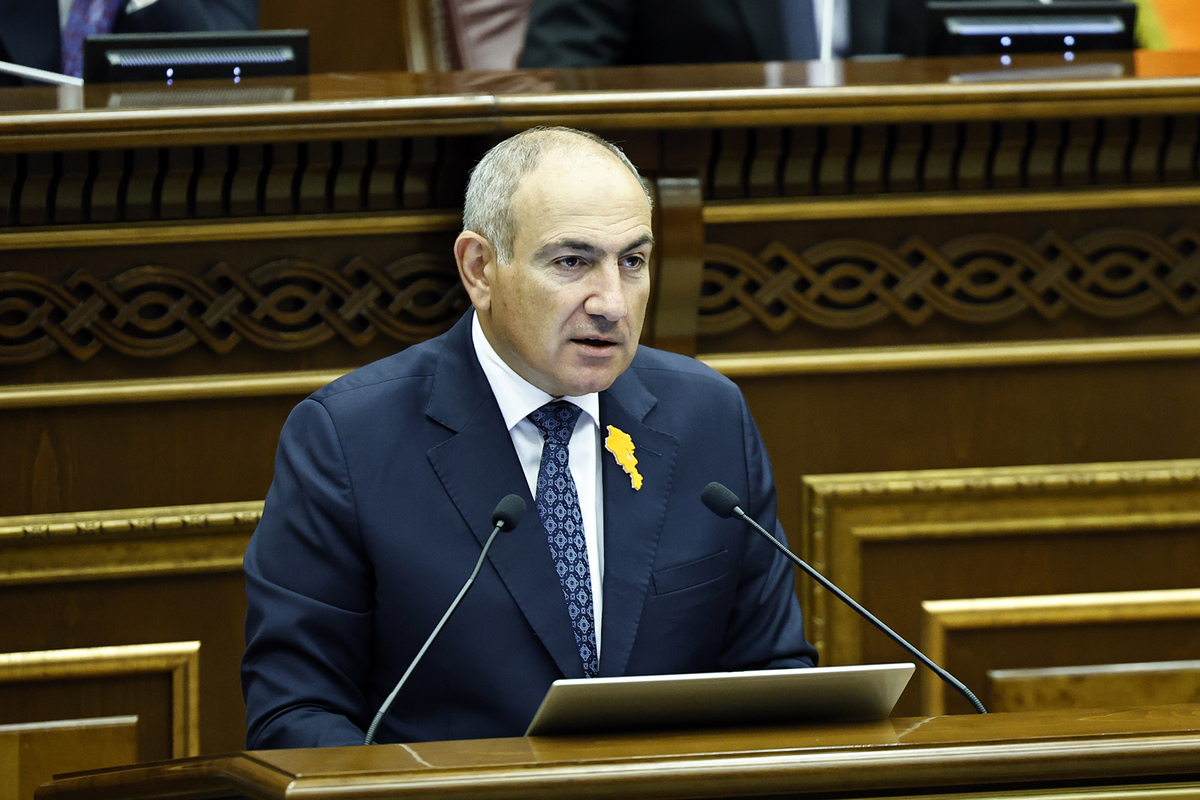
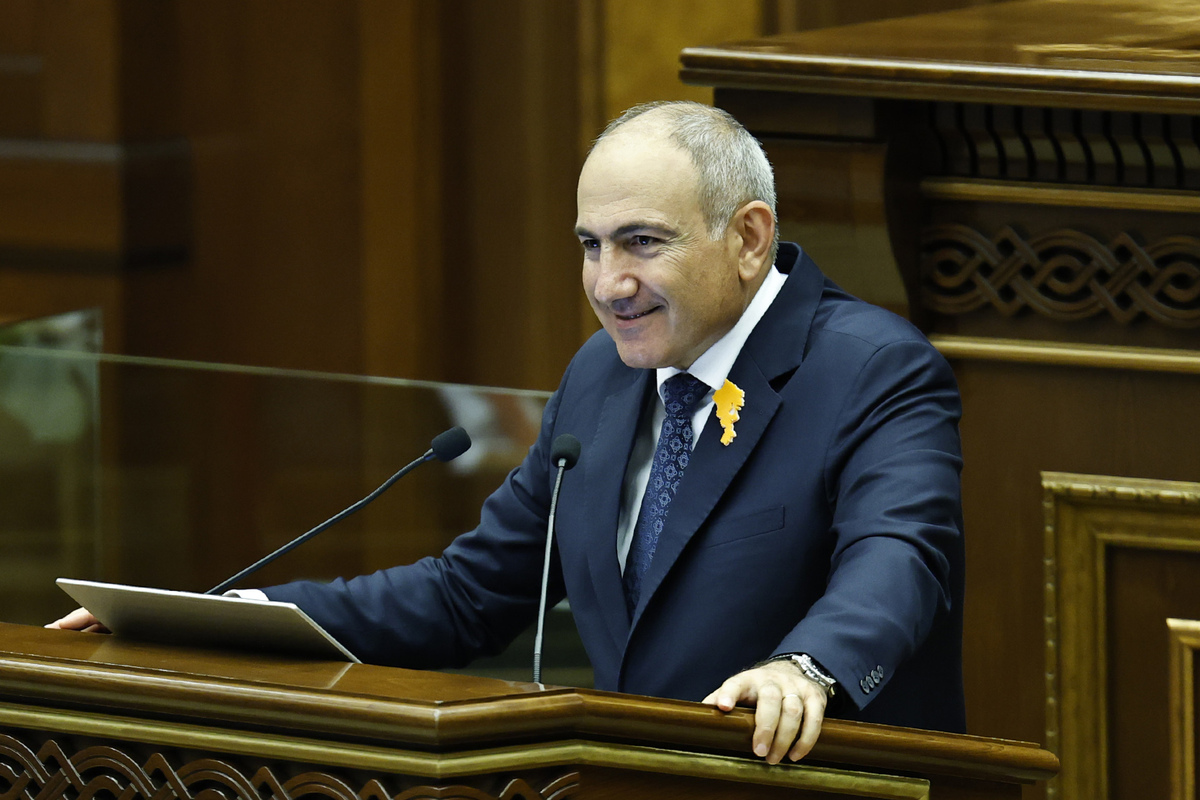
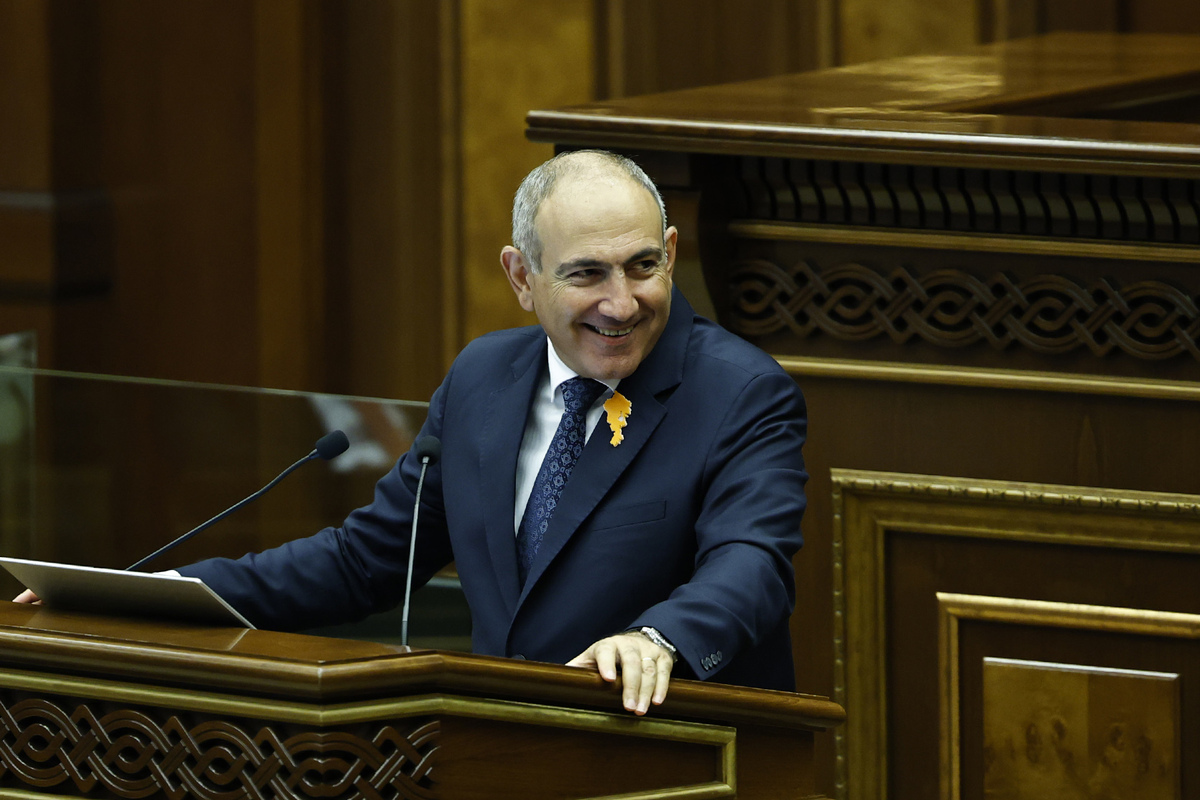
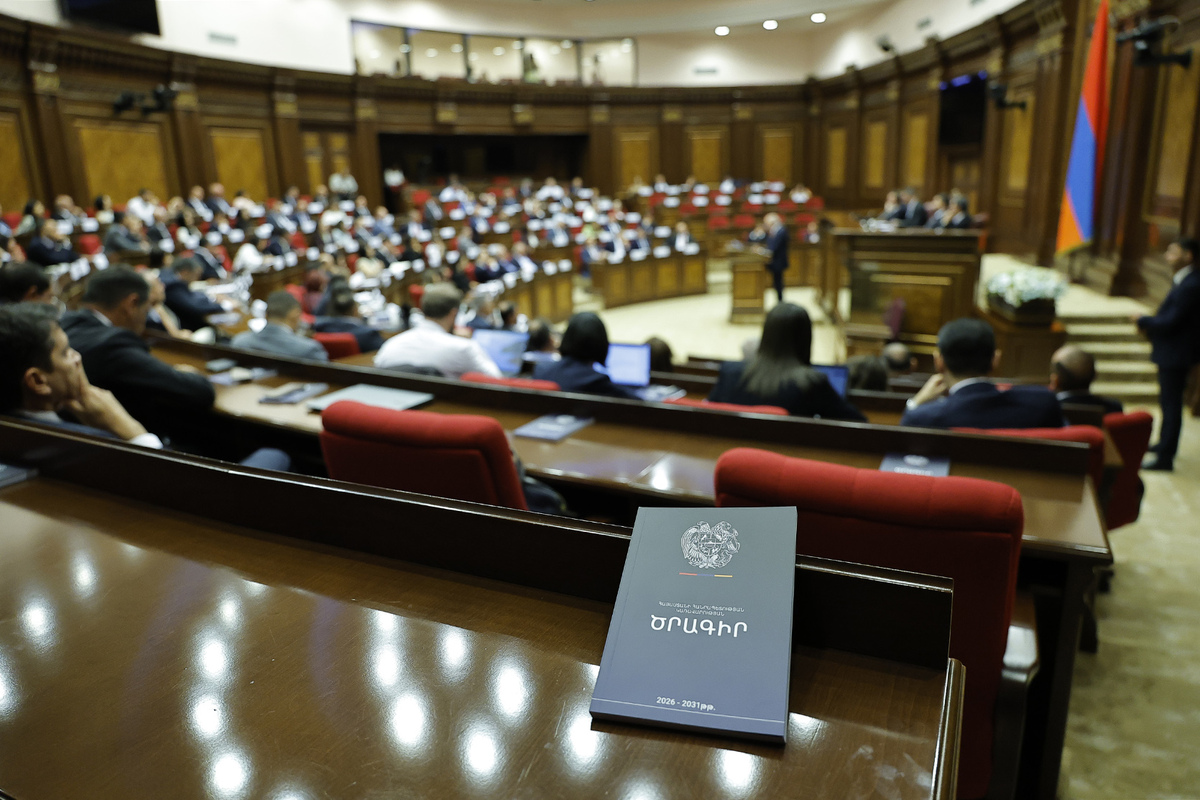
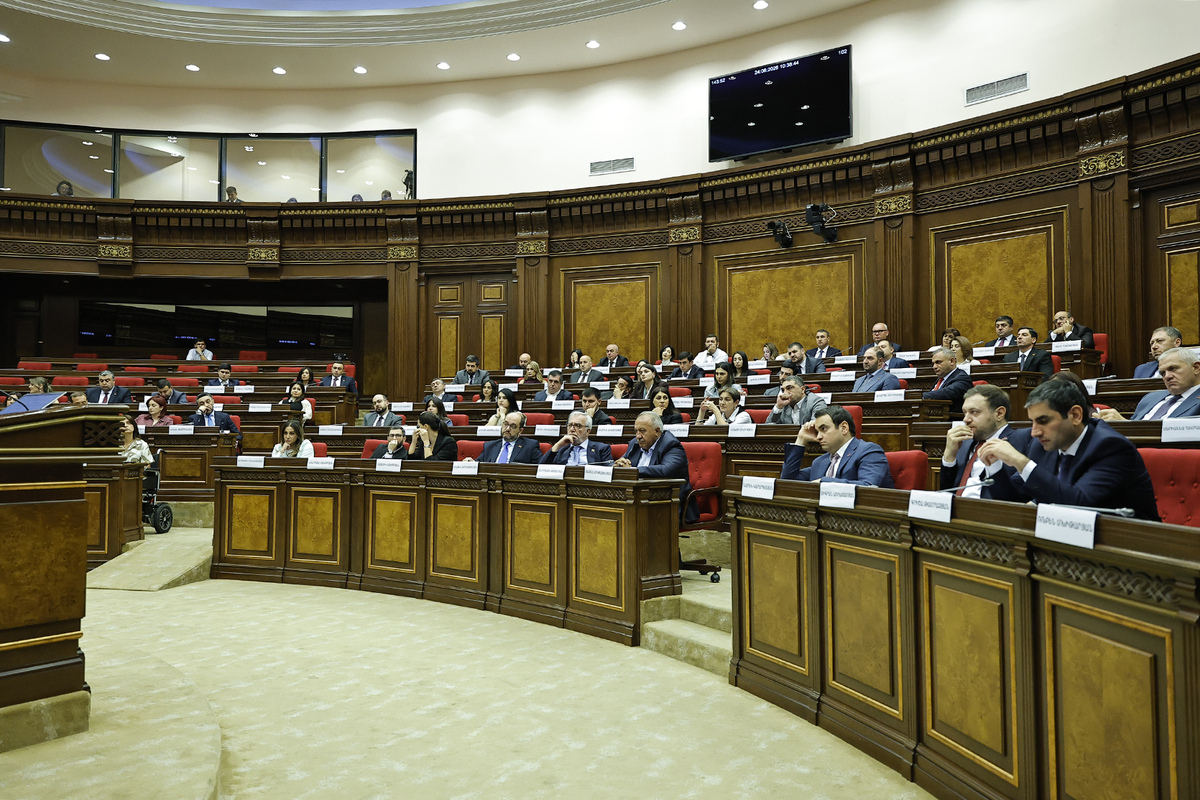
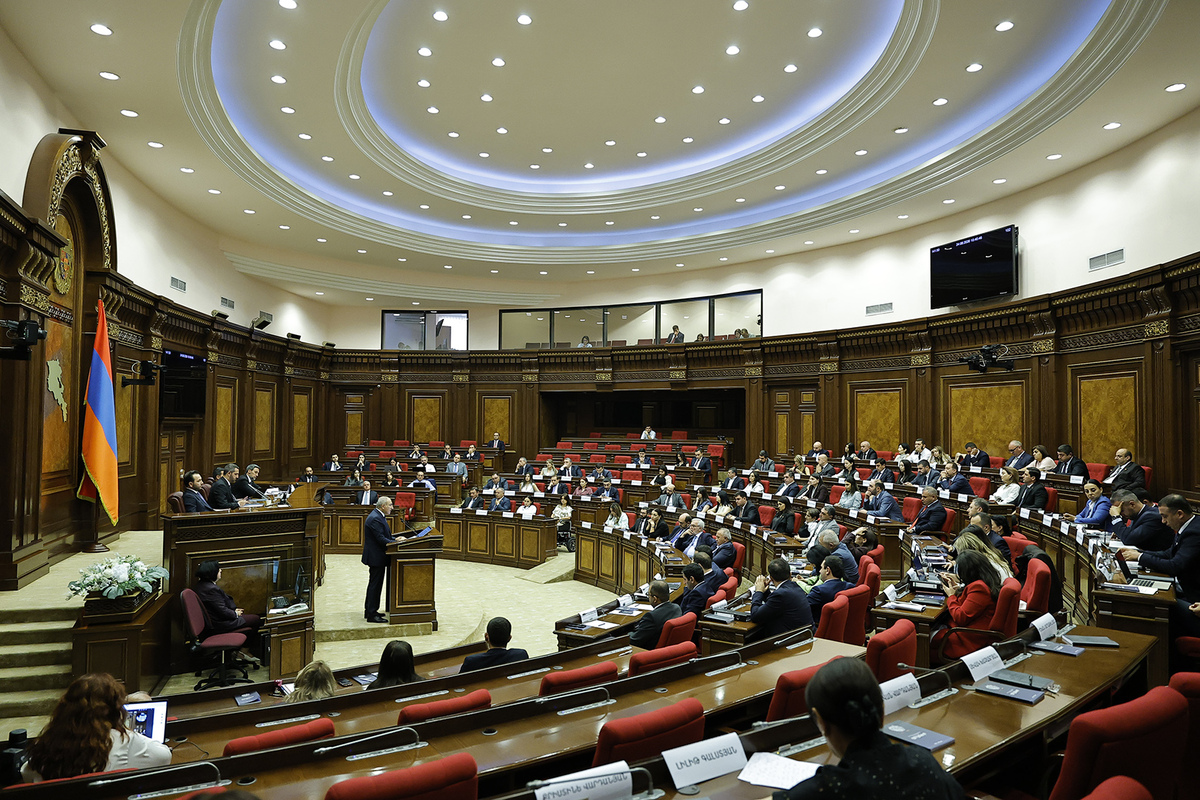
Prime Minister Nikol Pashinyan’s speech at the discussion of the Government's 2026-2031 Program at the National Assembly
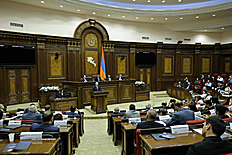 1670x1113px - 923 Kb
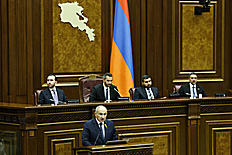 1670x1113px - 635 Kb
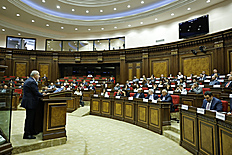 1670x1113px - 947 Kb
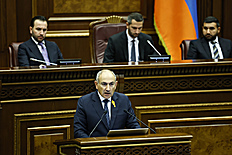 1670x1113px - 554 Kb
 1670x1113px - 545 Kb
 1670x1113px - 546 Kb
 1670x1113px - 596 Kb
 1670x1113px - 605 Kb
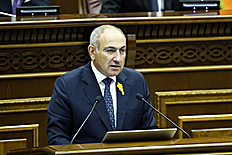 1670x1113px - 620 Kb
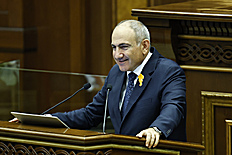 1670x1113px - 546 Kb
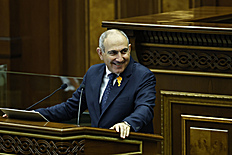 1670x1113px - 523 Kb
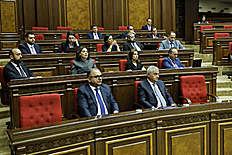 1670x1113px - 973 Kb
 1670x1113px - 655 Kb
 1670x1113px - 967 Kb
 1670x1113px - 1007 Kb


more 12 photos
Honorable President of the National Assembly,
Honorable Vice Presidents,
Honorable Cabinet members,
Dear People,
On June 7, 2026, the people of the Republic of Armenia voted in favor of the ideology of Real Armenia. This election result is historic because it redefines the functional significance of the Republic of Armenia. The declaration of independence of the Republic of Armenia in 1990 was based on the philosophy that we need the state to restore historical justice, and this perception was reflected in the Karabakh movement.
The ideology of the Real Armenia states that the only operational significance of the Republic of Armenia is to ensure peace, freedom, security, and prosperity for its citizens in its internationally recognized territory of 29,743 square kilometers, to create an environment for the happiness of citizens, as it is customary to say in modern life, an ecosystem, to preserve and develop the identity of the people. It is precisely such a state and vision that the citizens of the Republic of Armenia voted for on June 7, 2026, and it is this vision that we call the Fourth Republic.
And thus we can record that the Fourth Republic has been founded, the Fourth Republic is a reality. The fact that the the state of peaceful life is the expectation of our people becomes obvious to me with a retrospective analysis of the history of the Third Republic. In 2021, for example, in conditions when the opposition was developing the thesis “the defeated government must leave”, the people gave a vote of confidence to the “Civil Contract” party. Meanwhile, since 1994, none of the former presidents who have acted with the thesis of victory in the war or as a victorious leader have received the mandate of the people’s trust in the elections and have been forced to seize power through fraud, the use of force and/or murders and intimidation. It was such an attempt that ended with a revolution in 2018. All this is a sign of one thing: our people realized much earlier that the Karabakh conflict is a trap, and without facing this fact, it is impossible to have a truly independent state where a free, secure and prosperous life can be achieved.
However, as has often happened in our history, these aspirations of the people have not received political formulation, because our historical tradition is to impose ideas on the people from the spiritual and political elites, and not to derive political ideas and views from the people's desires and aspirations. And this tradition continued until the popular, non-violent, velvet revolution of 2018. The key result of the revolution was to increase the influence of the people on the formation of policies and political concepts. This phenomenon first found intuitive expressions, and then it took on an increasingly stable and systematic appearance, and what is happening here today is precisely its manifestation.
And therefore, it is a great honor for me to present the Government's 2026-2031 Program from the National Assembly, with which we are entering the Fourth Republic. It is a great honor for me to present the Government's Program, which is based on the ideology of the Real Armenia. It is a great honor for me to reaffirm, on this occasion of presenting the Government's Program, my commitment, that of the Government and the ruling majority, to the agenda of the People's, Non-violent, Velvet Revolution of 2018, which should reach its completion in 2026-2031.
And what is the agenda of the revolution? The establishment of an environment of justice, the exclusion of impunity and oligarchy, the return of illegally acquired property to the state and the people, the disclosure of crimes of wide public resonance and calling the guilty to account, the establishment of a state free from corruption, the development of democratic institutions, transparent and participatory governance. In all these areas, significant developments have taken place in Armenia since 2018, but, nevertheless, this agenda has remained incomplete for two main reasons. One reason is that the revolutionary team that has taken over the leadership of Armenia since the COVID pandemic has had to deal with crisis management, and most of its attention and energy have been focused on crisis agendas.
The second and no less important reason is the external and internal clandestine influences on the institutions of our country and their activities. But despite all this, we have been able to implement institutional reforms, which give confidence that in the end, the unfinished agenda of the revolution will be completed, because the implementation of that agenda is underway in full swing, it is underway today.
The system for the return of illegally acquired property is already fully functioning. In parallel, with the system for the protection of state and community interests, about 304 billion 182 million drams of property and funds have already been returned to the state. In addition, the Republic of Armenia wants a share in the Zangezur Copper and Molybdenum Combine, the Amulsar project, and Viva Armenia. Thousands of hectares of land, which were de jure or de facto illegally privatized, have been returned to communities and the Government, including through negotiations. Not to mention the fact that the state budget revenues of the Republic of Armenia have more than doubled compared to 2017, and in addition to economic growth, the reduction of the shadow economy plays a significant role in these revenues, where the huge funds generated before the revolution flowed into the pockets of the famous people we all know instead of the state budget.
The Government’s 2026–2031 Program stipulates the imperative of returning approximately $2 billion in illegally acquired property to the state by 2031, and the processes taking place around the ENA, Ararat Cement, and the Tsaghkadzor cable car provide confidence that this issue will eventually be resolved, encompassing a larger range of illegally acquired property. This process, by the way, is important not only for eliminating the consequences of corruption in the previous period, but also for preventing corruption and realizing the vision of a corruption-free state. Any official in office today, whether a member of the Government or a deputy, a community leader, or a director of an institution, who will have corruption temptations before their eyes and give in those temptations, must be sure that no illegally acquired property will remain in their possession or that of their family members.
In recent years, the Government has made sufficient efforts for reforming the judicial system and institutional development, and we can expect that the crimes that have distorted the development of Armenia will be revealed and the guilty will be punished, receive a deserved punishment, and some processes, including the decisions of the Human Rights Court, inspire hope that everything will be just that way. The greatest risk of aborting this vital process, I want to state my impression directly, is related to the functioning of the judicial system. The judicial system of Armenia largely continues to be a protector of the interests and concerns of the elites and mainly the former elites. The reason for this is not only that the family ties of the former elites are widely active in the judicial system, here we also have an institutional problem. The judicial system of Armenia is castrated and does not have a full organic connection with the only source and bearer of power - the people.
In Armenia, the only source of power is the people, but there are systems for generating judicial power that are so removed from the people that, in essence, they have nothing to do with them. In particular, the election of members of the Supreme Judicial Council by judges raises questions, because a simple question arises: from whom does this power of judges to elect high-ranking officials originate? In Armenia, any power can only originate from the people, and power that does not originate from the people at least raises questions. This strange structure, which I spoke about, is still in operation for a simple reason. It is under constitutional protection, and there is only one way to establish the full legitimacy of power in the judicial system, too: the adoption of a new Constitution, which also needs to resolve the issue of introducing the institution of a jurors. As a result of these changes, the opportunities for corrupt circles to evade justice and fairness will be significantly reduced, if not almost eliminated. This is the reason why those same circles spare no effort and energy to demonize the agenda of adopting the new Constitution, to present it as a foreign, or rather, Azerbaijani agenda.
First of all, I must state that the agenda for adopting the new Constitution is a purely Armenian agenda, not only because we adopted that agenda and announced it back in February 2020, but also now. The citizens of the Republic of Armenia, by voting for the “Civil Contract” party, also voted for that agenda, because the adoption of the new Constitution is one of the important provisions of the “Civil Contract” party’s pre-election program, on the grounds that the people of Armenia have the right to finally have a Constitution adopted legitimately and freely and to freely establish for themselves a legal order and rules of life. On the other hand, it is impossible to deny that Azerbaijan is very actively raising and even instrumentalizing the topic of constitutional reforms, and this is a well-known fact.
But if this means that the issue of the new Constitution is an Azerbaijani agenda, as some opposition circles claim, let's go back and look at the history of the Third Republic. By the same logic, since 1994, only Azerbaijan has continuously raised the topic of the return of the seven regions, that is, there has been no initiative related to it in Armenia. And, as the published documents on the negotiation of the Karabakh issue testify, all the previous authorities of Armenia, that is, the political leaders, defenders or representatives of the two current opposition factions, have actively negotiated on this issue. Why did they negotiate? Why did they keep Armenia on the Azerbaijani agenda for 24 years? Why were they guided by the Azerbaijani agenda? Is it because they were led by Azerbaijan or were representatives of Azerbaijan. Especially since some of them were born and raised in Azerbaijan. I make these descriptions to show what absurd conclusions the logic of a number of our oppositionists can lead to.
As for the text of the new Constitution, we will publish it in the coming months, and as I said, there should be no reference to the 1990 Declaration of Independence in the new Constitution. Why? For a simple reason: we have announced the need and decision not to continue the Karabakh movement, to end it, we have made that decision and the people have approved that decision. To refer to the Declaration of Independence in the new Constitution would mean continuing the Karabakh movement, would mean returning to the logic of the conflict. And we cannot do this, especially after the 2026 national elections, where our people voted for peace, and the peace agenda is now a national agenda.
Accordingly, the maintenance, strengthening and institutionalization of the peace established with Azerbaijan is a priority agenda for the Government. One of the upcoming important tasks in this direction is the implementation of the TRIPP project on the ground, which stems from the Government’s “Crossroads of Peace” project, and which is one of the important practical outcomes of the Washington Peace Summit of August 8, 2025. The TRIPP project, which will be implemented on the territory of the Republic of Armenia and based on the principles of territorial integrity, sovereignty and jurisdiction of the Republic of Armenia, will put an end to the blockade of Armenia. The blockade of Armenia, by the way, has already been partially overcome, because since November 2025, the Azerbaijani railway through the territory of Georgia has been open for imports to and exports from Armenia, and the Akhalkalaki-Kars railway, as you know, was opened for exports from and imports to Armenia in May. Now, Turkish roads through the territory of Georgia are also being opened for Armenian cars. The TRIPP project, however, will not only open a direct Armenia-Azerbaijan railway connection, including the connection between the western regions of Azerbaijan and the Nakhchivan Autonomous Republic through the territory of Armenia, as well as the railway connection of the northern regions of Armenia with the Syunik region through the territory of Nakhchivan, but will also integrate Armenia into the international railway network.
I would like to emphasize that the implementation of the project will also open a railway connection between the Persian Gulf and the Black Sea through the territory of Iran, Nakhchivan, Armenia and Georgia, which is an epoch-making change for Iran, Azerbaijan, Armenia and Georgia. Thus, Armenia will receive a railway connection with the Islamic Republic of Iran. I draw attention to the fact that the Persian Gulf-Black Sea railway has no direct connection with TRIPP, that is, it is not part of that project, its reopening will become one of the important related results of regional de-blockade. As for the TRIPP railway infrastructure itself, it is obvious that it will pass along the Nrnadzor-Agarak route, along the southern border of Armenia, along the banks of the Araks - the route of the railway known to us all that existed in Soviet times. This railway will connect Armenia with Russia and Central Asia through the territory of Azerbaijan, and it is understandable that it will carry enormous cargo transportation, especially from east to west. These cargoes will inevitably pass through TRIPP, the Nrnadzor-Agarak railway.
It is clear that cargo from Agarak will enter Nakhchivan, and this is where a situation arises for us, the management of which is of significant importance for Armenia. And this situation is as follows: in Soviet times, the railway from Nakhchivan entered Armenia through the settlement of Yeraskh in Ararat province and continued to the settlement of Akhurik in Shirak province, and then entered Turkey. And now we see that international investors, being excited by the TRIPP project and having a great appetite for investments, are looking for ways to bypass the Yeraskh-Akhurik railway section. They are looking for a scheme so that after cargo enters Nakhchivan via the Nrnadzor-Agarak railway, it continues its journey westward, not through the Armenian railway, but bypassing the Armenian railway. This is a big problem for us, because in such a scenario, Armenia loses large revenues, investments, potential jobs, and development opportunities. And why do investors, freight forwarders, sellers and buyers of goods want to avoid the Yeraskh-Akhurik railway? For a simple reason: that section of the railway, although fully owned by Armenia, is under the management of Russian Railways. And the complicated relations between Russia and the West, the sanctions applied to Russia force international investors, freight forwarders and trade participants to avoid it, consider it a risk and not take risks. In other words, they consider that by working with such infrastructures, they are taking risks, especially if we take into account that the largest customers of freight transportation under TRIPP will be those countries that have imposed sanctions against Russia.
It is clear that Armenia has no connection and influence in the issue of sanctions imposed against Russia. It is clear that we also have no problem with the fact that the Armenian railway is under the management of Russian railways. This has not been a problem for us, and we have never addressed this topic. Moreover, I want to repeat that the railway is the property of Armenia and is only under the management of Russian railways, and we have no problem with this fact. We have the greatest respect for the Russian Federation and its interests, but due to the fact that the Armenian railway is under Russian management, we now face the danger of losing this historic opportunity to integrate Armenia into the international railway network.
We cannot afford to lose this historic opportunity. This is why we ask our partners in the Russian Federation to show flexibility and sell the concession rights to a third country acceptable to Armenia and Russia, I repeat, a third country acceptable to Armenia and Russia. At the same time, I draw your attention to the fact that under these circumstances, the construction of the Kars-Dilucu, that is, the Kars-Nakhchivan railway, has become more active on the territory of Türkiye. It is clear that we cannot prohibit or inhibit the construction of this railway and we must face the fact that the Yeraskh-Akhurik railway must compete with the Dilucu-Kars railway, and for this we must bring Yeraskh-Akhurik to a competitive position as soon as possible and further ensure high quality of services and competitive prices of the railway.
And it is the realization of the importance of all this that has led to the following formulation of the Government's program being discussed, which you can find in the fourth section of the program. I quote: “The railway management under concession rights will be revised in a way that does not hinder the implementation of the historic opportunity that has been created for the Republic of Armenia to integrate into the international transport system.” We will continue to work in this direction and I once again ask our Russian partners to reach an amicable solution to this issue as soon as possible.
Returning to the TRIPP project, I would like to emphasize that it will include not only railways, but also pipelines, roads, cables, and power lines. It is highly likely that power lines will be the first infrastructure launched under TRIPP, because firstly, it is technically relatively easy to complete quickly, and secondly, the growing global demand for electricity forces us to pay more attention to projects for exporting electricity from the region.
Currently, the framework agreement on strategic cooperation between Armenia and the United States on the TRIPP project is in the ratification stage. The work on establishing the TRIPP Development Company is in the final stage. Let me remind you that Armenia will have a 26% share in this company, and the United States will have a 74% share. This formula will be in effect for at least 49 years, and after that period, if extended by mutual agreement of the parties, for another 50 years, where Armenia's share will become 49%, and the United States' share will become 51%, without any additional financial or other investment from Armenia.
The project, as I said, will be implemented within the framework of the territorial integrity, sovereignty, and jurisdiction of the Republic of Armenia. And I would like to emphasize that TRIPP does not imply any foreign military and/or armed presence. I would also like to emphasize that before TRIPP, we never had a 100-year project or perspective before us. This is a very important circumstance. We have never had a program, a project that opens up a 100-year perspective before us, not to mention with the world's number one superpower. And this is a historic opportunity for both Armenia and the region. The implementation of the TRIPP project will change the situation and atmosphere in our region, making peace beneficial for regional countries not only in the socio-psychological and political sense of the word, but also in the financial and economic sense. This is a very significant guarantee of stability and peace in the modern unstable world, and it is difficult to imagine a more reliable guarantee in our time.
As for the signing of the peace agreement with Azerbaijan, which was initialed in Washington on August 8, 2025, this issue remains among the priorities of our agenda, and we will continue to work with Azerbaijan in this direction. As I had the opportunity to say, the release and return to Armenia of our compatriots imprisoned in Azerbaijan has never been and will not be off our working agenda until the issue is resolved.
Of course, work will continue on the demarcation of the Armenia-Azerbaijan border. I am convinced that exports from Armenia to Azerbaijan will soon begin in parallel with imports from Azerbaijan to Armenia. The launch and development of trade and economic relations with Azerbaijan, of course, significantly strengthens the established peace. And we will encourage our businessmen to work in this direction.
In addition to the establishment and deepening of trade and economic relations, the demarcation of borders, cooperation on the issues of prisoners of war and missing persons, lifting the blockade, and even signing a peace agreement, the socio-psychological aspect of Armenia-Azerbaijan relations is very important. And in order to make the established peace lasting, it is important to establish peace at the socio-psychological level. What does this mean? This means one thing, that both we and Azerbaijan must face and come to terms with the fact that the territory of independent Armenia is identical to the territory of Soviet Armenia, the territory of independent Azerbaijan is identical to the territory of Soviet Azerbaijan – nothing more, nothing less.
In my message on the occasion of the first anniversary of August 8, I also said that in order to make peace irreversible and lasting, it is necessary to stop talking in Armenia about the right of return of Armenians of Nagorno-Karabakh and Armenian refugees from Azerbaijan, and in Azerbaijan about “Western Azerbaijan” and the right of return of “Western Azerbaijanis”, and to put an end to these talks. This is an issue that needs to be addressed both in Armenia and Azerbaijan, for the sake of the right of peaceful coexistence of our generations.
Peace and peaceful coexistence of the peoples of Armenia and Azerbaijan is the right that we must materialize and pursue today, and we must be able to overcome any talk and action that contradicts this. We must stop looking for Armenia in Azerbaijan, Azerbaijan must stop looking for Azerbaijan in Armenia. I have not forgotten me saying: “Artsakh is Armenia and that’s it.” But having addressed this topic dozens of times in recent years, I want to summarize once and for all: it is the unwavering dedication to the Karabakh movement and the idea of seeing Karabakh as Armenia, which is the political origin of the older and middle generation of Armenian politicians, in fact, of all figures, that has given me and my colleagues the courage to go forward, lift the curtain and see what is behind the Karabakh movement.
For 35 years, Armenia has spared nothing for Karabakh, absolutely nothing. Our government has spared nothing for Karabakh. During our years of government, compared to the previous same period, we have allocated more than one billion dollars in funding to Karabakh. This is the amount that is calculated in addition to the previous same period. And finally, we had the courage to lift the curtain and see that the Karabakh movement is nothing more than a project to nullify the statehood and future of Armenia, and we, with the mandate given by the people, have closed that project, opening up unlimited opportunities for the sustainability of the statehood of Armenia.
Whether we will take advantage of that opportunity or not is another question. And this is where I want to emphasize: we should not look for Armenia not only in Azerbaijan, but also in Türkiye, we should not look for Armenia in Iran, we should not look for Armenia in Georgia for two main rational reasons: first, when we look for Armenia outside the Republic of Armenia, we leave the Republic of Armenia, its needs and interests, our responsibility and obligation to care for it out of sight and attention. And second, no less important reason, when we look for a homeland in the internationally recognized territories of our four neighbors, we open the door through which they look for their homeland in the internationally recognized territories of the Republic of Armenia. And it turns out that we are looking at four different places, they are all looking at one place, which is our country, our state, our homeland, and we find ourselves in the status of one against four. We find ourselves, pay attention, in the status of one against four. And when we find ourselves in the status of one against four, we inevitably understand that we cannot live in such a neighborhood without external help. And the one who comes to help us so that we can live in our neighborhood, it turns out, is also looking for his homeland here and is even offended that we take ourselves, our state and independence seriously - we take it seriously and do not understand that we are just a proxy, a temporary proxy and a tool for the restoration of historical justice, his historical justice.
It is in the course of this social psychology, in the course of this logic of history, that the Armenian people have been subjected to massacres and genocide, without themselves understanding why, why this is happening to us. And “Artsakh is Armenia and the that’s all” has served this purpose, so that we can finally open the curtain of our history, enter the backstage of our history and reality and see what is happening, so that we can finally hear the message of historical Armenia, which tells us: do not follow my path, do not make Armenia historical again, so that we can hear the messages of our history, which tells us: do not repeat me, and “Artsakh is Armenia and that’s all” is the turning point that should have led to a change in the course of our history. And we should have broken out of the deadlock of history and found ourselves at the crossroads of the future, and today we have found ourselves at the crossroads of the future, and the future is today, the crossroads is here, in the Republic of Armenia.
But this is not the end of this path. This is the peculiarity of this new path, it has no end and will not end. The previous logic of history, in which we were until 2024, has an end. And this new history has no end if we do not lead ourselves to a dead end and the unification of the people of the Republic of Armenia around the ideology of the Real Armenia gives us reason to be sure that we will not enter a dead end again.
Honorable President of the National Assembly,
Honorable Vice Presidents,
Honorable MPs,
Honorable Cabinet members,
Dear people,
A balanced and balancing foreign policy has become one of the key tools that has allowed the stabilization of the external environment of the Republic of Armenia.
The government will not only continue the balanced and balancing foreign policy, but also adopts it as a foreign policy strategy, the key task of which is not to allow asymmetries in foreign relations or to have a tool to balance asymmetries. Regionalization plays a key role in the balanced and balancing foreign policy, the goal of which is to make it not only possible, but also comfortable for the Republic of Armenia to live in its own environment without external assistance. In this sense, the further development of relations with Georgia, the Islamic Republic of Iran, the Republic of Türkiye, and the Republic of Azerbaijan are of great importance.
Our relations with the United States, in terms of extra-regional policy, are already on the rise. The Memorandum of Strategic Partnership between the Republic of Armenia and the United States of America was signed only in January 2025, and look at the developments that have occurred during this time. I remember that in September of last year, exactly a year ago, I had to “justify” in this hall that on August 8 I had signed just a memorandum of intent with President Trump on an innovative partnership in the field of artificial intelligence and semiconductors, which, according to the then insistence of some opposition deputies present in the hall at that moment, was a paper that said nothing and meant nothing. A year after the signing of that “nothing-saying paper,” three supercomputer centers have opened in Armenia, one of which is at Yerevan State University, the other two are artificial intelligence factories, and the plans for Armenia-United States-private investors cooperation in this area are such that we may have to revisit our energy strategy, because the planned investment programs in the field of artificial intelligence will increase energy demand at a tremendous pace. Our relations with the United States of America are now based on the Charter of the Comprehensive Strategic Partnership, which was signed quite recently, and this is the peak of relations between our countries.
In recent years, we have established strategic relations with Georgia, France, China, the Netherlands, Kazakhstan, Germany, Luxembourg, the United Kingdom, Bulgaria, Croatia, Lithuania. Our relations with France are increasingly becoming multidimensional and multifaceted, and we are already cooperating in areas that we have never cooperated in before. The strategic agenda of our partnership with the European Union is being implemented at a visible pace. The law on the launch of the process of accession of the Republic of Armenia to the European Union, adopted by the National Assembly last year, gave new impetus to this process. In May 2026, the eighth summit of the European Political Community was held in Yerevan, followed by the first Armenia-EU summit. Armenia is currently the only country with which the European Union is actively negotiating on visa liberalization, and we intend to achieve visa liberalization with the European Union by 2029.
Distinguished audience,
Dear people,
I will not reveal a secret by saying that our rapprochement with the European Union has caused certain concerns in the Russian Federation. In my opinion, the development of our relations with the European Union has actually given rise to this but is not its deep-seated cause. And the fundamental reason for the concerns that have arisen in Russia is the transformation that has begun in Armenia-Russia relations. Moreover, this transformation is not someone’s whim, but, by and large, a natural process. Armenia-Russia relations in conditions of conflict are one thing and quite another in conditions when peace has been established between Armenia and Azerbaijan, and there is no tension at all in Armenia- Türkiye relations, and the outlook is positive.
Due to objective and subjective historical circumstances, the perception of our relations with Russia has been mainly military, security-related. For two centuries, Armenian-Russian relations have been built on the basis and understanding that Russia is the guarantor of the security of the Armenian people, and then of the Republic of Armenia. I have not doubted Russia's commitment to fulfilling this function, but the events of 2021, 2022, 2023 have shown that, due to its own security problems, the Russian Federation may sometimes have significant limitations in fulfilling this role. We saw that in September 2022, we saw that in September 2023. And it was here that we again faced with the sad fact of not having learned the lessons of our history.
After all, from mid-19th century, the massacres of Armenians in the Ottoman Empire intensified as a result of the fact that we first decided that we should solve our issues through international guarantors, and then carried out all our activities based on this logic, also believing in force factors. There was even a time when it seemed, at least it seemed to us, that the powerful powers of the world, in particular Russia, were capturing territories for us. This perception further intensified the hostility forming around us, that is, the more we rejoiced over Russia’s successes in and before World War I, the more an atmosphere of hostility formed around us. And when Russia, due to its internal problems and other reasons, was forced to leave the region, we were left alone with the environment that considered us an enemy and which we perceived as an enemy. And in these conditions, the killings turned to massacres, and the massacres ended with a genocide.
We did not learn the lesson of history even in the 21st century, until reality taught us that lesson and we, in the end, recognized ourselves in the role of the hero of the famous proverb in which we found ourselves. And the proverb is as follows: “The greatest misfortune of a person, when it comes to the 20th and 21st centuries, is that he does not know how happy he is.” And we, who had not stopped our migration that had began in the 19th century even in the conditions of having a state since 1991, we, who even in the conditions of having a state continued our search for the promised homeland, only at the last moment of failing the history exam, understood that there is no need to dream about historical justice, there is no need to live with national aspirations, there is no need to dream about the homeland, because our dreams and aspirations have been realized, and the Republic of Armenia is the homeland of our dreams.
We understood very difficultly that the homeland is the state, that there is no other homeland outside the state, and we decided to recognize that homeland, we decided to recognize the Republic of Armenia and its territorial integrity. And on that basis, it became possible to establish peace and open the doors to the future and enter the future through those doors. We decided that international recognition of the Armenian Genocide will not be on our foreign policy agenda, and while we were formulating sentences to explain to our society why, the events themselves demonstrated an eloquent explanation, when very recently the Israeli government with the sharpest determination began a process of recognizing the Armenian Genocide, and then with the same determination stopped that process. This was also an important event that opened the curtain, and we all saw, we were forced to see what was happening behind it.
International players, excuse me for this wording, are throwing the remains of our martyrs at each other, but we are the one to be harmed. International players are weaponizing the bones of our martyrs, shooting each other with them, but we are the ones who are being killed, just as it was at the end of the 19th century, at the beginning and end of the 20th century, and until very recently. We must put an end to this process of weaponizing the Armenian Genocide, because even if we are naive enough to think that it is a weapon in our hands as well, we have been killed again and again by the shots of that weapon, and we will be killed again and again. April 24 is our April 24, the Tsitsernakaberd Memorial is our Tsitsernakaberd Memorial. We must contemplate at Tsitsernakaberd, bowed down, and decide that the Republic of Armenia should not be a graveyard for the descendants of the victims of massacres, deportations, and genocides of all times, but a homeland-state where people live freely, prosperously, and safely. We should no longer dream of another homeland, because the Republic of Armenia is the homeland of our dreams and we are happy to have this homeland. And our task should be to develop this homeland-state and pass it on to future generations.
And for this, yes, first of all, we need to ensure the existence and security of the state. For this, we need to first learn the lessons of our old and new history, what happens when we pin our hopes for security on others. Moreover, as I showed above, it is not necessary that others fail to do what they promise to do in a malicious manner. This can happen simply due to insurmountable circumstances or other limitations, just as English ships once really were unable to climb mountains. But we must also reconsider our perceptions of security, understanding that we cannot place the entire burden of ensuring external security on the army. The army, yes, should be the key, but also the last tool for ensuring our external security, it should be the security reserve, and before that we must have and create additional layers of security. And the more these layers are, the safer will be the state.
What are the factors, layers of our new architecture of external security that we should consider and place before the army? The first factor in ensuring the external security of the Republic of Armenia is international legitimacy. The international community recognizes the territorial integrity of the Republic of Armenia with an area of 29,743 square kilometers of the Armenian SSR of the Soviet Union. As I have already said, this principle is also placed at the basis of the established peace. Armenia and Azerbaijan have recognized each other's territorial integrity and sovereignty, taking as a basis the 1991 Alma-Ata Declaration, by which the Soviet republics that joined it became independent states within their administrative borders. Having an undisputed, that is, legitimate territory under international law and legitimate positions and expectations in foreign relations is a primary tool for ensuring external security. While it is not an absolute guarantee, it is nevertheless an important cornerstone.
Interconnection with the world is the next tool for ensuring external security. This factor allows the country to become such an important part of the global supply chain, economic turnover, that its security and stability become important for many other, including neighboring countries, and vice versa, whose instability is perceived as a threat by the region and the international community. The “Crossroads of Peace” project and the TRIPP project arising from this, as a result of the implementation of which goods will flow through the territory of the Republic of Armenia from east to west, from north to south, create such opportunities for our country. And we rely and will rely on this strategic perception.
The next important tool for ensuring external security is long-term predictability. In the short, medium and long term, other countries should perceive the Republic of Armenia less and less as a threat. And commitment to the peace agenda should become the long-term and strategic perception of other countries about the Republic of Armenia. Not only the declared policies, but also the content and discourses of the socio-psychological, educational-cultural, public-political spheres are essential for solving this problem. A clear demarcation between history and the future and a practical connection of the present reality with the future, are vital for ensuring the sustainability of the Republic of Armenia. The formula “The Future is Today” also serves this purpose.
I actually talked about the tool of long-term predictability in the previous part of the speech. To clarify again, let me say that if our environment perceives the Republic of Armenia as a state that, so to speak, is developing out of sight and looking for a convenient moment to restore its historical homeland, naturally, they will also look for a convenient moment to stop this course of thought, and ultimately, to put an end to that threat. And the necessary, if not sufficient, condition for radically addressing this problem is to instill the ideology of the Real Armenia as a strategy in the Republic of Armenia. This formula must be organically integrated with the underestimated perception among us that peace is the only effective and reliable guarantee of ensuring security. There simply is no more reliable guarantee.
And therefore, working on peace, strengthening peace every day, taking care of peace is one of the most important things to do in the security sector. It should also be understood that there is nothing easier than destroying peace, especially now, destroying peace does not require special efforts, destroying peace is easy, it is not difficult to do it, absolutely. But strengthening peace, taking care of peace requires significant efforts, even dramatic efforts. By dramatic efforts, we mean that we must step out of our comfort zones. This requires being very careful about what you say, what you hang on your chest, what steps you take. For example, a number of clergymen, who are under the direct instruction of Ktrich Nersisyan, I am telling you what I have seen, call on God from the altars during holy and immortal liturgies to preserve the Republic of Artsakh, thus turning the church into an institution of war propaganda. This is, in general, a very interesting phenomenon. They make these calls, then they say: “And let us pray to the God for peace.” In other words, by calling for war, one should not pray to God for peace, one should stand up for peace, one should make an effort to preserve peace.
This is one of the reasons why the de facto head of the Armenian Apostolic Church should be called to rest, but it is not the only reason. By my order, a report is being prepared on the deep systemic crisis that has arisen in the Armenian Apostolic Holy Church, which sets out dozens of facts that Ktrich Nersisyan has put the Armenian Apostolic Holy Church outside the canonical framework with all the consequences arising from this.
And if you have noticed, the agenda for the reform of the Armenian Apostolic Holy Church also has a place in the Government’s activity program. Returning to the topic of external security, I want to emphasize that a strong, capable army occupies a significant place in our vision of Real Armenia. But why do we emphasize the army so much if peace has been established, if peace is our long-term strategy? For a simple reason: even in peacetime, a state that does not have a strong, capable army can be a temptation for aggression, and a strong, capable army, in this sense, is, yes, a key instrument of peace.
The military parade of May 28, 2026, I think, dispelled all the speculations that the Government, under external dictation, left the Republic of Armenia without defense. The armament and military equipment that we have today, the armament and military equipment that we are acquiring and producing today, the Republic of Armenia has never had before. Yes, we have created a real military-industrial complex in Armenia, and the Government will continue to support the development of the military-industrial complex.
Now, however, we are entering an important and decisive stage: in the medium term, the military-industrial complex should become financially self-sufficient and be less and less dependent on state purchases. And I am pleased to announce that the volume of export contracts of the Armenian military-industrial complex is continuously growing, and the Ministry of Defense, in the person of a number of local manufacturers, has acquired reliable suppliers. Today, our army is developing dynamically, but not without problems. Cases of suicides, pushing someone to commit it, murders, deaths of our soldiers for various reasons are of deep concern to the Government, and our efforts to address these problems will not stop, and we are already outlining specific programs on how to solve this problem, while understanding that it also has a certain connection with the change in the external environment. I am sure that there will be an opportunity to address this topic in more detail during the question-and-answer session. When dealing with the topic, I simply cannot help but notice another circumstance: a significant part of the problems existing in the army do not originate in the army, but rather intensify and manifest themselves, and profound public, socio-political, educational-cultural transformations are an important part of the process of addressing problems in the army.
Honorable President of the National Assembly,
Dear Vice Presidents,
Dear Members of Parliament,
Dear Cabinet members,
Dear people,
Returning to the topic of our relations with the Russian Federation, I must emphasize that our goal is a dialogue with Russia aimed at mutually beneficial, multi-sectoral cooperation, a balanced and balancing foreign policy, the transformation, development and deepening of relations in the new conditions of established peace in the region. This is not an easy process, but we will follow this path without inflaming passions. But it must be said frankly that the export restrictions that the Russian Federation is applying to Armenia are encouraged and requested by the Armenian opposition, who have taken on the task before certain Russian circles of changing the government in Armenia, and have assured these circles that the implementation of the restrictions will guarantee their victory in the June 7 elections. The same Armenian circles are assuring now the same Russian circles that if the restrictions continue and become more stringent, they will certainly change power through street struggle. The secret plan, which one of the leaders of the three-headed party of war was talking about, is exactly this. According to this plan, with the support of their sponsors, such economic restrictions should be introduced in Armenia that would result in socio-economic crisis, so that the people would stage a social revolt against the Government. This is the essence of the secret plan.
Of course, this is not the first such plan, several such plans have already failed in the past, this one will fail too, because the people of Armenia will not cede their statehood, independence, sovereignty to the mafia, and the Armenian economy will continue its dynamic development. And the events of recent months show how important it is to introduce a balancing and balanced foreign policy also in the economic sphere and to have diversified economic relations. And on the contrary, the events of the last month showed how diversification of economic relations helps to mitigate the consequences of global crises.
Armenia did not face a gasoline crisis due to the crisis of supply of oil products in the Strait of Hormuz and the Russian Federation, because before the 2018 revolution the oil product market, which was clearly controlled, was liberalized, and in 2025 the import of oil products from Azerbaijan was also added to this. We have all forgotten that the events in Ossetia in 2008 lasted for a few days, paralyzing the Armenian gasoline market. And today, global changes, yes, had an impact on prices, but no issue of product availability emerged.
As a result of the crisis in the Strait of Hormuz and the supply of oil products to the Russian Federation, Armenia did not face a gasoline crisis, because before the 2018 revolution and before that the oil product market, which was clearly controlled, was liberalized, and in 2025 the import of oil products from Azerbaijan was added to this. We have all forgotten that the events in Ossetia in 2008 lasted for several days, the Armenian gasoline market was paralyzed. And today, global changes, yes, had an impact on prices, but the question of the availability of the product did not arise at all, zero.
This logic of diversification should be applied to all sectors of the economy, in the field of exports and imports, and we will follow this path, because it is obvious that disproportionate dependence on one market, regardless of whether there are any difficulties with that market at the moment or not, is a threat that can be used at any time to limit the country's independence. This is the case for which there is an exact management formula. Independence is replacing dependence on the few with dependence on the many, and the oil products market is a brilliant example of the application of this formula.
Between 2024 and 2026, oil products were imported into the Republic of Armenia from 20 different countries. This is real diversification, a balancing and balanced policy, and this policy should be extended to all economic sectors.
Distinguished audience,
Dear people,
I had the opportunity to say that the restrictions applied by the Russian Federation to the export of Armenian goods contradict the regulations of the Eurasian Economic Union. This is, in fact, a crisis for the EAEU, on which we have already begun discussions within the organization.
The joint statement of the leaders of the four EAEU member states of May 29 of this year is worthy of attention, in which they say that they share the position on the need to hold a national referendum in the Republic of Armenia on joining the European Union or remaining part of the European Economic Union as soon as possible. We perceive this as a friendly gesture, which we highly appreciate, and I am sure that such a referendum will definitely take place in Armenia. The problem is the timing, but the timing is not only of organizational importance, but also of content.
As I said, in March 2025, the National Assembly adopted the Law on the Launch of the Process of Armenia's Accession to the European Union. It is obvious from the title and also from the brief content of the law that it is about the launch of the process of membership in the EU, and the referendum on the issue is not a feature of the launch of this process, but an important milestone. In other words, a referendum makes sense when the launched process has reached some milestone and it is possible to reflect on the feasibility of those prospects, to have a roadmap on how we will move forward, to what extent the implementation of the reforms necessary for membership in the European Union is realistic within the given timeframe.
Having any answers to these questions is important not only in terms of procedure, but also in order to have at least an approximate answer to the questions posed by the people during the referendum. And in order to work on the answers to these questions, Armenia must first submit an official application for membership to the European Union. This is also a process that requires extensive work, and in the near future we will probably begin this process, especially heeding the exhortations of our EAEU partners. There is also an economic component, Armenia’s first steps towards gaining access to the European Union market are being taken, and our people should have time to see and understand the possible effects of this. My understanding is that we will hold a referendum after officially applying to the European Union for membership, receiving an appropriate response, and having a roadmap for the process. But also on this occasion I want to clarify why we have adopted a balanced and balancing foreign policy, and why we are talking about the agenda for membership in the European Union, if we do not have answers to many questions today. For a simple reason. The situation when the Republic of Armenia has nowhere to go, has no alternative, is a threat to our statehood, independence and sovereignty. We are forming and will continue to form alternatives for the Republic of Armenia and its people. Having alternatives is a matter of state security for us, because not having an alternative means giving someone the opportunity to impose anything on us.
During this time, we have created many alternatives, for example, in the acquisition of weapons and equipment. If we had continued to remain without alternatives, our army would not have the weapons and equipment that it has today. And on the contrary, we are now suffering the consequences of the fact that an alternative to the export of roses produced in Armenia had not been formed; if it had been formed, we would have insured ourselves against the current problem, just as we had insured ourselves against the gasoline problem. And I say again, I absolutely disagree with the assessment that the problem that has arisen in the export sector is a crisis. This is a crisis for the Eurasian Economic Union, and for the Republic of Armenia it is an opportunity, because we must understand that just as there are many arms sellers in the world, especially when you adopt a strategy of using these weapons only for defensive purposes and not using them outside the internationally recognized territory of your country, which we have done publicly, so there are many buyers of roses in the world, and to deliver roses to those many buyers, one thing is needed: work, competent, consistent, patient work, which we will definitely do and are doing with our esteemed businessmen.
By the way, the Government started this work a long time ago, but when it comes to weapons, the Government has a monopoly on deciding where to purchase, what, etc., this is not the case in other areas. And we have not had success there in many cases, because it is very difficult to take our esteemed businessmen out of their, so to speak, comfort zone for objective and subjective reasons, but we have always given that signal, that you see, there are many products that you export at the expense of our sovereignty, and the moment will come when the question will be formulated: what do we choose? We have always given this message that we will choose sovereignty, there is simply no other option. But now very important adaptation processes are taking place with our economy, which after the 2018 revolution has demonstrated high resilience, and developing that characteristic is more than important. We are talking about our economy, and I hope that the resilience and activity of our economy is visible to all of you, and, of course, in the near future we will see these trends, I am sure we will.
I also want to state very clearly that Armenia is adopting a strategy of energy independence, you heard me right, a strategy of energy independence, and this is more than realistic. It has become realistic quite recently, due to the development of renewable, in particular, solar energy. The Republic of Armenia has a huge solar resource, and we have developed this resource.
Please pay attention to the figures, in 2018, we had 16 megawatts, today we have 1213 megawatts, 16 versus 1213 megawatts of solar power plants, and now, to ensure the further development of this process, we will launch the establishment of electricity storage facilities in the Republic of Armenia, so that they, collecting solar energy produced during the day, supply us with the necessary electricity at night. Of course, this process will take time, and we plan to have at least 800 megawatts of storage facilities by 2031, which is about twice the installed capacity of the operating nuclear power plant.
Within the next year, we must finally decide with whom and what kind of nuclear power plant we will build, because, as you know, the resource of the operating nuclear power plant will be exhausted in 2036, and by the way, the closure of the nuclear power plant, as a de jure obligation, was undertaken by Armenia before the revolution, during the previous government, in 2017. Although I must say that developing technologies may allow us to extend the operation period of the ANPP once again after 2036, and we have been holding discussions about this with potential partners for quite some time. Such a decision, of course, will be made only in close cooperation and agreement with competent international structures, but I considered it necessary to voice that we have been working on this topic for quite some time.
Energy is the field where the developments are more than dynamic and we need to explore all the possibilities of generating electricity in our country, starting from geothermal technologies, ending with green hydrogen, and by the way, hydrogen production is already being tested and used in many countries as an alternative to natural gas, because the world reserves of natural gas will be exhausted at some point in the future.
Honorable President of the National Assembly,
Dear Vice Presidents,
Dear MPs,
Dear Cabinet members,
Dear people,
In the presented program, we have highlighted the expected benchmark results of the Government's activities for 2026-2031. They are as follows:
Strengthening and further institutionalizing the peace established between the Republic of Armenia and the Republic of Azerbaijan, maintaining and further developing a favorable security environment around Armenia by regulating and/or developing relations with the countries of the region, as well as by deepening existing partnerships outside the region.
Next, the lifting of the blockade of the Republic of Armenia on the basis of the TRIPP project of the "Crossroads of Peace" program.
Next, the deepening of democratic, anti-corruption, economic, public administration reforms, which will be measured by the progress of the Republic of Armenia in the most prestigious international ratings.
Next, inclusion of the entire population in the Health Insurance system.
Next, liberalization of EU entry visas for citizens of the Republic of Armenia.
Next, an average annual economic growth of 6%.
Next, creation of 125,000 new jobs. By the way, since 2018 we have already created more than 300,000 jobs.
Next, an increase in the volume of the corporate bond market by at least three times.
Next, at least doubling the volume of exports of goods of Armenian origin.
Next, a 50% increase in the volume of industrial output at current prices, from 3.3 trillion drams in 2025 to 5 trillion drams.
Next, an increase in the value of the gross agricultural product by at least 50%, doubling grain production.
Next, launch of construction of 10 reservoirs with the aim of completing them by 2033, construction and reconstruction of 350 km of canals and aqueducts, provision of irrigation for another 10,000 hectares of lands, 24-hour water supply at least in Yerevan, Gyumri, and Vanadzor.
Next, construction, reconstruction, overhaul, and full equipping and commissioning of 300 new schools, 30 colleges, 100 extracurricular institutions, 100 kindergartens, 100 combined playgrounds, including community swimming pools.
Next, construction and/or renovation of 2,500 km of highways and 40 bridges.
Next, construction of the Academic City technology cluster, as well as housing for 3,600 students.
Next, the creation of a leading-edge artificial intelligence computing capacity equivalent to at least 100,000 GPUs or at least 35,000 GPUs per million inhabitants, ensuring access to computing resources equivalent to at least 10% of these capacities for the scientific research, educational, startup, industrial and public sectors of the Republic of Armenia.
Next, development of Armenia’s national space capabilities, through the acquisition and operation of at least two observation satellites and one telecommunications satellite, development of national ground infrastructure, formation of national capabilities for satellite management and data processing, as well as ensuring access to satellite data and communication services for the state, scientific and private sectors.
Next, commissioning of 1000 megawatt photovoltaic and 800 megawatt storage power plants.
Next, poverty reduction by 5 percentage points.
Next, digitalization of basic state and community services.
Next, the continuation of the process of returning illegally, including corruptly obtained assets, which will include the return of illegally privatized and leased forests, beaches, parks and gardens, as well as educational institutions and other public spaces to communities and the state, the continued replenishment of the unified account of recovered funds, and the return of immovable and movable property of illegal origin to the public, in the amount equivalent to about two billion dollars.
Distinguished audience,
Dear people,
However, the most important message of the presented program of the Government is the following: The Government has declared and perceives education as a strategy of strategies. The new perception of the role and sustainability of the state, the Republic of Armenia, which I spoke about in this speech, presupposes a continuous and developing knowledge of the theoretical and practical layers of this task, as well as the transformations taking place in the world and the region. This knowledge must be mastered at the same time by the public, state institutions, communities, professional and public groups, and individuals, forming a state-centered socio-psychology.
Education is the only reliable way not only to solve the task of the development and sustainability of our state, but also to understand it. This applies to both the individual, group, public, and state levels, both internal and external. Therefore, education is the primary tool for implementing the strategy of developing the state and having a new quality state of rise, with the understanding that it is a lifelong process and applies to all possible forms of education: preschool education, general education, extracurricular education, vocational education, higher education, postgraduate education, non-formal education, professional training, continuous development of professional skills, re-specialization, intellectual development. The education system should teach the learner the skills necessary for a prosperous and full life of happiness. We must record that the key model for the formation of prosperity in the Republic of Armenia is the following: education, work, development of professional abilities, healthy lifestyle, labor-based earnings. The educational system must be able to equip people with the skills necessary to apply this formula for well-being in their lives.
Education is also a social phenomenon and, in addition to formal and informal educational institutions, it is essential to strengthen social ties in society as a factor in the rise of the state and the development of the educational environment, including through the development of social, direct and non-online communication platforms, in parallel with education, cultural and spiritual life, as well as other possible platforms for social communication - reading and other clubs, youth centers. The development and encouragement of all this will be in the focus of the Government's attention. In this context, it is particularly important to have a constant and continuous reflection on the following questions: what is the state, what is its peculiarity and significance in external and internal relations, what does it mean to be a state, to be an official, a state or community servant and/or to be a citizen, what are their relations and what should they be like, what are the peculiarities and what risks do these relations have. This is a special educational topic that is of vital importance for the development and sustainability of the state, and this direction should be present at all levels of education, in all spheres of public life, in political and public discussions.
After all, a citizen must love his state, trust it, the state must love its citizen and be dear to him. This is the deep goal of the activity of a state official. At the same time, it is necessary to realize that the systems of rights and obligations of a citizen are in qualitative interconnection. The higher the quality of the fulfillment of obligations, the stronger the system of protection of rights. At the same time, the positive duty of the state is to ensure the rule of law and the equality of all before the law.
Honorable President of the National Assembly,
Dear Vice Presidents,
Dear MPs,
Dear Cabinet members,
Dear people,
Based on the presented program, I tried to make a speech as short as possible, the program is multi-layered, during the question-and-answer stage, I am sure that we will touch on the remaining layers: social, economic, political, and based on the presented program, the Government will adopt a five-year action plan for its activities and implement it. As a result of the implementation of the program, it is expected to have a new quality state and ensure the rise of the state. The Republic of Armenia, thus, is entering the stage of its history that we call the Fourth Republic.
Glory to the martyrs and long live the Fourth Republic of Armenia. Thank you.