 1670x1113px - 388 Kb
 1670x1113px - 679 Kb
 1670x1113px - 651 Kb
 1670x1113px - 623 Kb
 1670x1113px - 604 Kb
 1670x1113px - 1 Mb
 1670x1113px - 762 Kb
 1670x1113px - 727 Kb
 1670x1113px - 525 Kb
 1670x1113px - 504 Kb
 1670x1113px - 910 Kb
 1670x1113px - 686 Kb
 1670x1113px - 583 Kb
 1670x1113px - 531 Kb
 1670x1113px - 546 Kb
 1670x1113px - 489 Kb
 1670x1113px - 702 Kb
 1670x1113px - 815 Kb
 1670x1113px - 542 Kb
 1670x1113px - 552 Kb
 1670x1113px - 482 Kb
 1670x1113px - 478 Kb
 1670x1113px - 483 Kb
 1670x1113px - 570 Kb
 1670x1113px - 481 Kb
 1670x1113px - 600 Kb
 1670x1113px - 575 Kb
 1670x1113px - 555 Kb
 1670x1113px - 586 Kb
 1670x1113px - 602 Kb
 1670x1113px - 765 Kb
 1670x1113px - 816 Kb
 1670x1113px - 784 Kb
 1670x1113px - 624 Kb
 1670x1113px - 544 Kb
 1670x1113px - 724 Kb
 1670x1113px - 932 Kb
 1670x1113px - 924 Kb
 1670x1113px - 631 Kb
 1670x1113px - 699 Kb
 1670x1113px - 706 Kb
 1670x1113px - 568 Kb
 1670x1113px - 494 Kb
 1670x1113px - 820 Kb
 1670x1113px - 616 Kb
 1670x1113px - 616 Kb
 1670x1113px - 625 Kb
 1670x1113px - 623 Kb
 1670x1113px - 590 Kb
 1670x1113px - 914 Kb
 1670x1113px - 871 Kb
 1670x1113px - 606 Kb
 1670x1113px - 577 Kb
 1670x1113px - 618 Kb
 1670x1113px - 1 Mb
 1670x1113px - 589 Kb
 1670x1113px - 558 Kb
 1670x1113px - 684 Kb
 1670x1113px - 590 Kb
 1670x1113px - 571 Kb
 1670x1113px - 512 Kb
 1670x1113px - 409 Kb
 1670x1113px - 697 Kb
 1670x1113px - 577 Kb
 1670x1113px - 862 Kb
 1670x1113px - 515 Kb
 1670x1113px - 953 Kb
 1670x1113px - 523 Kb
 1670x1113px - 492 Kb
 1670x1113px - 836 Kb
 1670x1113px - 833 Kb
 1670x1113px - 839 Kb
 1670x1113px - 802 Kb
 1670x1113px - 866 Kb
 1670x1113px - 884 Kb
 1670x1113px - 863 Kb
 1670x1113px - 834 Kb
 1670x1113px - 642 Kb
 1670x1113px - 680 Kb
 1670x1113px - 671 Kb
 1670x1113px - 711 Kb
 1670x1113px - 717 Kb
 1670x1113px - 601 Kb


more 80 photos
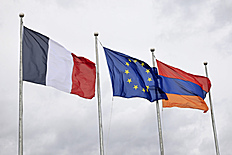
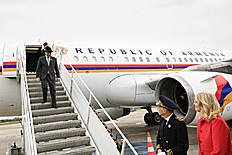
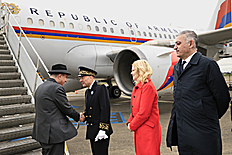
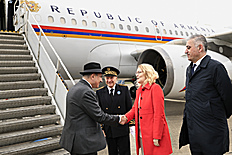
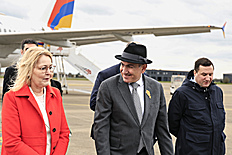
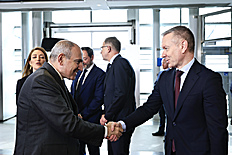
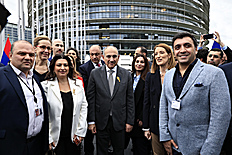
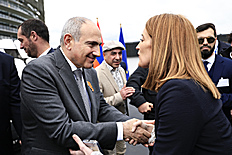
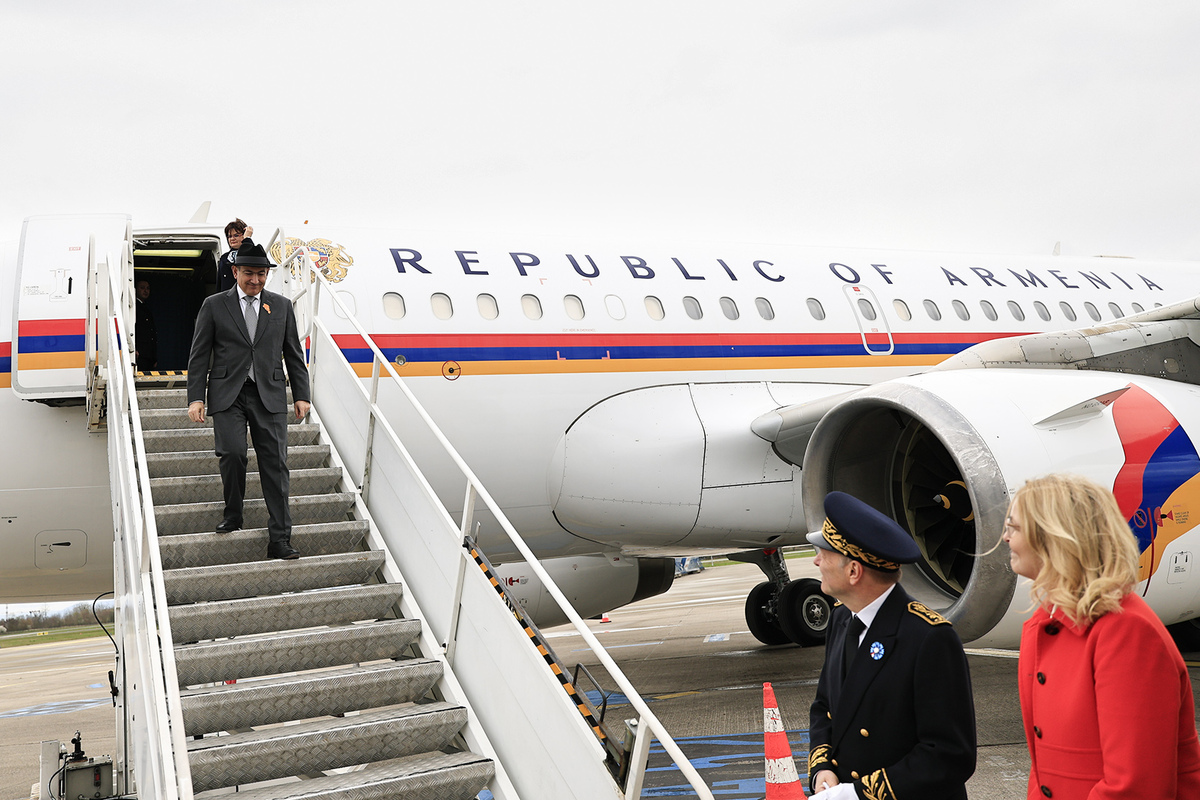
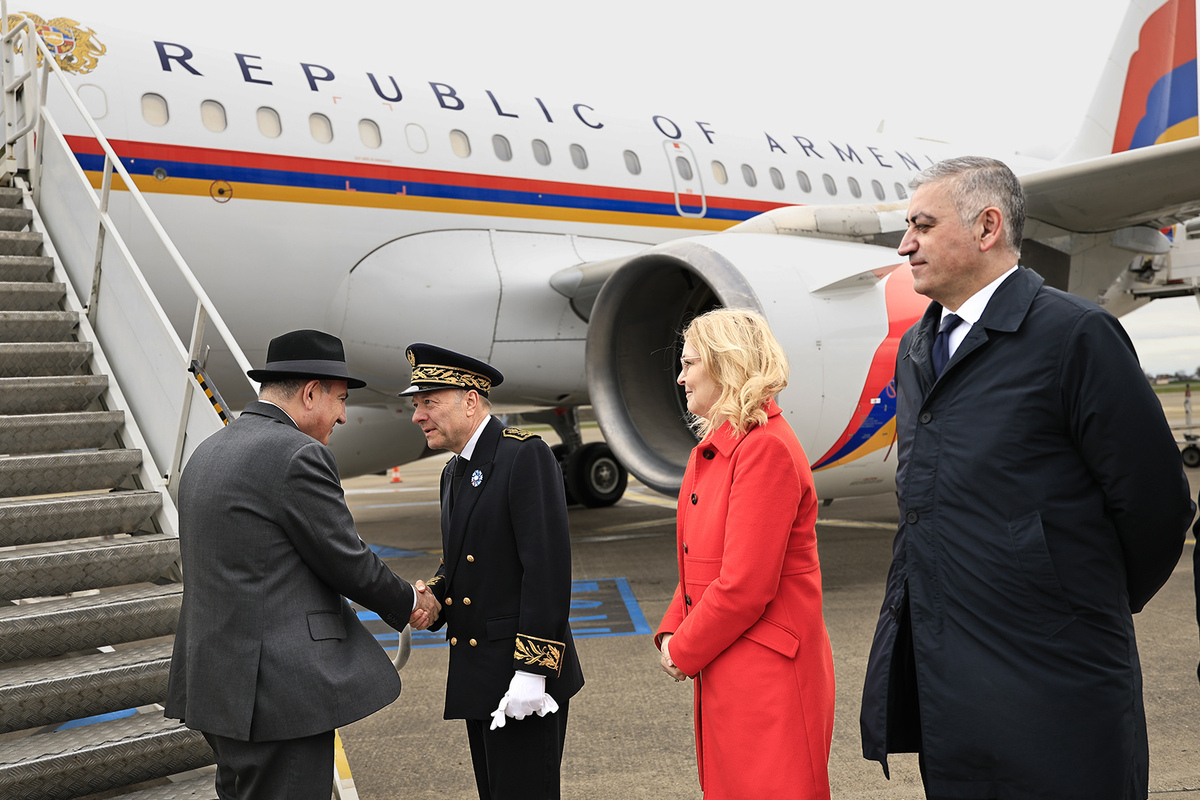
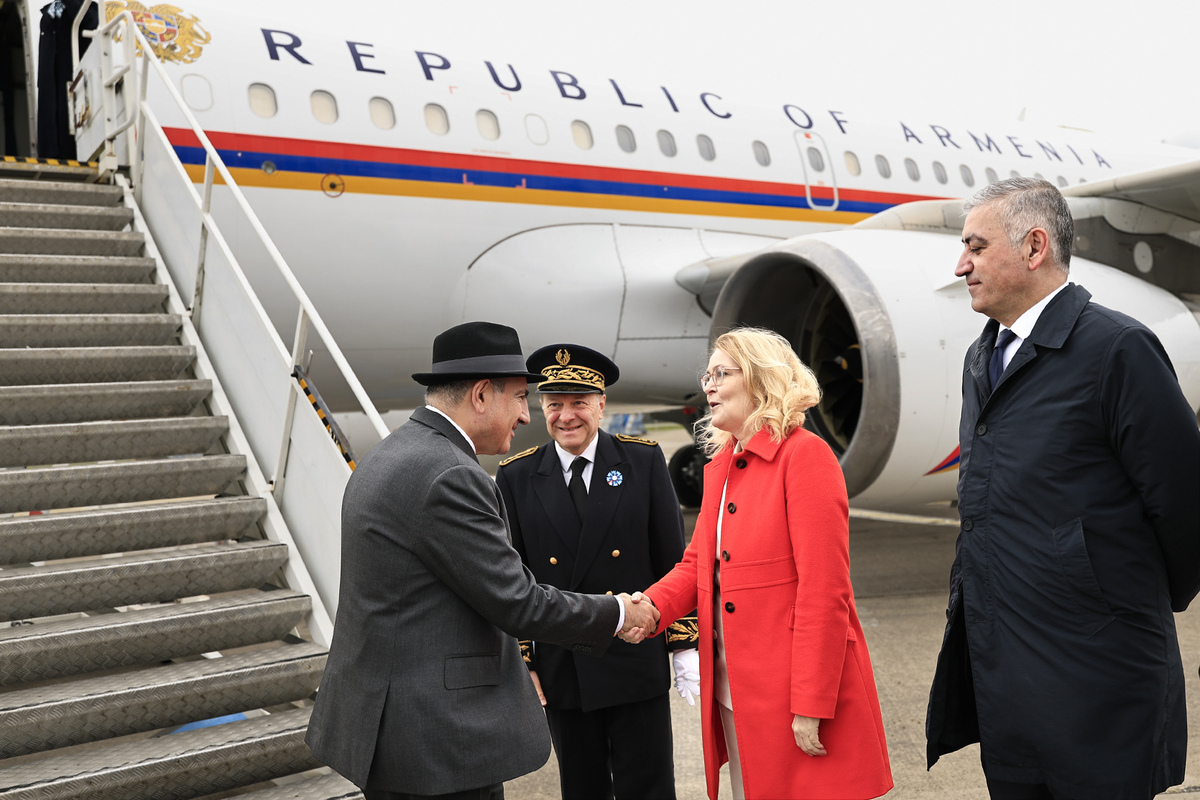
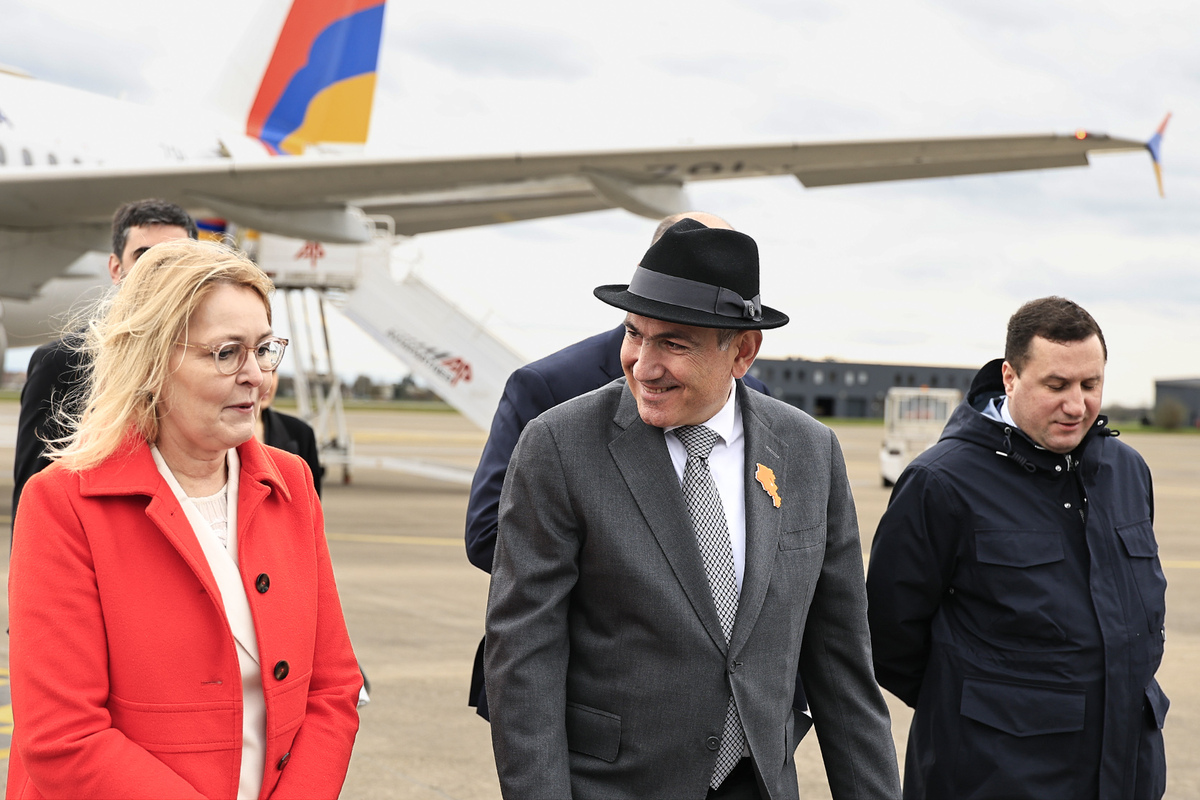
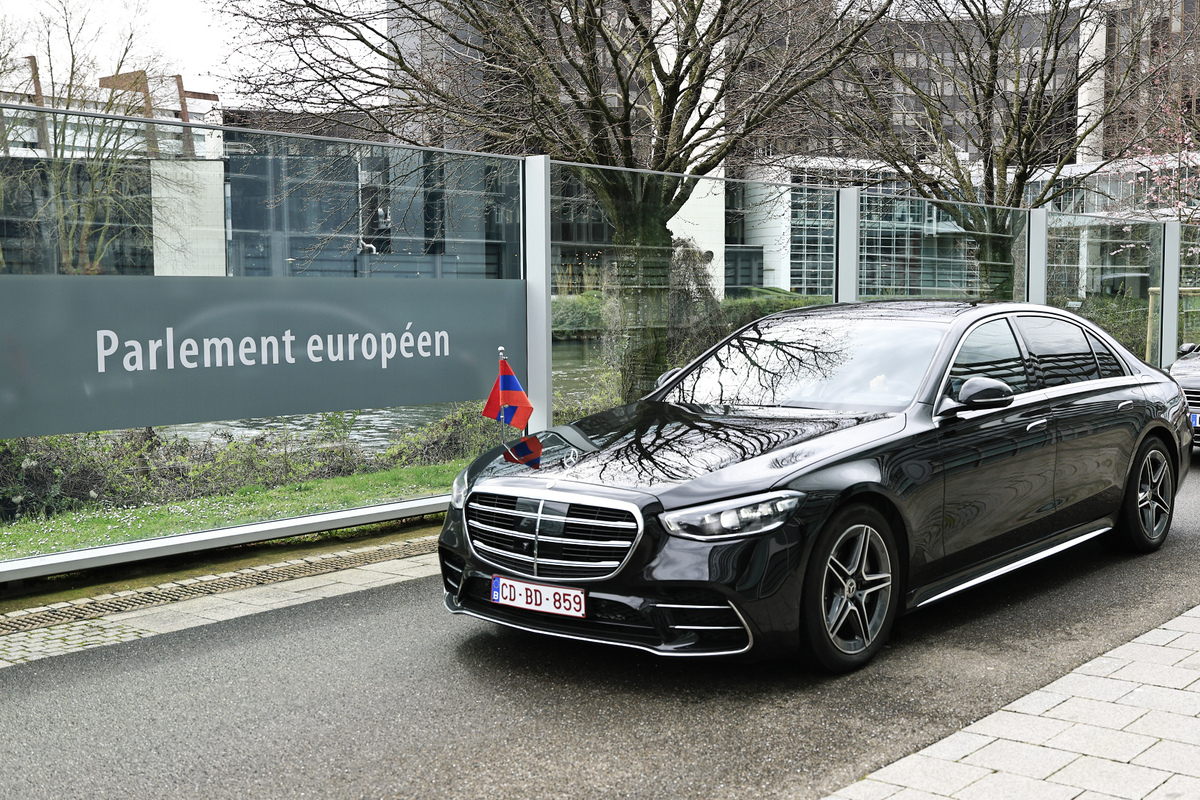
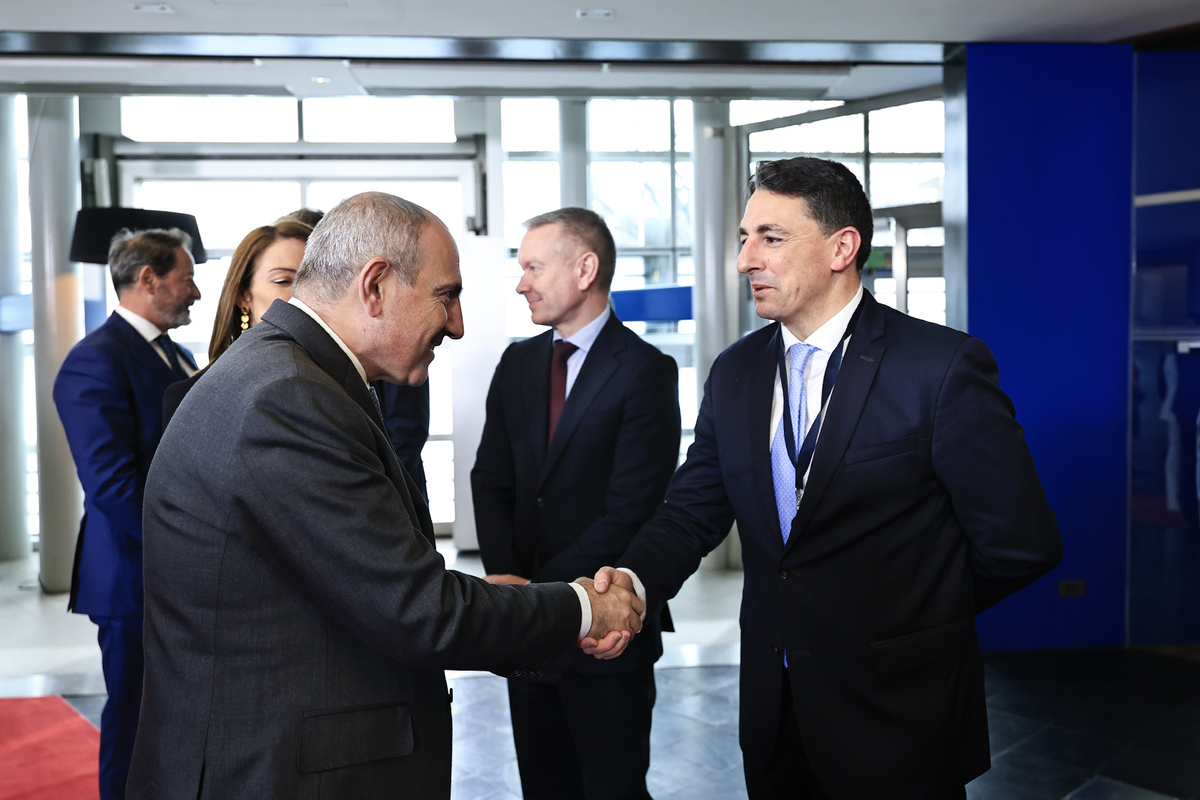
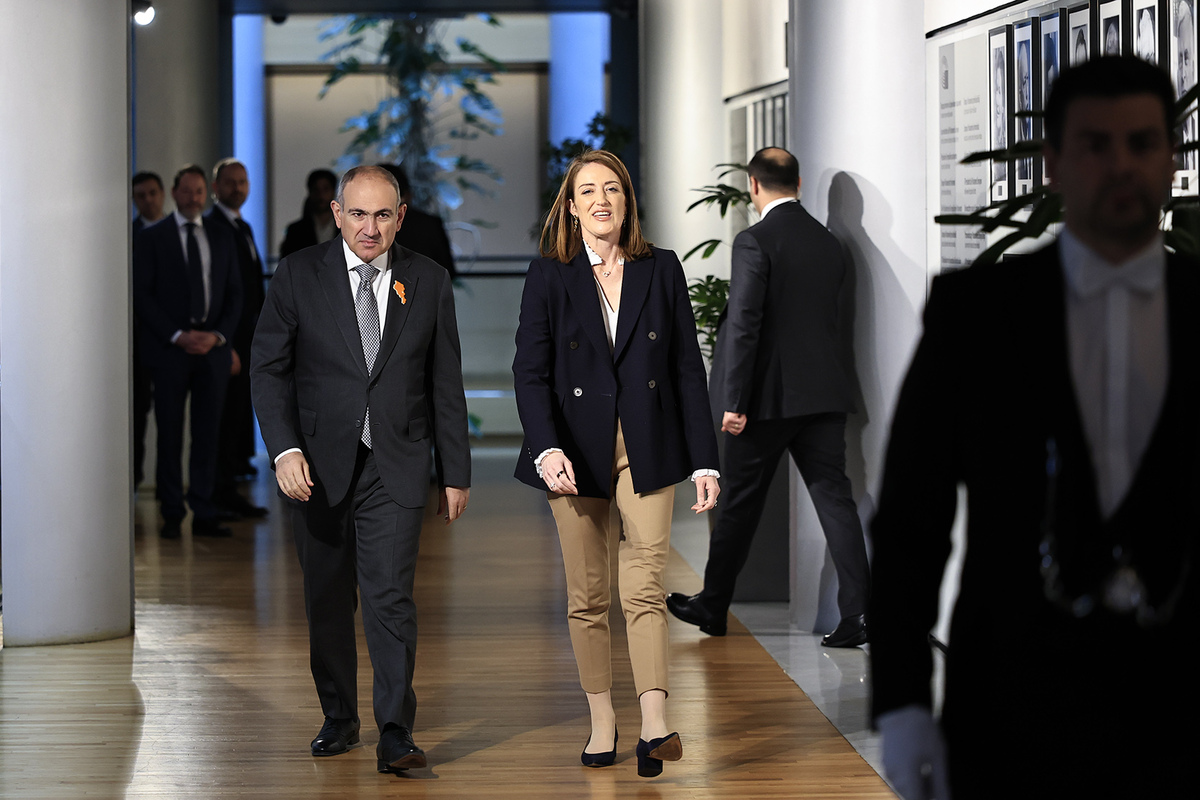
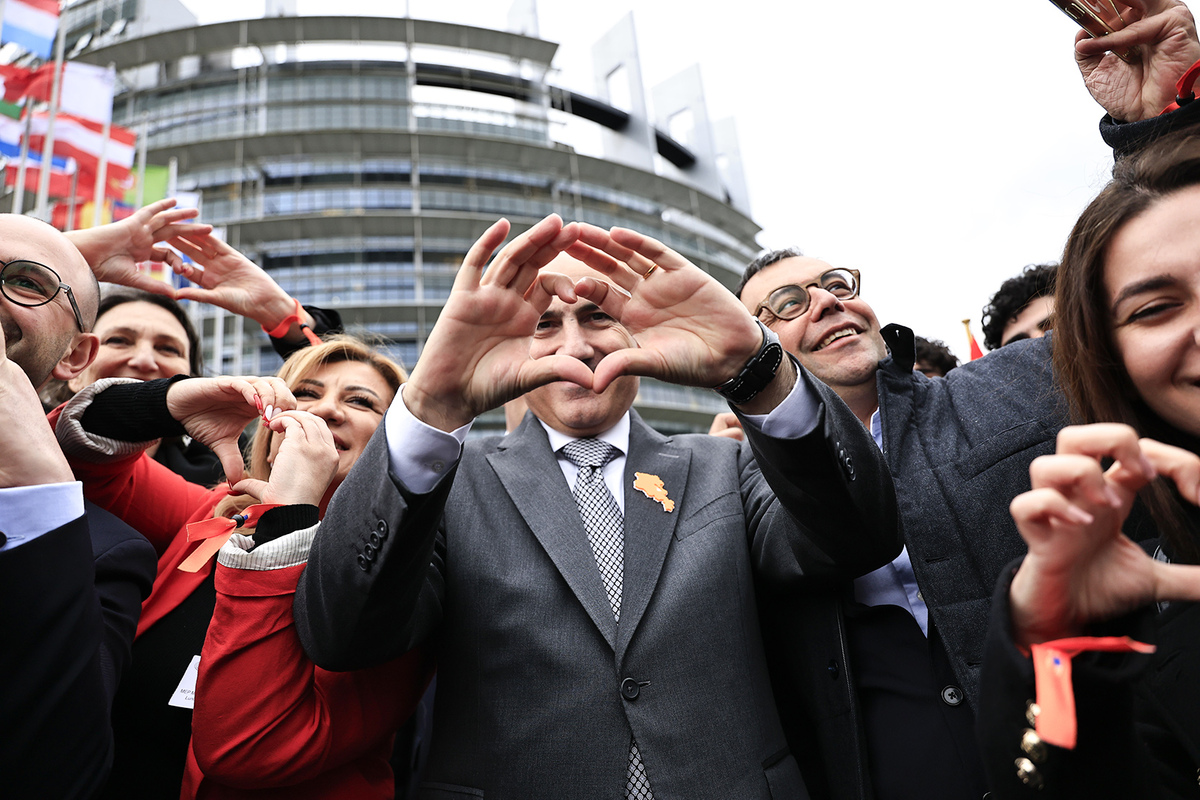
Prime Minister Nikol Pashinyan has arrived in Strasbourg. The Armenian Prime Minister was welcomed at the airport by Christel Schaldemose, Vice-President of the European Parliament, Member of the Social Democratic Party.
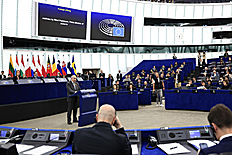
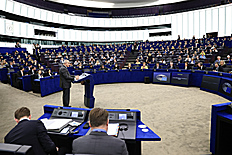
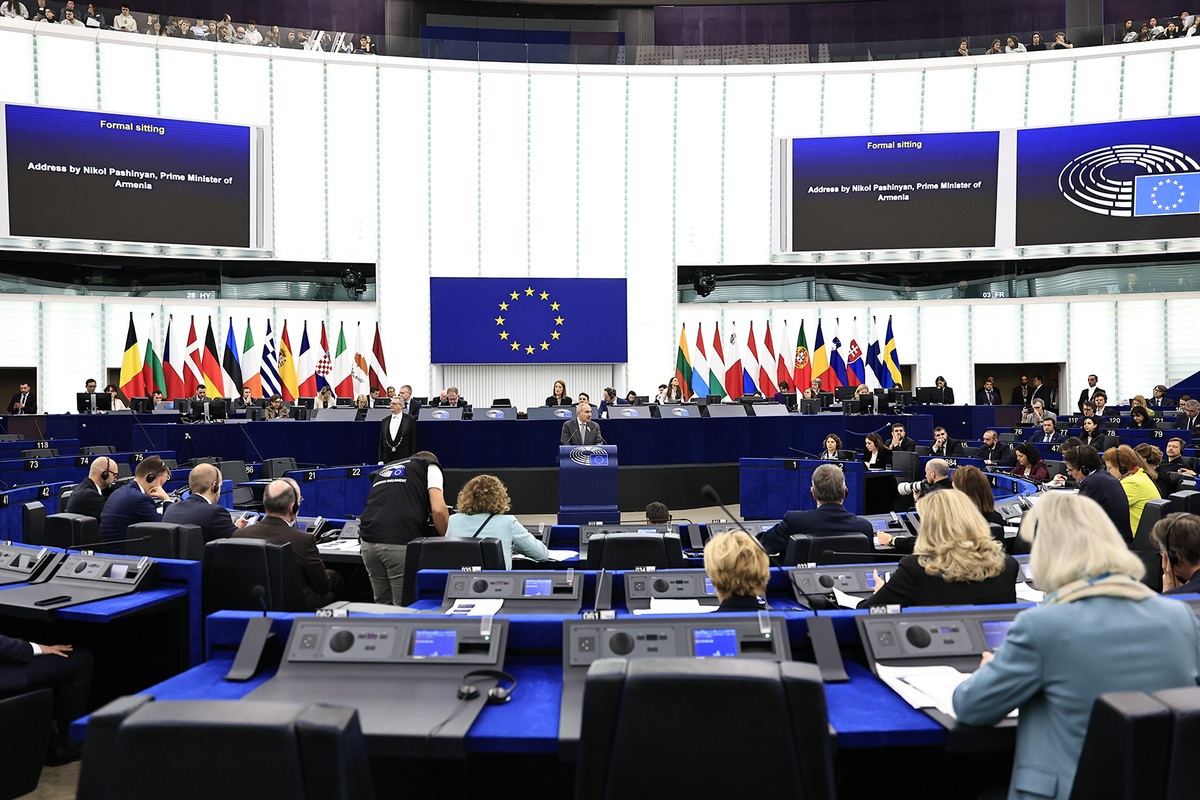
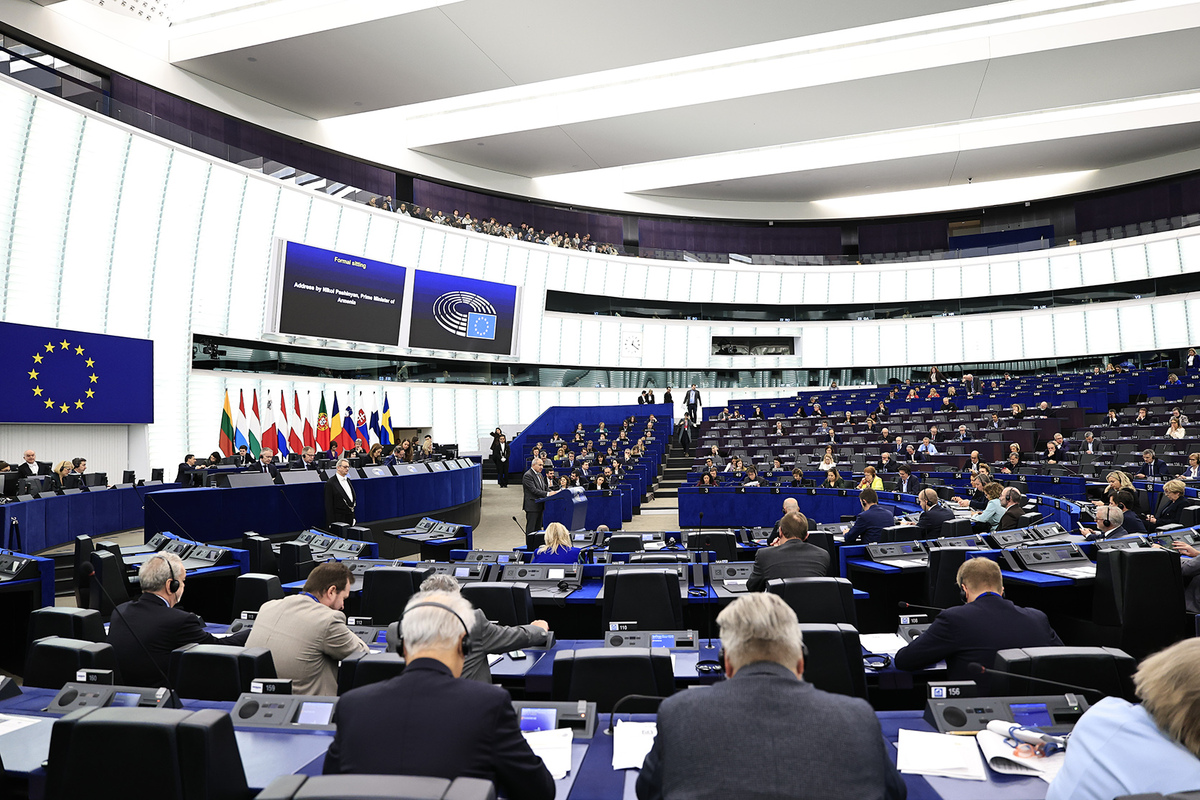
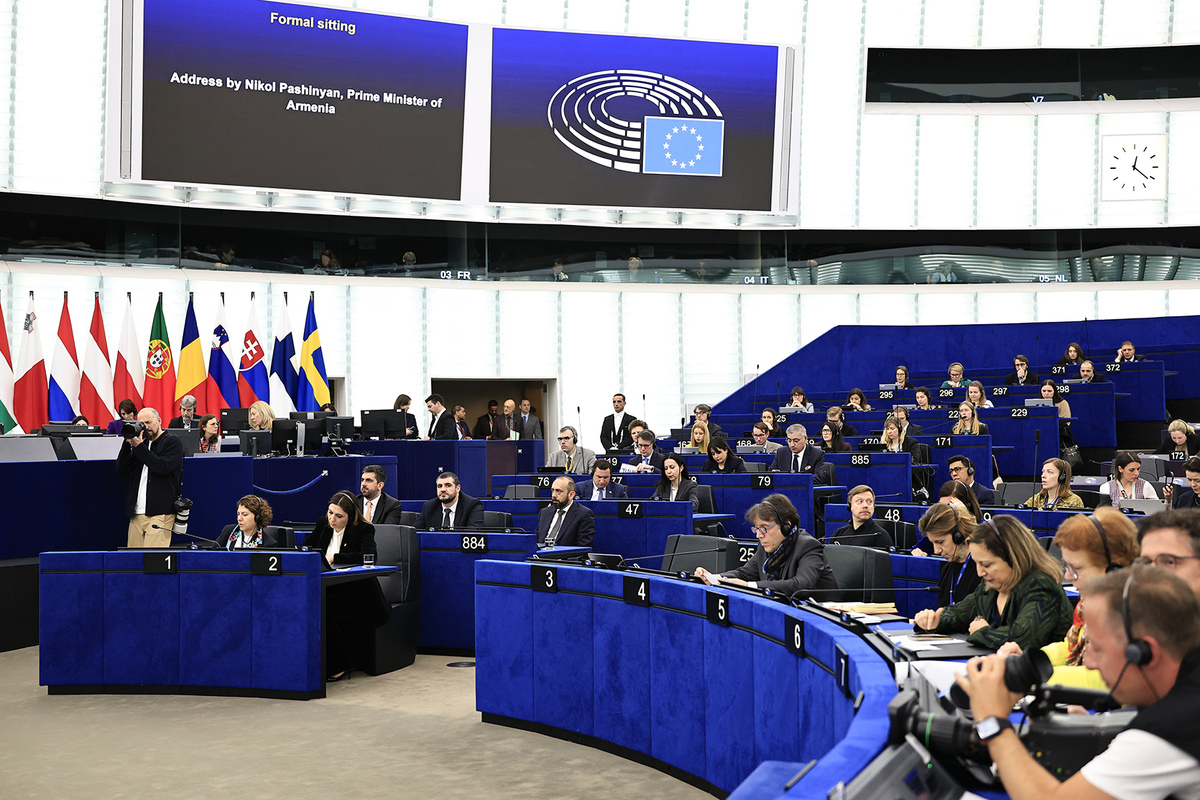
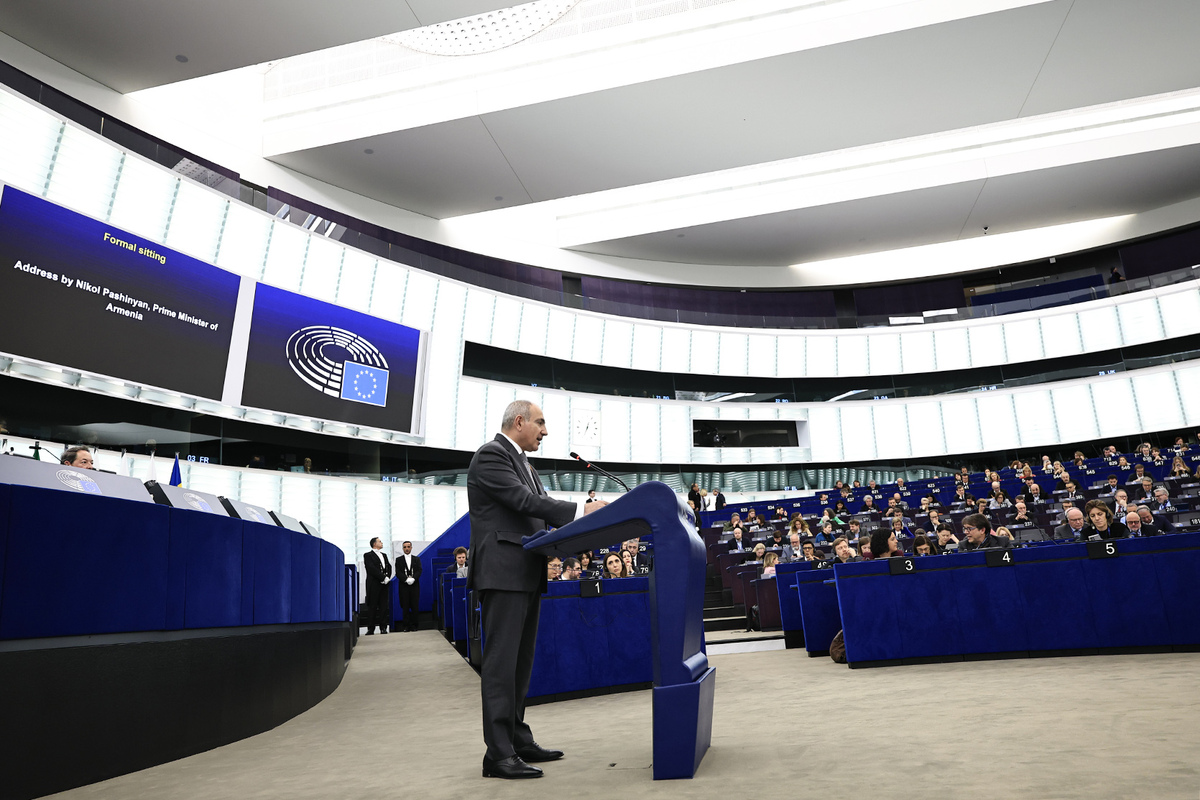
Today, Nikol Pashinyan will deliver a speech at the European Parliament. As part of the visit, Prime Minister Nikol Pashinyan will also meet with European Parliament President Roberta Metsola.
* * *
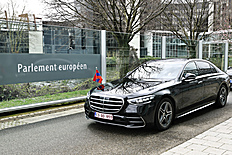
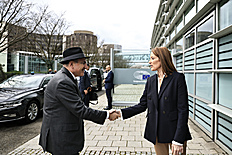
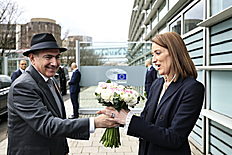
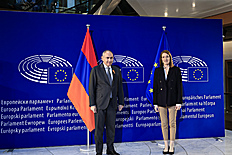
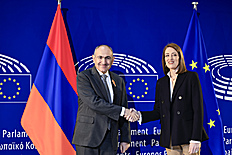
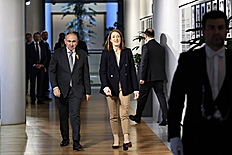
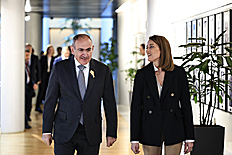
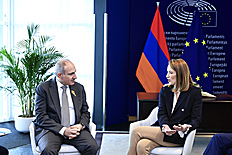
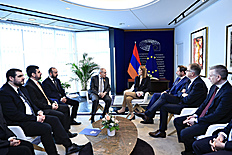
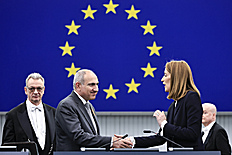
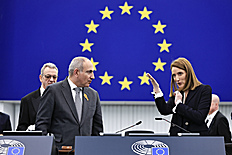
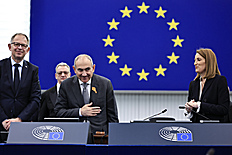
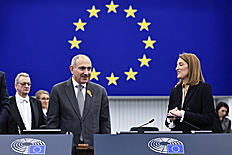
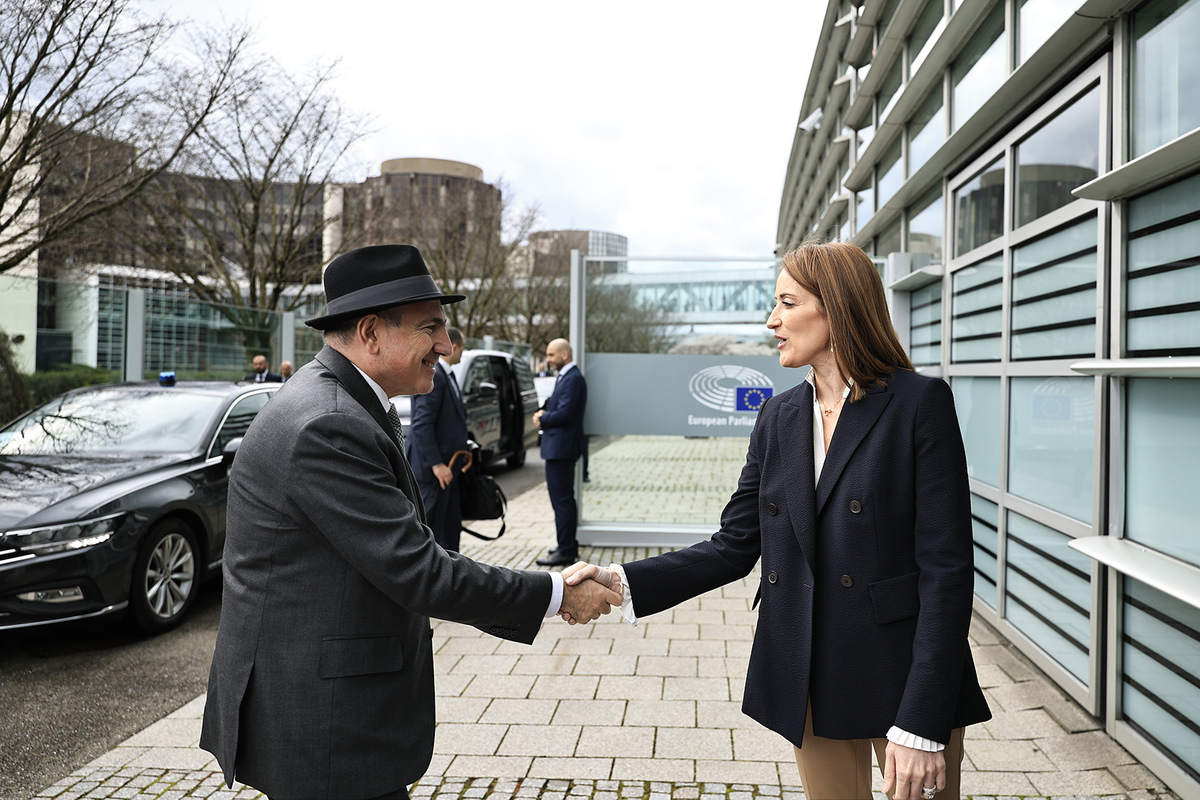
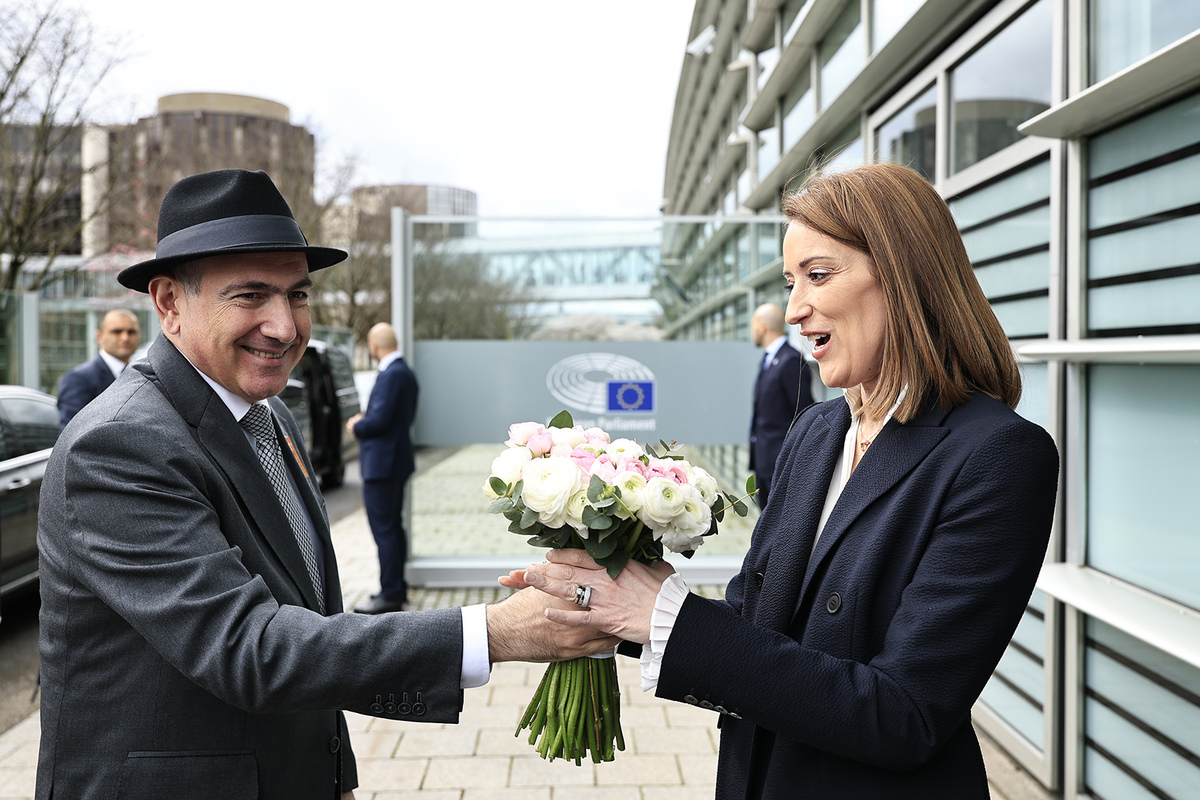
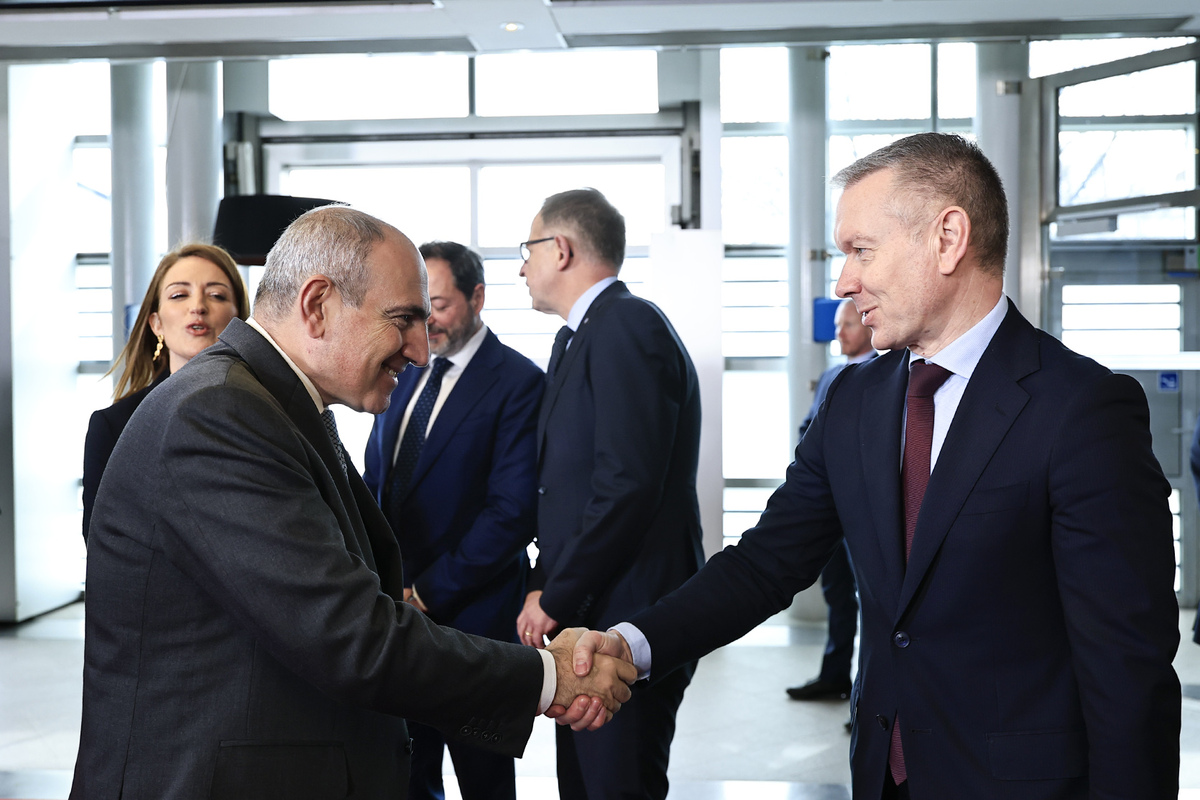
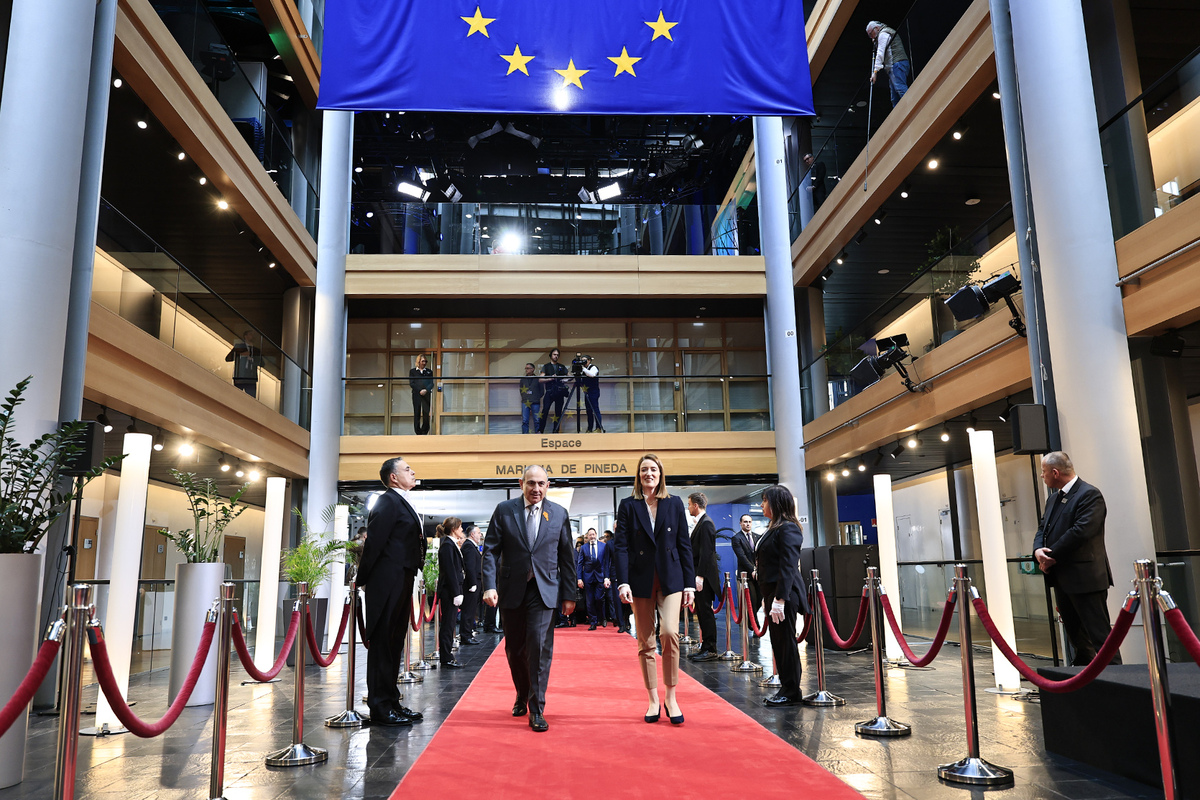
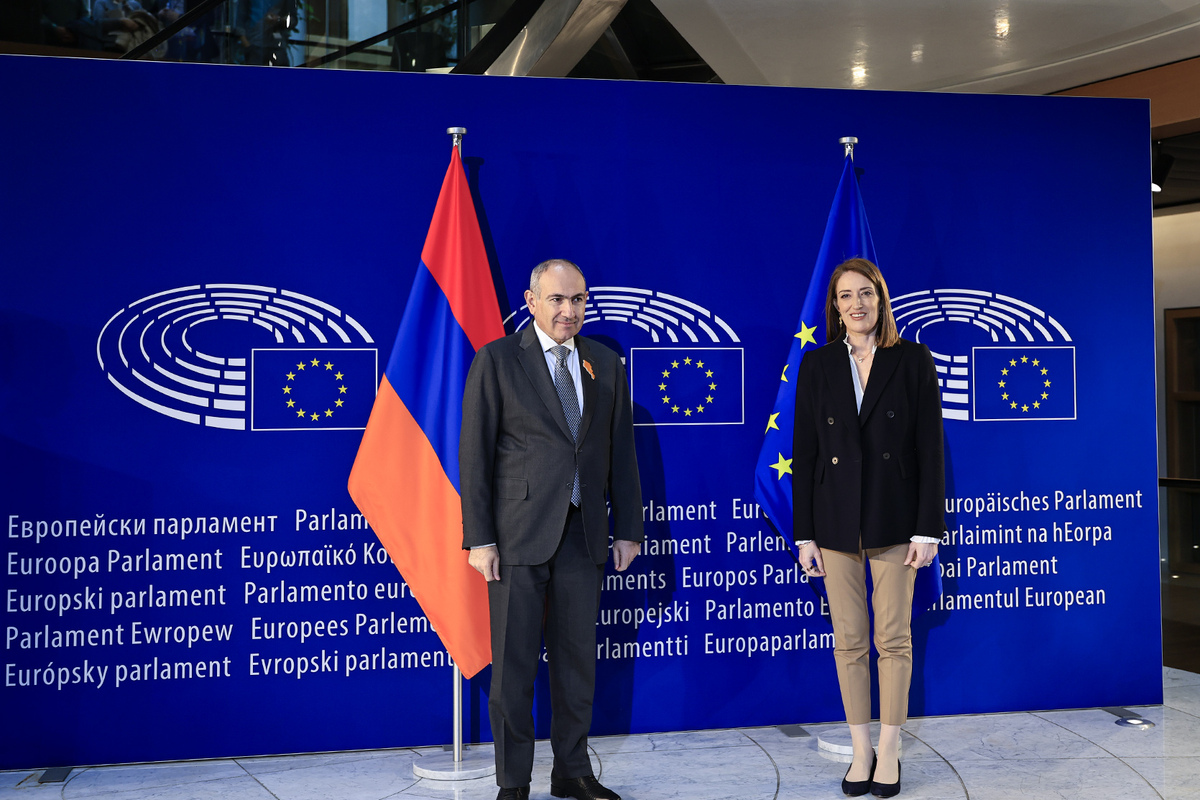
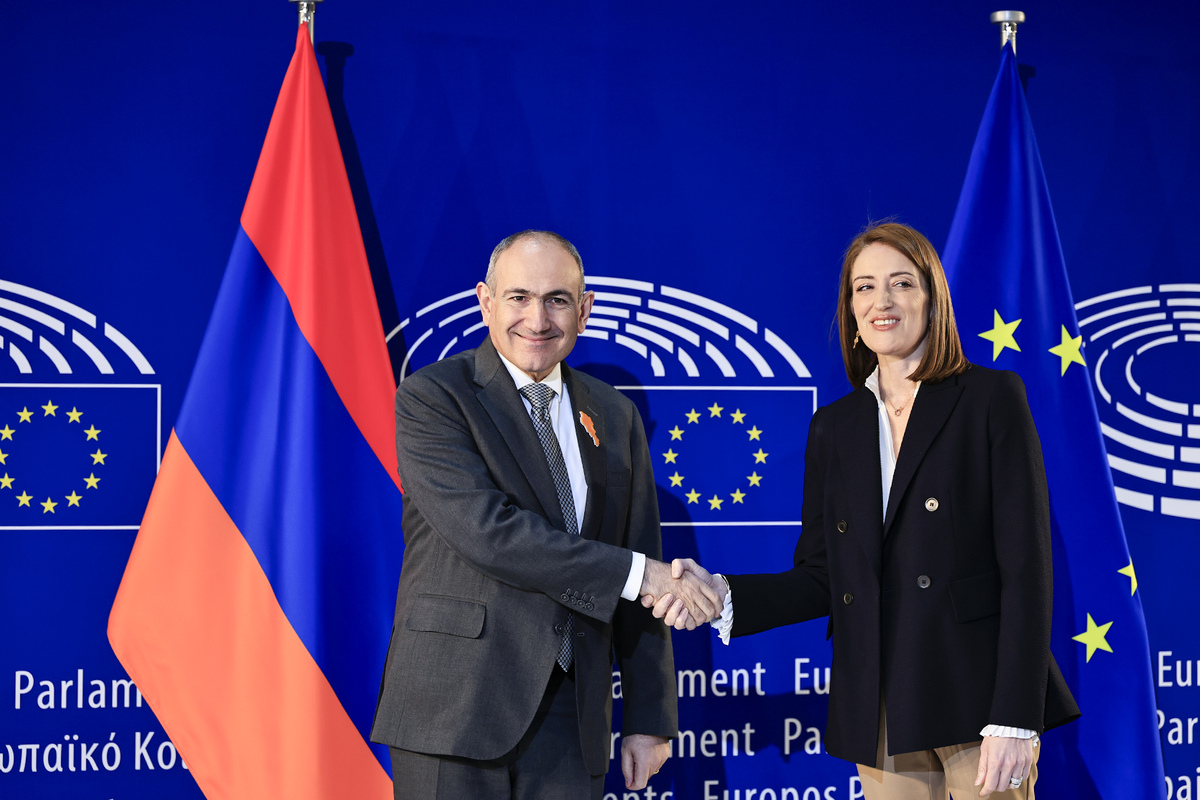
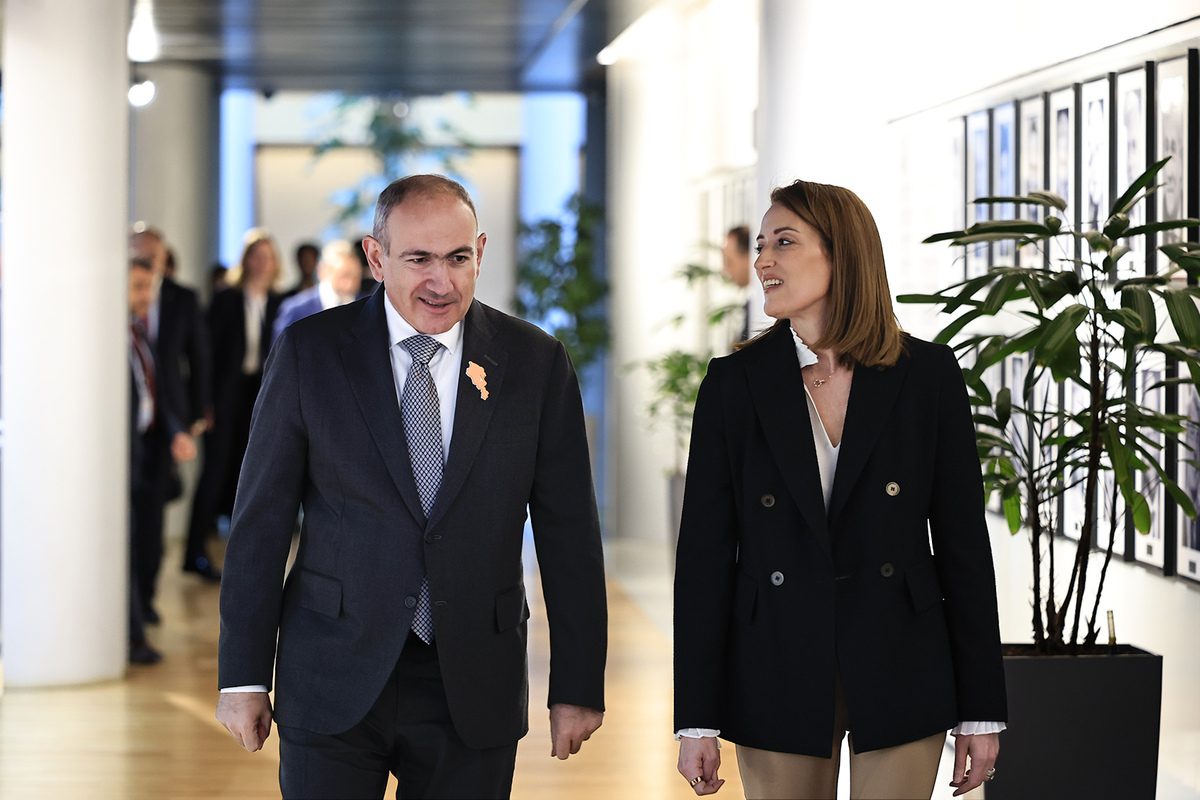
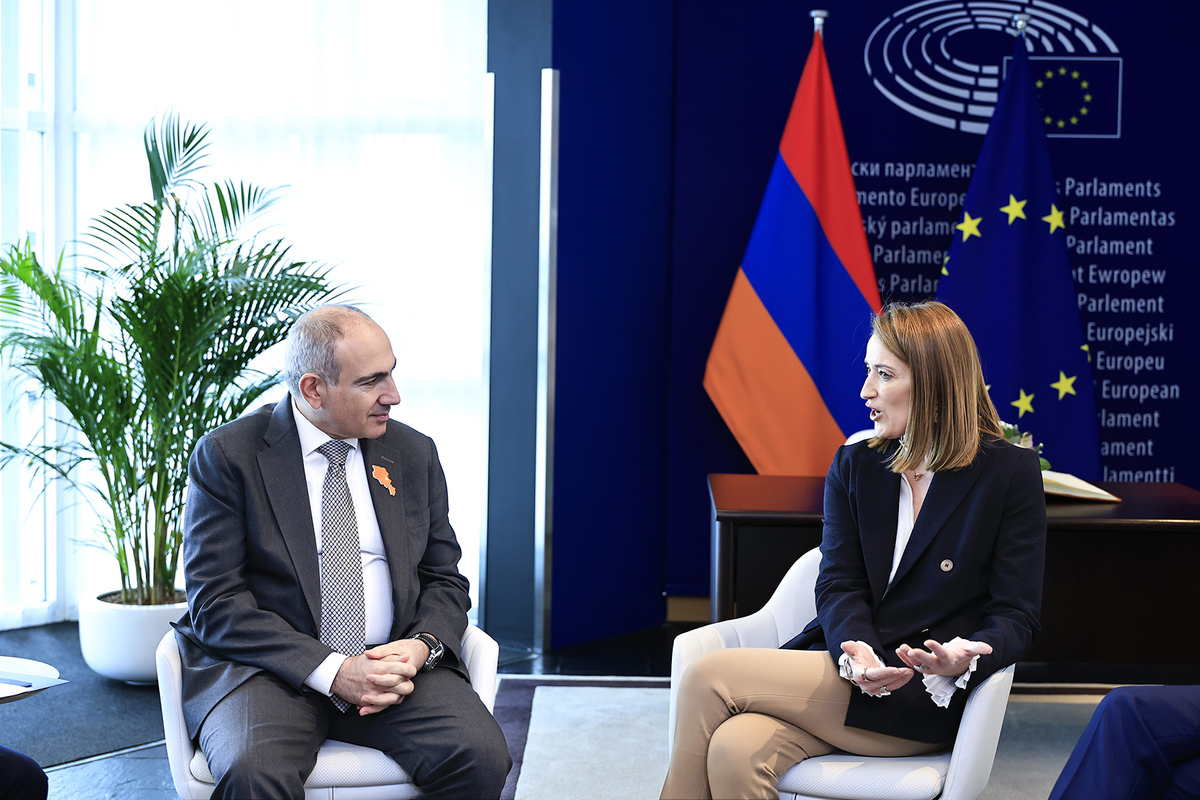
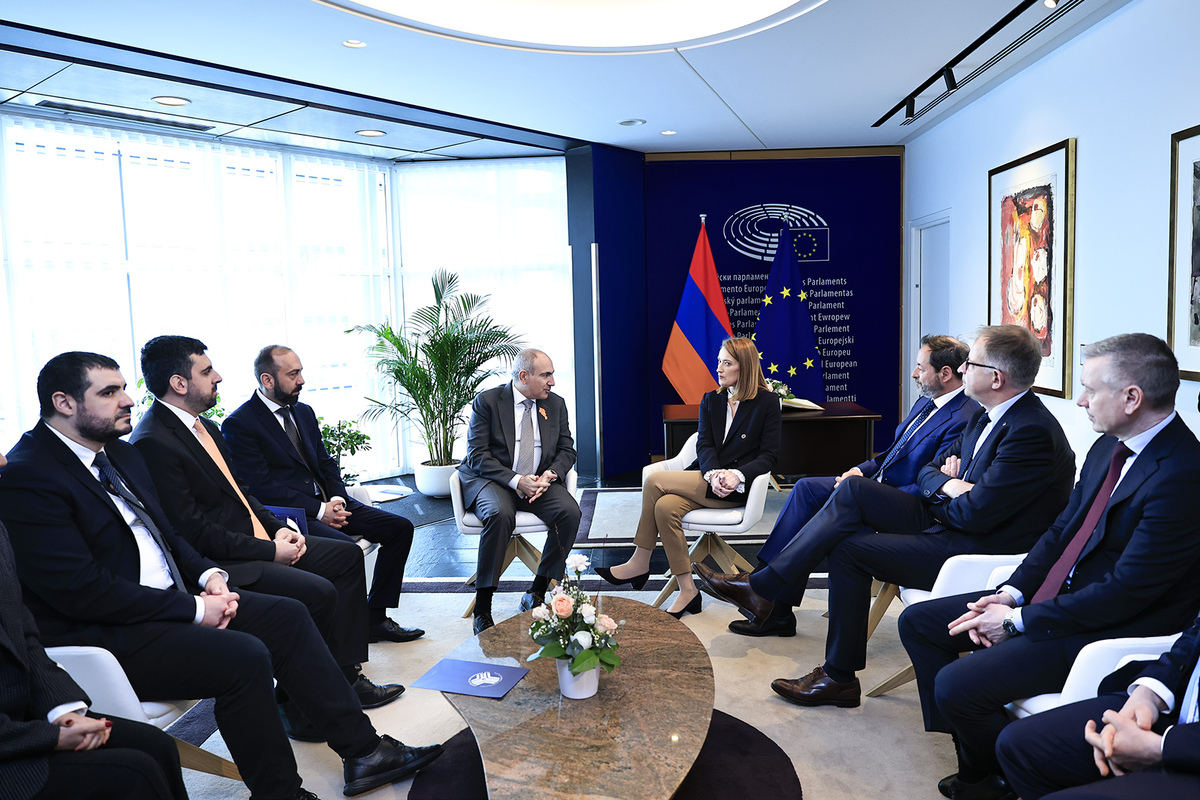
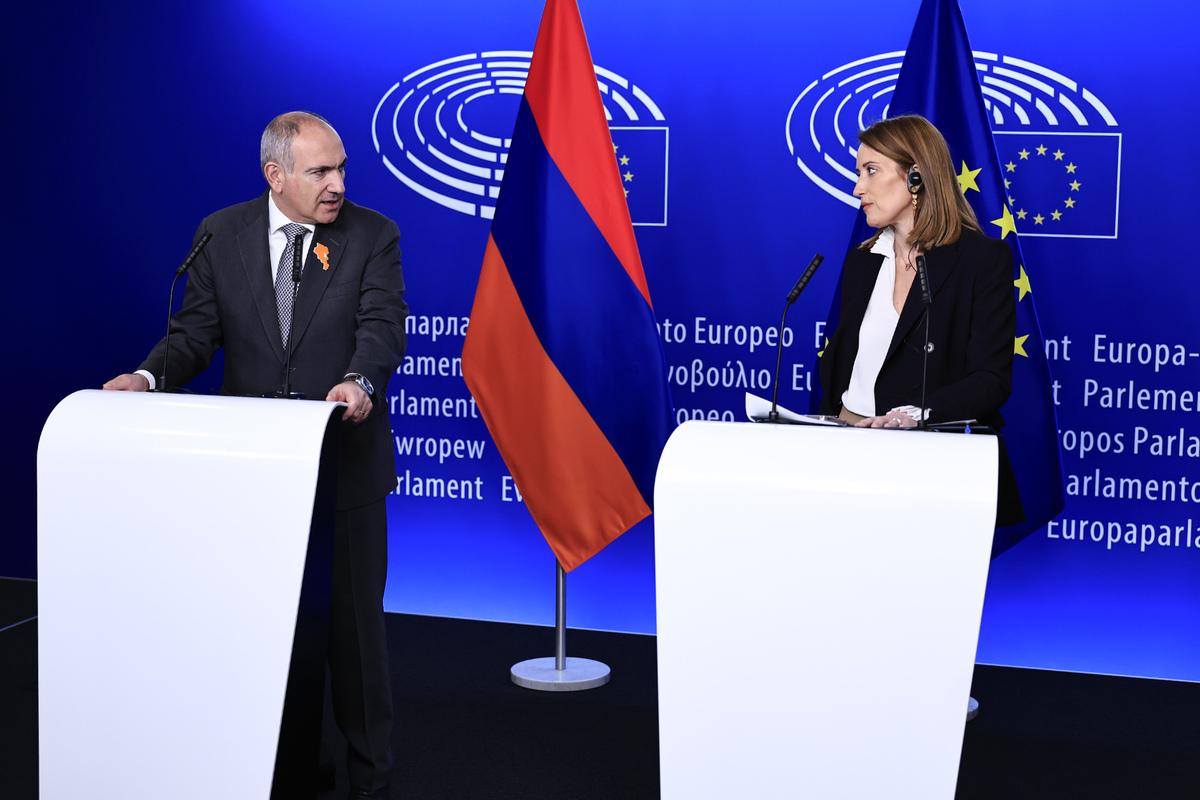
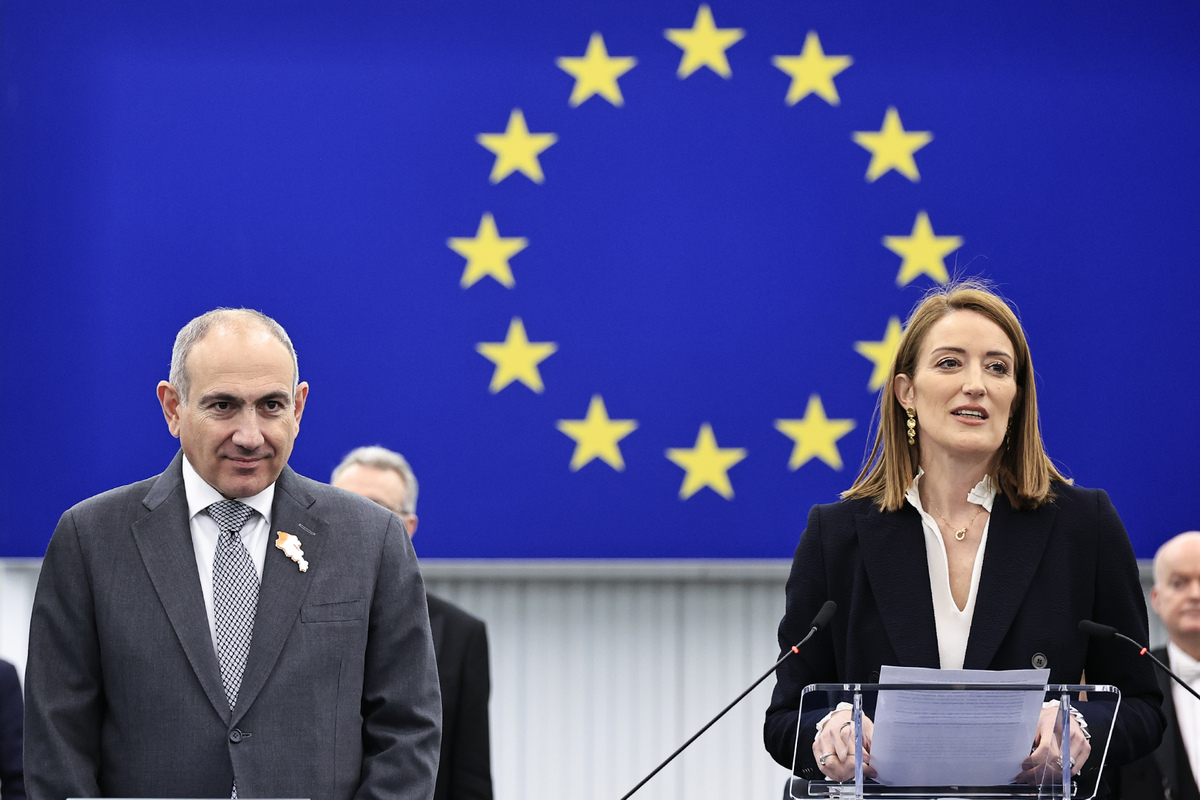
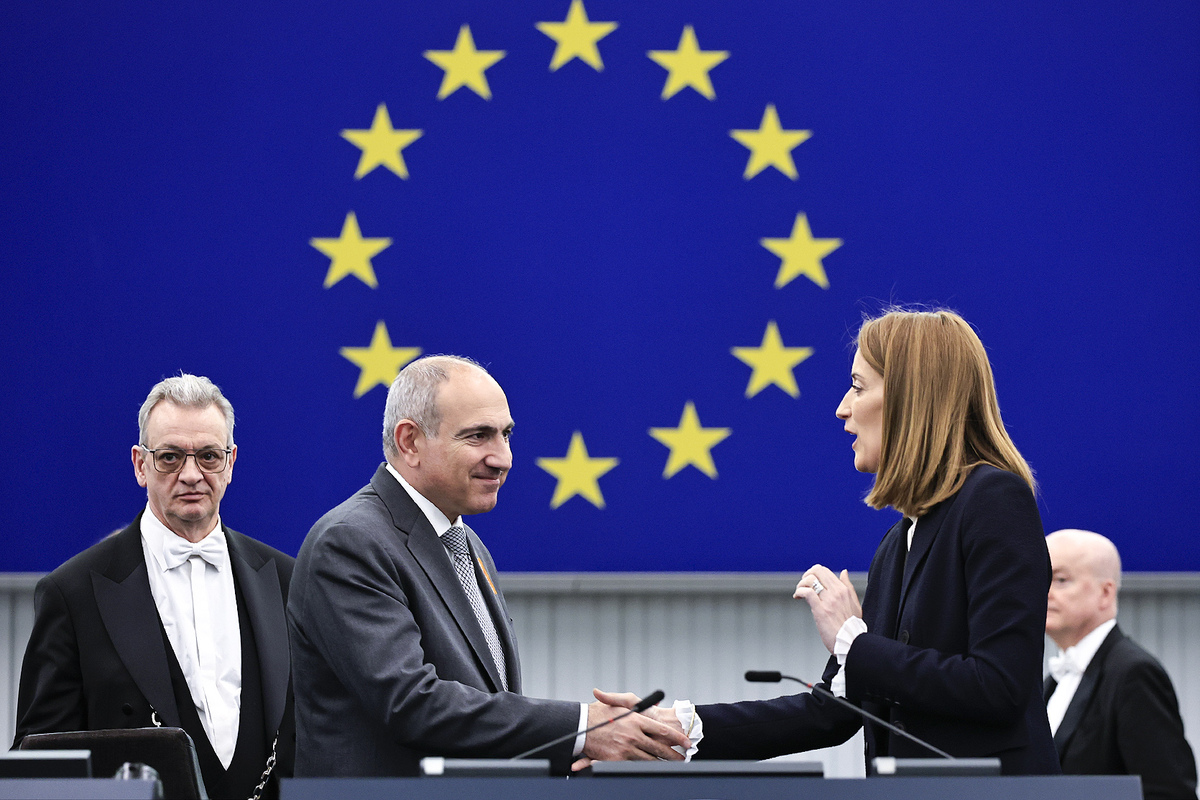
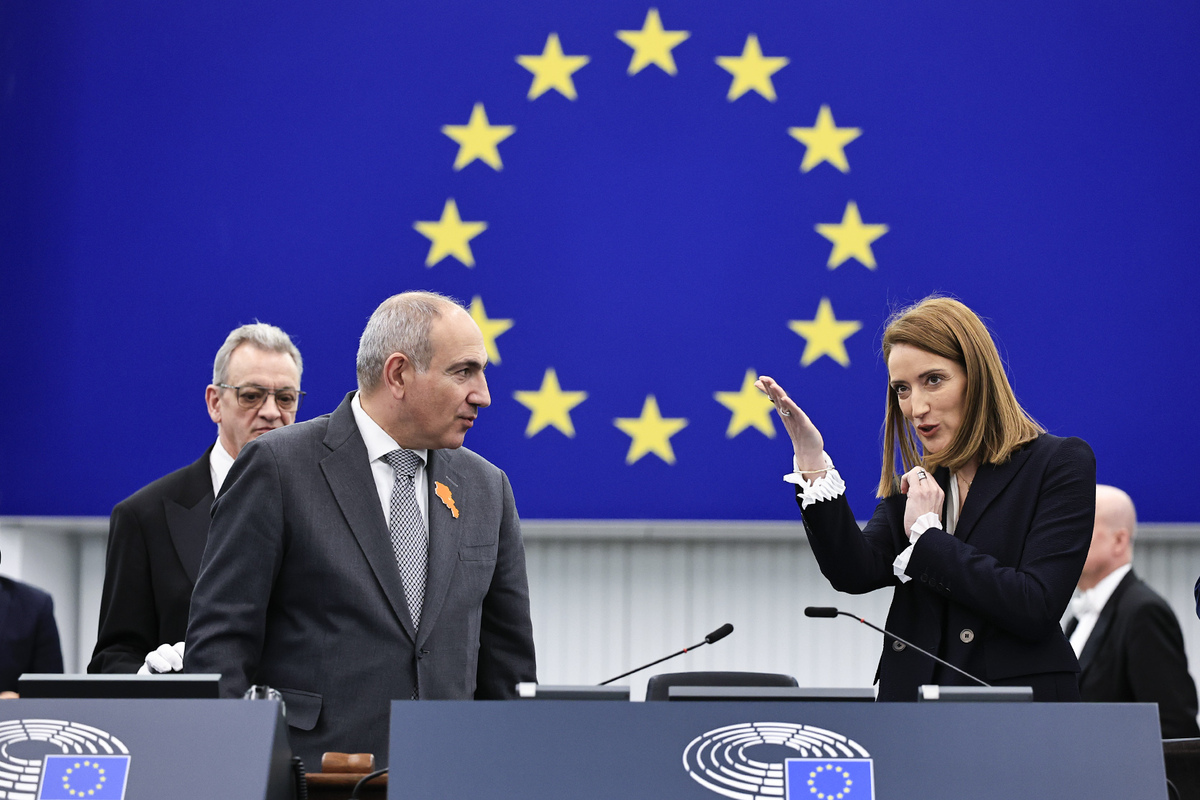
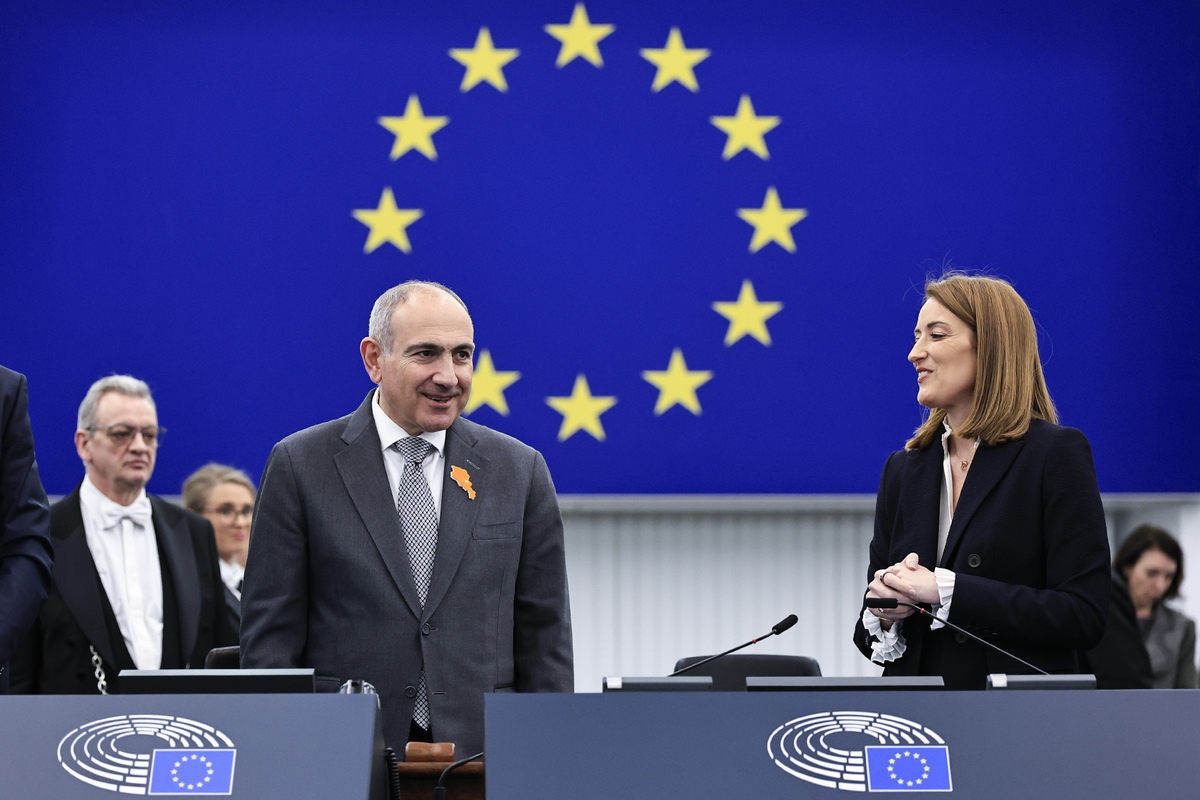
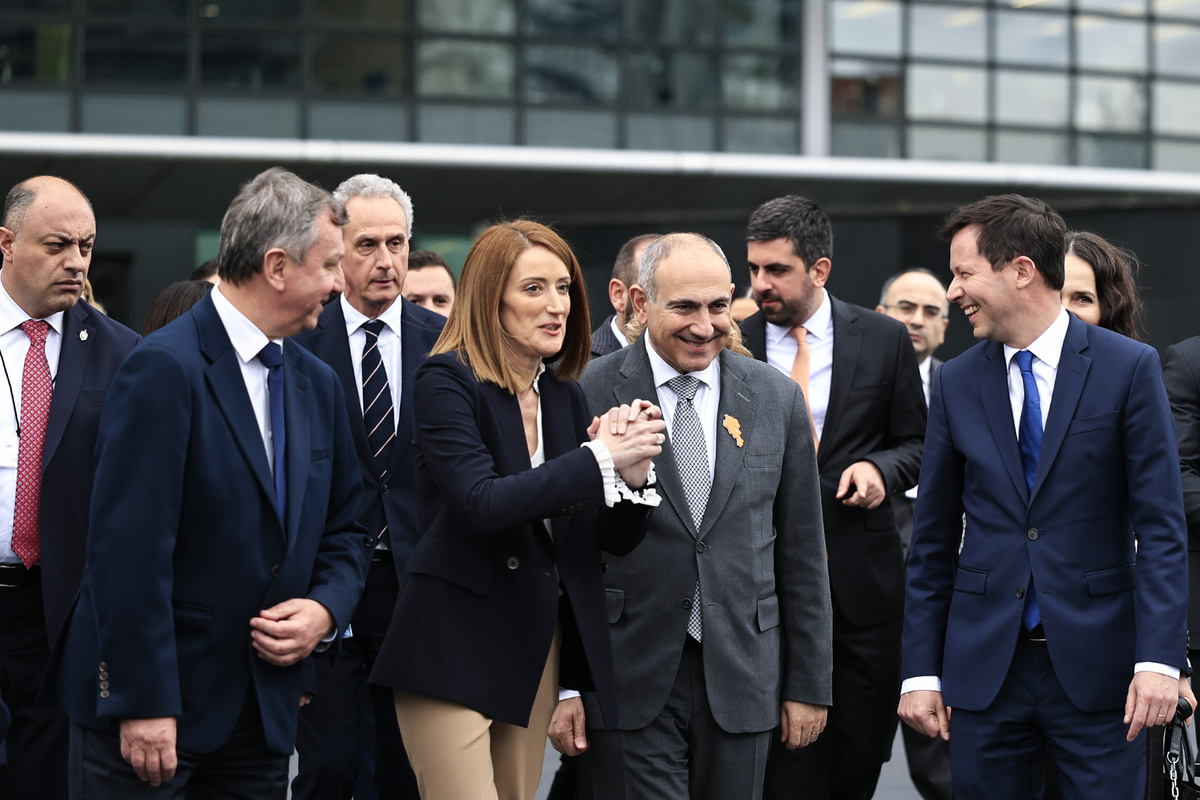
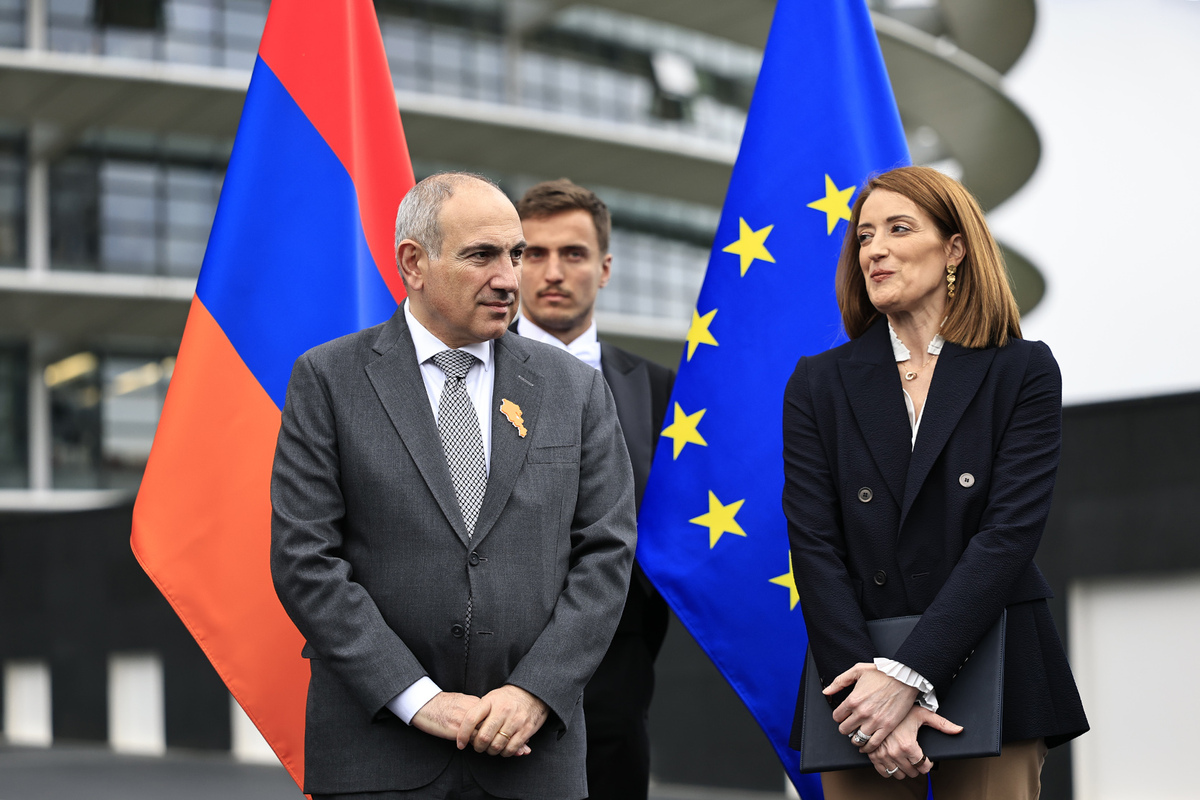
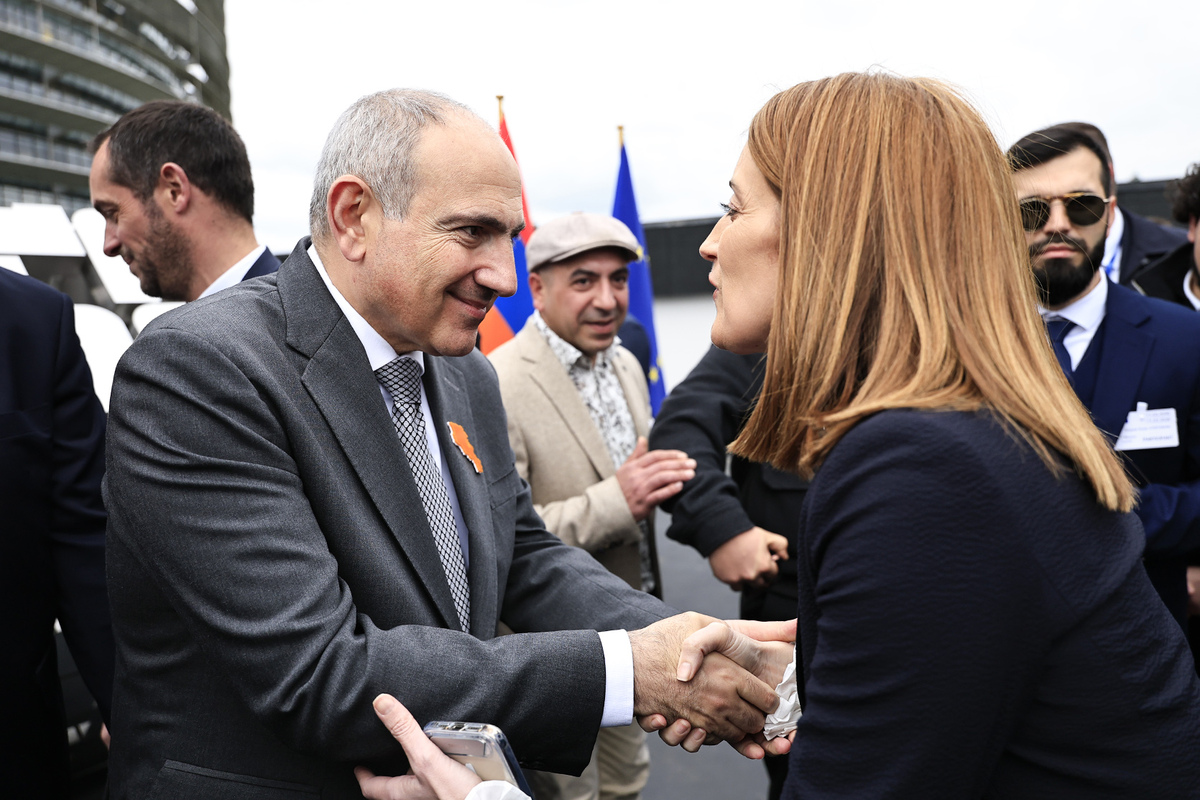
A meeting between the Prime Minister of the Republic of Armenia Nikol Pashinyan and the President of the European Parliament Roberta Metsola took place in Strasbourg.
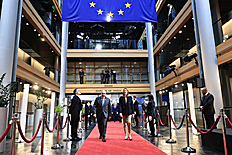
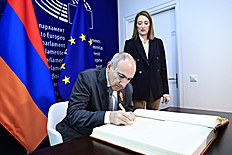
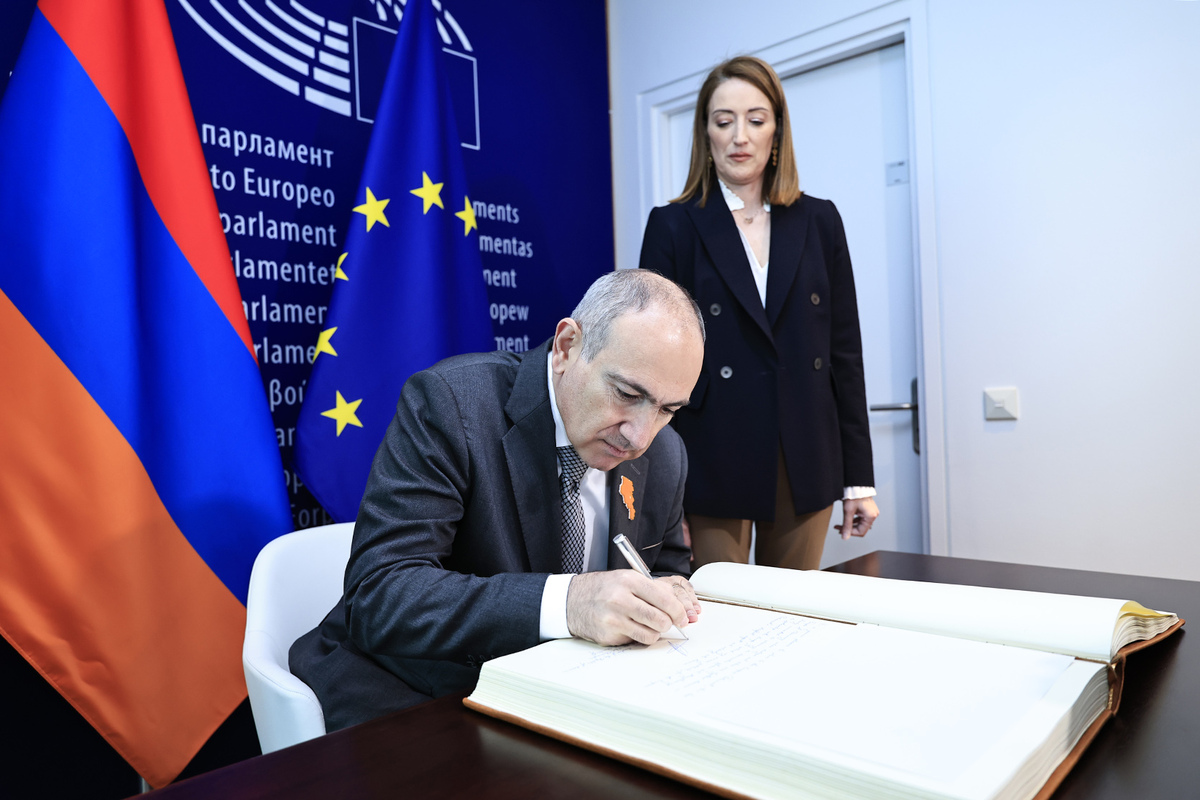
The meeting was preceded by an official welcoming ceremony for the Prime Minister, after which Nikol Pashinyan made a note in the European Parliament’s “Golden Book”.
Roberta Metsola welcomed the visit of the Prime Minister of the Republic of Armenia and noted that today’s meeting and Prime Minister Pashinyan’s speech are an important opportunity to reflect on the further development of Armenia-EU relations, as well as the process of democratic and institutional reforms being implemented in Armenia.
Prime Minister Nikol Pashinyan expressed gratitude for the invitation and emphasized that the Government of the Republic of Armenia is committed to consistently developing cooperation with the European Union. The Prime Minister also highly appreciated the European Union’s continued support in promoting reforms in Armenia.
The interlocutors discussed a number of issues on the agenda of Armenia-European Union cooperation. Regional developments were also touched upon, emphasizing the importance of efforts aimed at strengthening peace and stability.
* * *
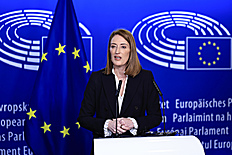
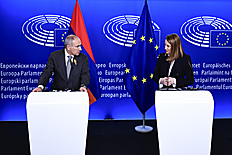
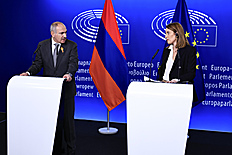
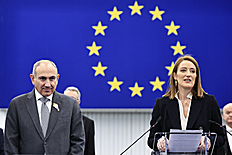
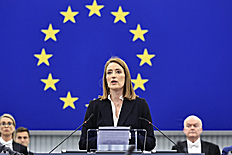
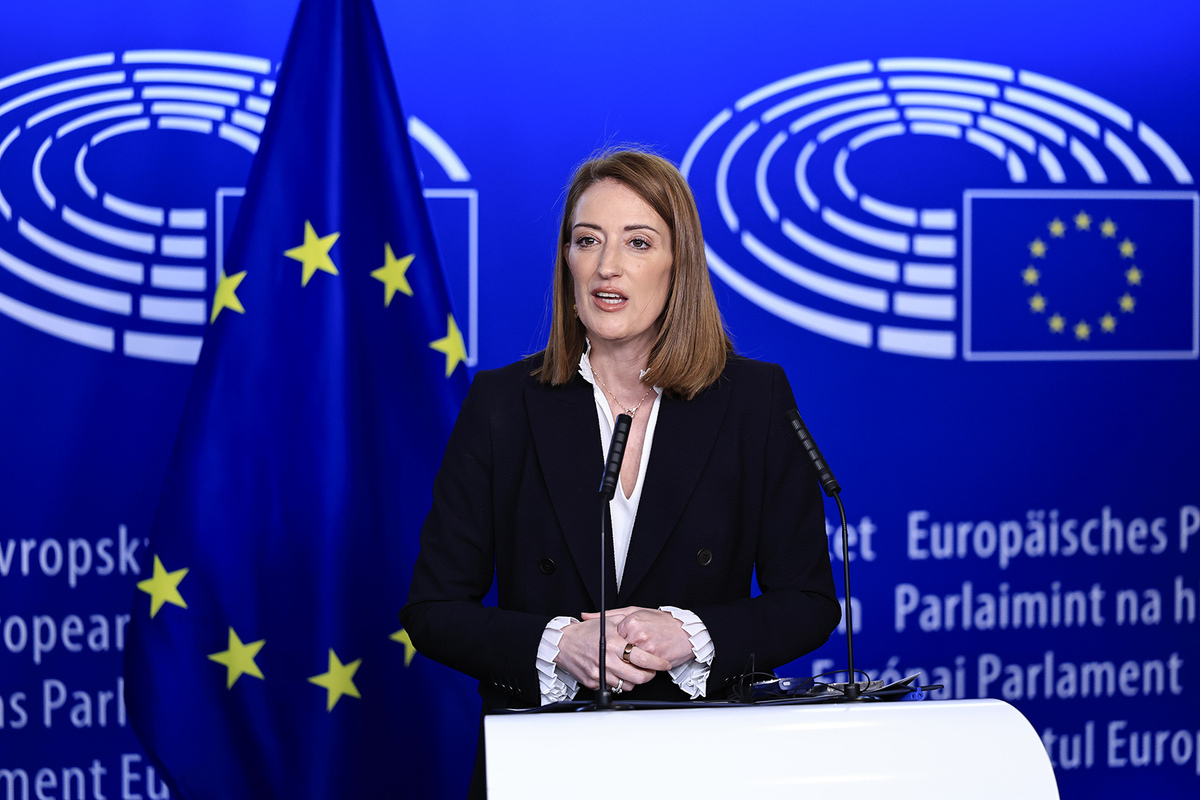
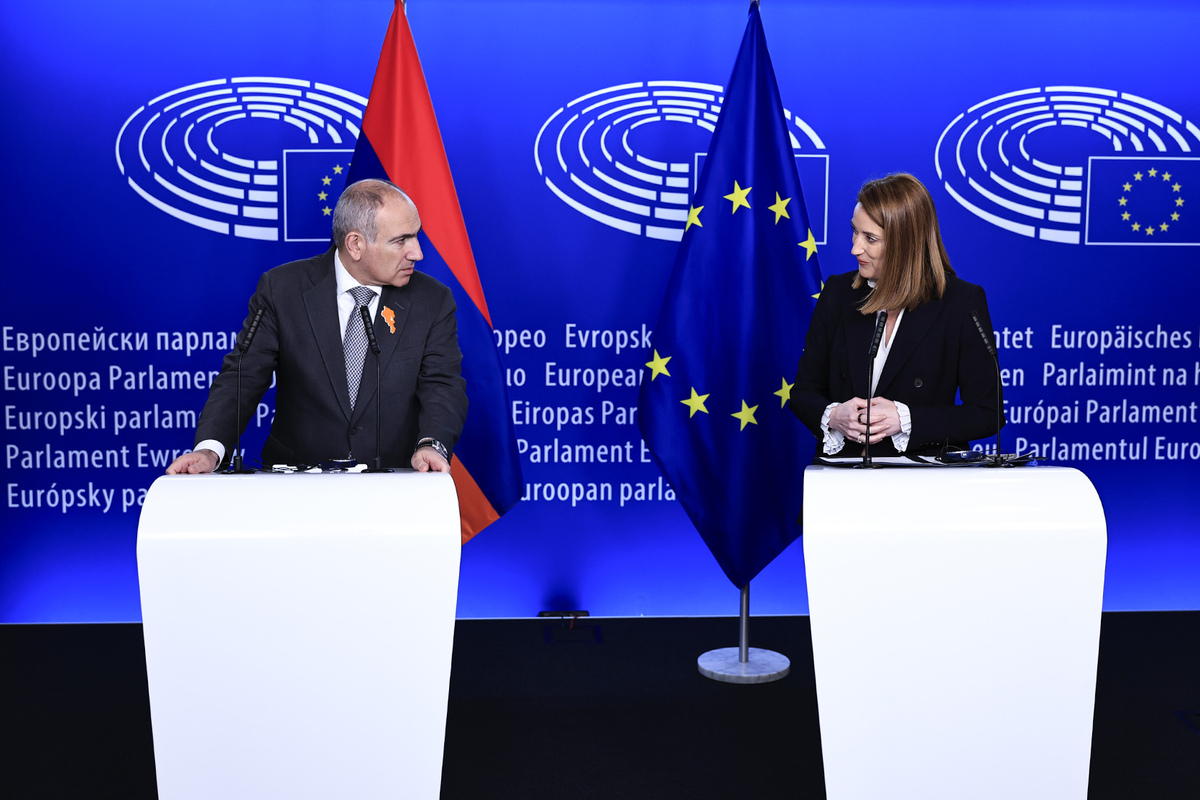
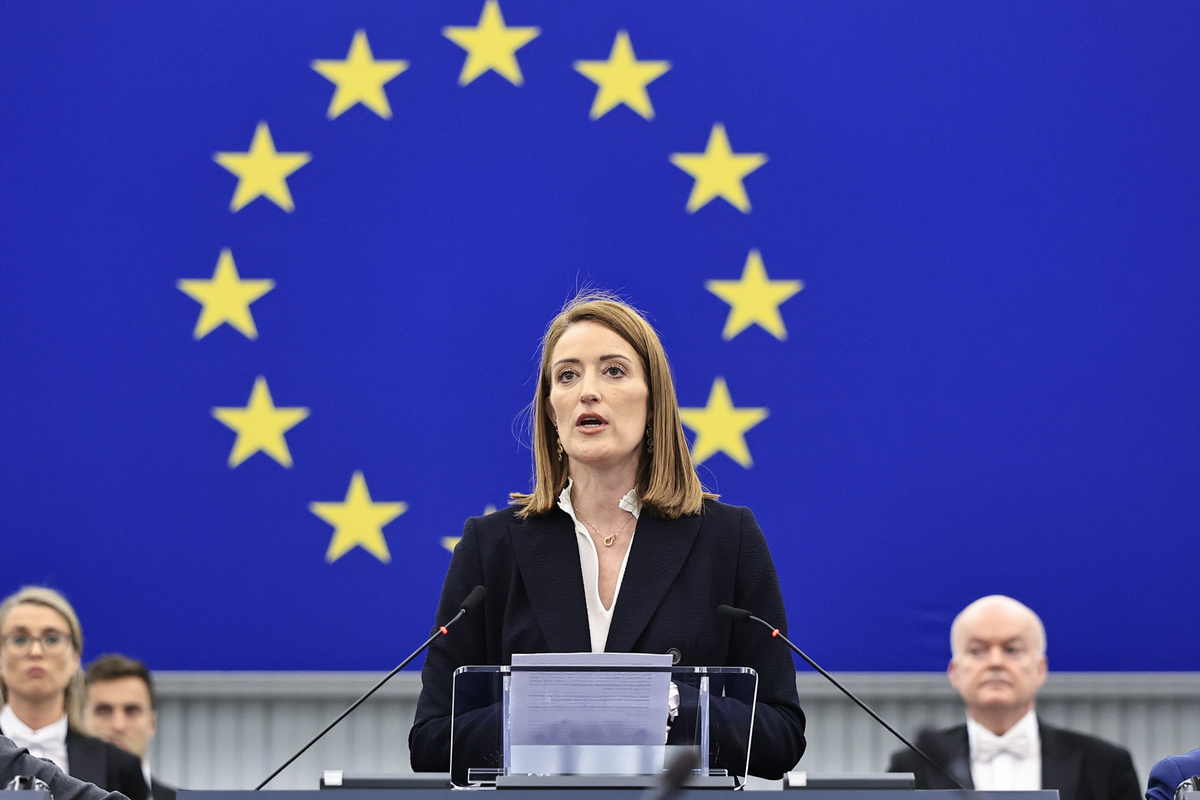
Roberta Metsola - Hello everyone, good morning. I warmly welcome you, Prime Minister, Mr. Pashinyan.
It is a great pleasure to welcome you again to our home of democracy. Thank you for joining us today and I look forward to your speech in the plenary session, which will take place in a few minutes.
First of all, when Europe looks at Armenia, we see a friend, a companion, and I hope that when Armenia looks at Europe, you see a partner and an ally. Under your leadership, Mr. Prime Minister, there have been great achievements since our last meeting in the sidelines of the European Political Community in Copenhagen last October, when the European Union and Armenia agreed on a new strategic agenda within the framework of the European Union-Armenia partnership. This step in our relations will support democratic reforms, strengthen economic resilience, strengthen the rule of law and deepen security cooperation. We also welcome the fact that an action plan for visa liberalization has been presented. All this contributes to Europe's common goal of strengthening our cooperation in various areas, and I am very confident that our parliaments will continue to play a leading role in bringing your country closer to our Union.
So, we look forward to continuing our discussions, which will take place next week in the framework of the EU-Armenia Parliamentary Partnership Committee meeting, which we look forward to with great anticipation, and we look forward to participating in the European Political Community meeting, for which I will be in Yerevan.
In the context of the events in Iran in recent days, Armenia has become a crucial humanitarian corridor. I would like to thank you, as I did a moment ago during the bilateral meeting, for helping to evacuate European citizens.
Thank you, Mr. Prime Minister, please, take the floor. .
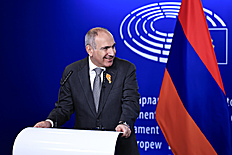
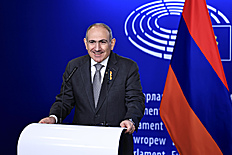
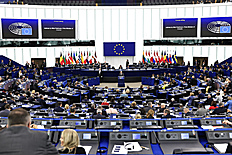
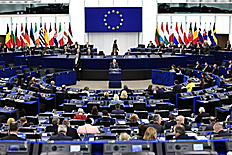
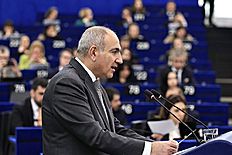
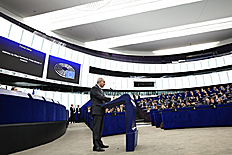
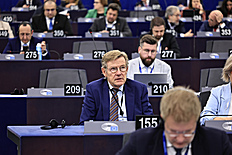
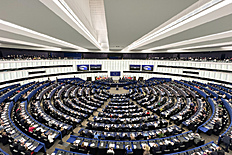
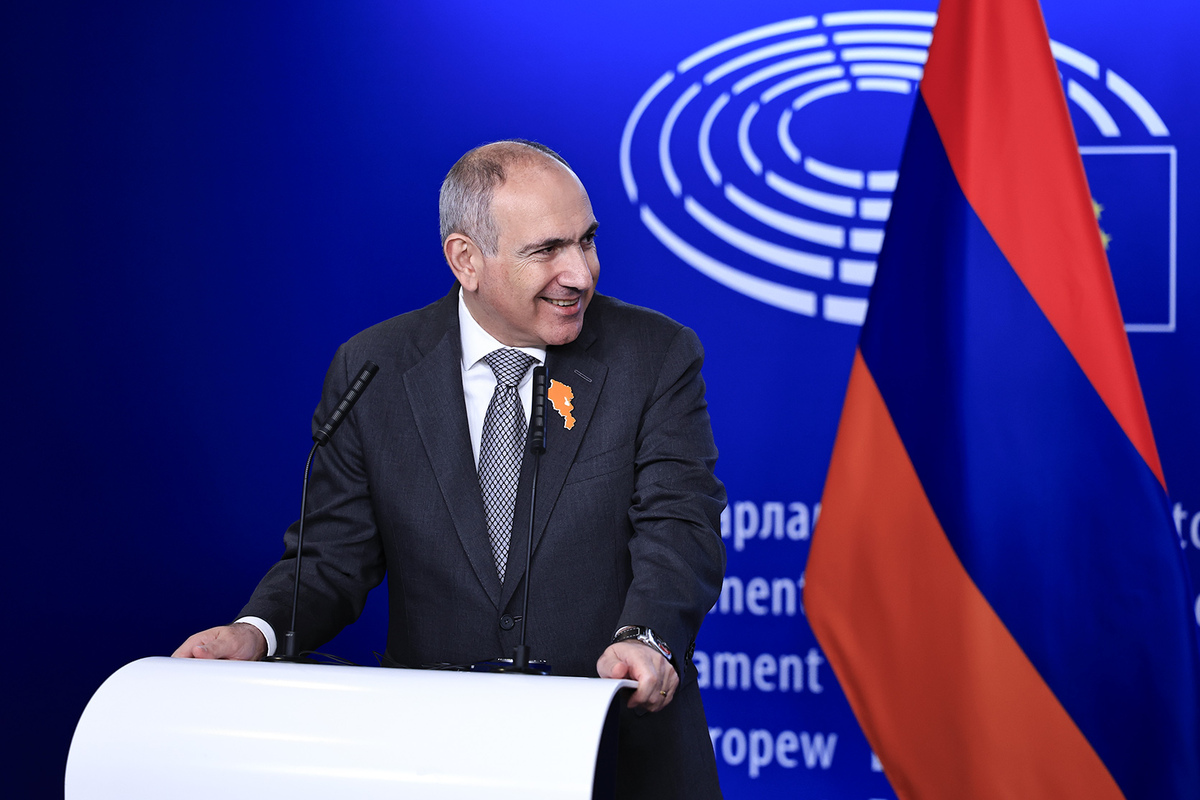
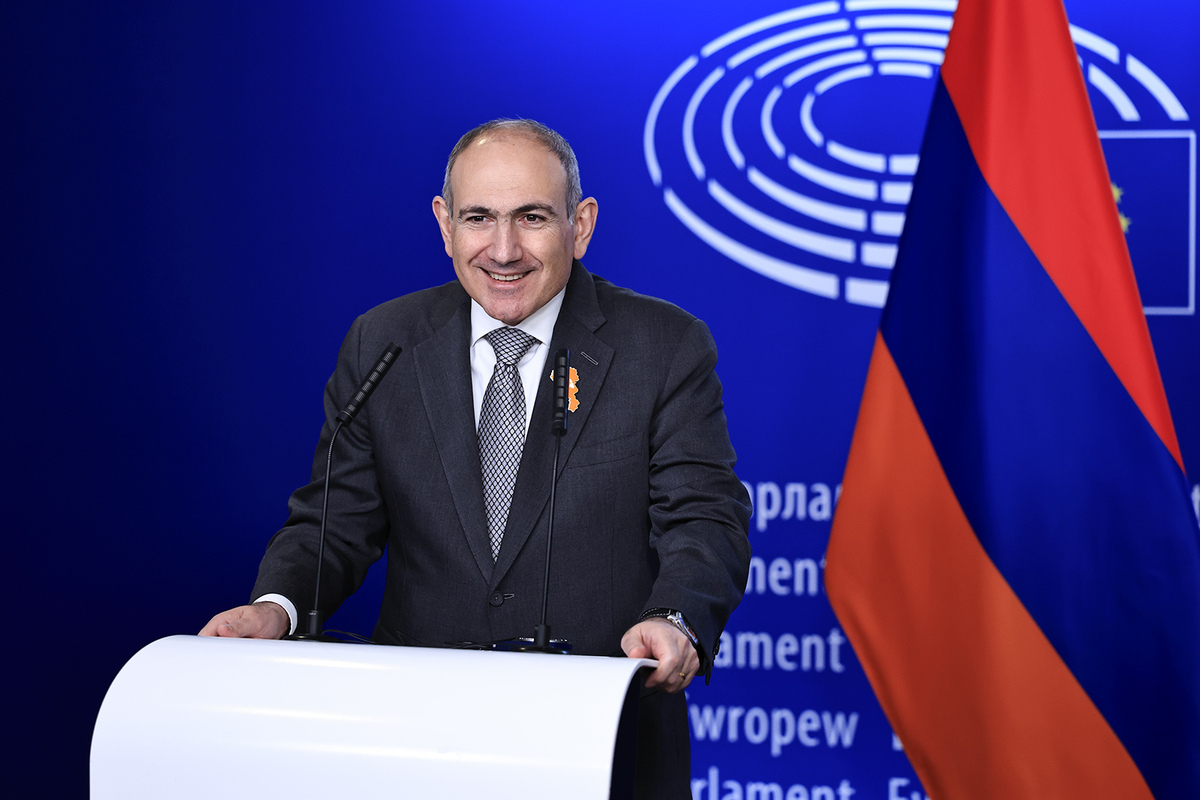
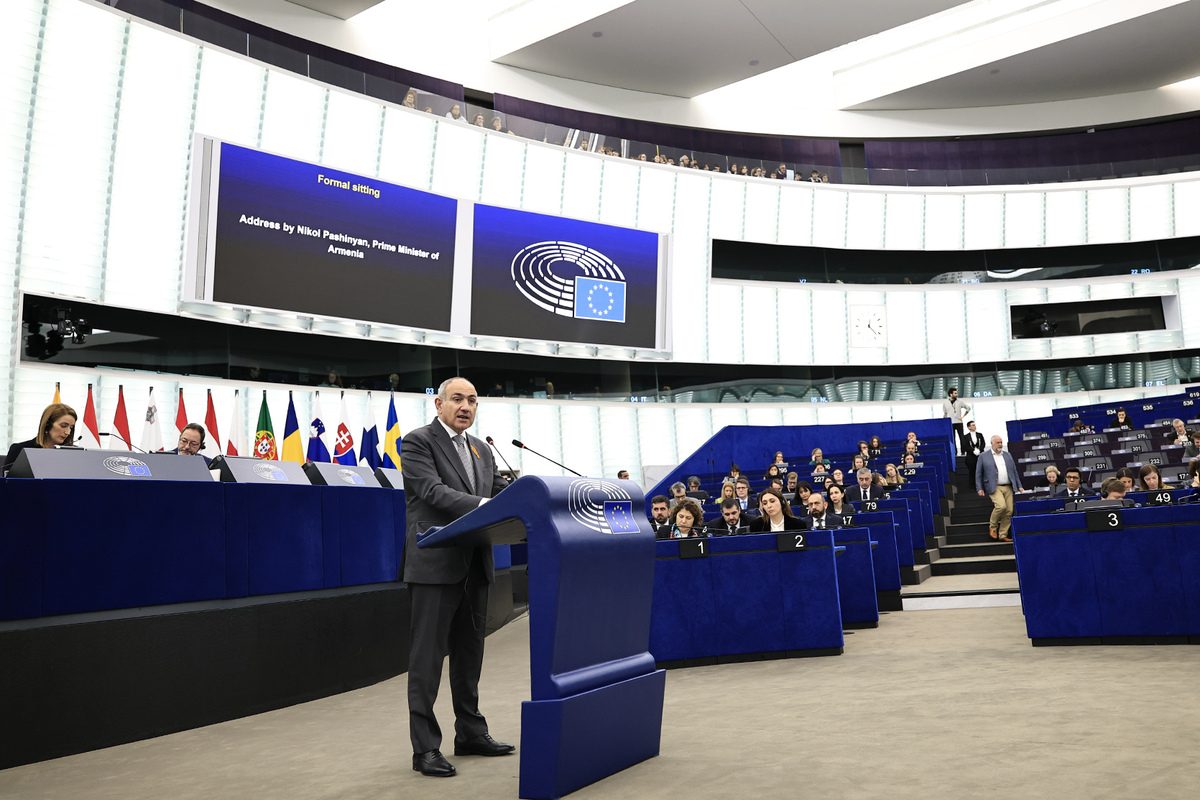
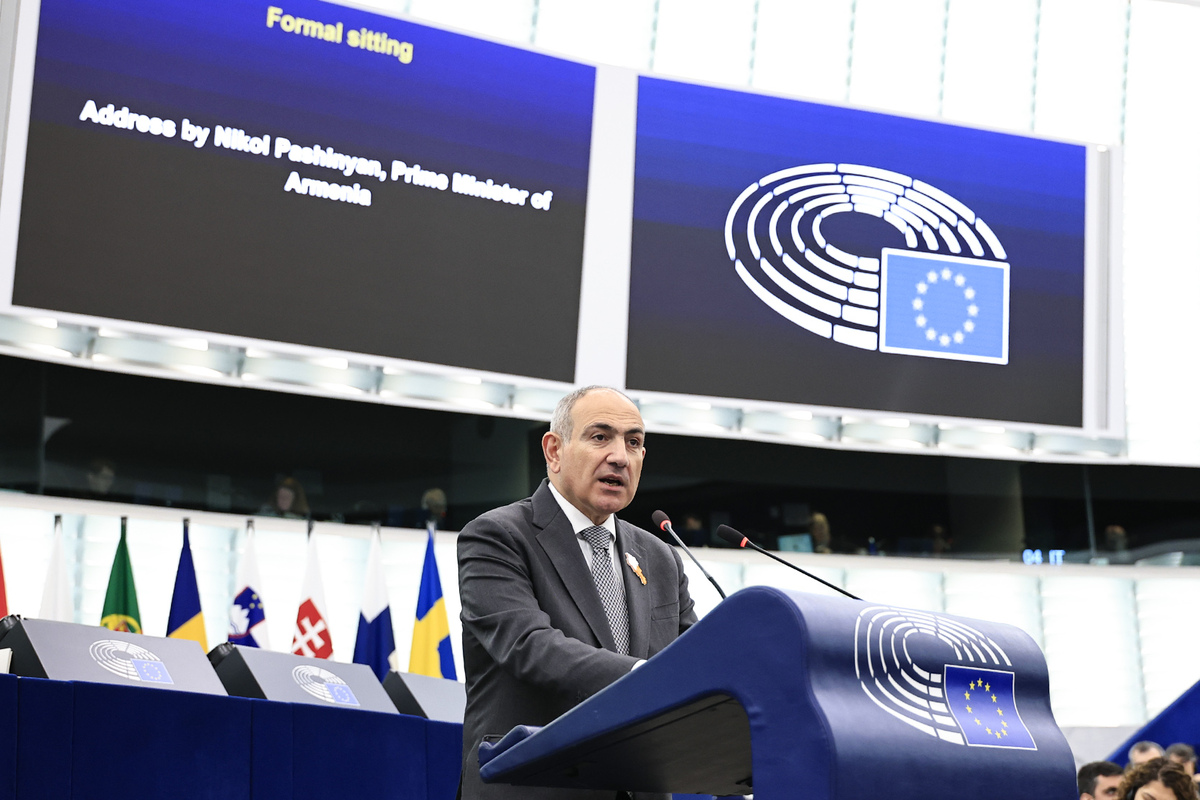
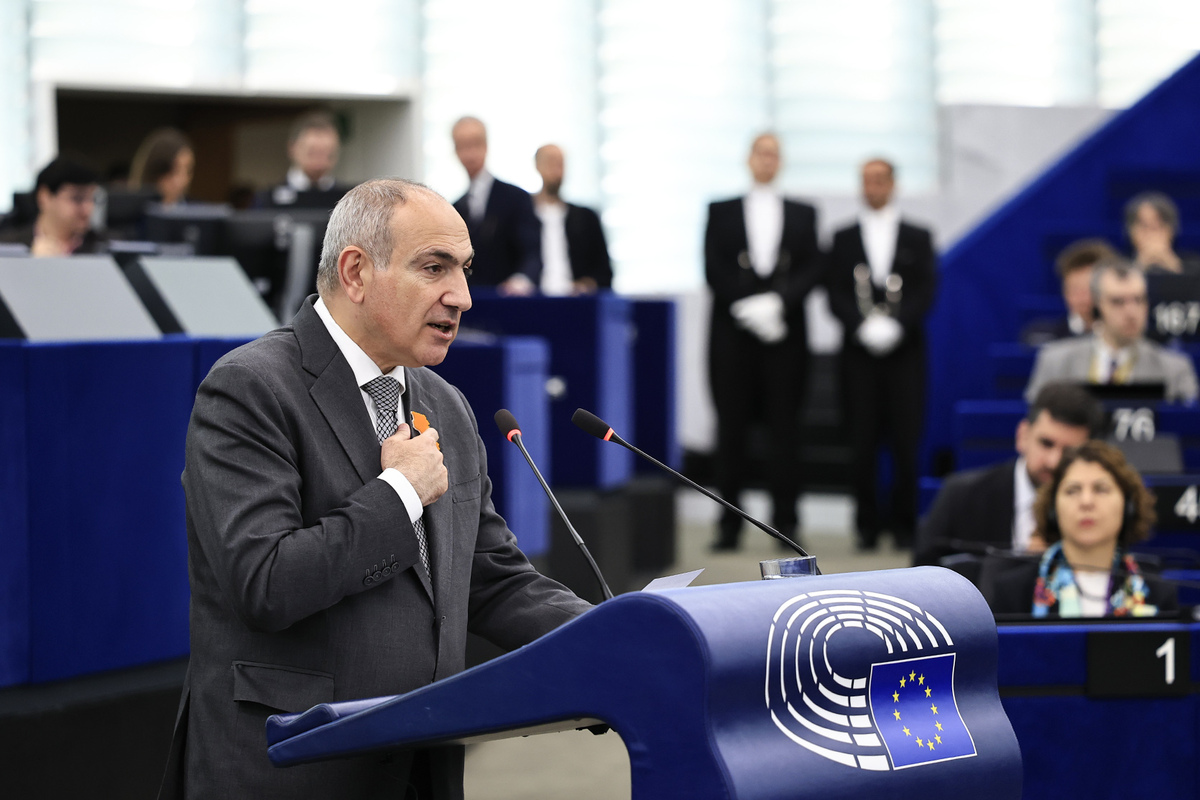
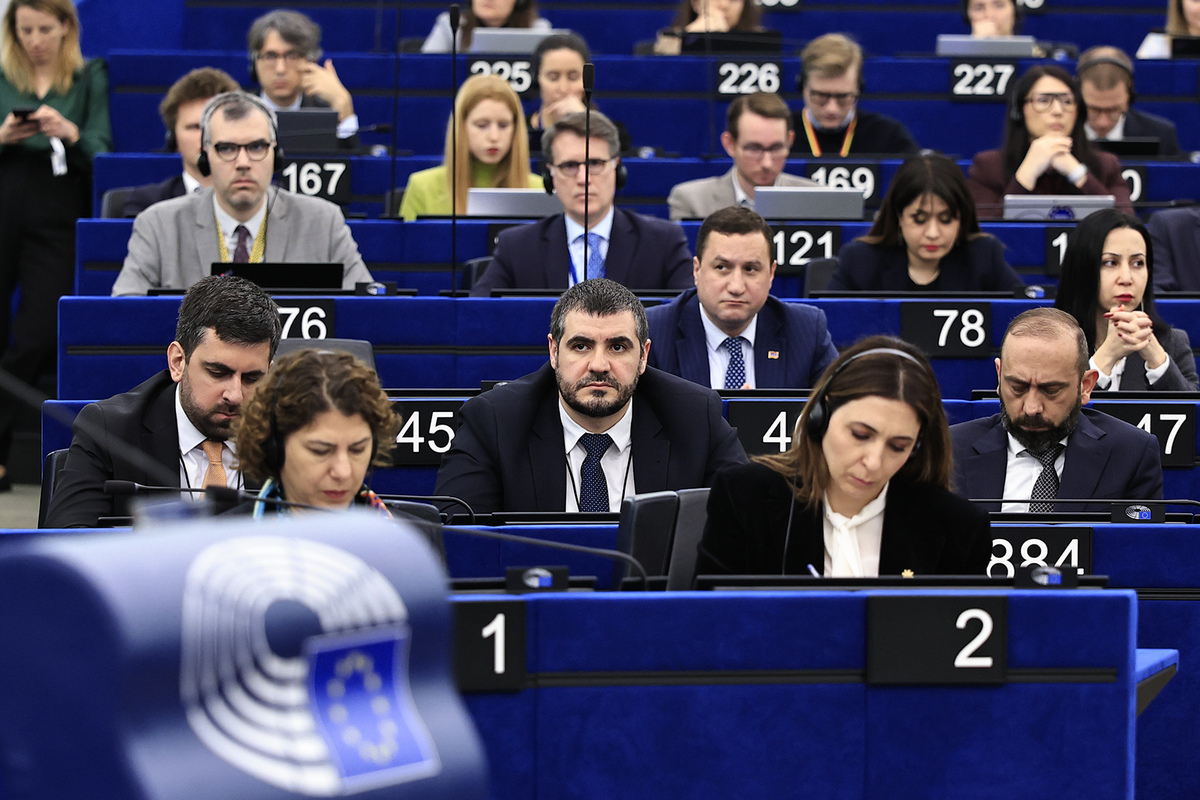
Nikol Pashinyan - It is an honor for me to be hosted here by you, as you mentioned, in the house of democracy. We feel the necessity and the need to return to the house of democracy from time to time to make sure and compare our democratic reform clock with the clocks of the house of democracy, to make sure that our democratic reform process is moving on the right path, at the right speed and in the right direction.
And of course, it is a great honor for us that we have the support of the European Union and the European Parliament on the path of democratic reforms. In my speech today, I also have the opportunity to share how the topics that we have previously had the opportunity to discuss have progressed over the past two and a half years. The most important thing that I said during the meeting is that in 2025 the law “On launching the process of accession of the Republic of Armenia to the European Union” was adopted and entered into force, which opens a new historical stage in the relations between Armenia and the European Union, and this is a new impetus for us to continue the process of democratic reforms.
You have already mentioned that Armenia and the European Union adopted a new strategic agenda, which raises our relations to a new level. Currently, we are actively negotiating on the issue of visa liberalization. During this time, the Republic of Armenia has also received support through the European Peace Facility, the mission of the European Union’s civil observers continues to operate in Armenia, whose role is difficult to overestimate. In general, our high-level political dialogue continues and has taken place at the level of both the executive branch and the legislative branch, as well as civil societies, and I am also pleased to note that we have a fairly large agenda for economic cooperation.
I would like to thank you again for this invitation and opportunity and I look forward to seeing you in Yerevan in early May for the European Political Community Summit.
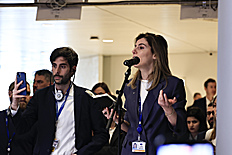
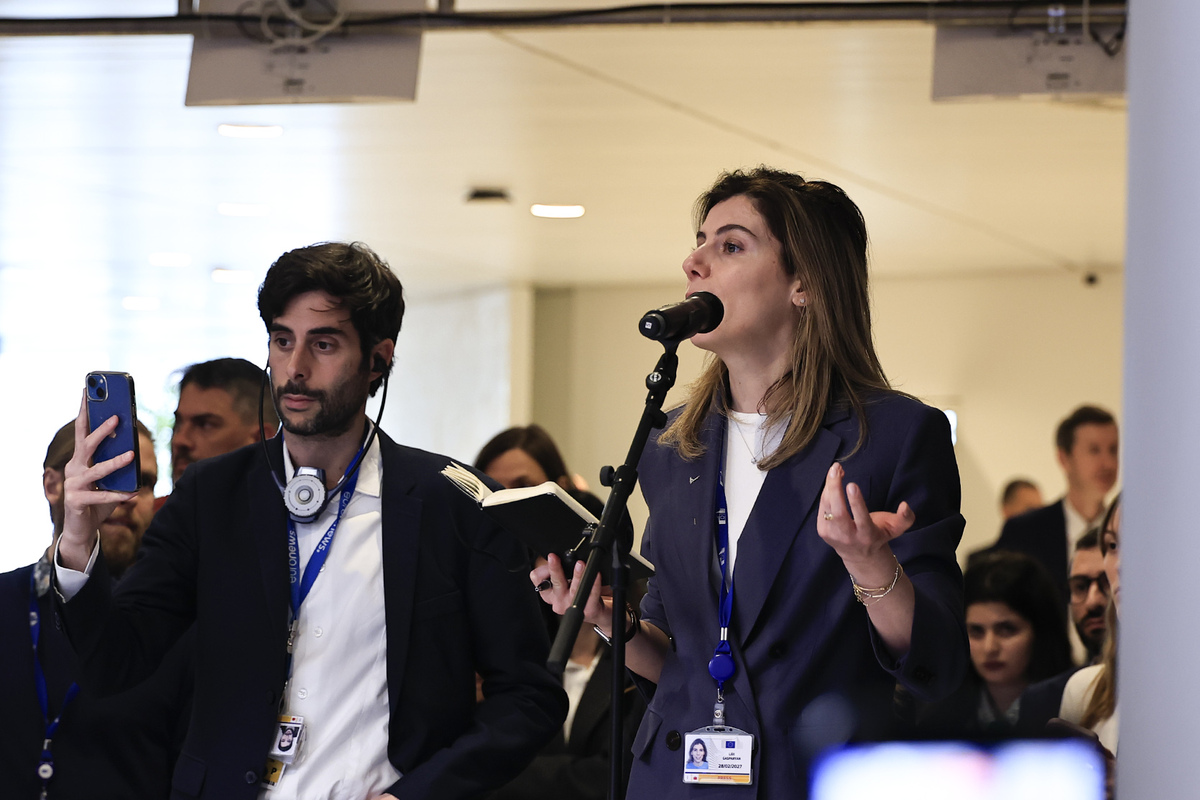
Question – Ms Metsola, my question is for you. Given the European Parliament’s continued support for democracy in Armenia, does the European Parliament envisage any opportunity to expand its presence on the ground, its presence in the country, in order to deepen relations with all political parties and support an inclusive dialogue with all parties? Thank you.
Roberta Metsola - Thank you very much for this question. First of all, both in my speech and in the Prime Minister's speech, I think you saw, the commonality is that there is a very strong commitment to deepening ties with the European Union. We welcome Armenia's firm commitment between parliaments. In our case, there is political dialogue, but more so in the areas of security, trade, regional connectivity. We really want to deepen our cooperation and we have been saying this in this institution for years. Our relations with Armenia have significantly increased, in line with the commitment of our Armenian friends in recent months, we will continue to deepen our relations. That is why we wanted to invite the Prime Minister here today, this is just the first step within the framework of this mandate of ours. Next week, the meeting of the Europe-Armenia Parliamentary Partnership Committee will take place, in addition to the meeting of the European Political Community, the first ever European Union-Armenia summit will take place in May.
As for our presence on the ground, we take these decisions in the Bureau of the European Parliament. A few months ago, we decided to open an office in Moldova, last November, which should deal with the entire Eastern Partnership region, including Armenia. We confirm our full commitment to all our friends in the Eastern Partnership in this regard.
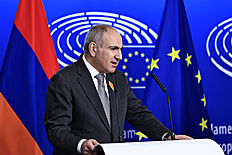
Question - Good morning, Mr. Prime Minister. Regarding the current relations with the European Union, could you please outline the next step, what is it and what is the possible timeframe for the EU-Armenia integration process? And given the current situation, the security situation in the region, does Armenia plan to deepen its cooperation with Europe in the field of defense, including, for example, participation in programs like the SAFE program? Are you currently discussing with any European partners the prospect of increasing security assistance to Armenia in the region? Thank you.
Nikol Pashinyan – You know, we already cooperate with the countries of the European Union in the field of security. We have cooperation with France in the military-technical sphere, I already mentioned that we have already received support from the European Union twice through the European Union Peace Facility. In general, we cooperate with the European Union in a regional context, and the recent peace with Azerbaijan creates an opportunity for us to expand our cooperation with the European Union, including in infrastructure projects.
In response to your question, I would like to mention such a nuance, which I have been talking about a lot recently also within the Republic of Armenia. In general, you know, when people say security, they very often mean weapons, ammunition, the army, special services, operational operations, etc., and we have been in that perception for a very long time, 30 years. The main problem that I see, and the main change in perception that I see, is that in Armenia too they talk a lot, they talk about security guarantees.
It is now obvious to me that the only guarantee of security is peace. There is no more reliable guarantee of security than peace. The second-layer security guarantee is cooperation, interconnectedness, economic cooperation and mutual benefit, because, as I have already said, recently we have also had military-technical cooperation with the United States of America, with a number of European countries, which we have never had before, but, nevertheless, understanding that the development of the army is very important and is not only the right, but also the duty of every sovereign country, our perceptions of security are changing over time, from military to political and diplomatic. And I think that we should put more emphasis on this logic. In Armenia, when I talk about this, I say that the army is not a security tool for us, but a security reserve, if suddenly, under any circumstances, the primary tools of peace that I mentioned, peace, cooperation, interaction and so on, suddenly fail to work.
* * *
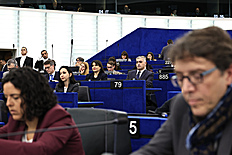
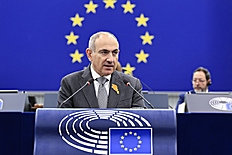
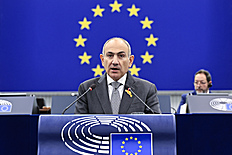
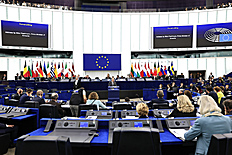
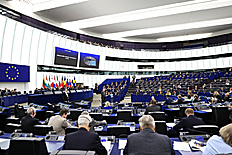
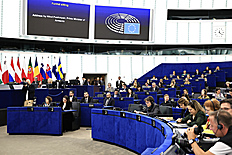
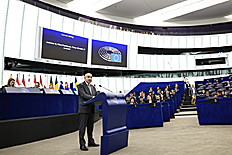
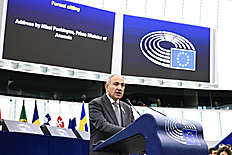
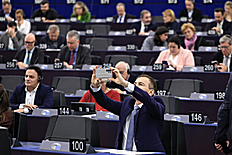
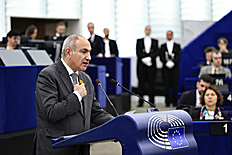
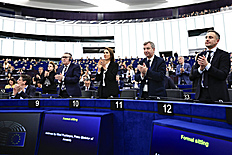
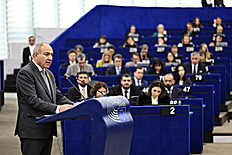
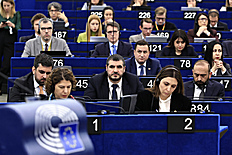
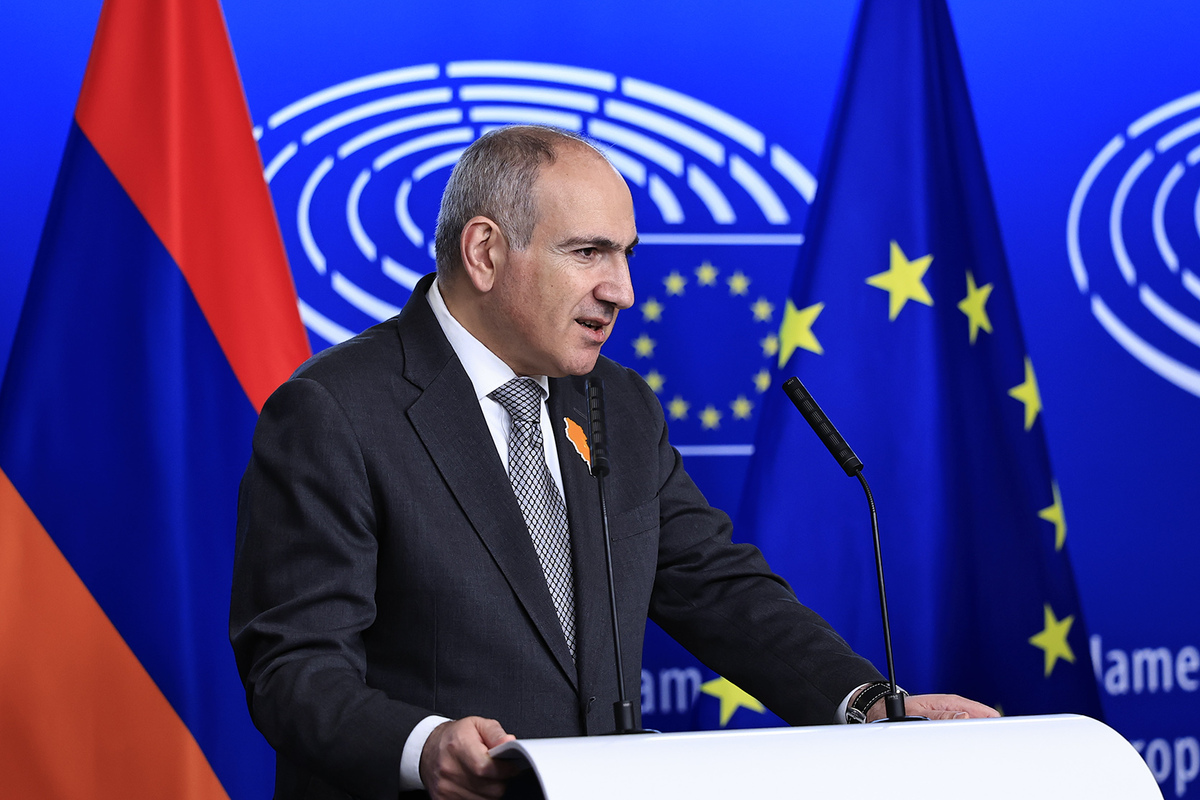
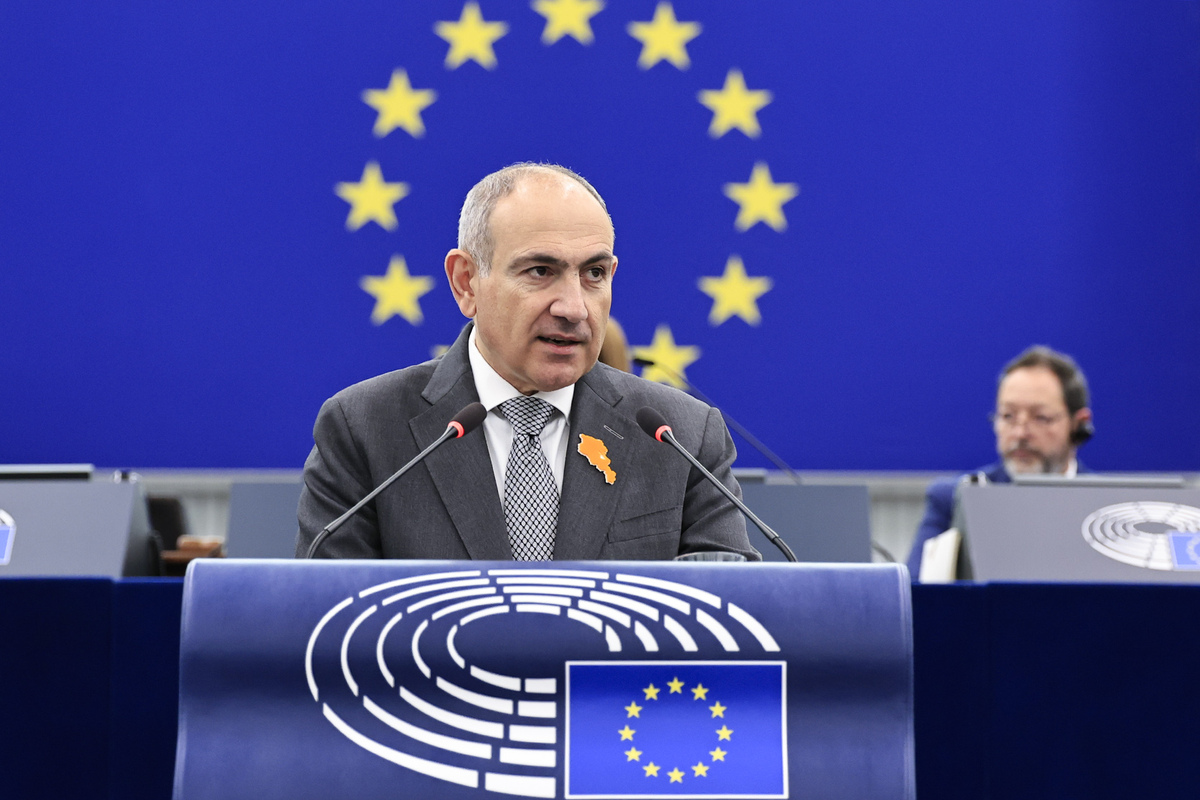
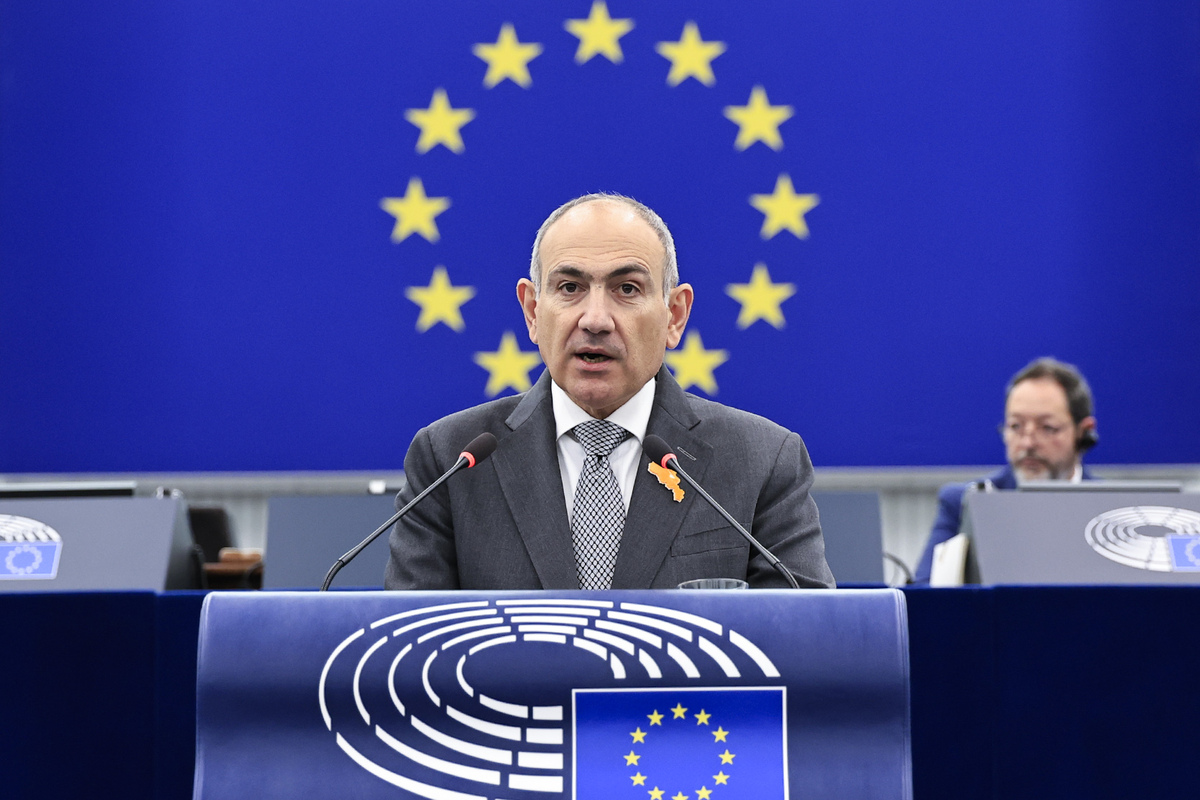
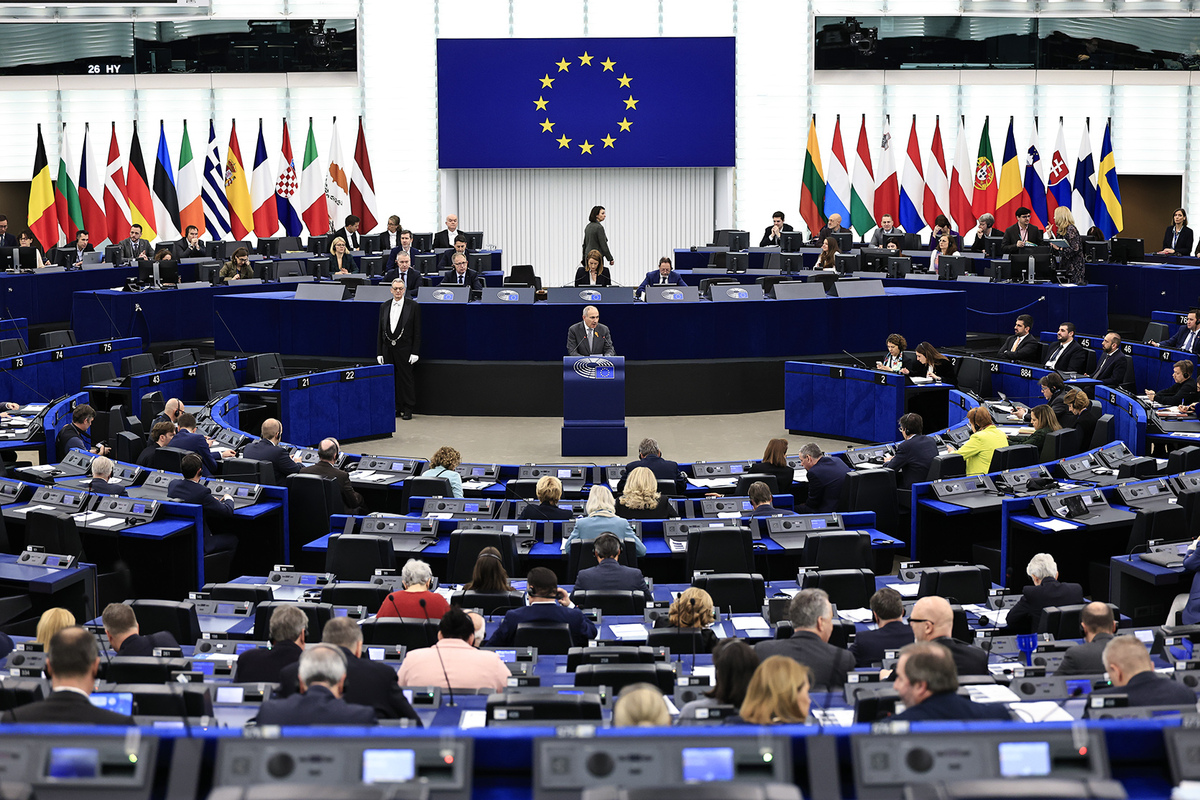
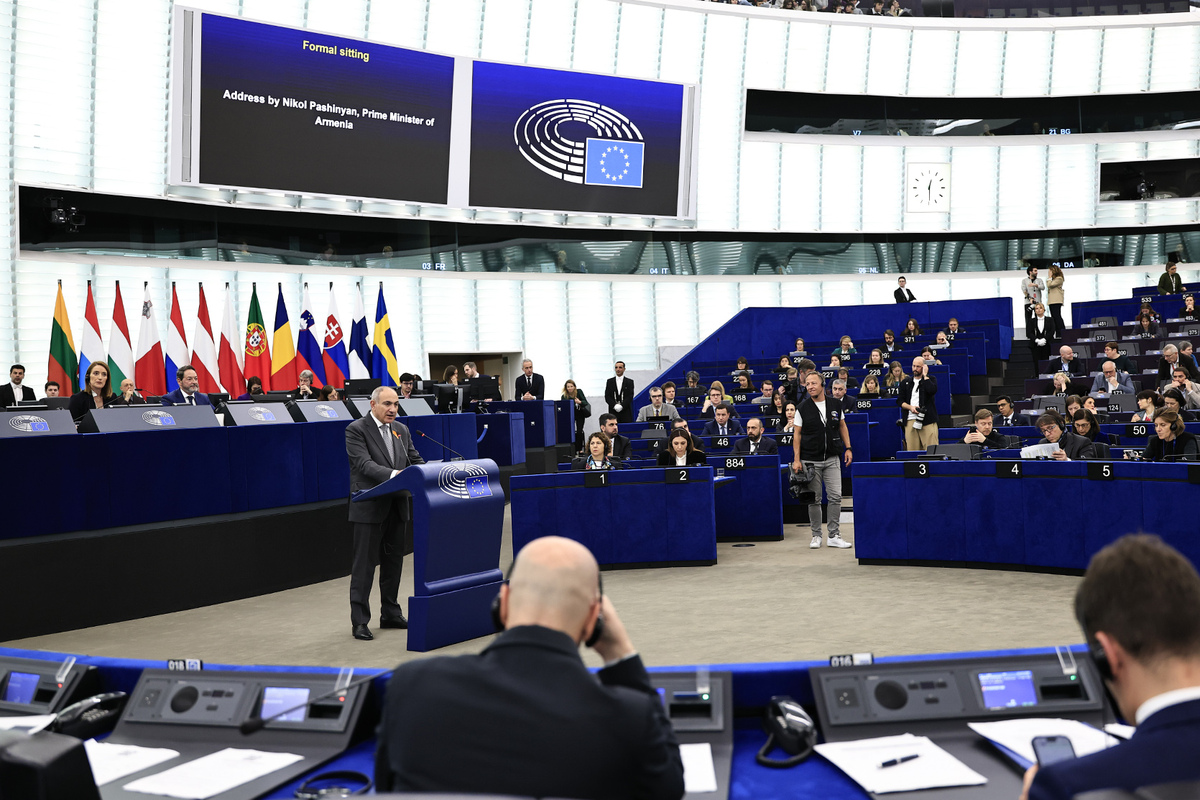
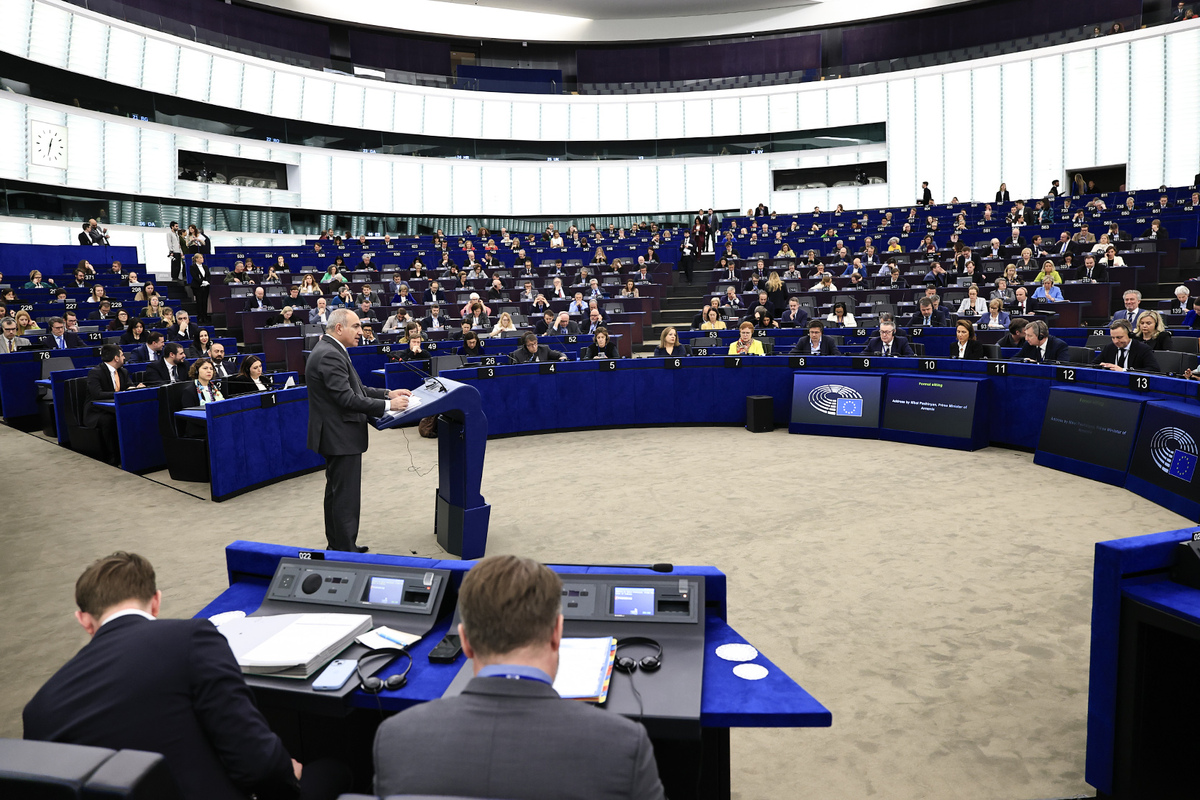
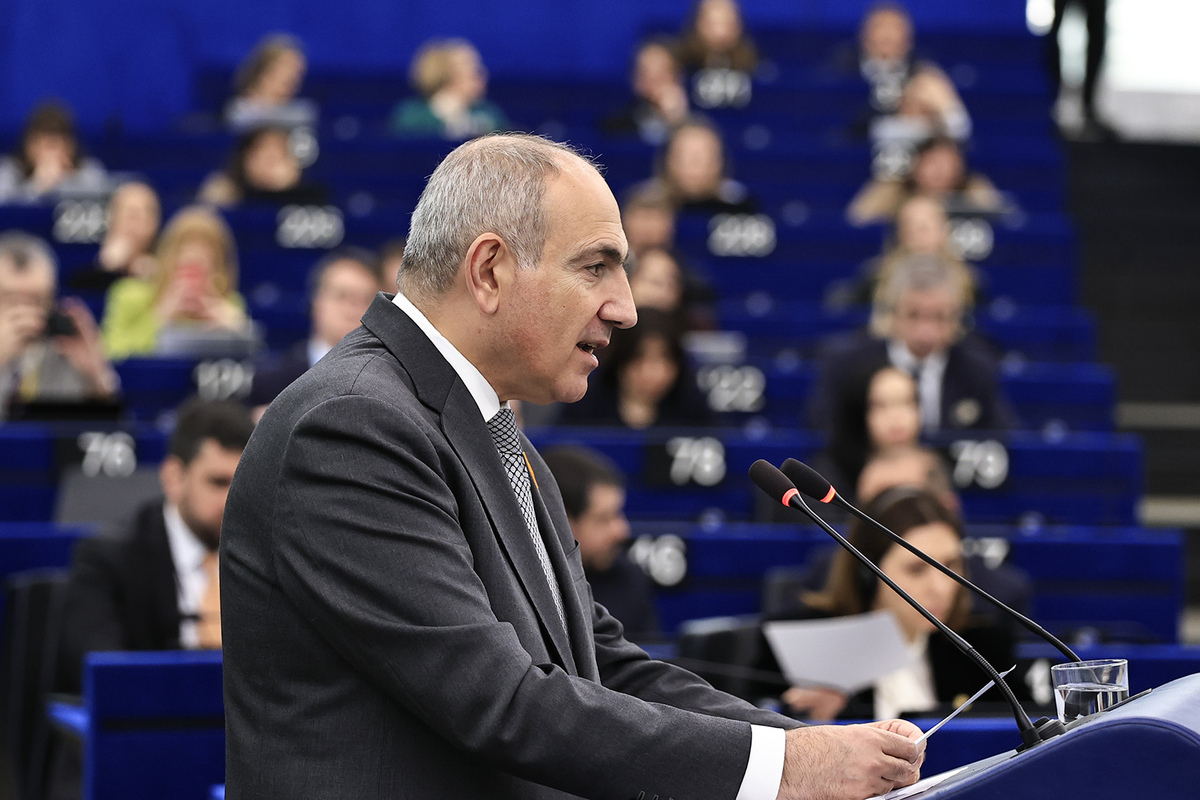
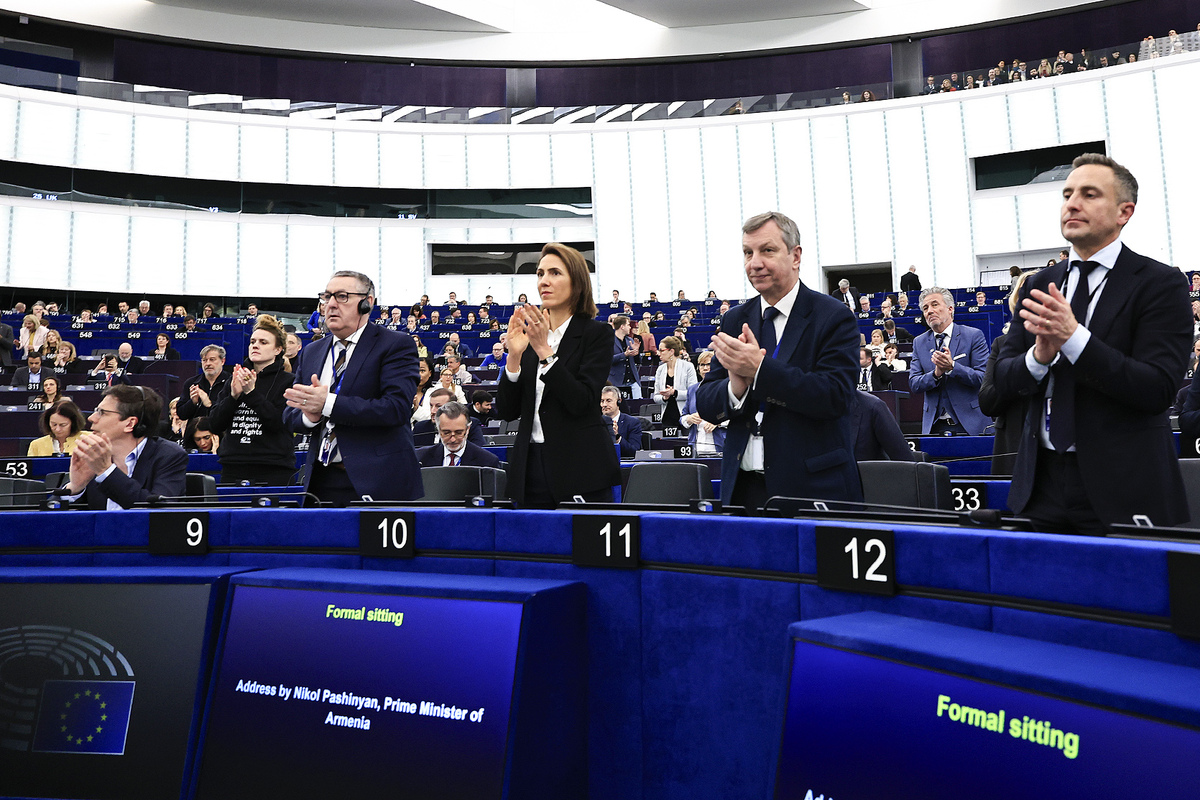
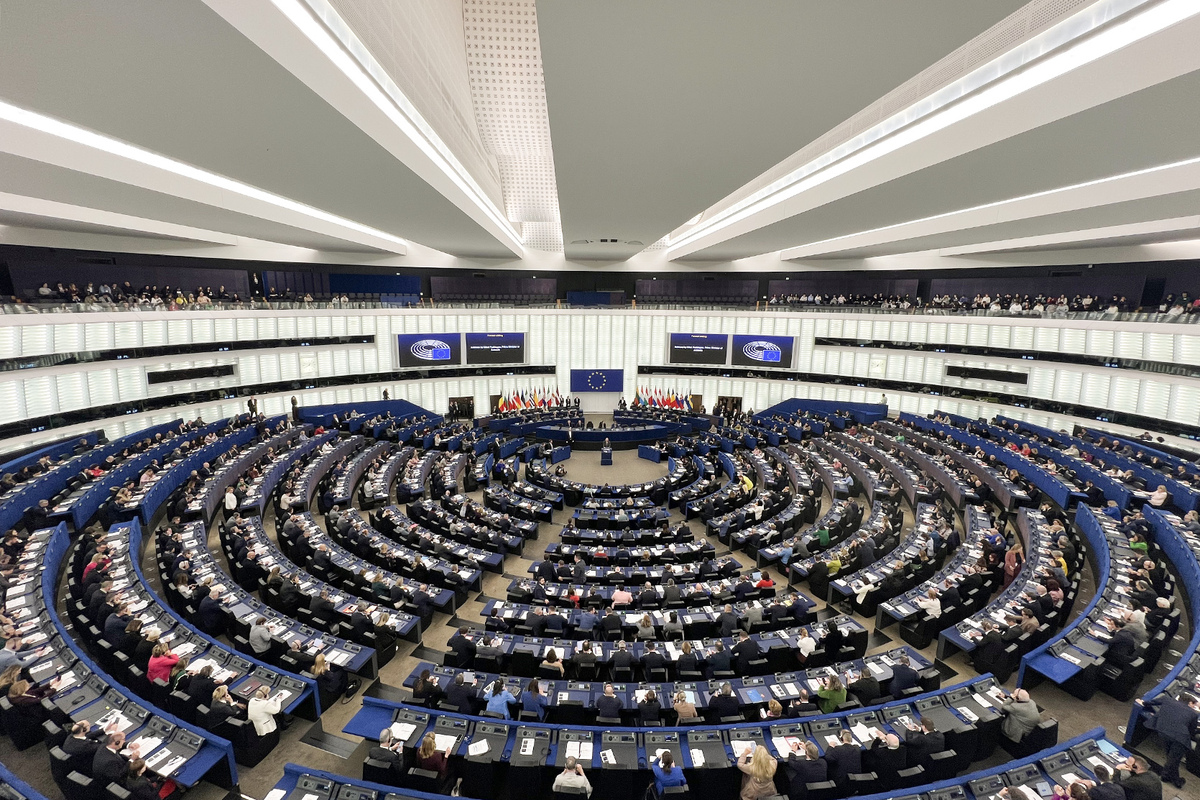
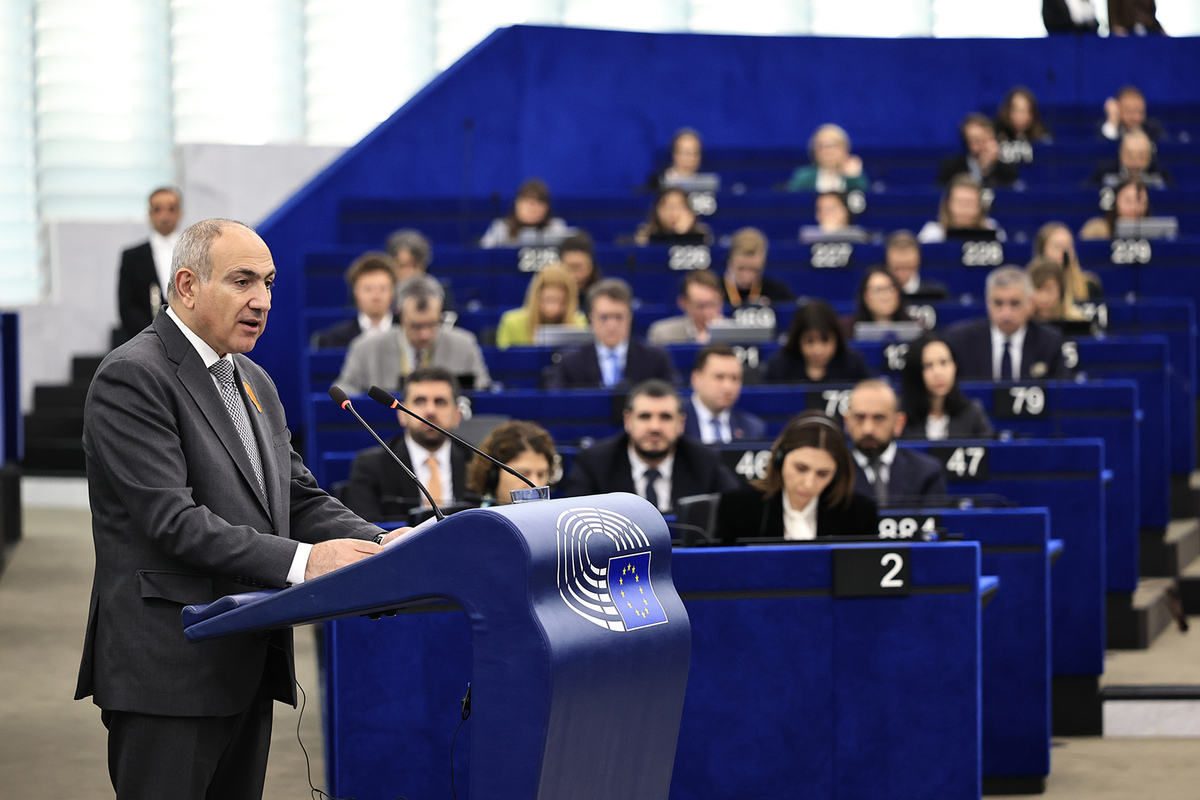
Madam President of the European Parliament, distinguished Members of the European Parliament,
It is an honor for me to tell you that since my last speech from this rostrum, which was on October 17, 2023, changes have taken place in Armenia and in the South Caucasus in general that are of century-long, if not millennia-long significance.
And only two years and five months have passed since my last speech.
The most remarkable change is the peace established between Armenia and Azerbaijan, which was recorded on August 8, 2025, in the US capital, Washington, when the President of Azerbaijan Ilham Aliyev and I signed a joint Declaration at the White House, by which we essentially established peace between Armenia and Azerbaijan.
The Declaration was also signed by US President Donald Trump as a witness.
Before that, the Foreign Ministers of Armenia and Azerbaijan had initialed the “Agreement on the Establishment of Peace and Interstate Relations between Armenia and Azerbaijan” in the presence of the US President, the President of Azerbaijan and myself.
The Washington Declaration also resolved the very important and sensitive issue of unblocking regional communications.
In paragraph 3 of the Declaration, it is stated: (I quote) “We reaffirmed the importance of the opening of communications between the two countries for intra-state, bilateral, and international transportation for the promotion of peace, stability, and prosperity in the region and in its neighborhood on the basis of respect for the sovereignty, territorial integrity, and jurisdiction of the States. These efforts are to include unimpeded connectivity between the main part of the Republic of Azerbaijan and its Nakhchivan Autonomous Republic through the territory of the Republic of Armenia with reciprocal benefits for international and intra-state connectivity for the Republic of Armenia.” (end of quote).
And already in point 4 of the Declaration it is stated (I quote): “The Republic of Armenia will work with the United States of America and mutually determined third parties, to set forth a framework for the “Trump Route for International Peace and Prosperity” (TRIPP) connectivity project in the territory of the Republic of Armenia. We confirm our determination to pursue efforts in good faith to achieve this goal in the most expeditious manner.” (end of quote).
The TRIPP program is currently in the crystallization stage. On January 13, the governments of the United States and Armenia adopted the framework for the implementation of the TRIPP, in the near future a corresponding agreement will be signed between Armenia and the United States and the practical implementation of the project will be launched.
This program, which stems from the “Crossroads of Peace” project of the Government of Armenia, will create new transport opportunities for communication from east to west and vice versa, from south to north and vice versa, which is also an epoch-making change. It is important to emphasize that I first spoke about the "Crossroads of Peace" project on October 17, 2023, from this rostrum of the European Parliament, and the developments described above open up new opportunities for the European Union and Armenia in terms of deepening and concretizing cooperation in the field of transport communications.
Madam President of the European Parliament, distinguished Members of the European Parliament,
The positive picture I have presented is certainly overshadowed by the events taking place right next door, in the Islamic Republic of Iran and in a number of Middle Eastern countries. Iran is our good friend, our thousand-year-old neighbor. You already saw the extent of our relations with the United States. The United Arab Emirates, Qatar, Oman, Kuwait, Jordan, Lebanon, Bahrain, Syria are our good partners. We have recently taken a historic step with Saudi Arabia, establishing diplomatic relations. We are pained by what is happening in the Middle East. Against the backdrop of such an international crisis of such magnitude, we are a small, modest state, and we can only pray for the repose of the souls of all the victims and for the wisdom of our partner leaders to find diplomatic solutions as soon as possible.
Distinguished Members of the European Parliament, Madam President of the European Parliament,
For 8 months now, complete peace has been established on the Armenia-Azerbaijan border. 2025 has become the first calendar year since our independence, that is, since 1991, when there were no casualties or injuries as a result of Armenia-Azerbaijani shooting. For months now, residents of the border settlement have not heard the sounds of gunfire.
Moreover, for the first time since independence, in November 2025, a train arrived in the Republic of Armenia through the territory of Azerbaijan, also passing through Georgia. This happened after the President of Azerbaijan announced in October 2025 that he was lifting the restriction on rail transportation through the territory of Azerbaijan to Armenia, and I am grateful to the President of Azerbaijan for such a decision.
We, in turn, have announced that we are ready to ensure transit from Azerbaijan to Türkiye and vice versa right now, because we can do this using our existing roads at the moment. Neither Azerbaijan nor Türkiye have taken advantage of this opportunity yet.
I assume that this is because they think that such a solution might delay the implementation of the TRIPP project. From this rostrum, I officially declare that Armenia has not only no intention, but also no reason to delay the implementation of the TRIPP project, because the project fully meets the short-term, medium-term and long-term interests of the Republic of Armenia and, as you saw from the above-mentioned quote, does not in any way undermine the sovereignty, territorial integrity, or jurisdiction of the Republic of Armenia.
Now I also want to say that the Republic of Armenia is ready to provide a road connection between the western regions of Azerbaijan and the Nakhchivan Autonomous Republic via the Kornidzor-Goris-Yeghegnadzor-Yeraskh route using the existing infrastructure.
This proposal of ours is not intended to delay, disrupt, or forget the Washington agreements in any way, and I say this officially. We are making these proposals because we ourselves, as I mentioned above, are using the Azerbaijani railway in a slightly alternative way. Just as Azerbaijan is waiting for the establishment of a connection through the territory of Armenia to Nakhchivan, so we are waiting for the establishment of a railway connection between the south and north of Armenia through the territory of Nakhchivan. This railway route has no alternative for Armenia, the mountainous terrain of Armenia does not allow for a railway connection between the south and north of the country in any other way. As you can see, the expectations of Armenia and Azerbaijan do not contradict each other.
We are also going to use the Georgia-Azerbaijan railway for export. I hope that in the near future Azerbaijan will also become an export destination for Armenia. And Armenia is already importing oil products from Azerbaijan, which has caused a decrease in oil product prices in our market and has broken the monopolies established in the oil product market for decades.
I would also like to thank the Prime Minister of Georgia for supporting the railway communication between Armenia and Azerbaijan and the peace process in general.
Dear attendees,
Especially on international platforms, I am often asked why peace between Armenia and Azerbaijan become possible in 2025, while it was not possible before, what is the reason for this, what changed anyway?
First of all, of course, the personal involvement and initiative of the President of the United States, Donald Trump, was essential and turning point.
The second factor that made peace possible was the realization of the interconnectedness of the last 100 years of history of Armenia and Azerbaijan. In 1918, the two countries gained independence on the same day. Two years later, in 1920, they lost their independence with a time lapse of months.
In 1991, Armenia and Azerbaijan gained independence again with a time lapse of months, or one could even say on the same day, when the Alma Ata Declaration recorded the end of the Soviet Union.
The Armenian-Azerbaijani clashes of 1920 were one of the key factors that prevented the two countries from maintaining and developing their independence.
Now, a century later, we live in an equally complex region, and geopolitical floods, like at the beginning of the 20th century, will not spare us now if we do not take care of ourselves, because conflict and enmity are the virus that blinds us, makes our independence and statehood vulnerable, and makes us a tempting target for deadly geopolitical diseases. And so, the realization of the strategic interdependence of our destinies is another essential factor that made peace between Armenia and Azerbaijan possible.
In order not to give room for misinterpretations, I would like to emphasize that this is my personal opinion and in my personal conviction that in March-April 2024 we had reached the brink of Armenia’s statehood and if in April 2024 we had failed to make a decision to launch the process of demarcation with Azerbaijan, the Republic of Armenia would be a territory under foreign rcontrol at best today.
Moreover, making that decision to demarcate was very difficult. With the encouragement of the de facto chief of our church, one of the archbishops had started a movement in Armenia demanding not only not to carry out the demarcation, but also to essentially activate the Karabakh movement, or rather, the conflict.
Tens of thousands of citizens, succumbing to the disinformation campaign carried out by high-ranking clergymen and their supporting opposition forces, who claimed that the Government was preparing to cede the sovereign territories of Armenia and the ancient churches and settlements located in them to Azerbaijan, took to the streets.
You can imagine what this meant for our Government and political team, which came to power through the people's, non-violent, velvet revolution of 2018.
And how did we solve the problem?
We talked to our employer, the people. And now, the village of Kirants in Tavush region, which the leaders of the church-opposition movement had made their symbol, convincing people that the village would be emptied and abandoned, has had about a 50 percent increase in houses with the support of the Government after the demarcation and today is an absolutely peaceful, safe and colorful settlement. And the ancient churches are being restored or renovated.
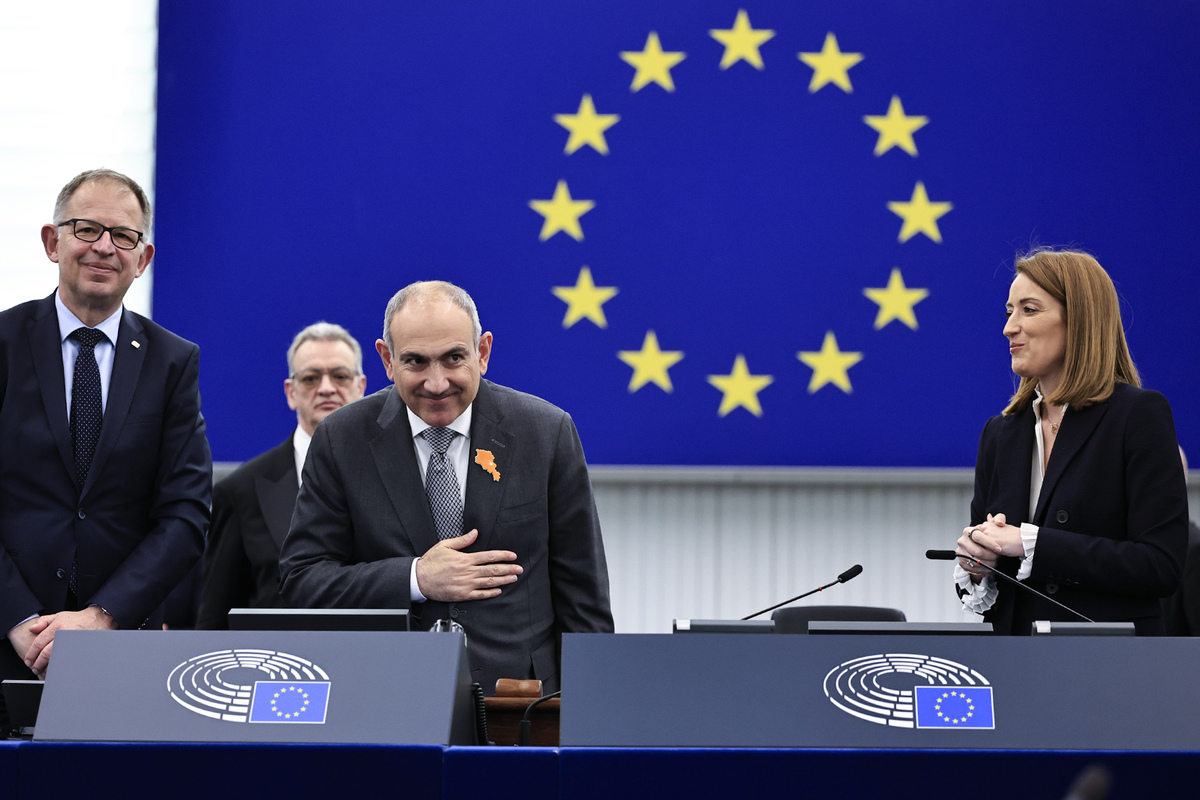
I personally organize visits and tours for groups of citizens to the village of Kirants in Tavush region, to show people what we mean by peace, what I mean by Real Armenia, the symbol of which, the image of the internationally recognized territory of the Republic of Armenia, I carry on my chest.
This is also a symbol of peace, because we established peace between Armenia and Azerbaijan by recognizing each other’s territorial integrity, sovereignty, and political independence on the basis of the Alma Ata Declaration of December 21, 1991, according to which Soviet Azerbaijan became independent Azerbaijan, Soviet Armenia became independent Armenia, and this is the outline of the map of the territory of independent Armenia.
I would not have touched upon the topic of the involvement of some clergy in this process against peace, if I had not seen how the emissaries of these clergy and representatives of some lobbying organizations affiliated with them are trying to spread in the European Parliament and other authoritative international structures that the Armenian Government is restricting freedom of conscience, that a dictatorship is being established in Armenia, that there are political prisoners in Armenia.
The reality is that some clergymen, who cynically violated all the rules of spiritual good conduct, thus making themselves vulnerable to foreign special services (by the way, the fact that some of them were agents of the USSR KGB is proven by documents), have assumed the leadership of the war party in the Republic of Armenia, consolidating around them the former leaders of Armenia, some forces associated with them, some pro-Russian and pro-Belarusian oligarchs, and are trying to sacrifice Armenia's independence to the interests of third countries.
We will not allow a new conflict, a new war, we will not allow the consciousness, peace and independence gained at the cost of thousands of victims to be sacrificed for anti-Christian purposes. In the text of our liturgy of the Armenian Apostolic Holy Church, the word peace is mentioned more than 40 times, and it is not only about the person, the soul, but also about world peace, about which there are dozens of supplications in the canonical text of our liturgy, to our Lord and Savior Jesus Christ, and today some are using the altar of Christ to preach conflict, war and/or intra-Armenian violence, trespassing the boundaries of the legislation of the Republic of Armenia. This cannot be tolerated in any democratic country.
Honorable President of the European Parliament, distinguished Members of Parliament, dear guests,
One of our important tasks is also to ensure that the emotions of our Karabakh sisters and brothers who have become refugees are not exploited, giving them false hopes.
Our strategy in this regard is very clear: our Karabakh sisters and brothers must receive Armenian citizenship and be permanently settled in the Republic of Armenia. We have already launched their resettlement program, which has benefited 4,886 families so far. We need the greatest possible support from our international partners to solve this problem aimed at strengthening peace.
Dear guests,
We are criticized that the peace established between Armenia and Azerbaijan is not perfect. Please tell me, where is the peace perfect, where is there perfect peace and where has it been and when?
And on the contrary, it is the will to care for peace that can make it as close to perfect as possible and this is how we approach all issues, including the issue of our compatriots held in prison in Azerbaijan. Recently, Azerbaijan released four more of our compatriots.
The Armenian society, we all experienced happiness on that occasion. But the Government very quickly returned to continuing its silent diplomatic work, for the sake of the return of others, because I am convinced that if we had not previously chosen the style of silent diplomatic work, the return of our four compatriots on January 14 would simply not have taken place.
Honorable President of the European Parliament, distinguished Members of Parliament, dear guests,
The next incredible change that has taken place in Armenia since my previous speech is that in March 2025, the law “On the Launch of the Process of the Republic of Armenia’s Accession to the European Union” was adopted in our country, which entered into force in April 2025.
This is the political crystallization of the statement I made from this podium on October 17, 2023, that the Republic of Armenia is ready to be closer to the European Union, as much as the European Union deems it possible.
Now, after the adoption of this law, many in Armenia are asking when Armenia will become a member of the European Union. Our answer is very clear: no country can become a member of the EU without meeting the standards of the European Union. Therefore, our task is to continue the path of reforms with the support of our European partners and first objectively meet the criteria for EU membership.
When this happens, there will be two ways: either the EU will accept us as a full member, or it will not. I say this because I understand that EU enlargement, the inclusion of a new member, is not a simple matter, and is also a matter of political decision.
Therefore, if the EU accepts Armenia as a full member, it is very good. If it does not, we will still benefit, because we will be a country that complies with EU standards.
I must say frankly, however, that the biggest problem on the path of Armenia’s integration into the EU at the moment is the frozen state of the political dialogue between the European Union and Georgia. Georgia is a path for us to the European Union, and we adopted the law on the launch of the process of Armenia’s accession to the European Union after Georgia received the status of a candidate for EU membership. This made Armenia’s EU membership prospect tangible, and it is our expectation and request that the European Union-Georgia constructive process should develop. This is important for Armenia, just as important as for Georgia.
Honorable President of the European Parliament, distinguished Members of the European Parliament, dear guests,
The people's non-violent, velvet Revolution that took place in Armenia in 2018 was based on the understandings of freedom, democracy, and the rule of law. We kept our democracy viable and developing in conditions of war, but we also understood that it is peace that paves the way for making democracy irreversible. In reality, we have achieved peace thanks to democracy, thanks to our commitment to democratic values, because we were able to overcome the patterns of thinking imposed on Armenia by listening to the people, real, living people who yearn for life and peace.
On June 7, 2026, the next parliamentary elections will be held in the Republic of Armenia, and with these elections, our democracy must make peace irreversible, and then, with peace, democracy will become irreversible. We are going this way, and I say this as a legitimate representative of the people of the Republic of Armenia.
Long live peace, long live democracy.
* * *
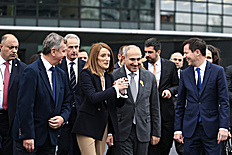
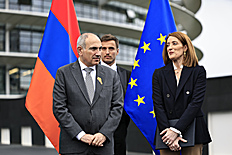
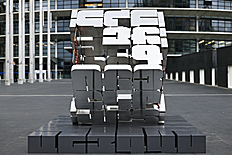
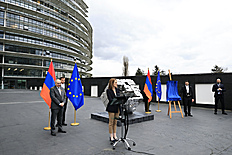
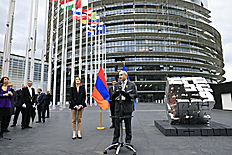
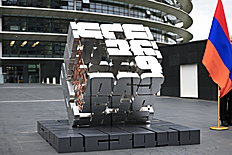
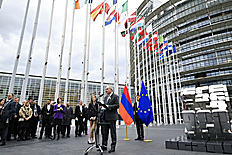
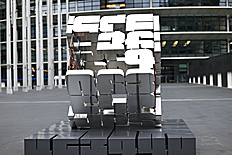
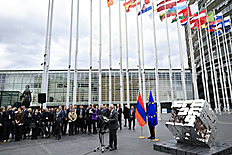
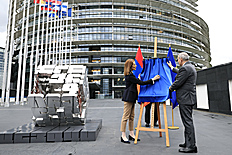
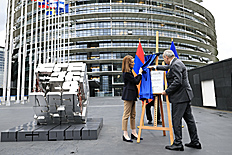
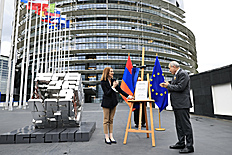
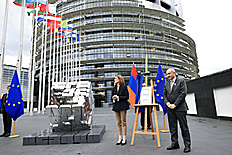
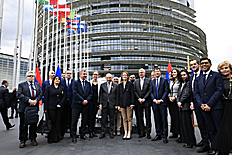
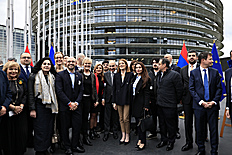
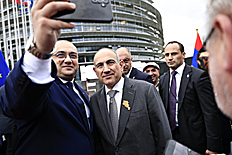
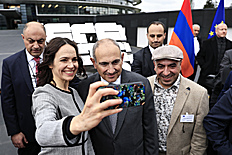
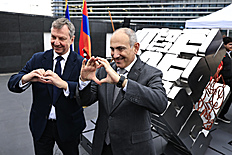
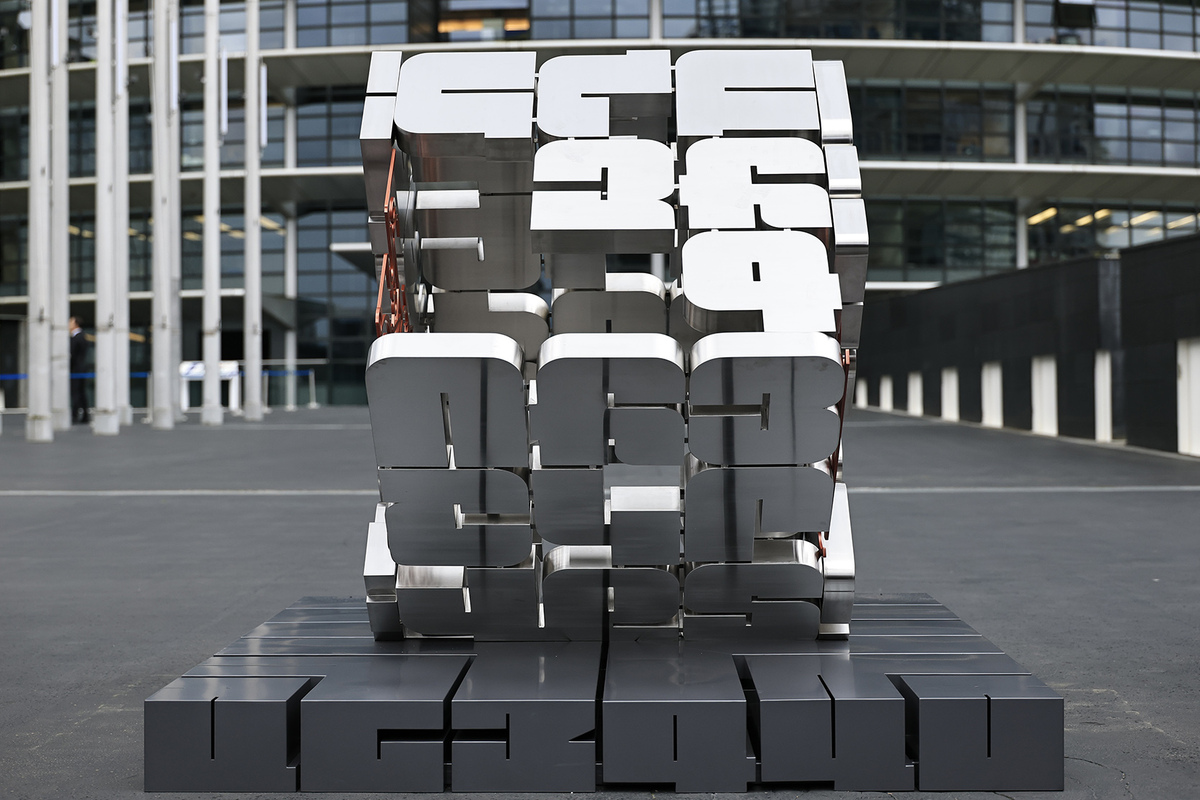
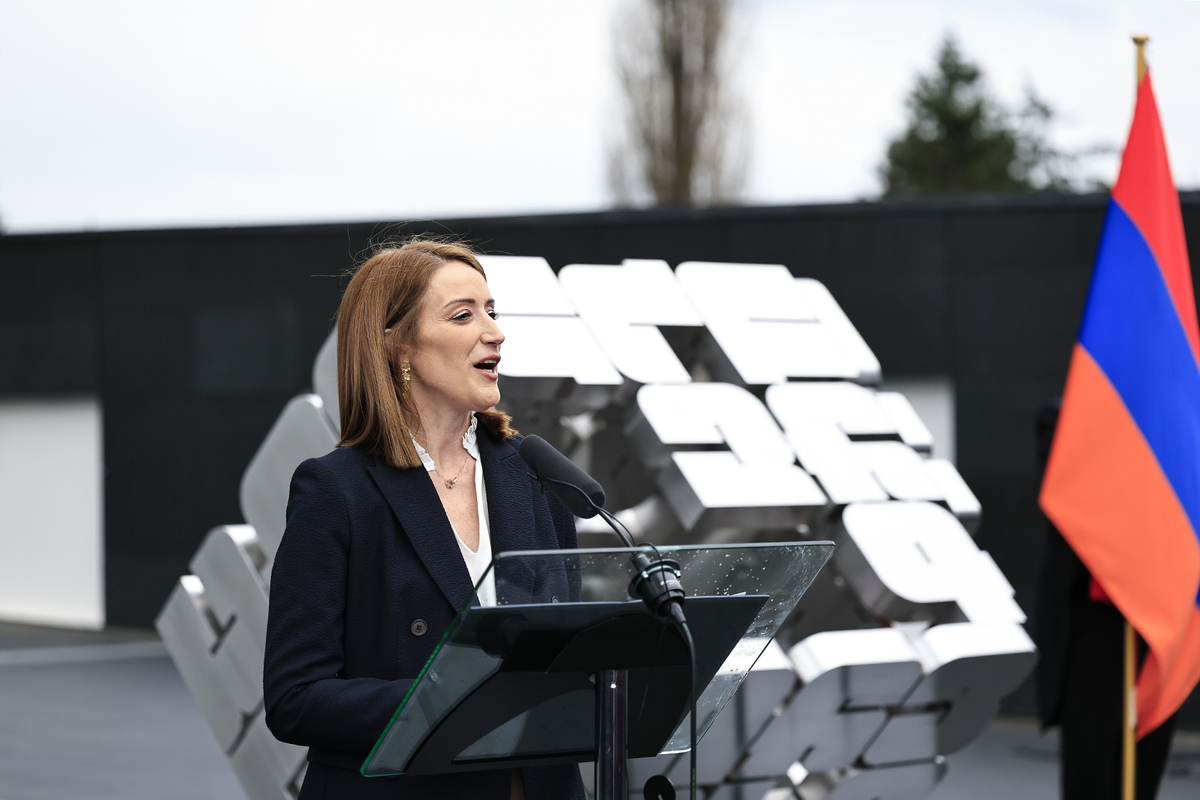
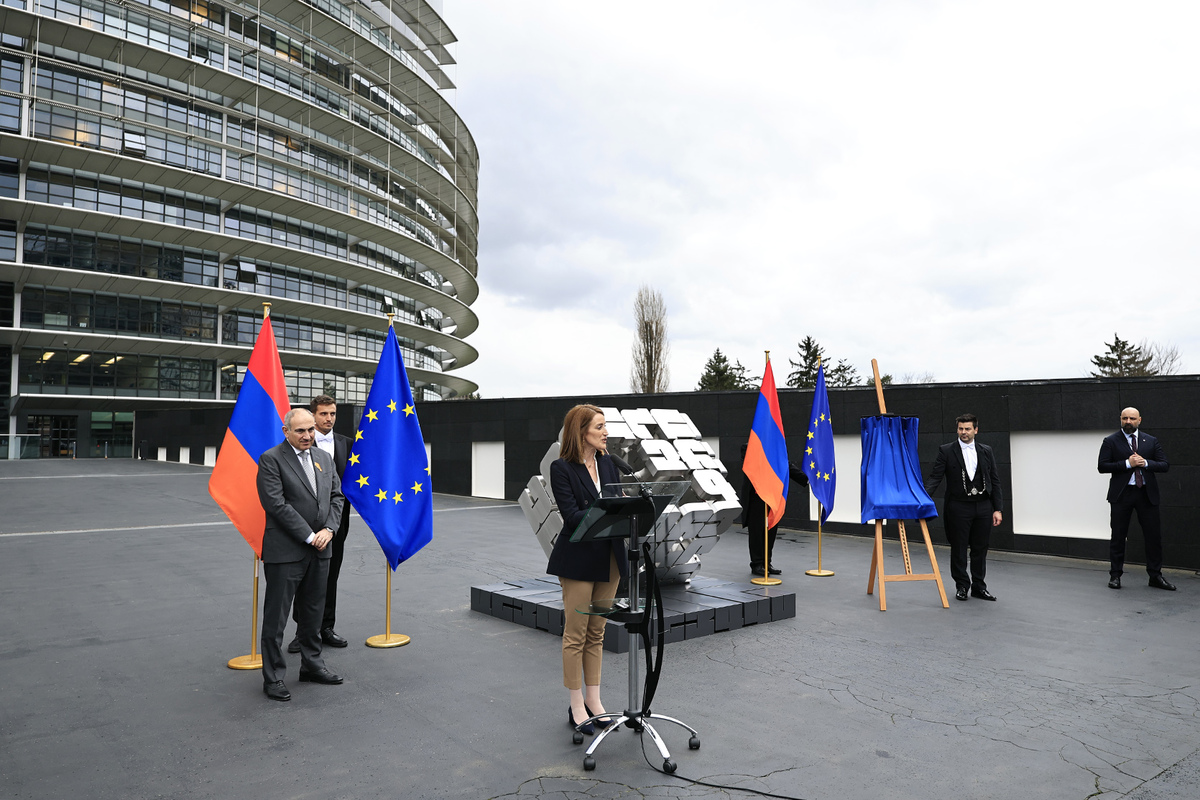
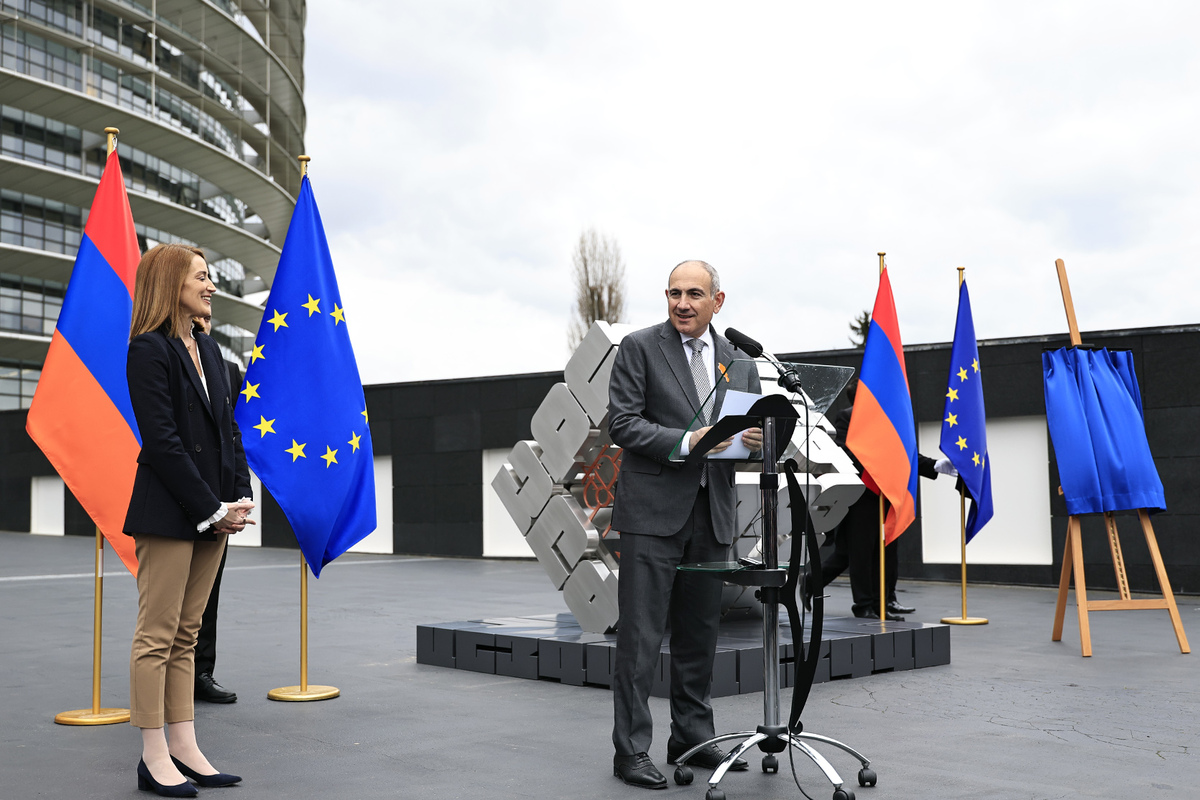
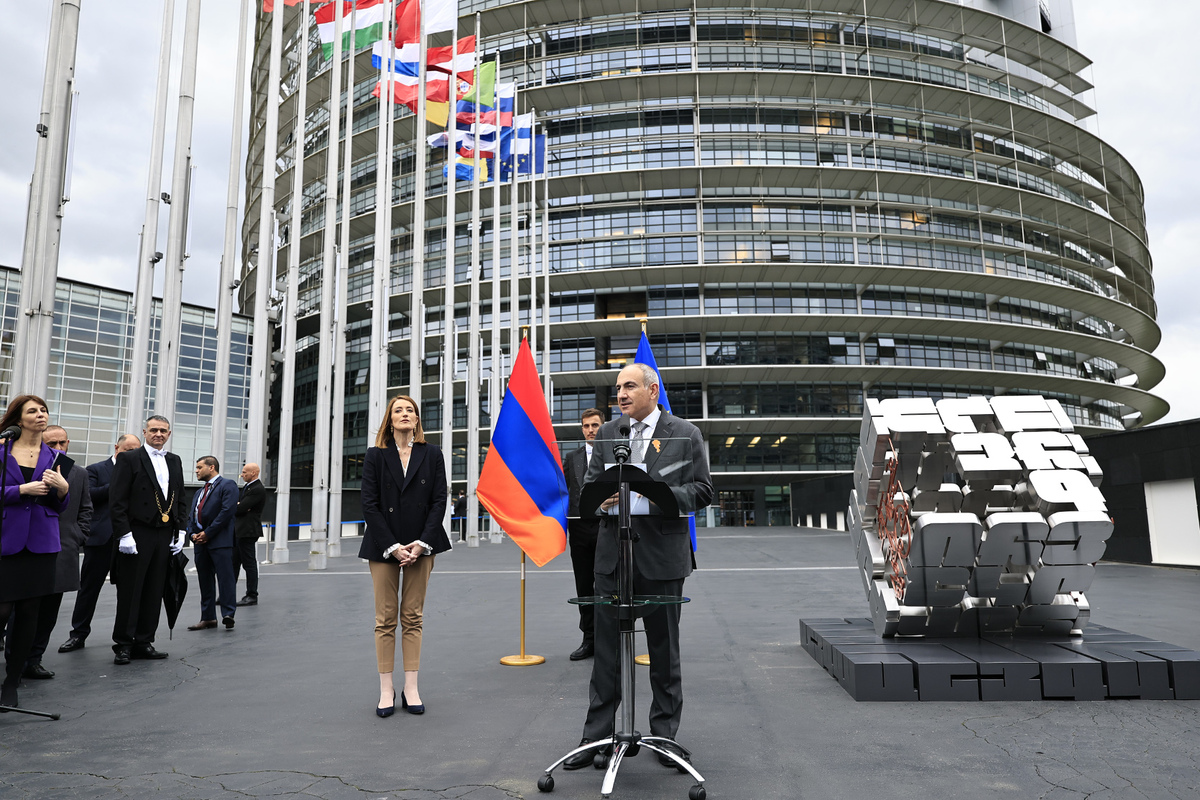
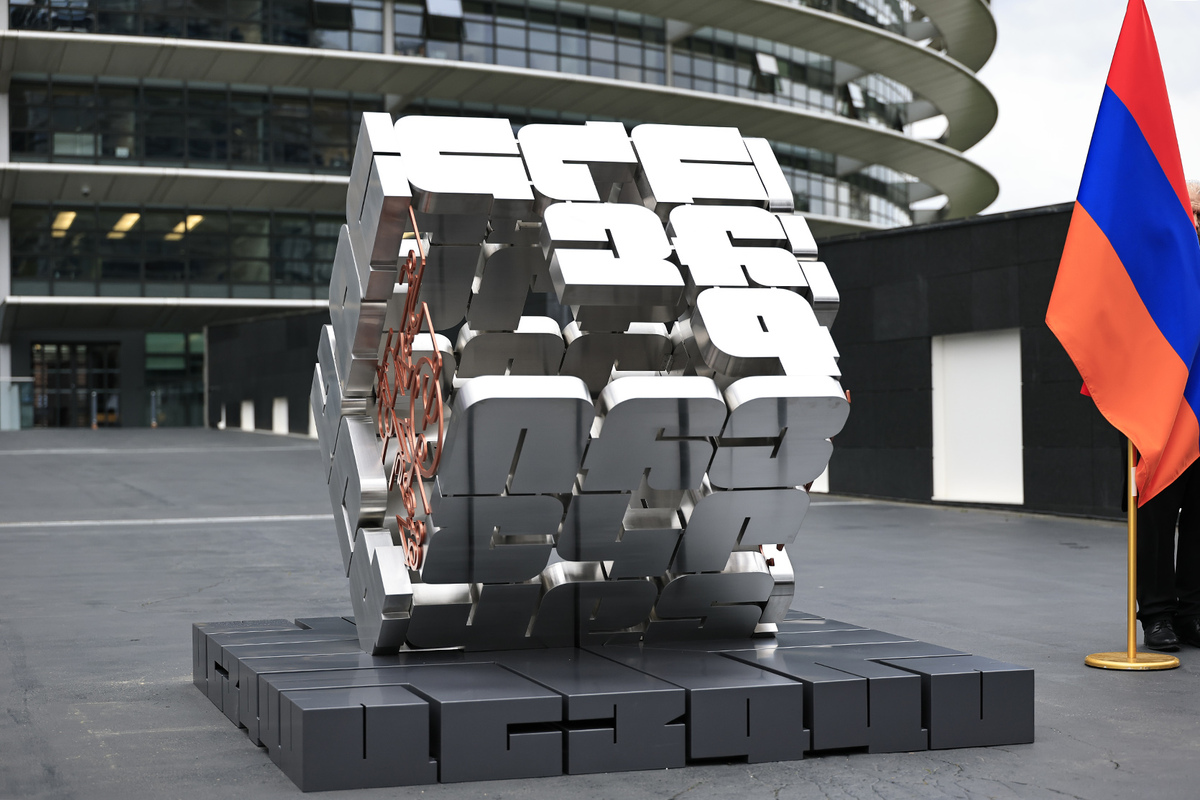
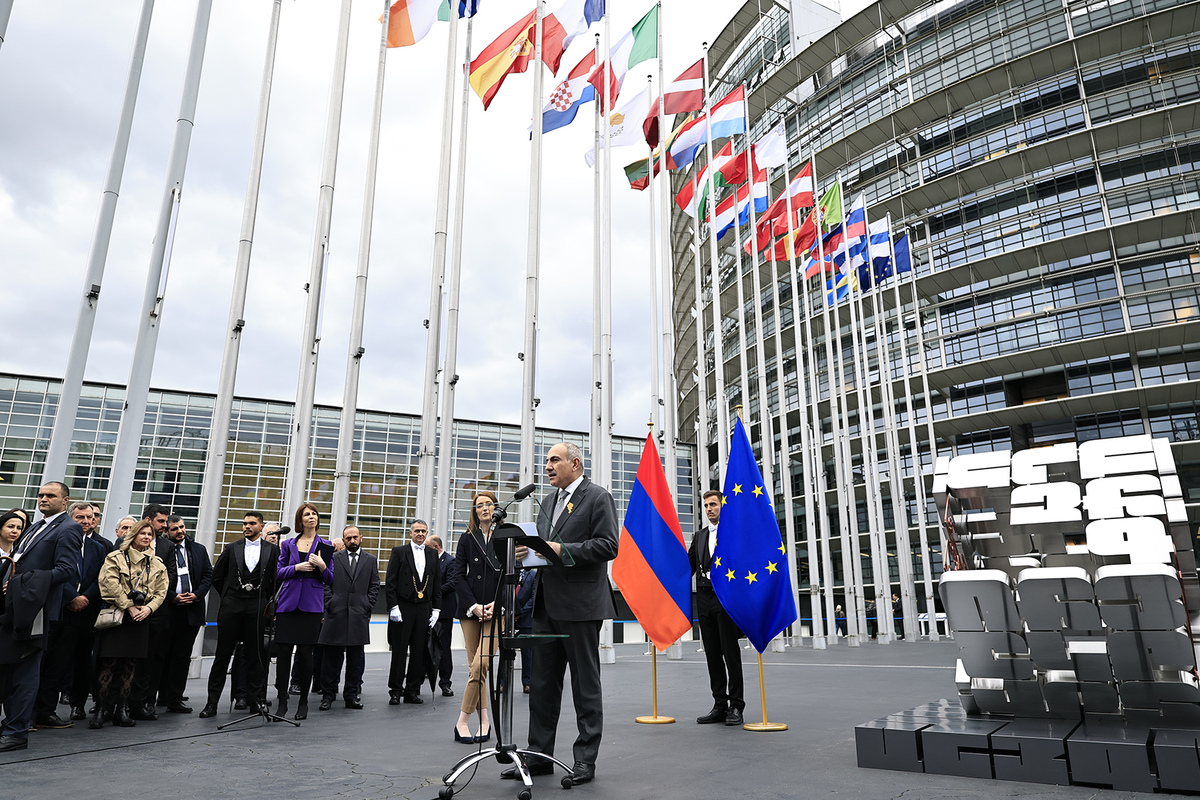
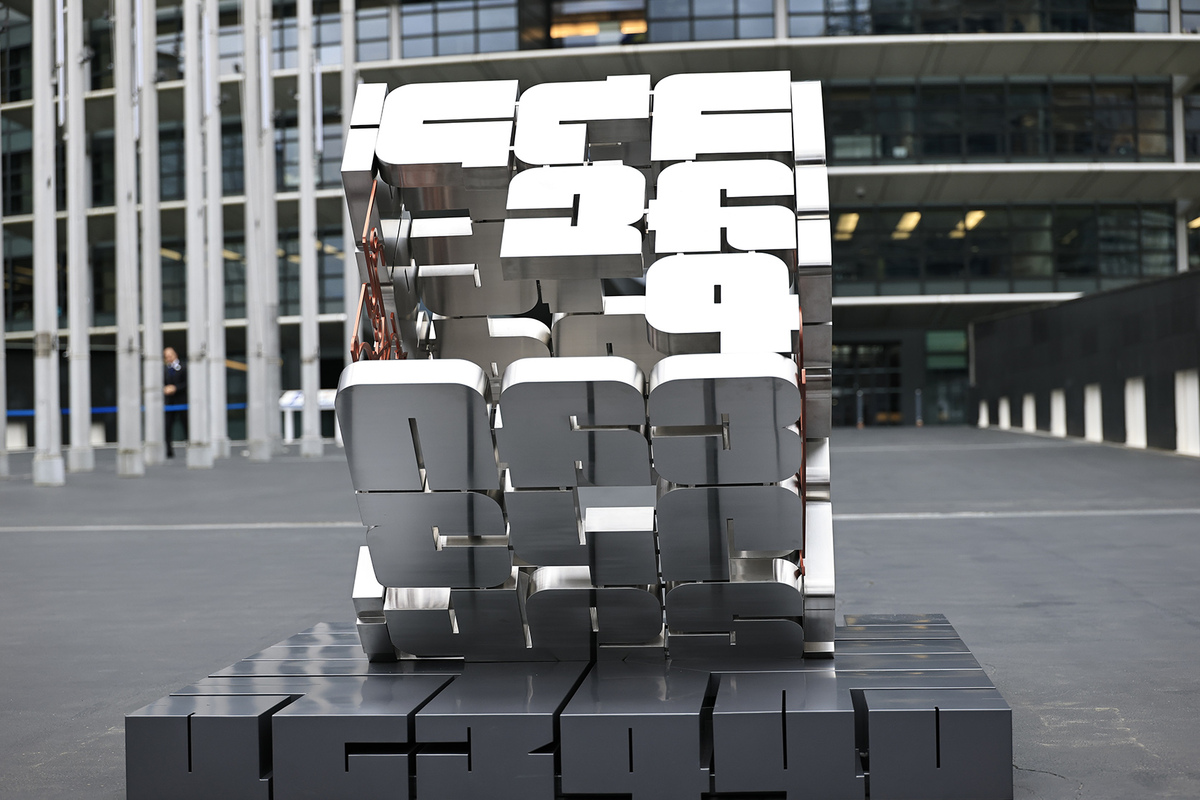
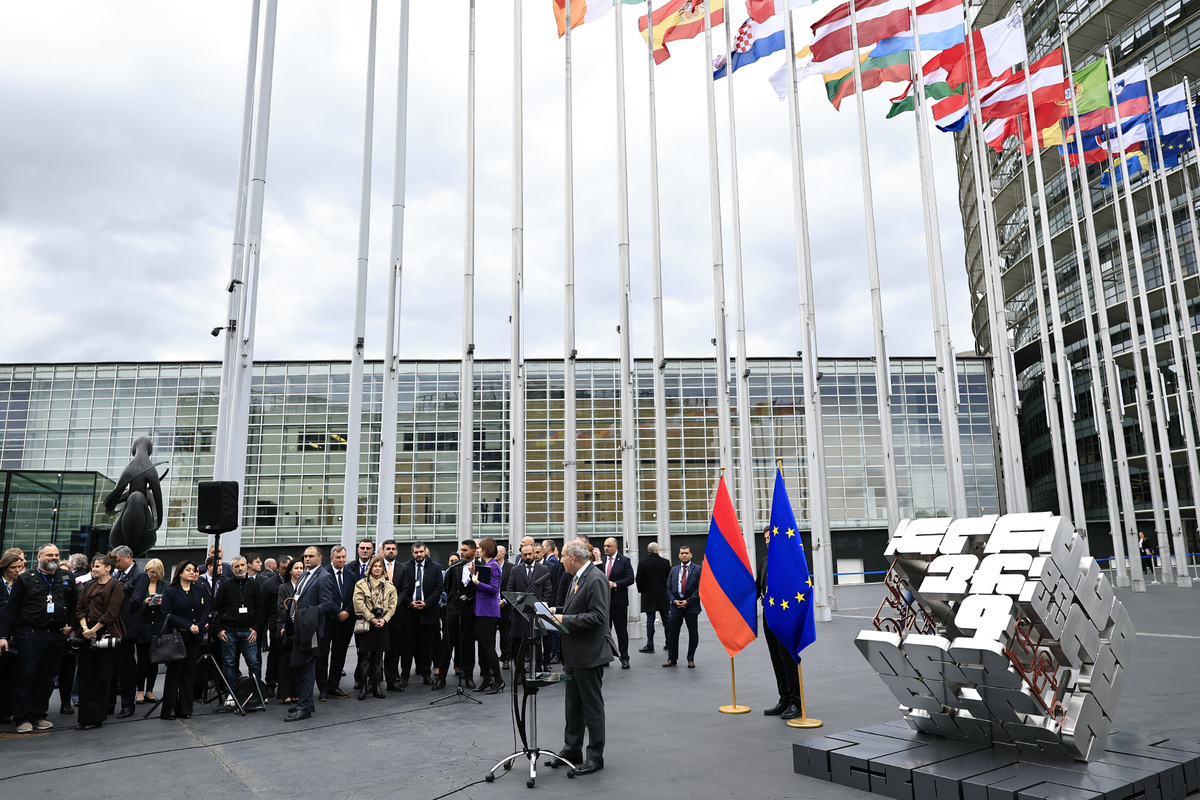
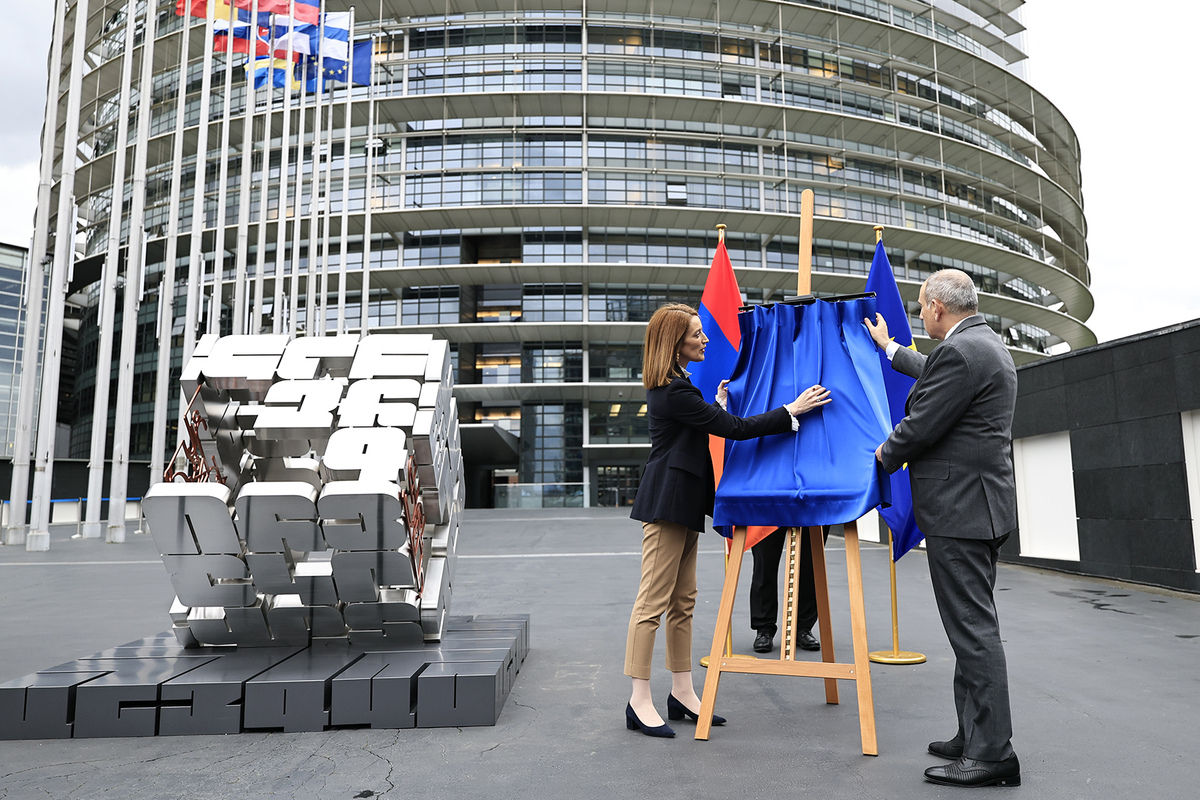
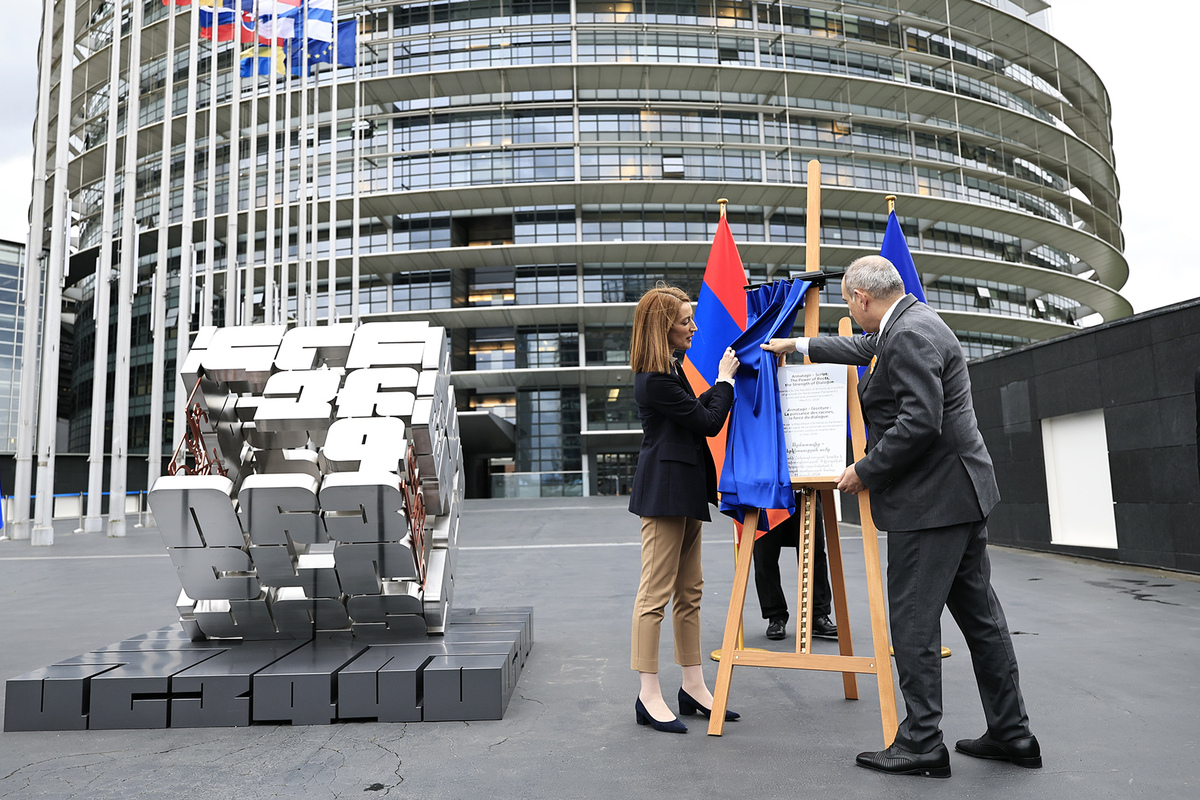
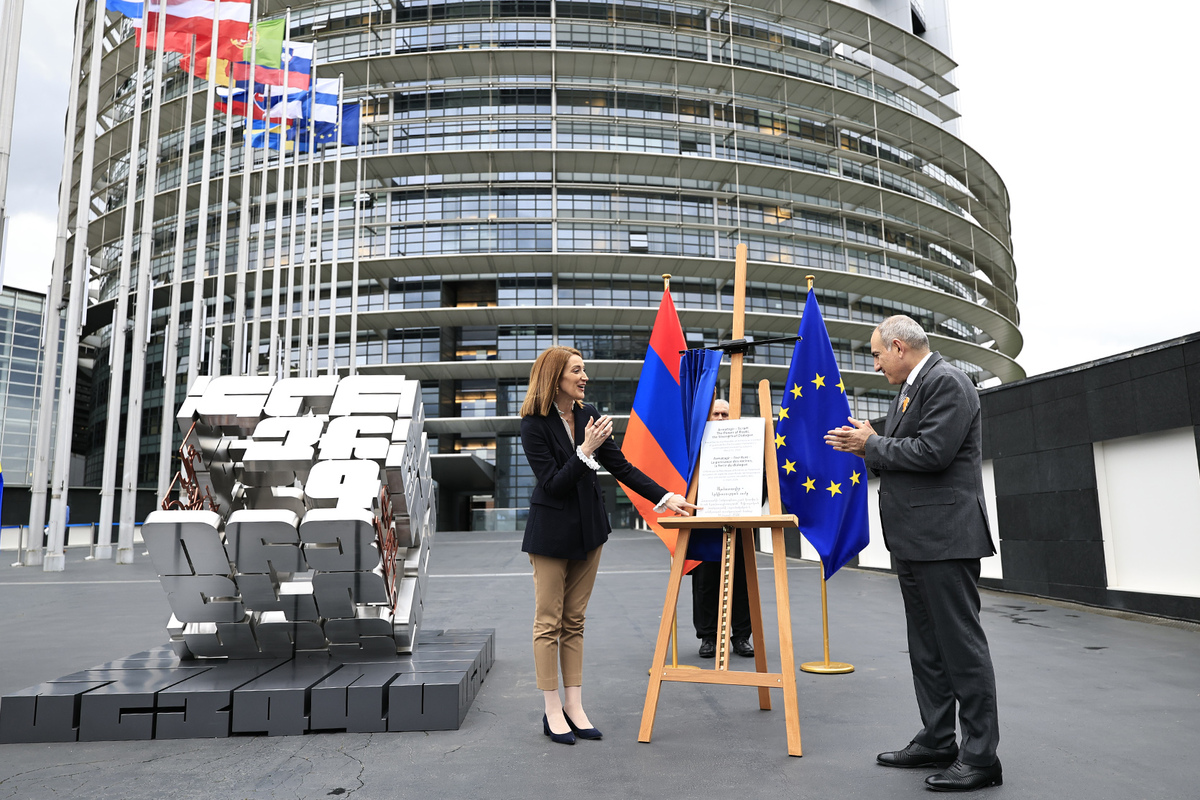
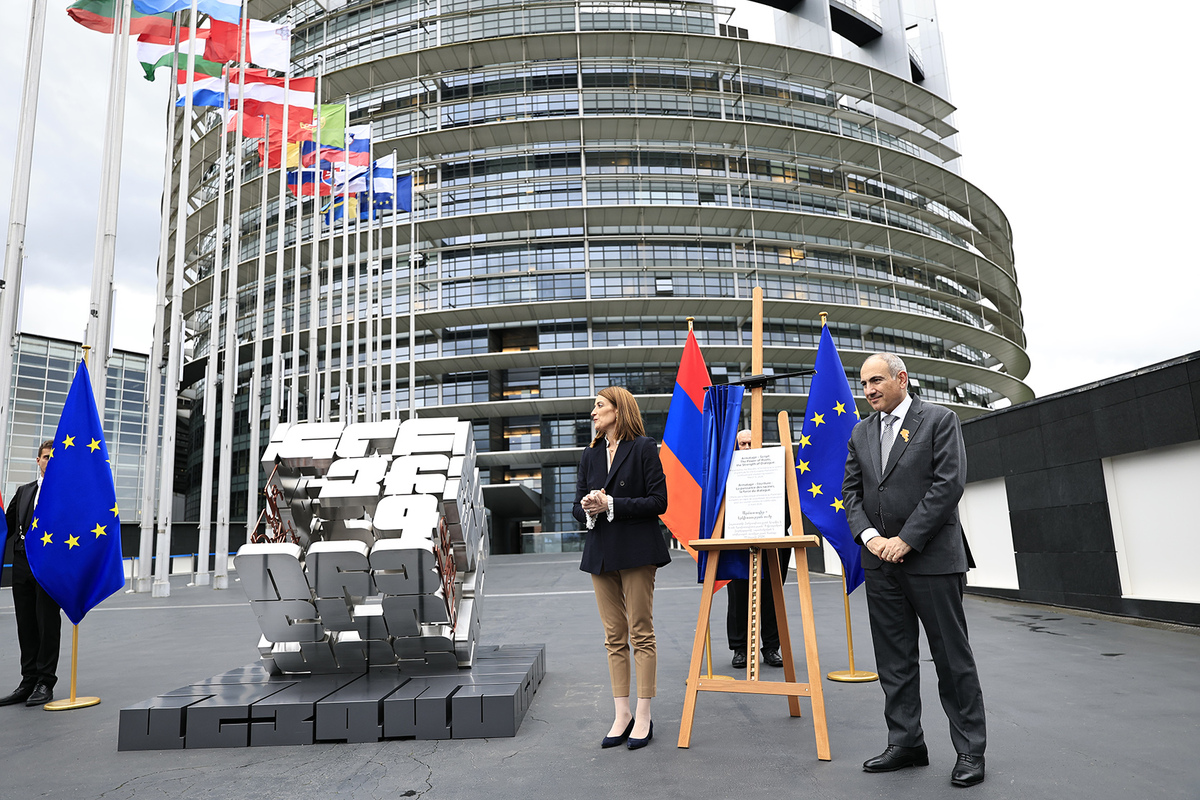
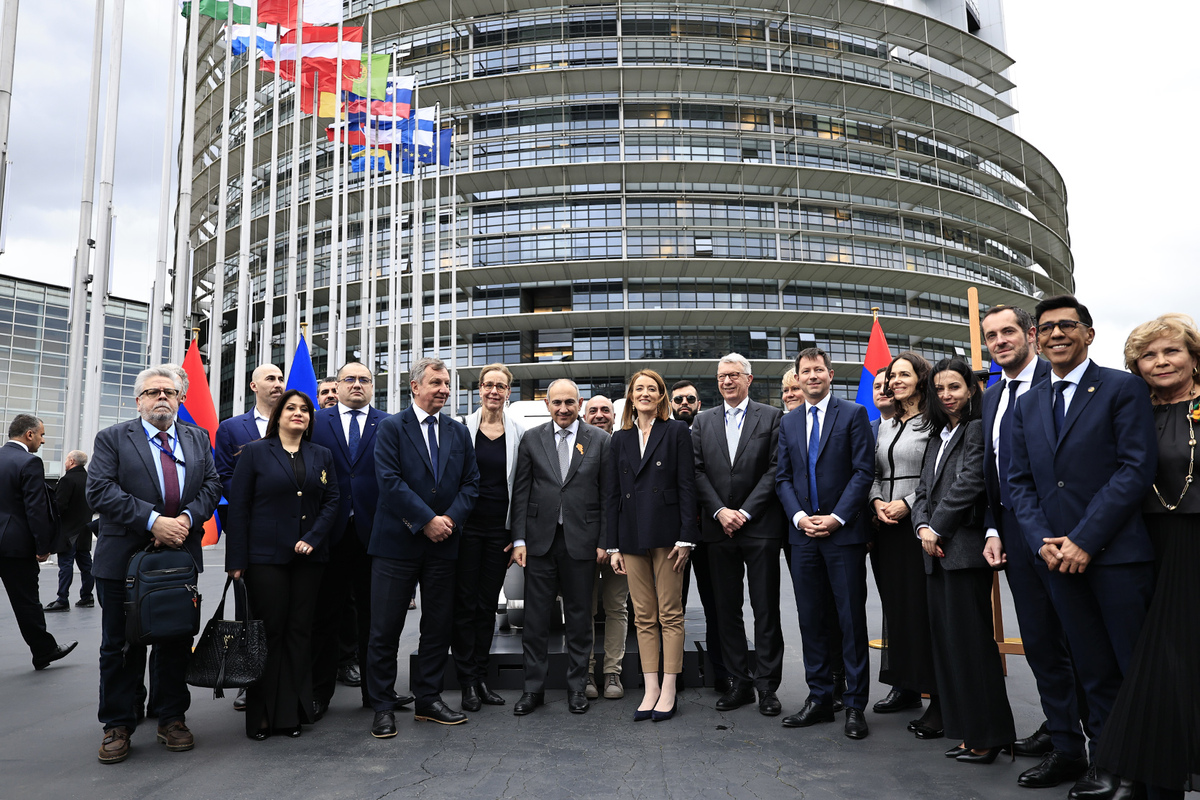
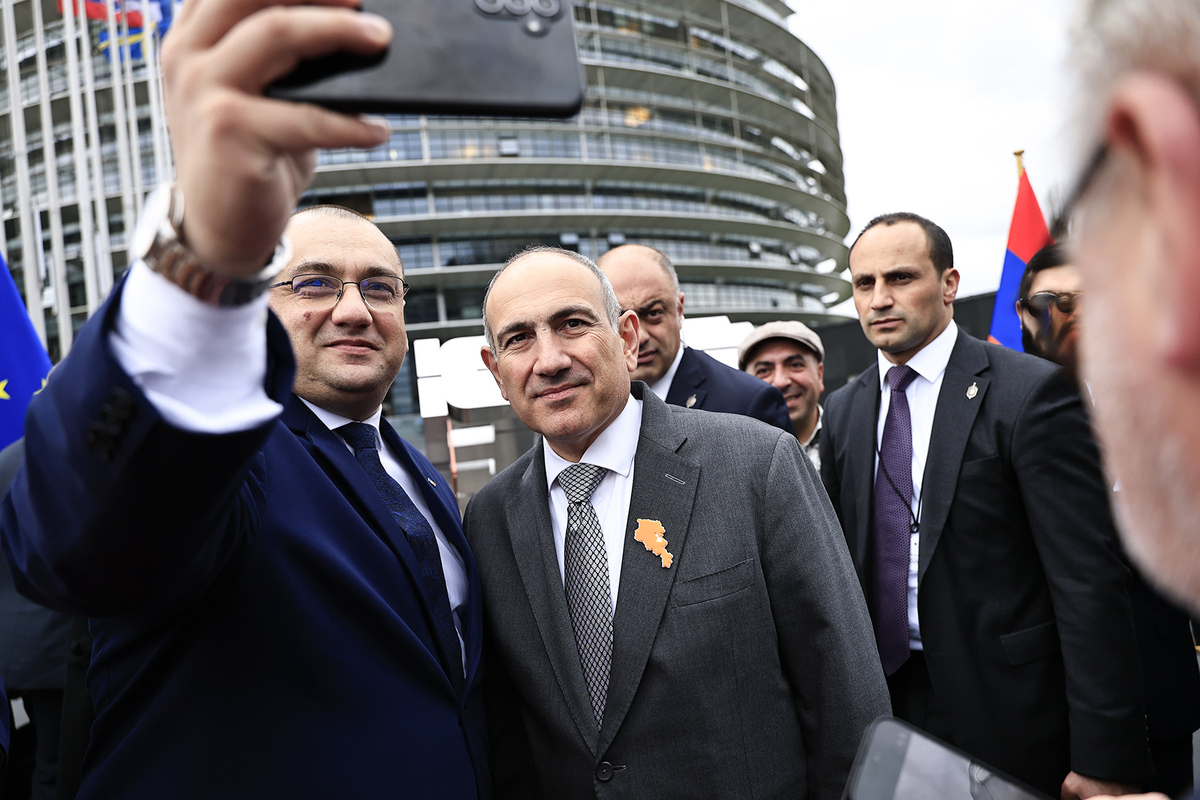
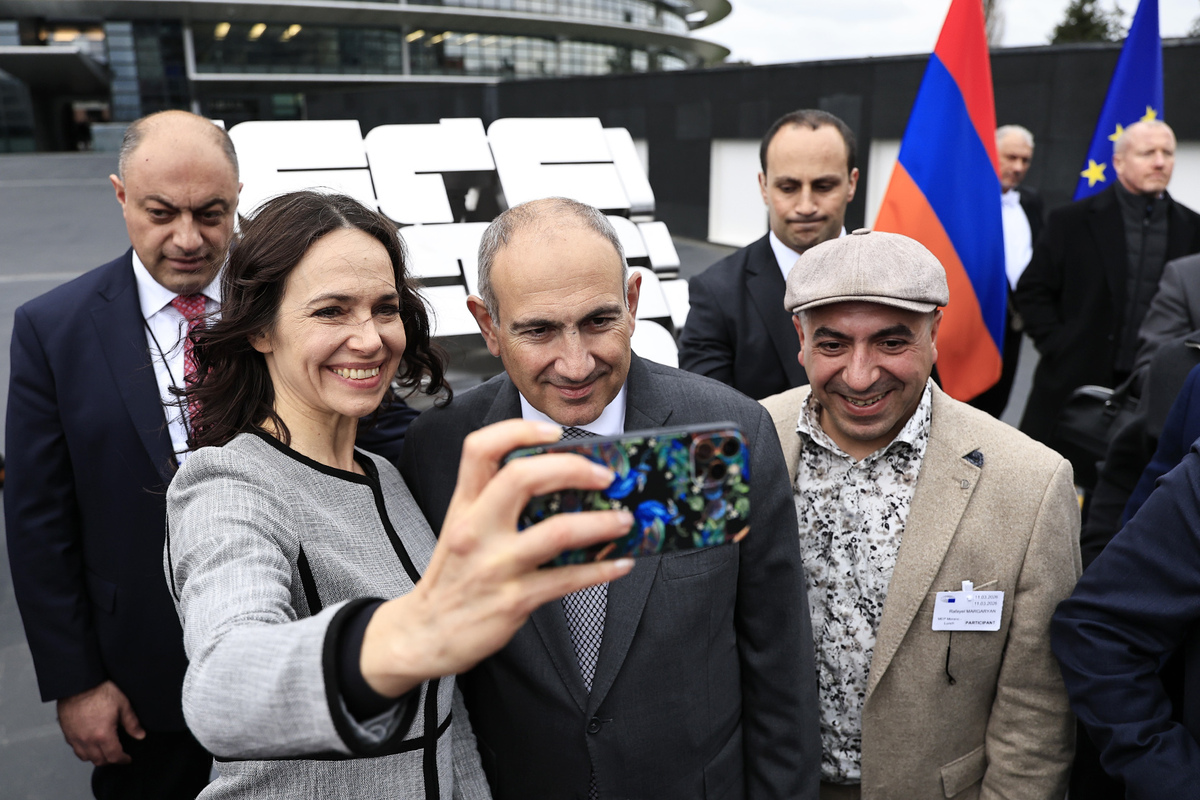
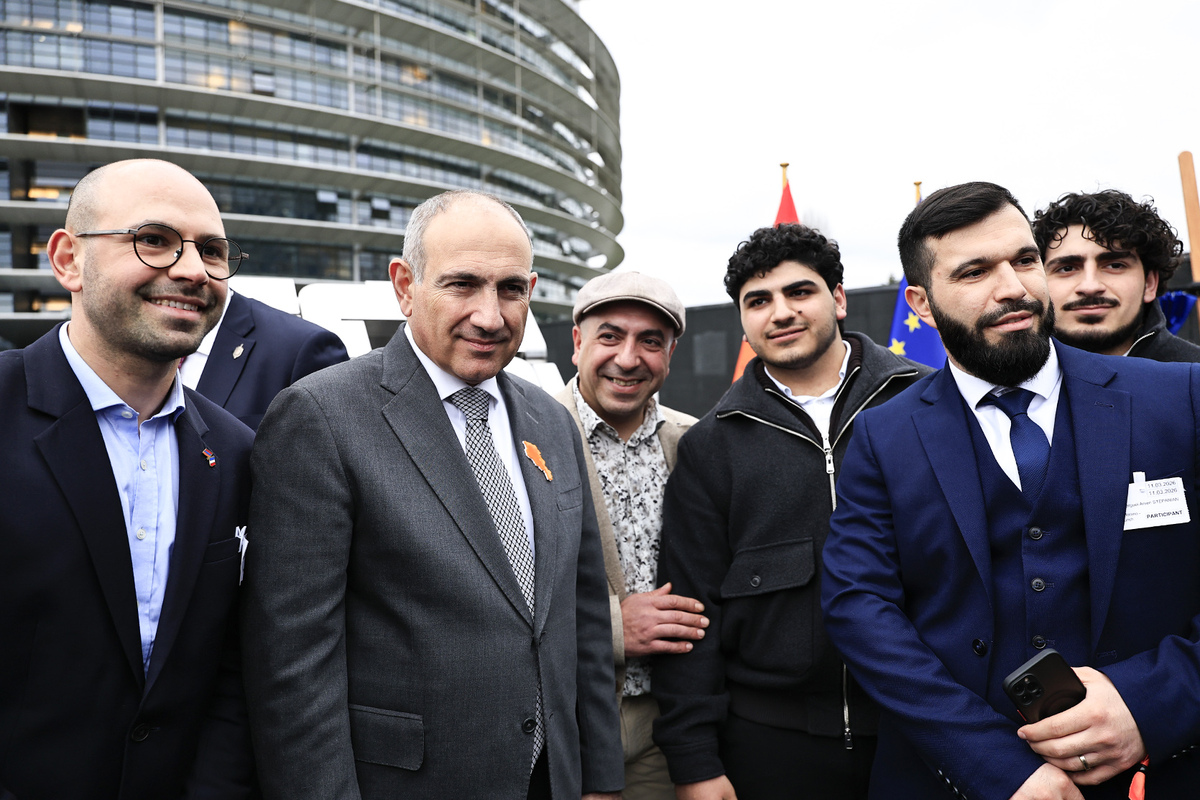
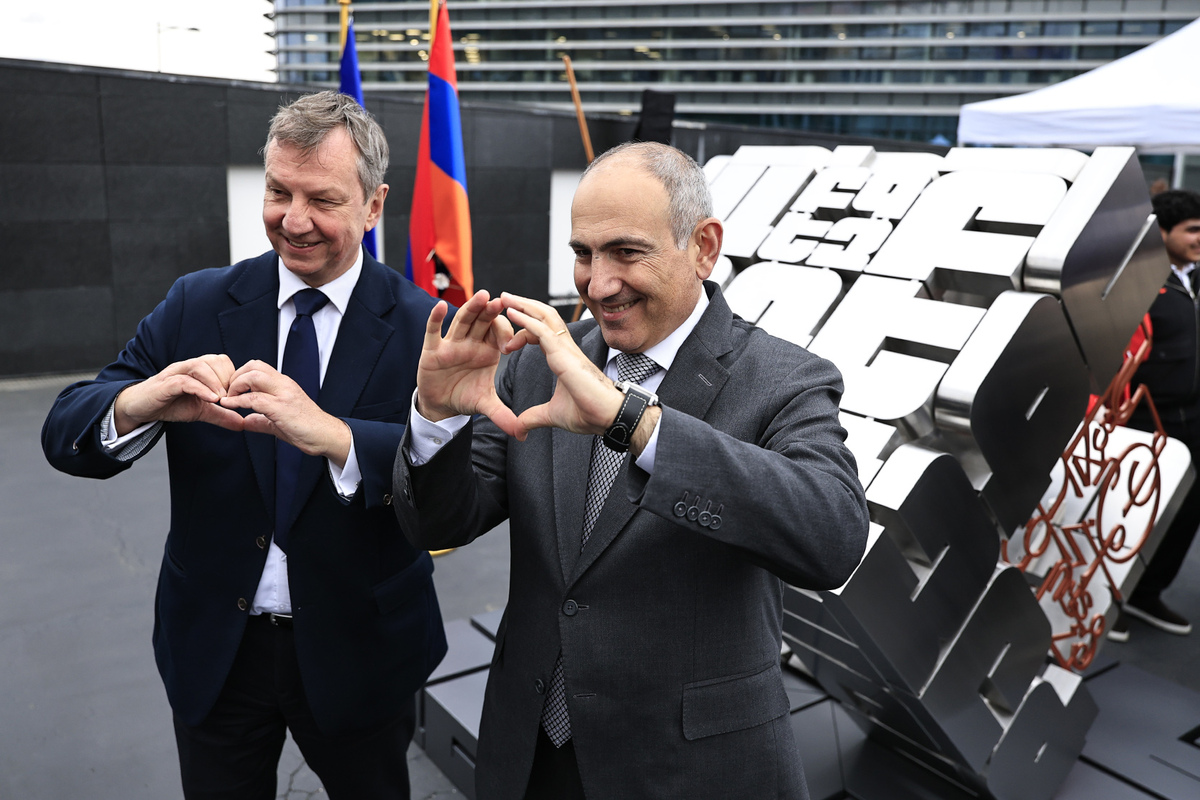
In Strasbourg, a monument to the Armenian alphabet was unveiled in the area adjacent to the administrative building of the European Parliament in the presence of the Prime Minister of the Republic of Armenia Nikol Pashinyan and the President of the European Parliament Roberta Metsola.
The statue titled “Armatagir – the Power of Dialogue” was installed by the Republic of Armenia as a token of gratitude for the continuous and unconditional support of the European Parliament. This sculpture consists of the letters of the Armenian alphabet.
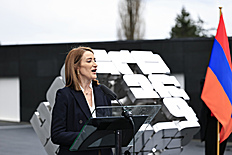
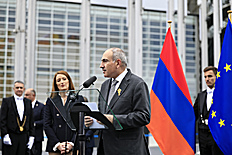
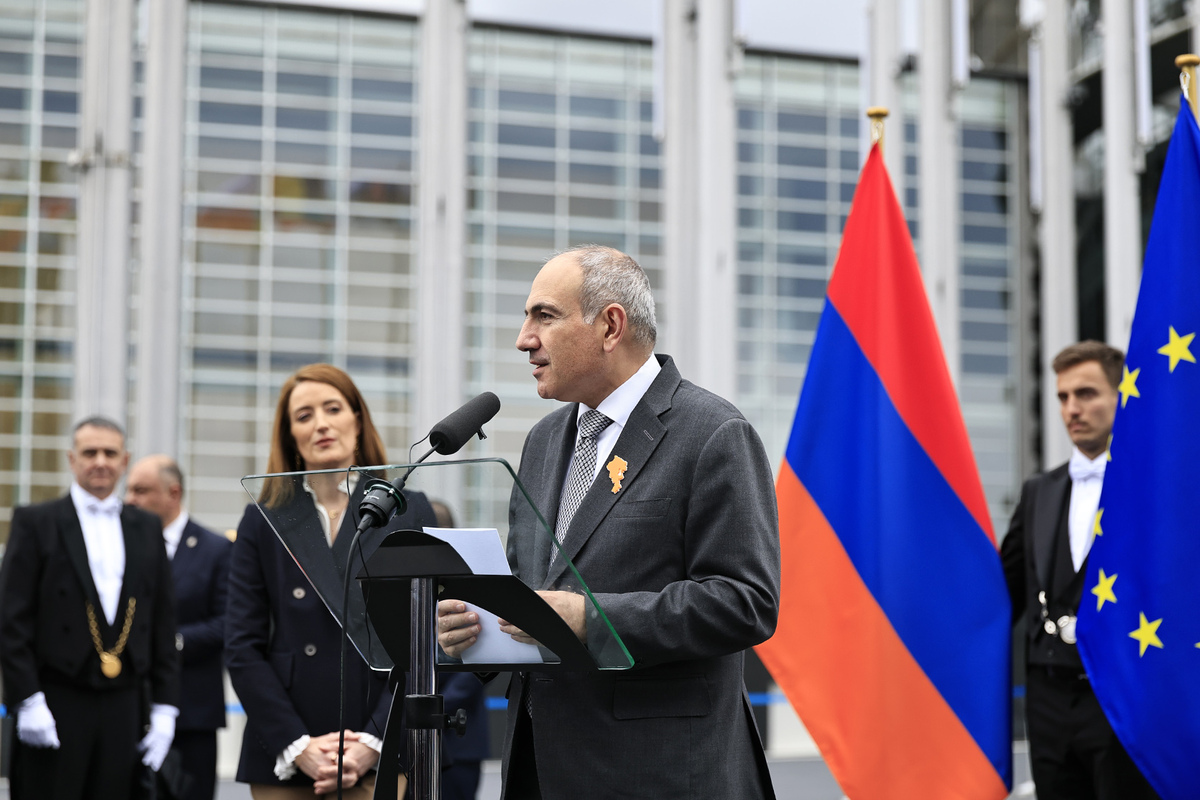
Roberta Metsola noted in her speech that dialogue is the cornerstone of democracy, it unites us and moves us forward. “After all, that is what the European Parliament is all about: building dialogue with each other, with citizens and with the world around us. And with this beautiful work, with this depiction of the Armenian alphabet, the Armenian language strengthens its place in the rich and diverse dialogue that is called Europe,” said Roberta Metsola and quoted the Armenian poet Silva Kaputikyan: “Wherever you are, wherever you go under this moon, do not forget your mother tongue.”
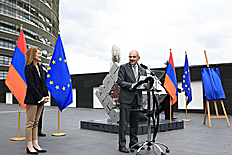
Prime Minister Pashinyan noted in his speech that the invention of the Armenian alphabet took place back in the 5th century and is one of the most important pillars of Armenian identity. "And it is very symbolic that this sculpture will emphasize the important connection between Armenian identity and European identity. I believe that speech, knowledge, text are one of the most important and strongest symbols of democracy, because it is impossible to have democracy without text, without communication, without writing, without speeches, without words, without laws," the Prime Minister said.