Statements and messages of the Prime Minister of RA
Prime Minister Nikol Pashinyan’s speech at the first conference of representatives of state bodies of the Republic of Armenia
 1670x1113px - 827 Kb
 1670x1113px - 842 Kb
 1670x1113px - 849 Kb
 1670x1113px - 575 Kb
 1670x1113px - 893 Kb
 1670x1113px - 830 Kb
 1670x1113px - 991 Kb
 1670x1113px - 801 Kb
 1670x1113px - 1 Mb
 1670x1113px - 585 Kb
 1670x1113px - 610 Kb
 1670x1113px - 510 Kb
 1670x1113px - 537 Kb
 1113x1670px - 445 Kb
 1670x1113px - 1 Mb
 1670x1113px - 1 Mb
 1670x1113px - 697 Kb
 1670x1113px - 1 Mb
 1670x1113px - 1 Mb
 1670x1113px - 788 Kb
 1670x1113px - 1 Mb
 1670x1113px - 822 Kb
 1670x1113px - 1 Mb
 1670x1113px - 654 Kb
 1670x1113px - 542 Kb
 1670x1113px - 1 Mb
 1670x1113px - 619 Kb
 1670x1113px - 444 Kb
 1113x1670px - 415 Kb
 1670x1113px - 764 Kb
 1670x1113px - 642 Kb
 1670x1113px - 602 Kb
 1113x1670px - 797 Kb
 1670x1113px - 602 Kb
 1670x1113px - 729 Kb
 1670x1113px - 823 Kb
 1670x1113px - 772 Kb
 1670x1113px - 620 Kb
 1670x1113px - 954 Kb
 1670x1113px - 768 Kb
 1670x1113px - 770 Kb
 1670x1113px - 810 Kb
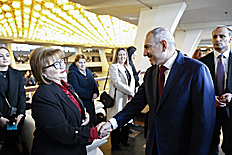 1670x1113px - 593 Kb
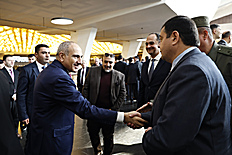 1670x1113px - 532 Kb
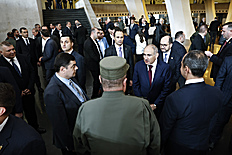 1670x1113px - 556 Kb
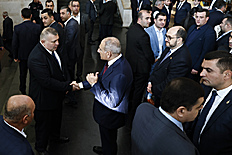 1670x1113px - 532 Kb
 1670x1113px - 540 Kb
 1670x1113px - 516 Kb
 1670x1113px - 456 Kb
 1670x1113px - 613 Kb
 1670x1113px - 470 Kb
 1670x1113px - 608 Kb
 1670x1113px - 512 Kb
 1670x1113px - 515 Kb



more 51 photos
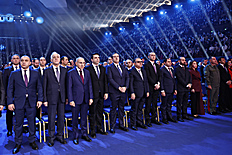
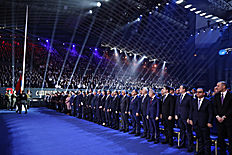
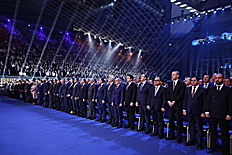
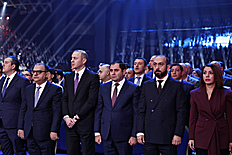
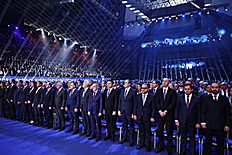
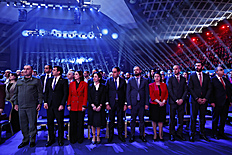
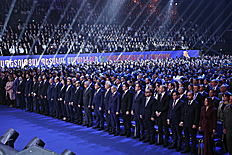
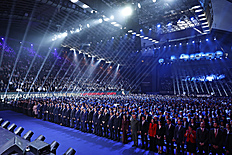
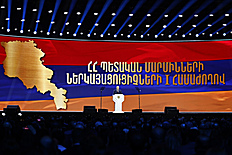
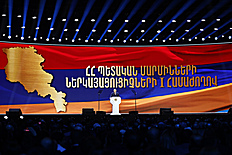
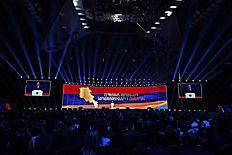
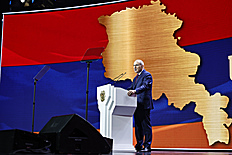
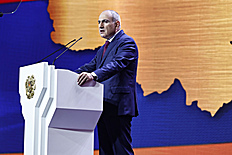
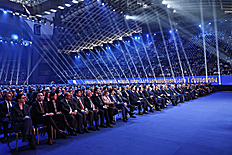
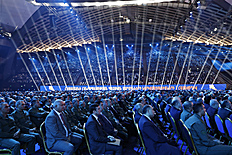
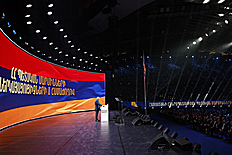
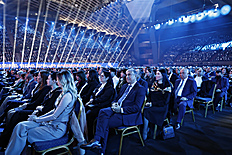
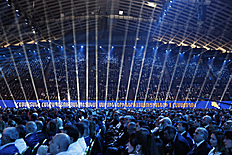
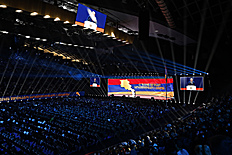
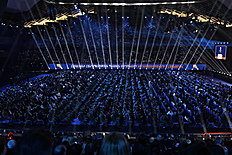
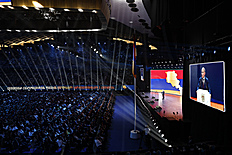
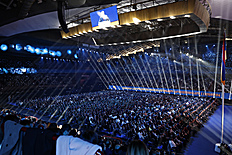
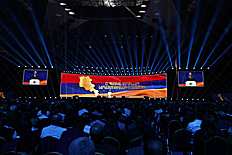
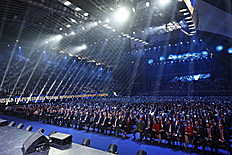
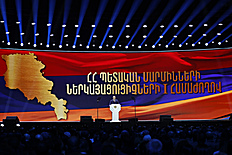
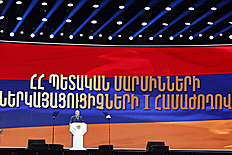
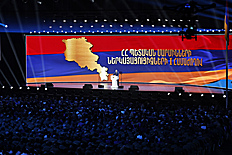
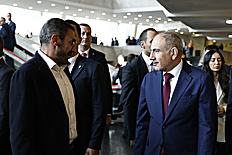
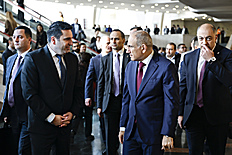
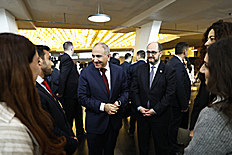
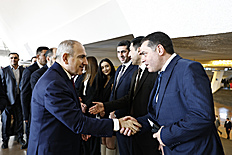
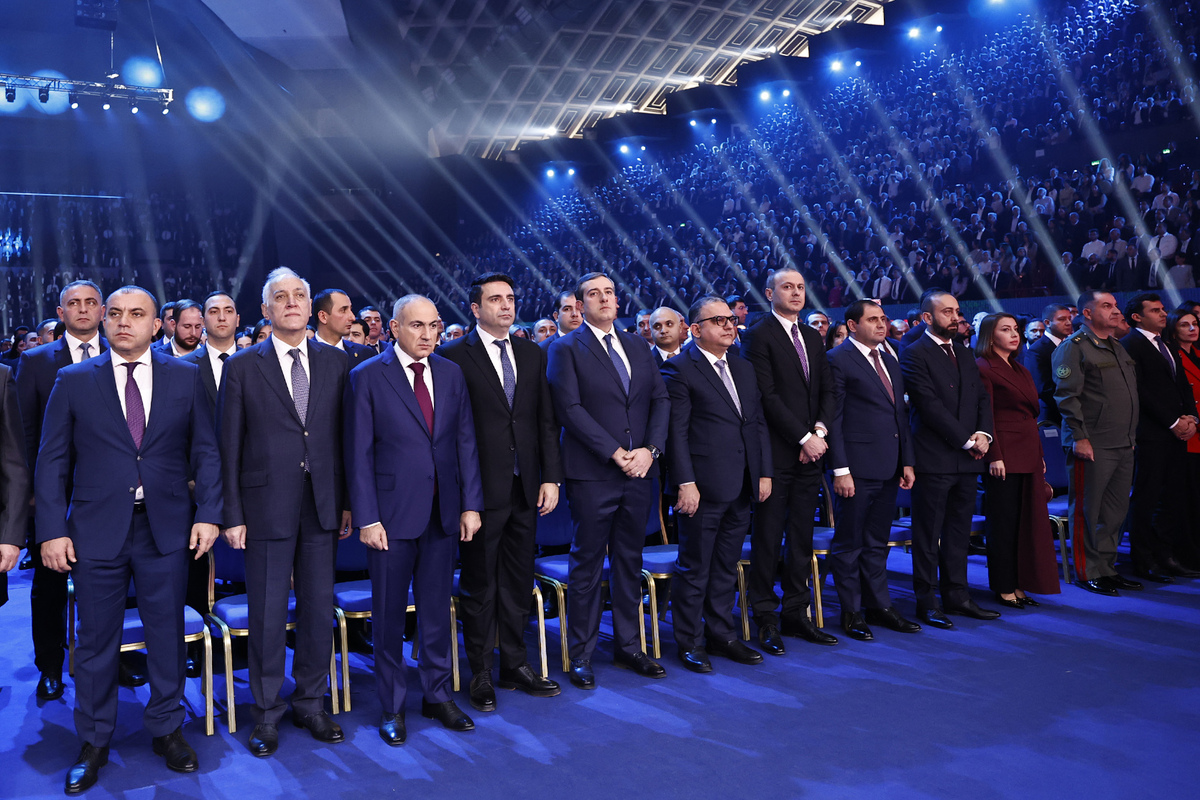
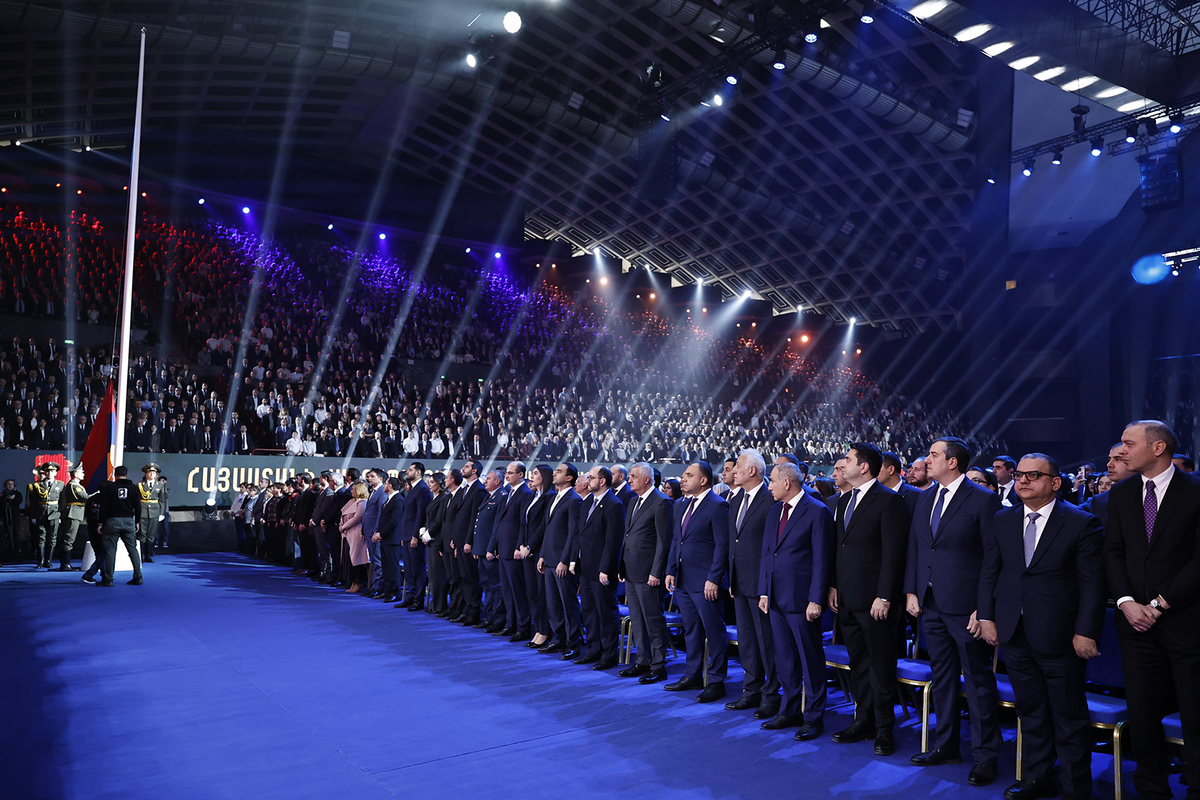
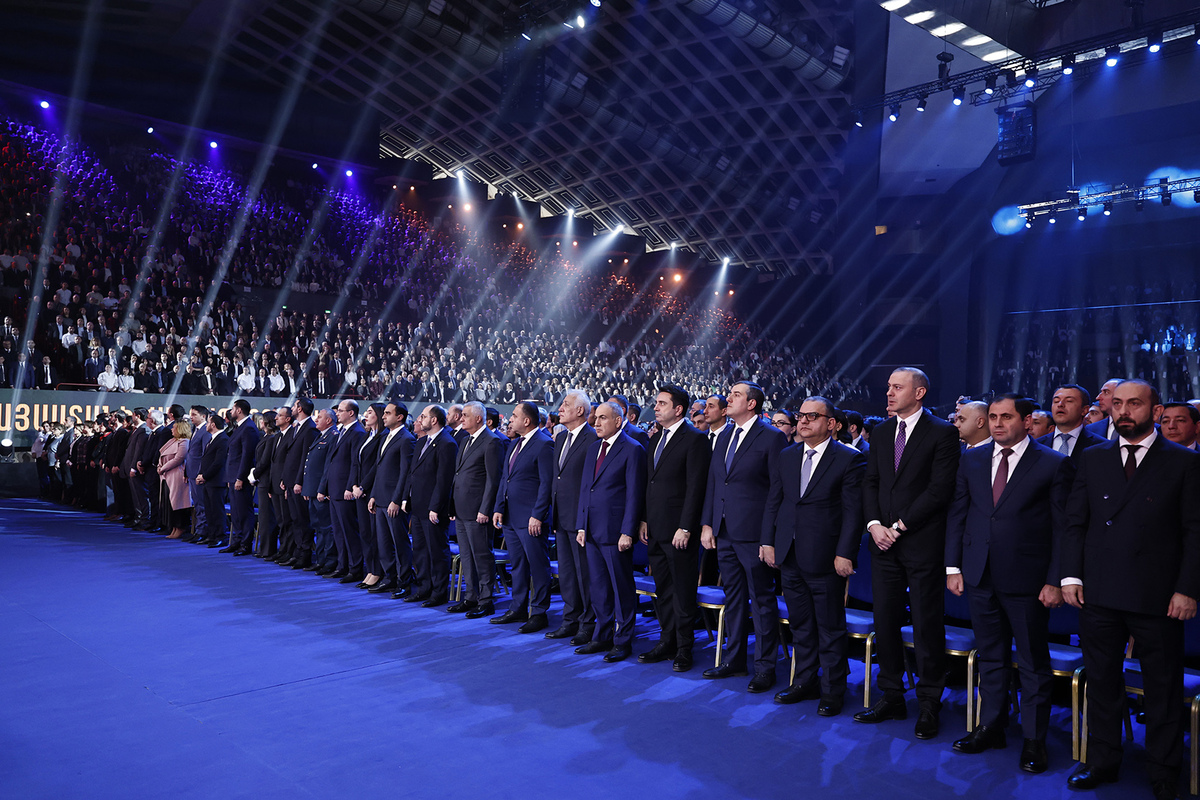
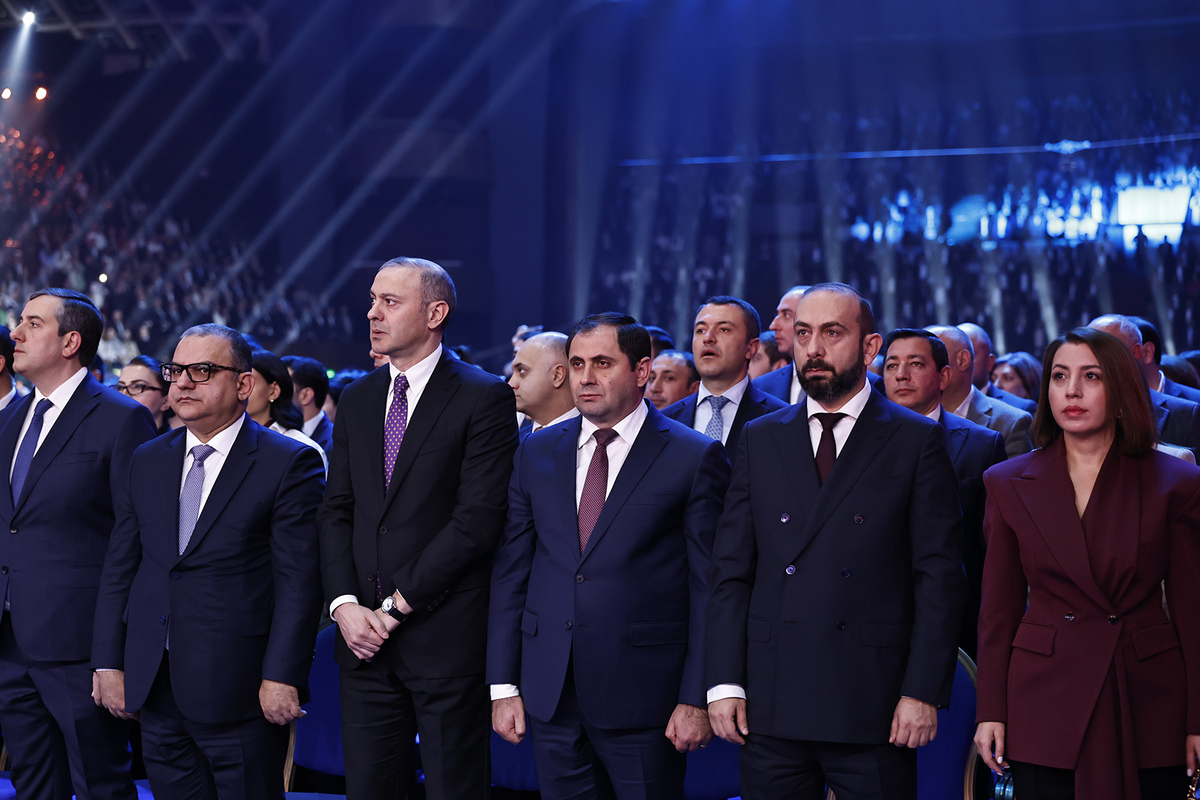
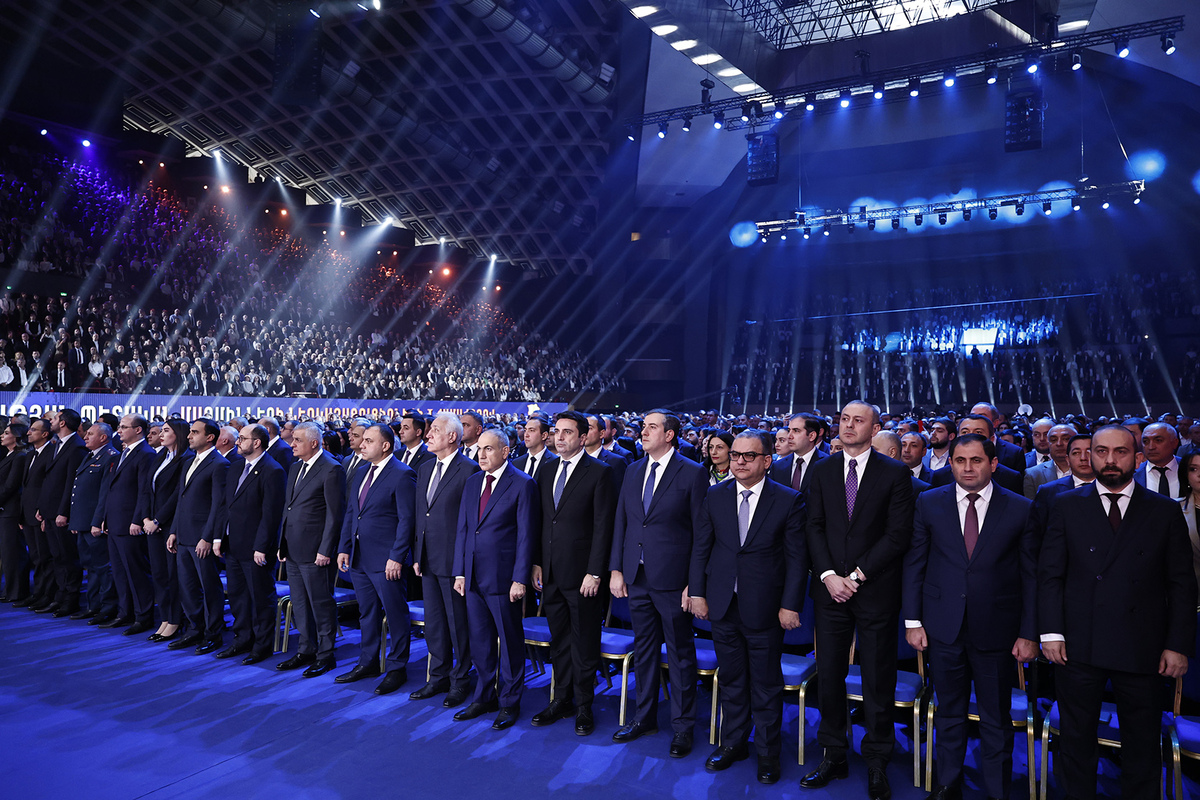
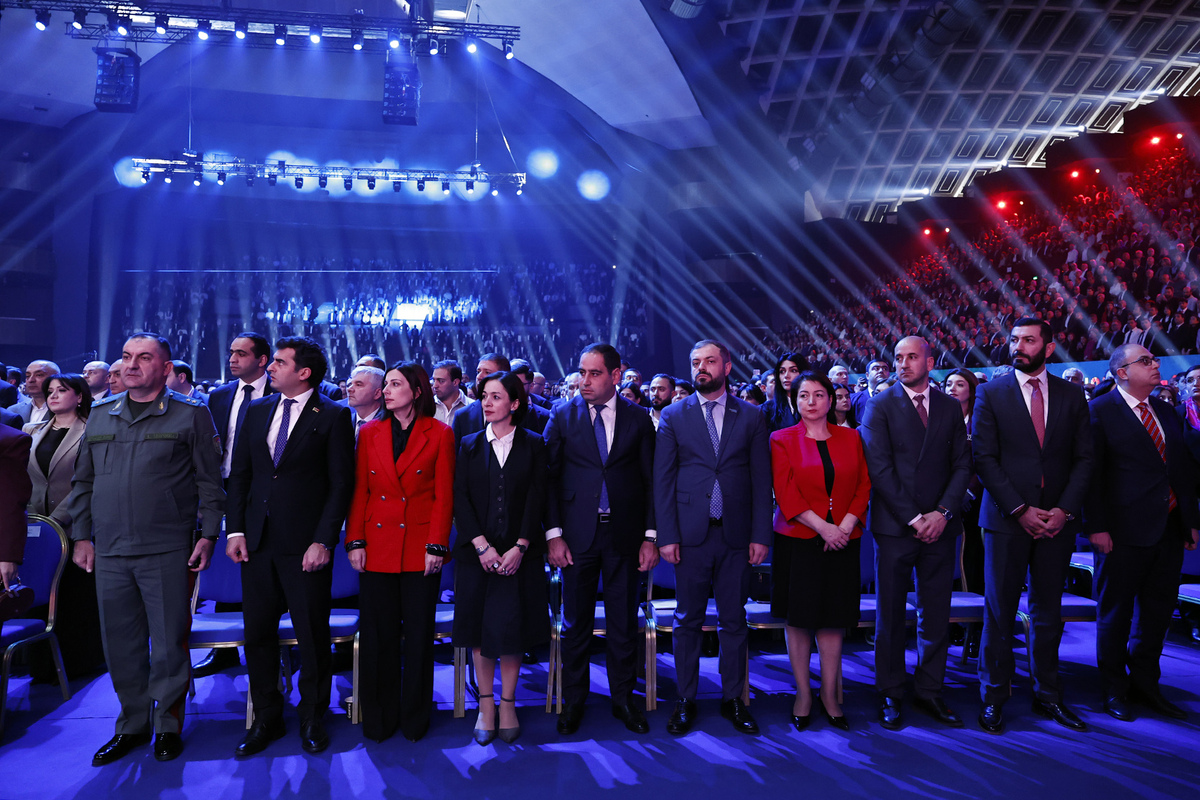
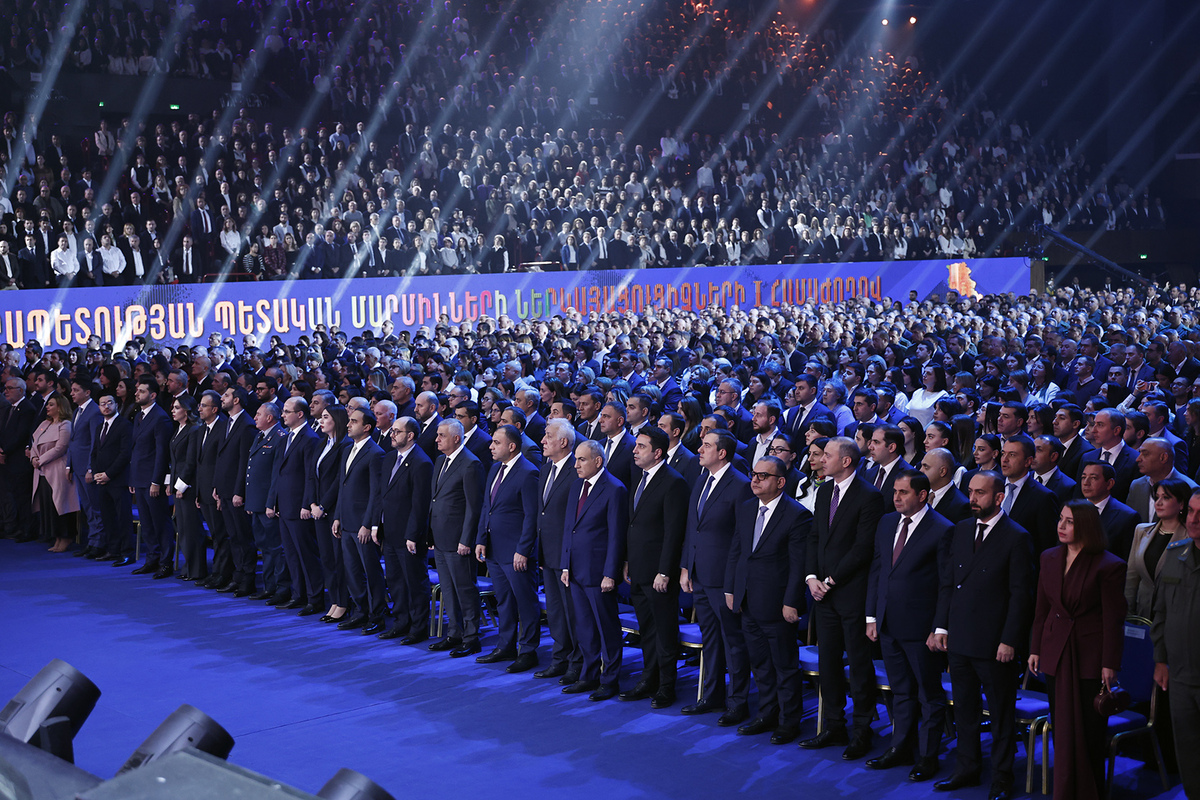
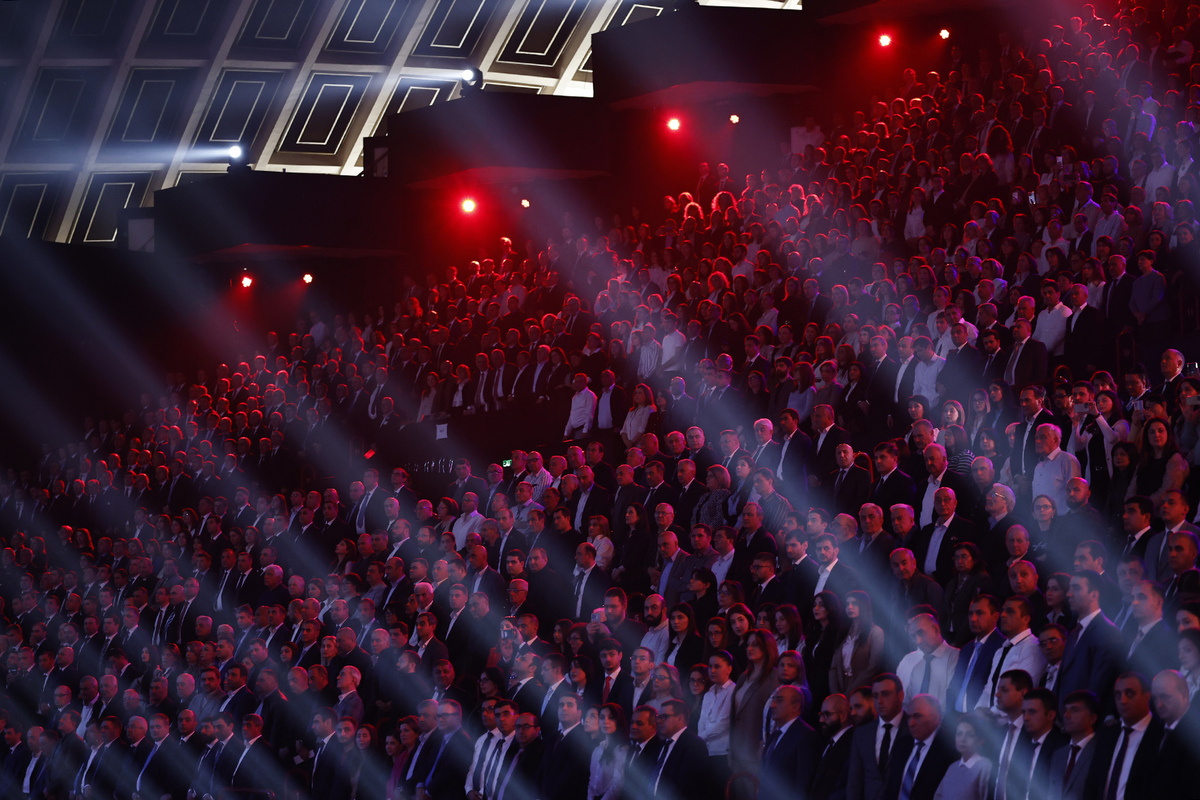
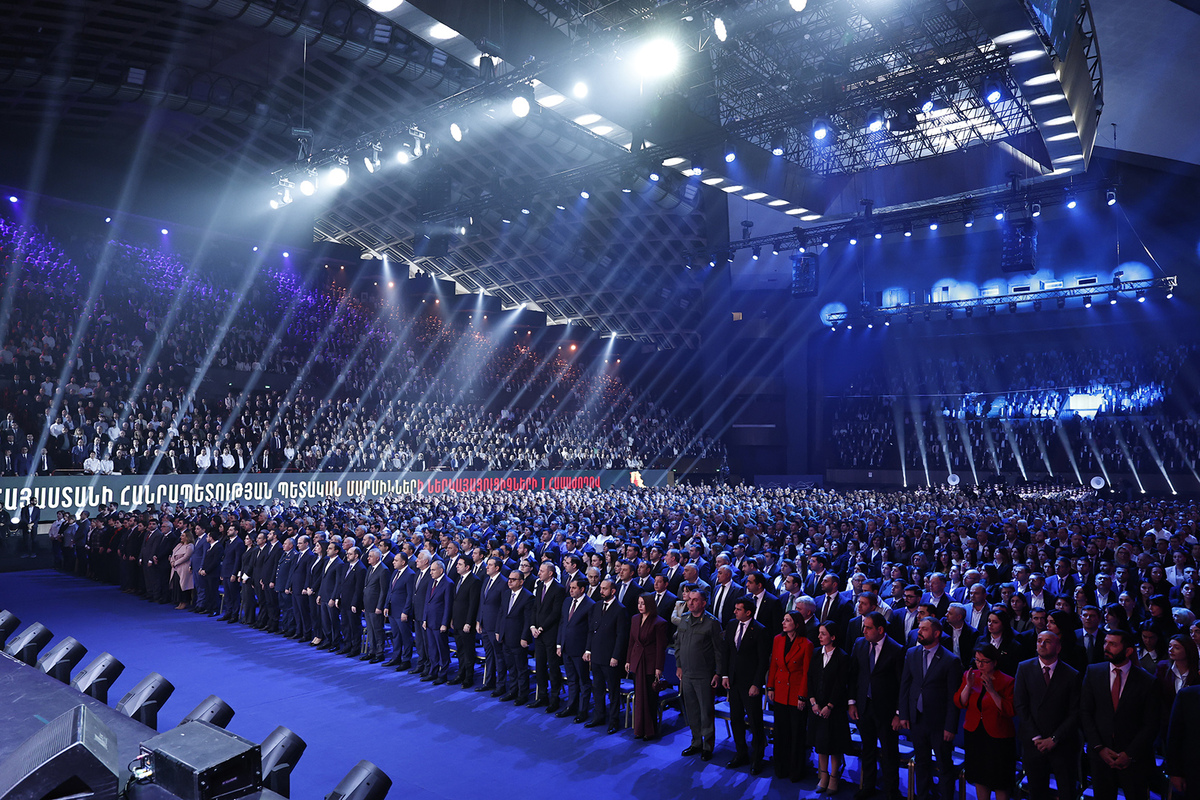
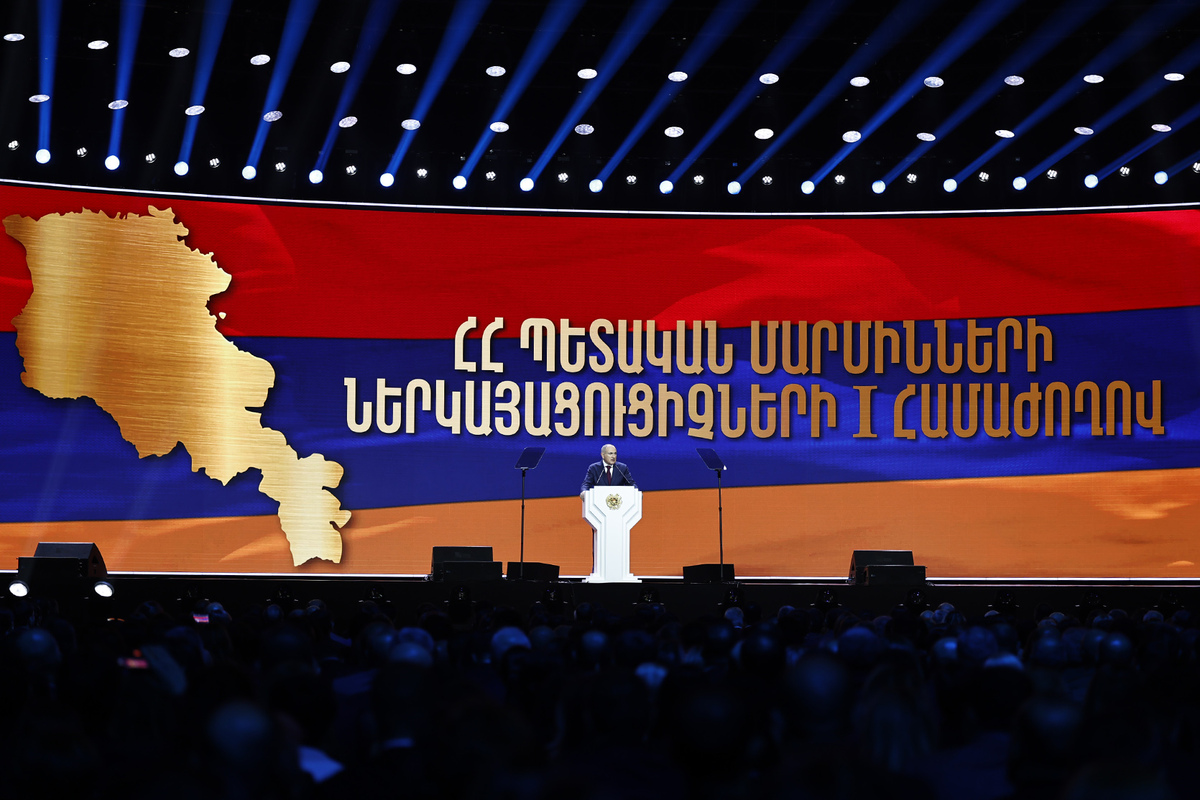
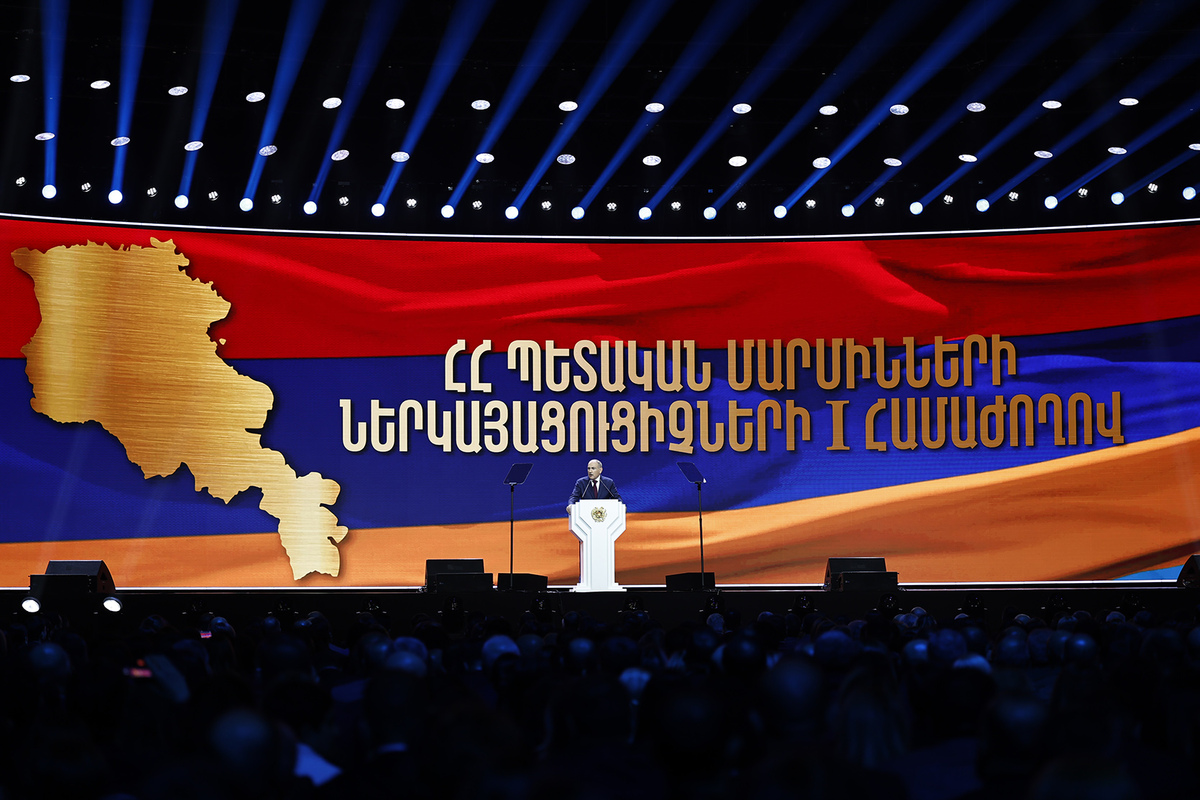
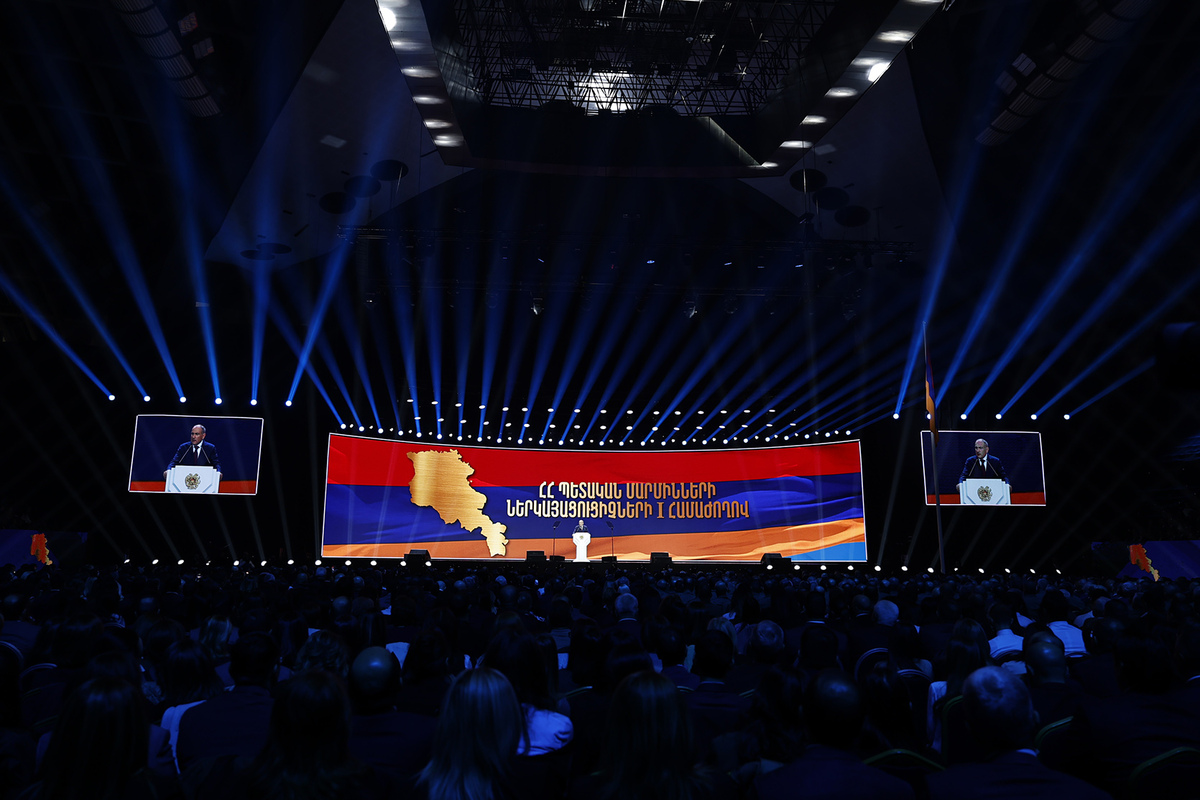
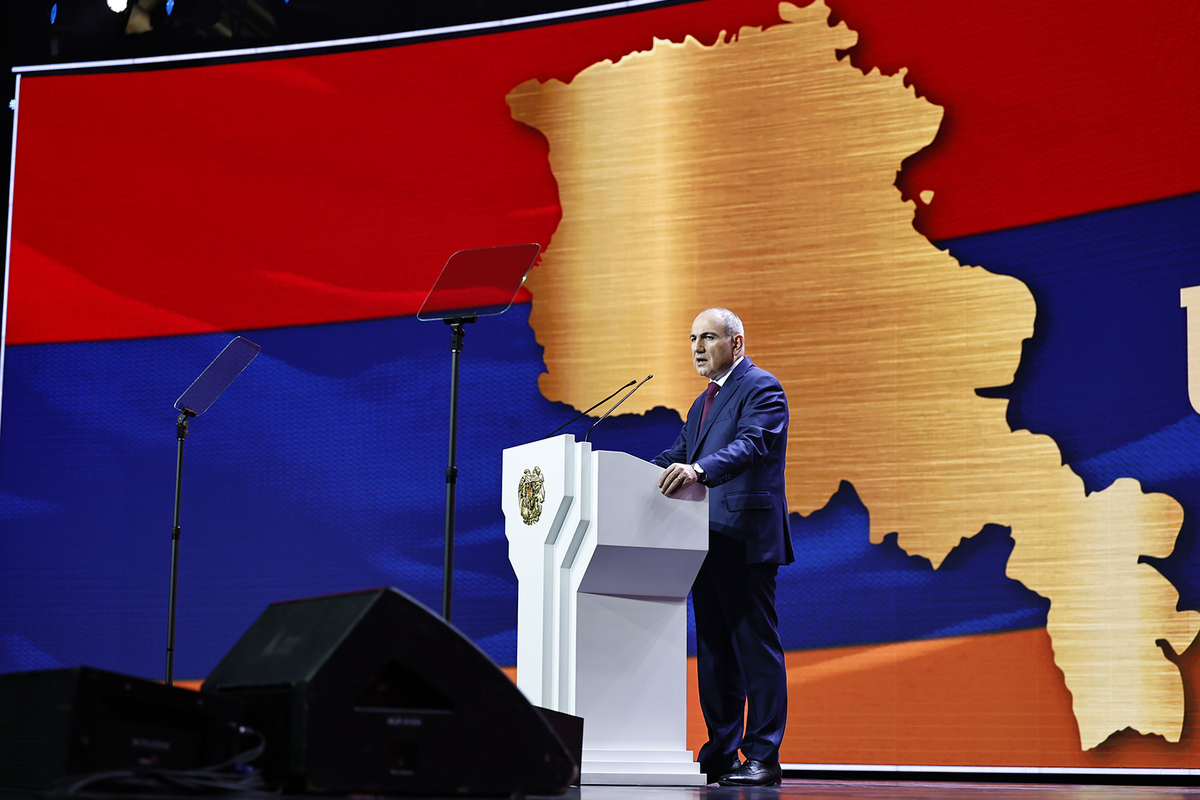
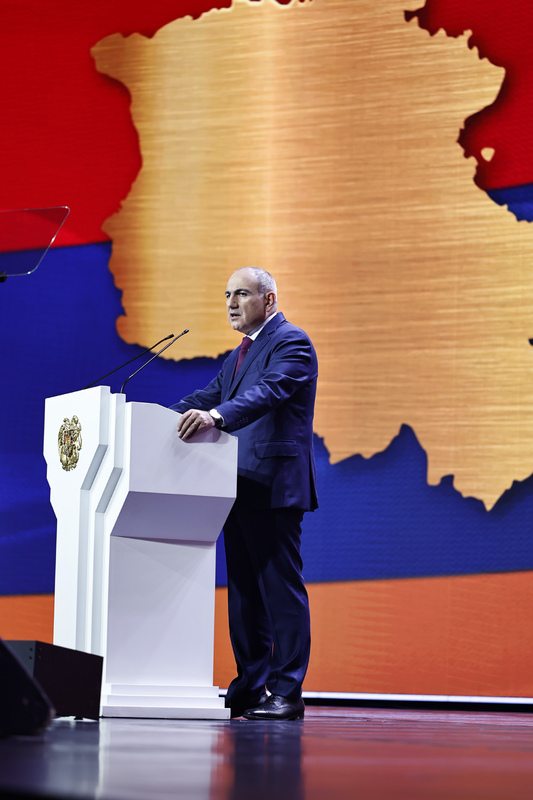
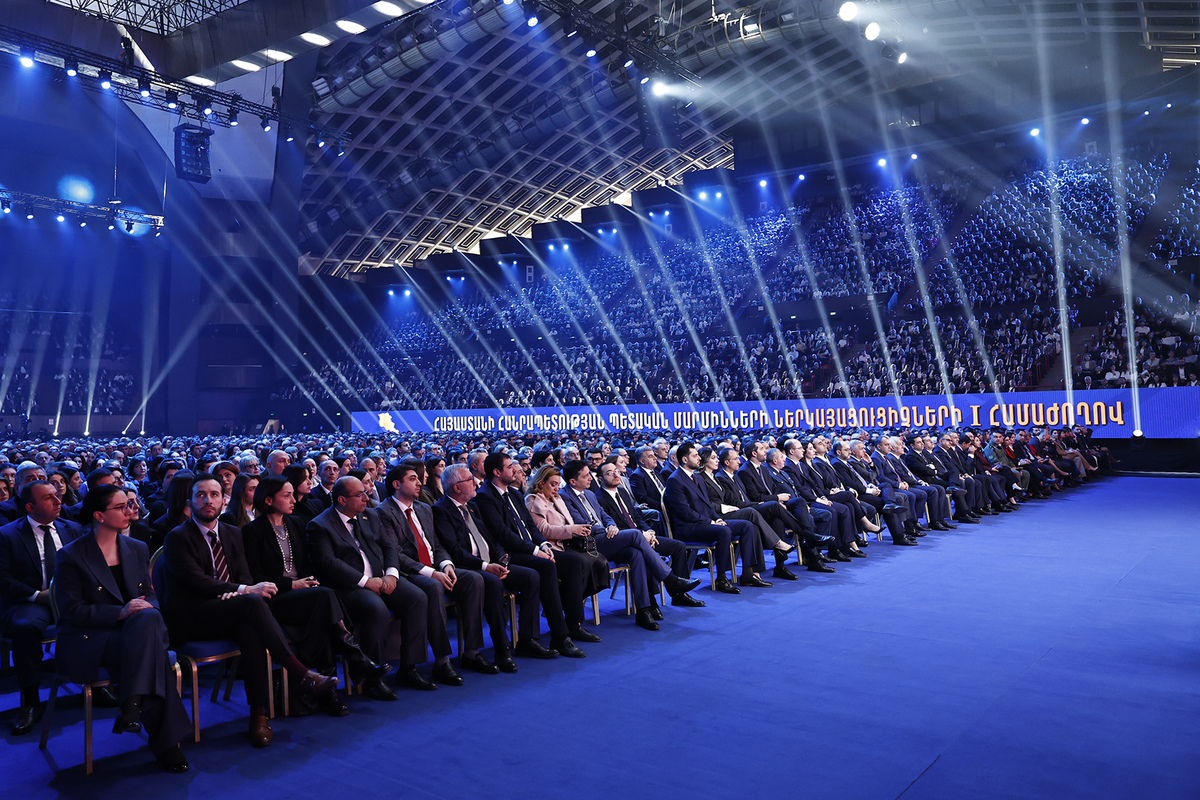
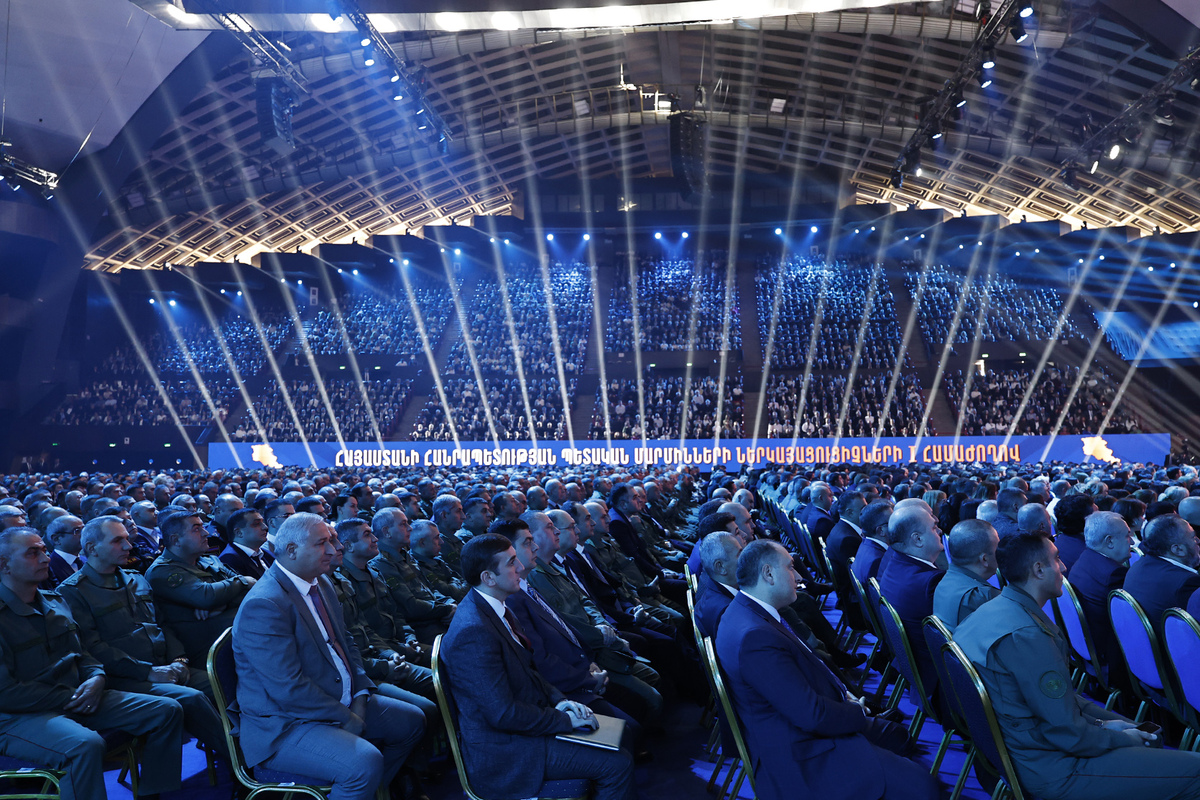
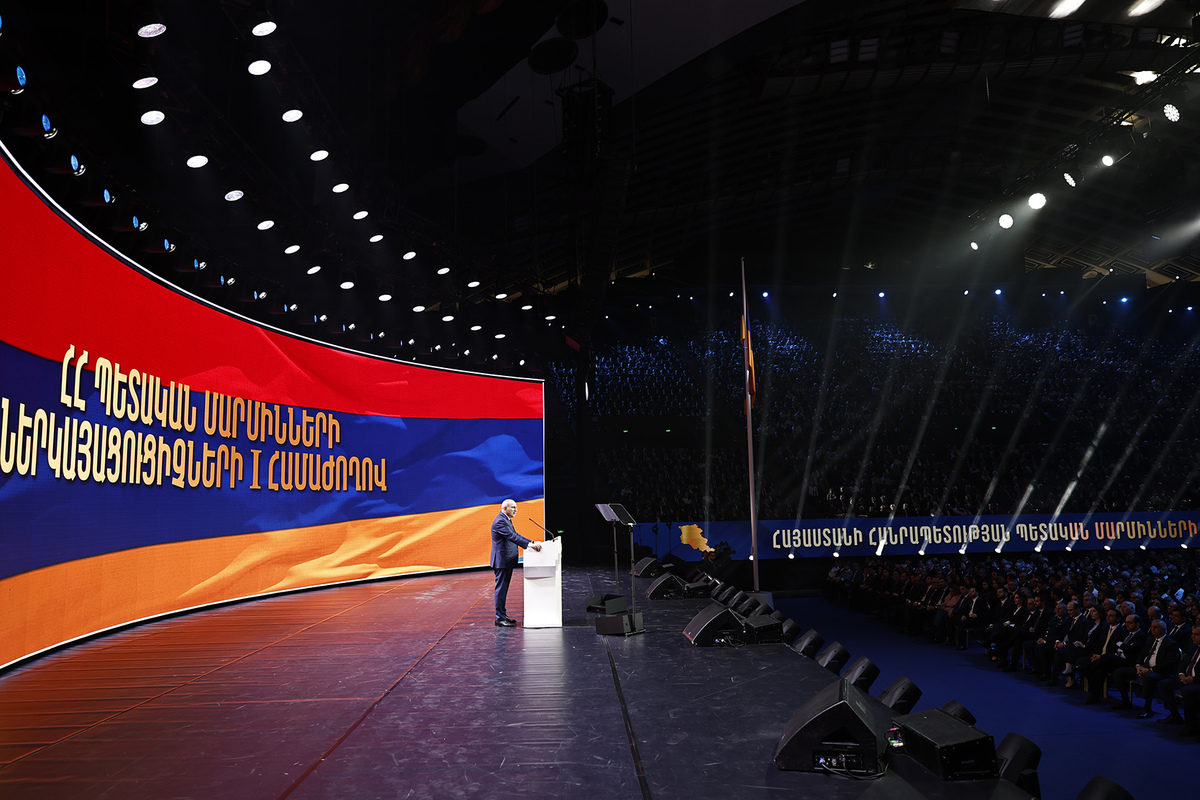
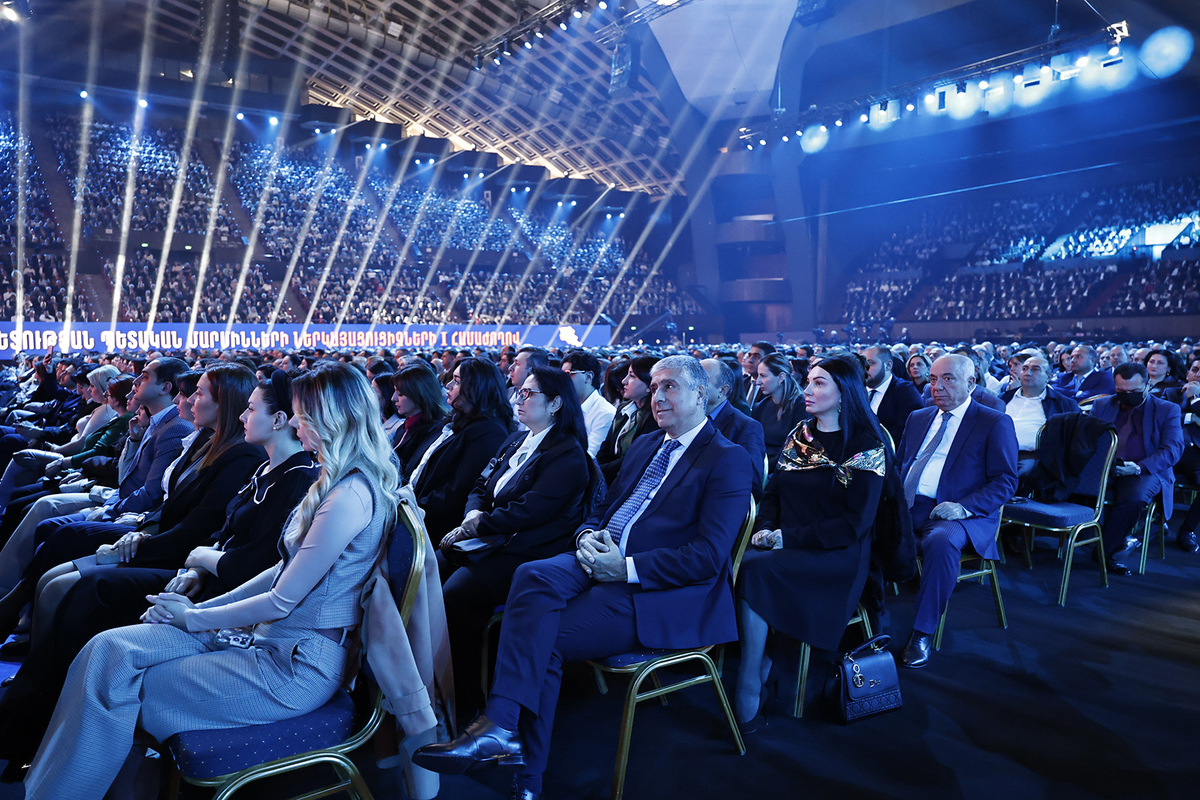
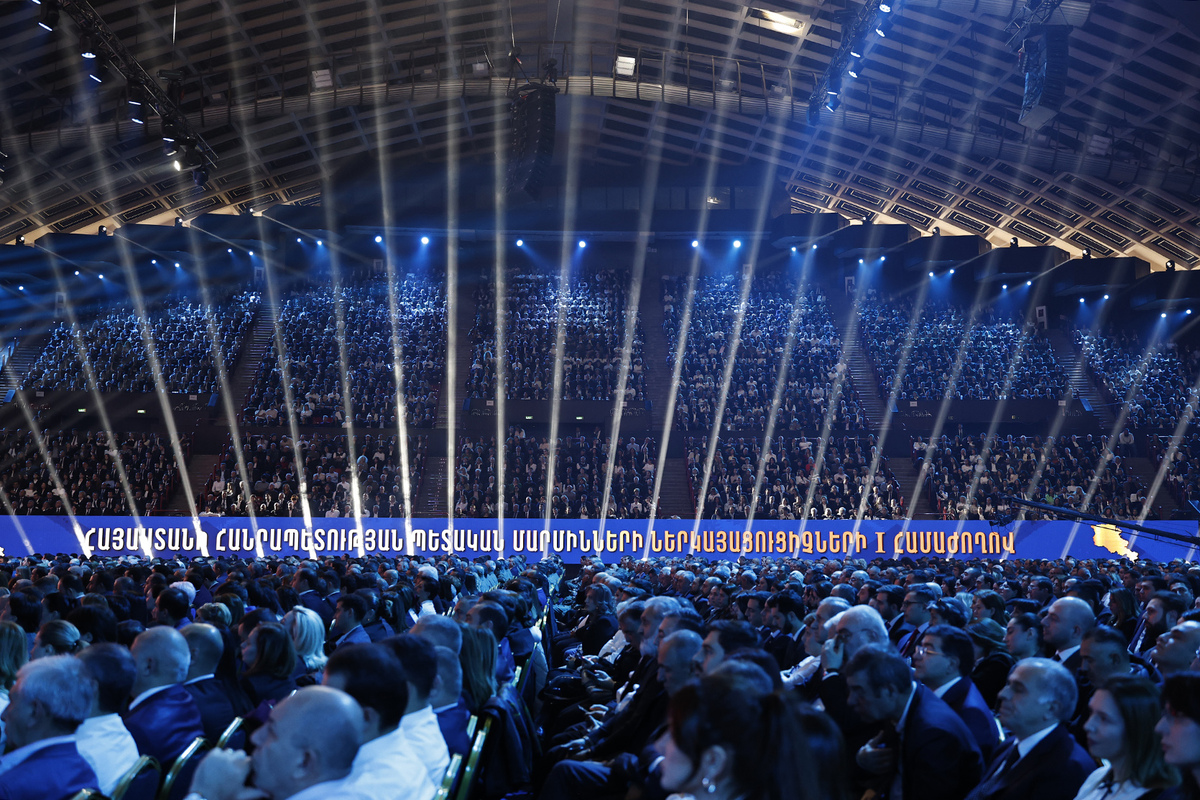
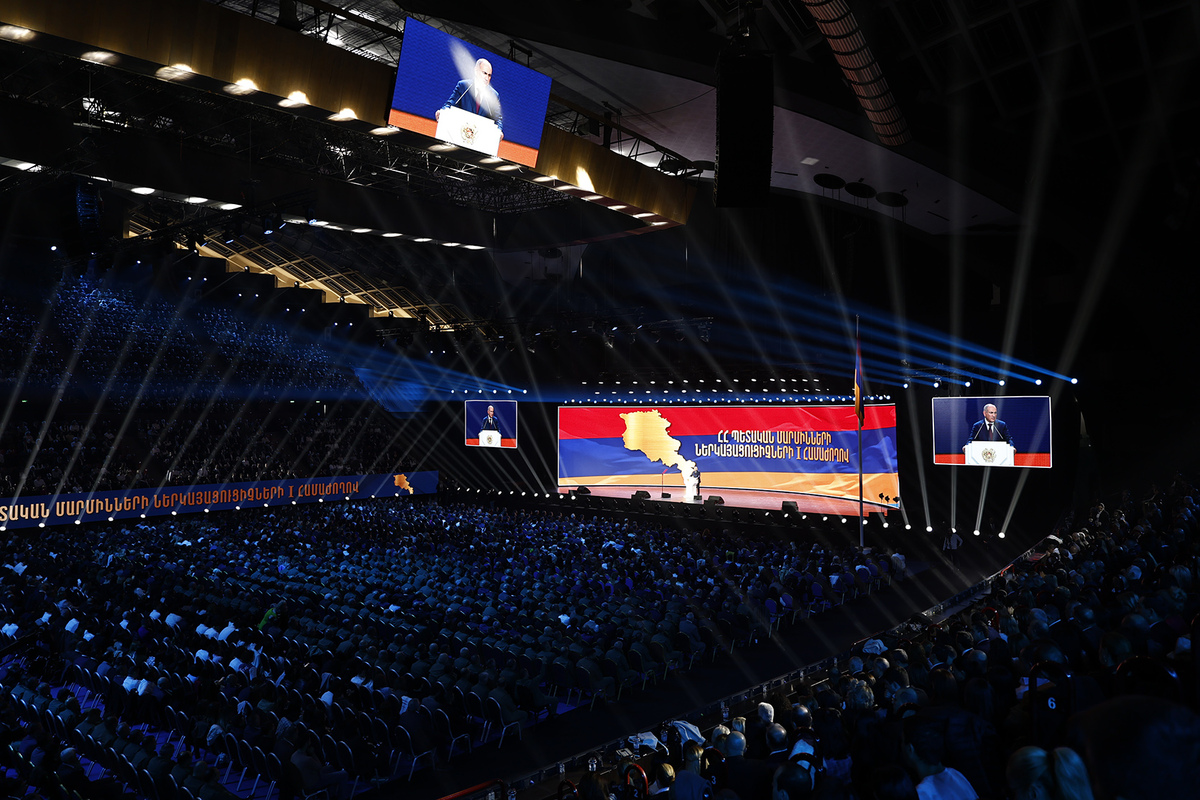
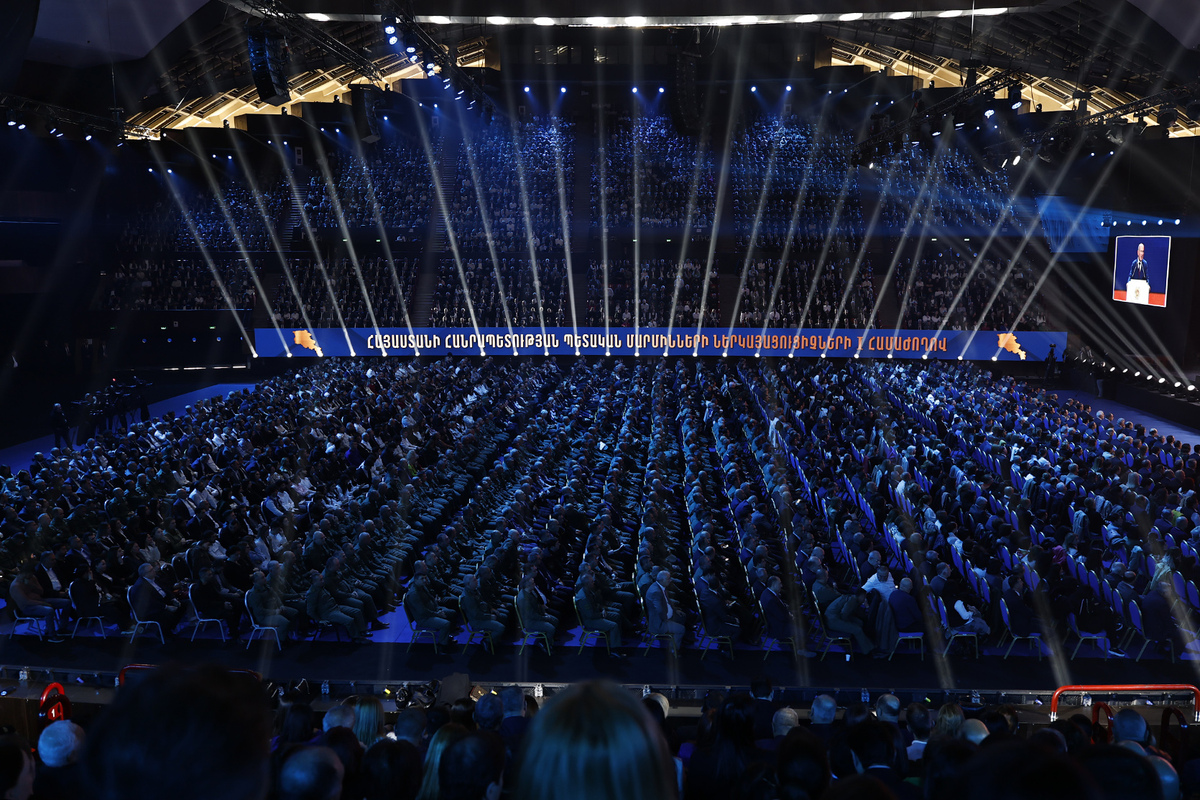
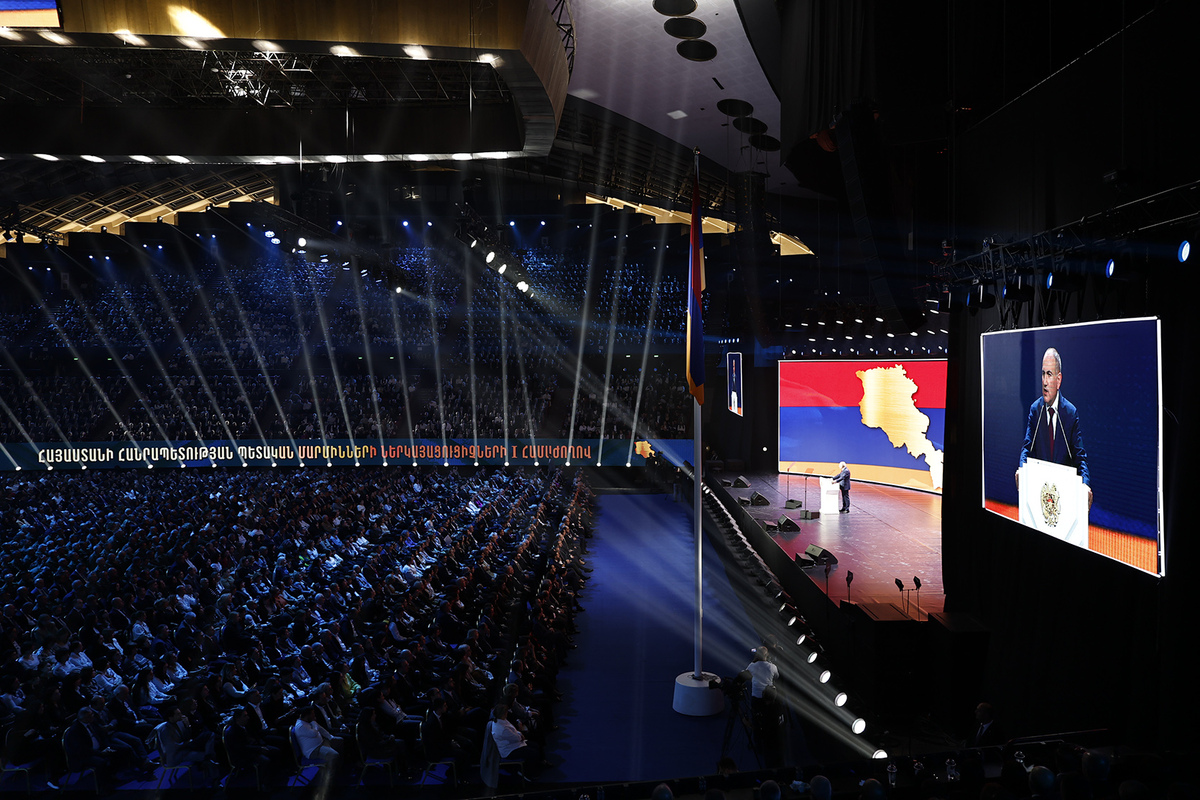
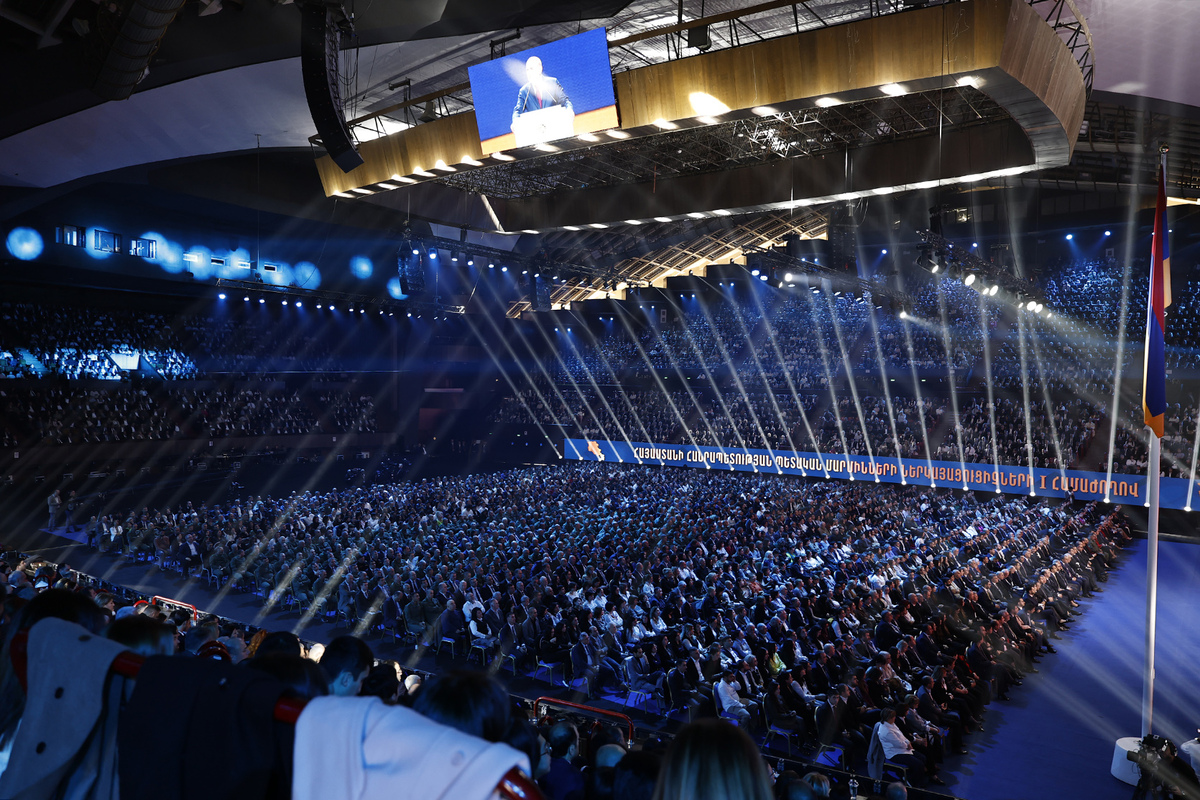
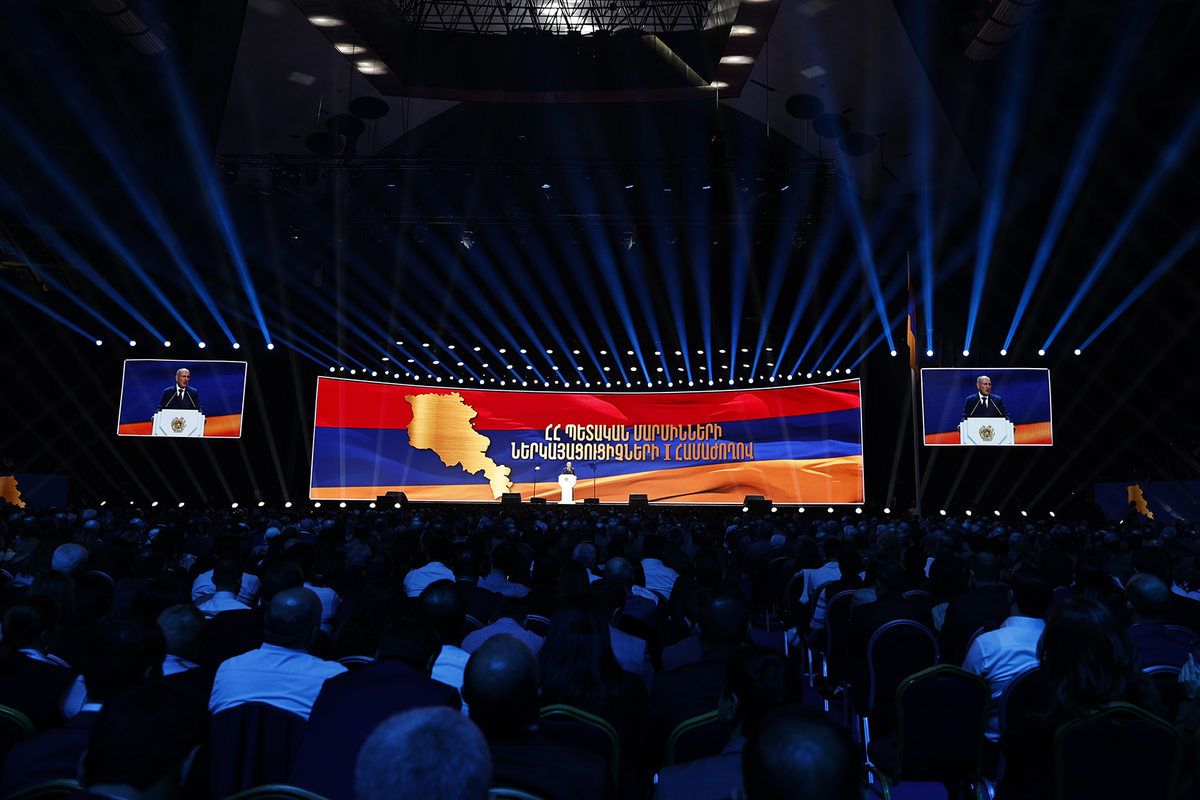
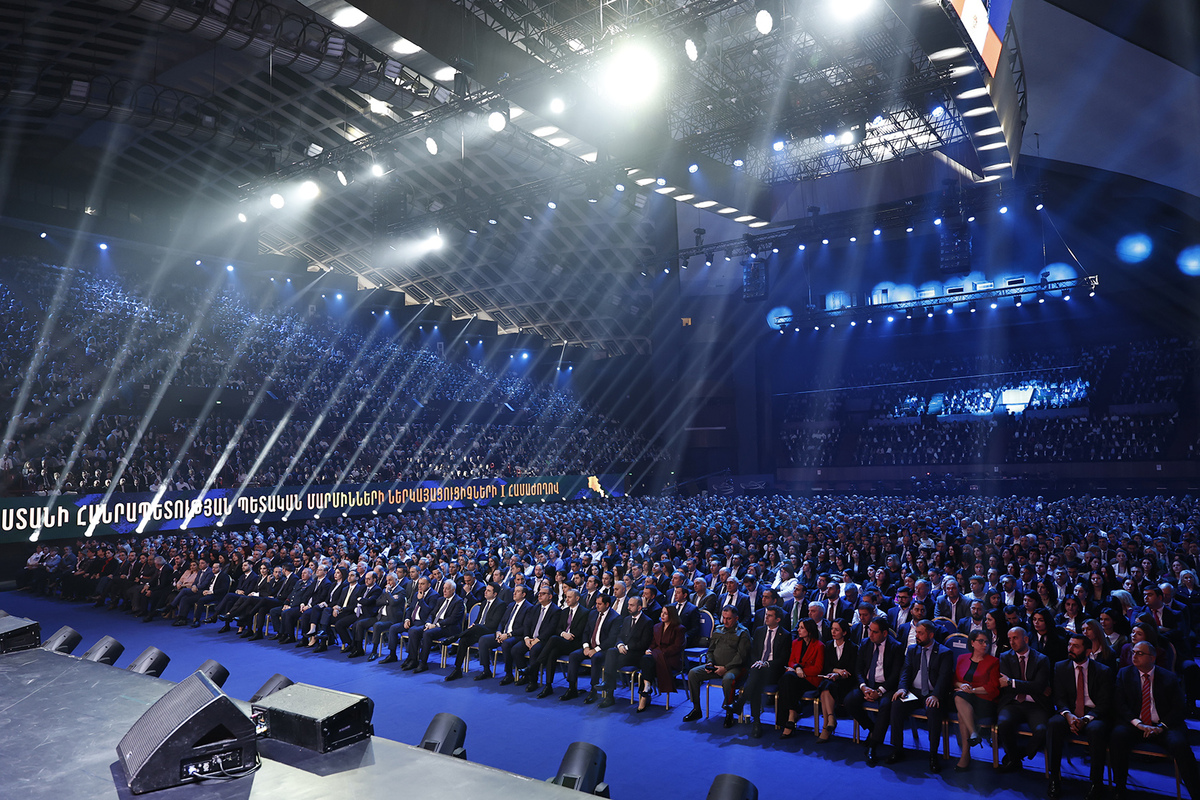
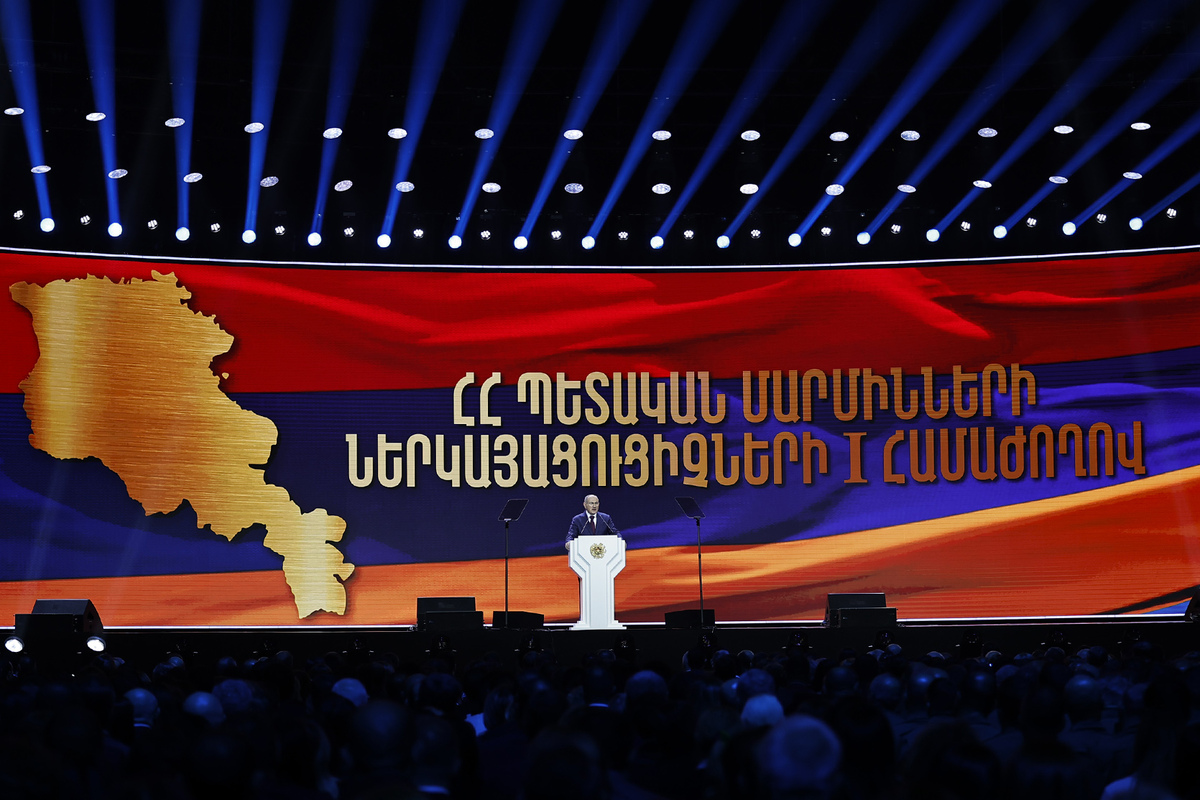
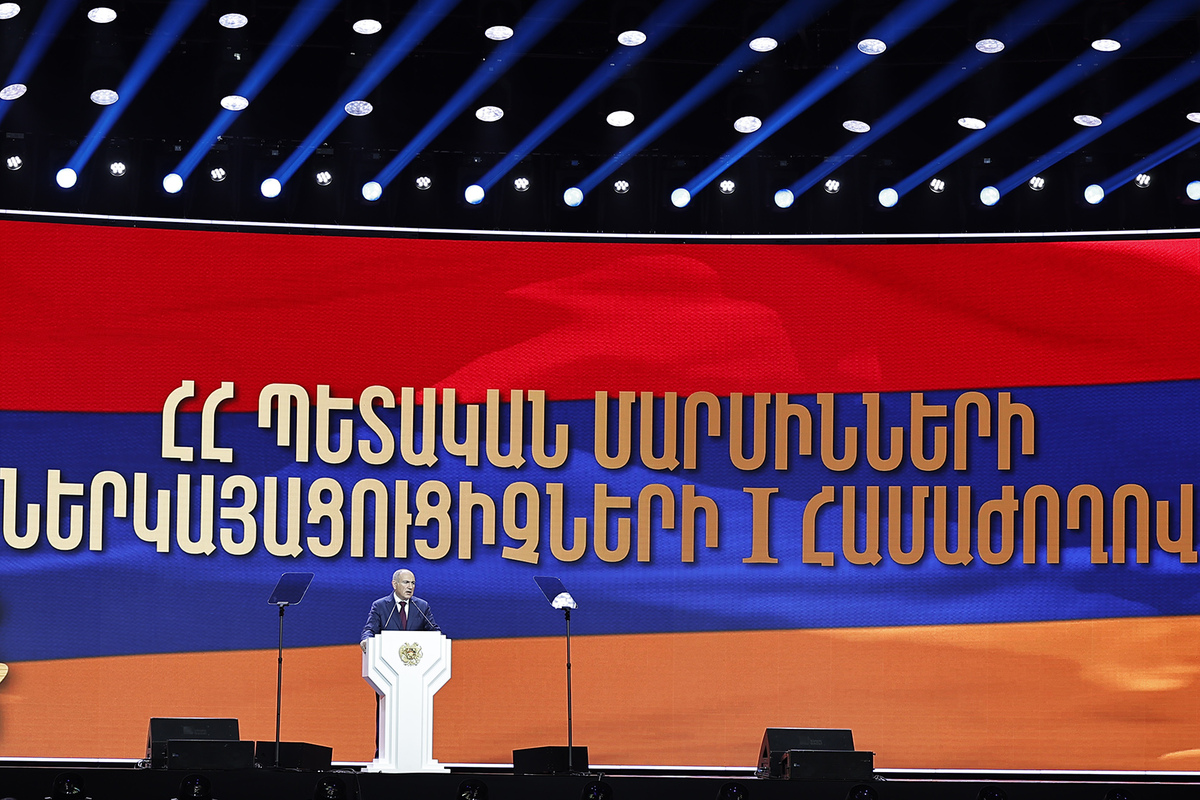
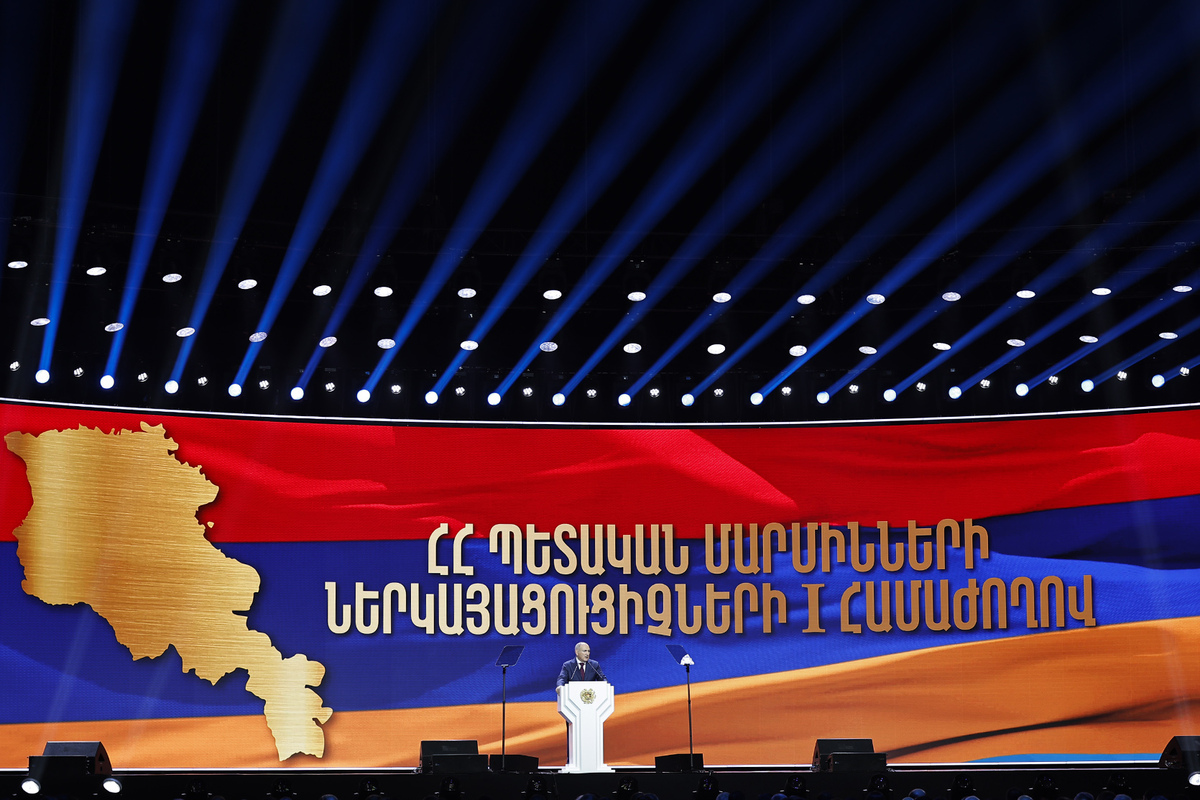
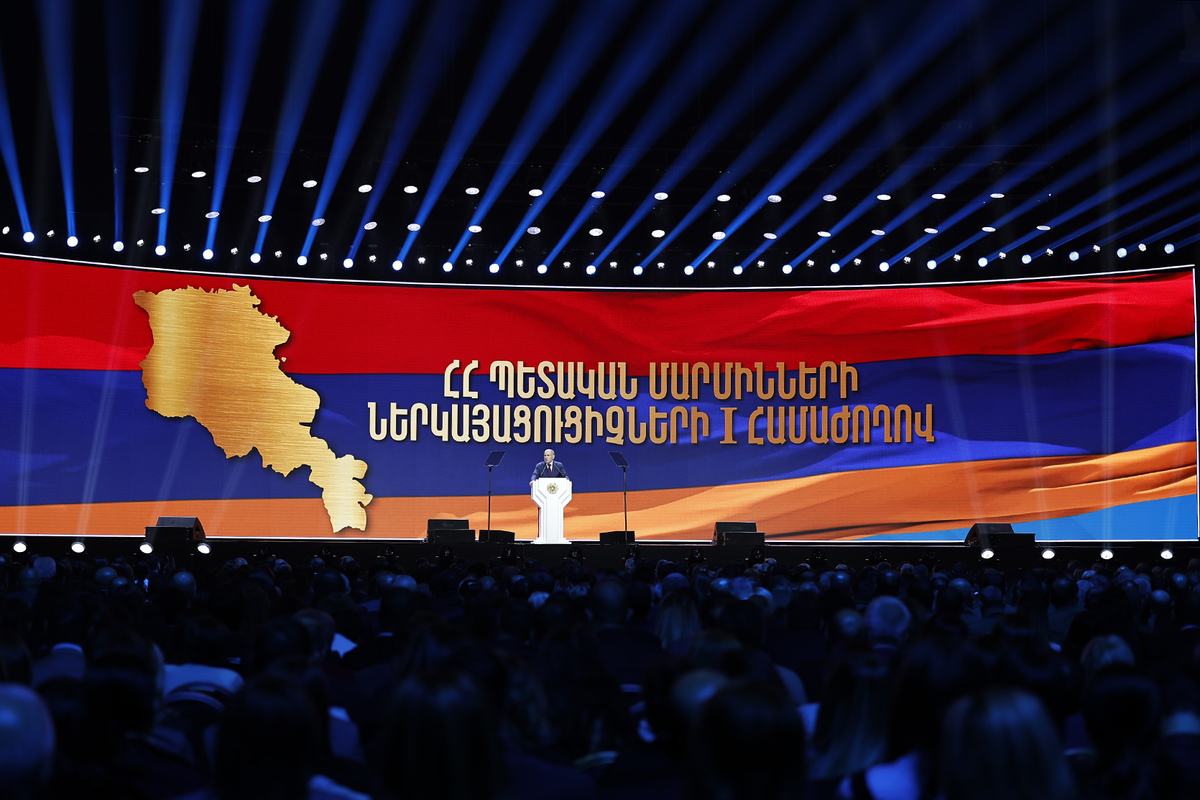
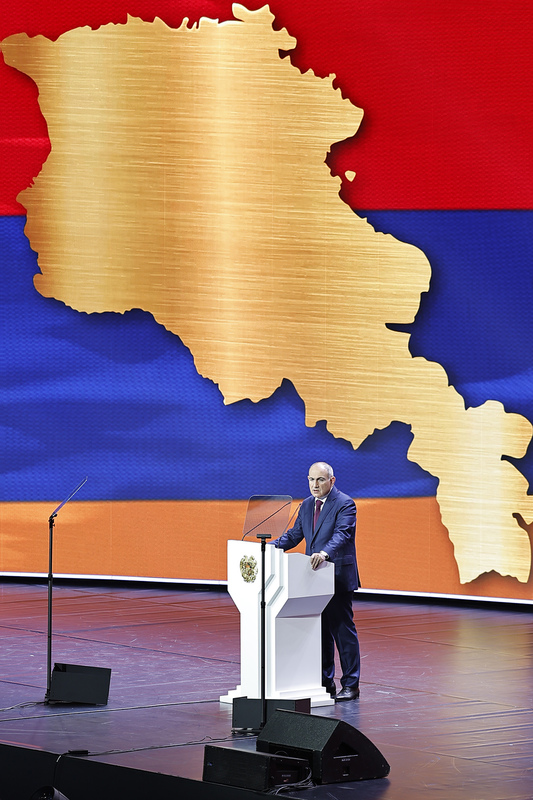
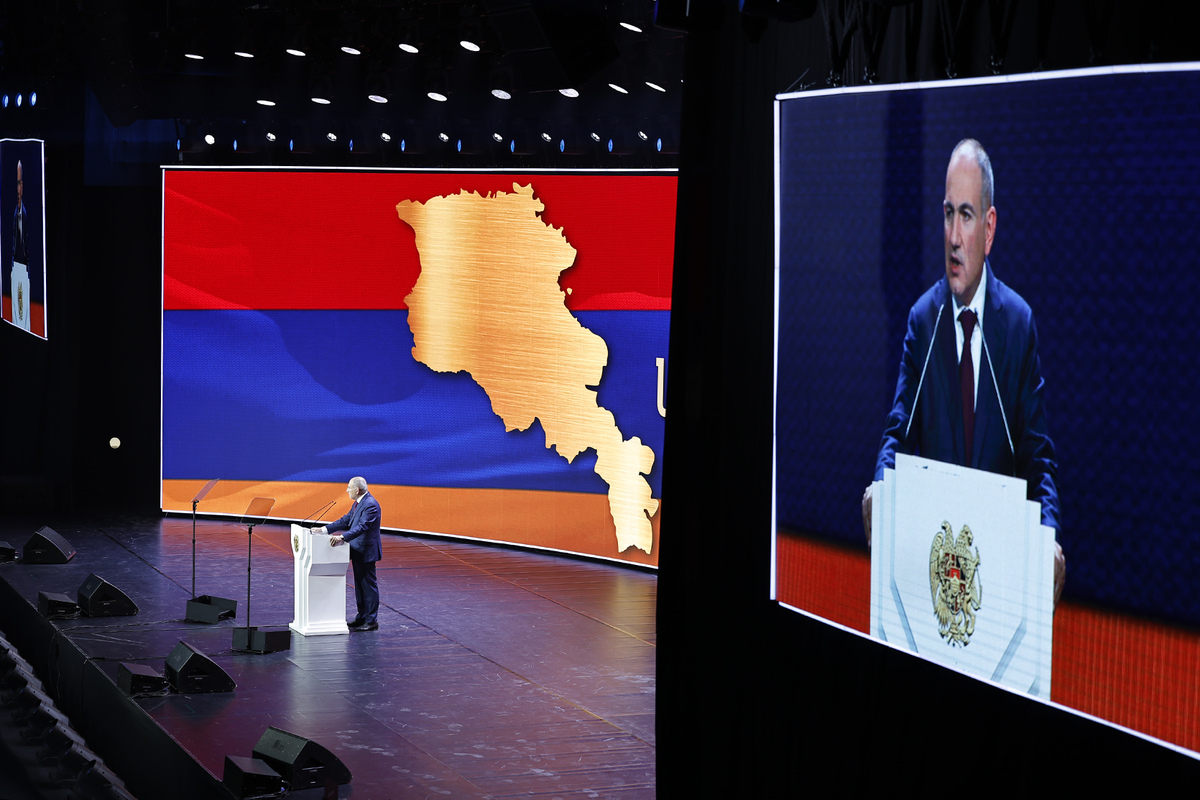
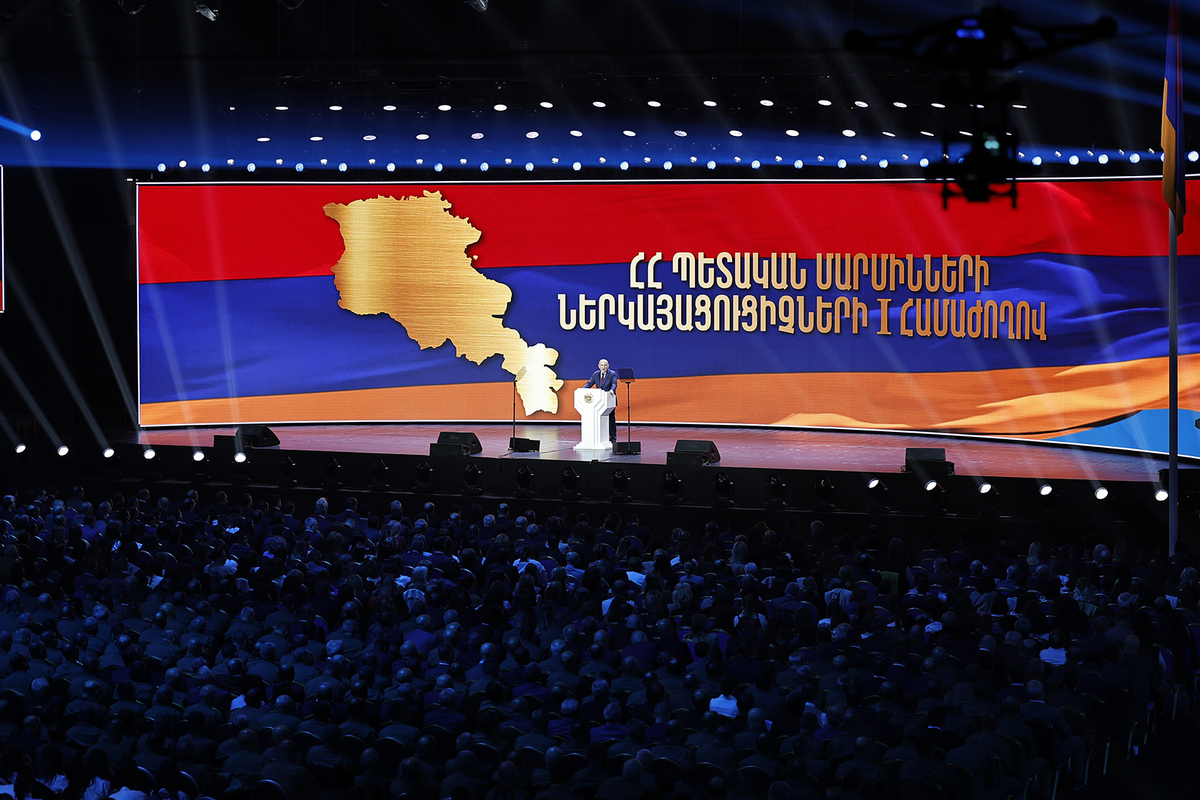
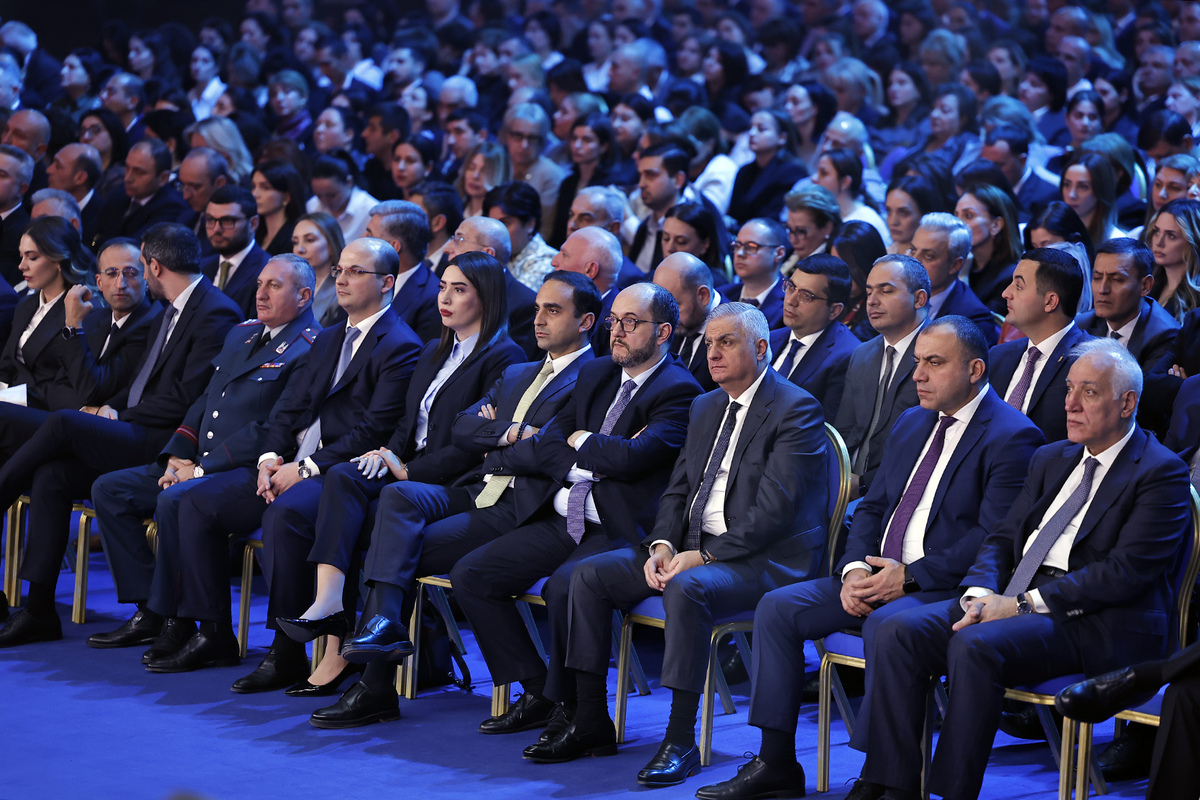
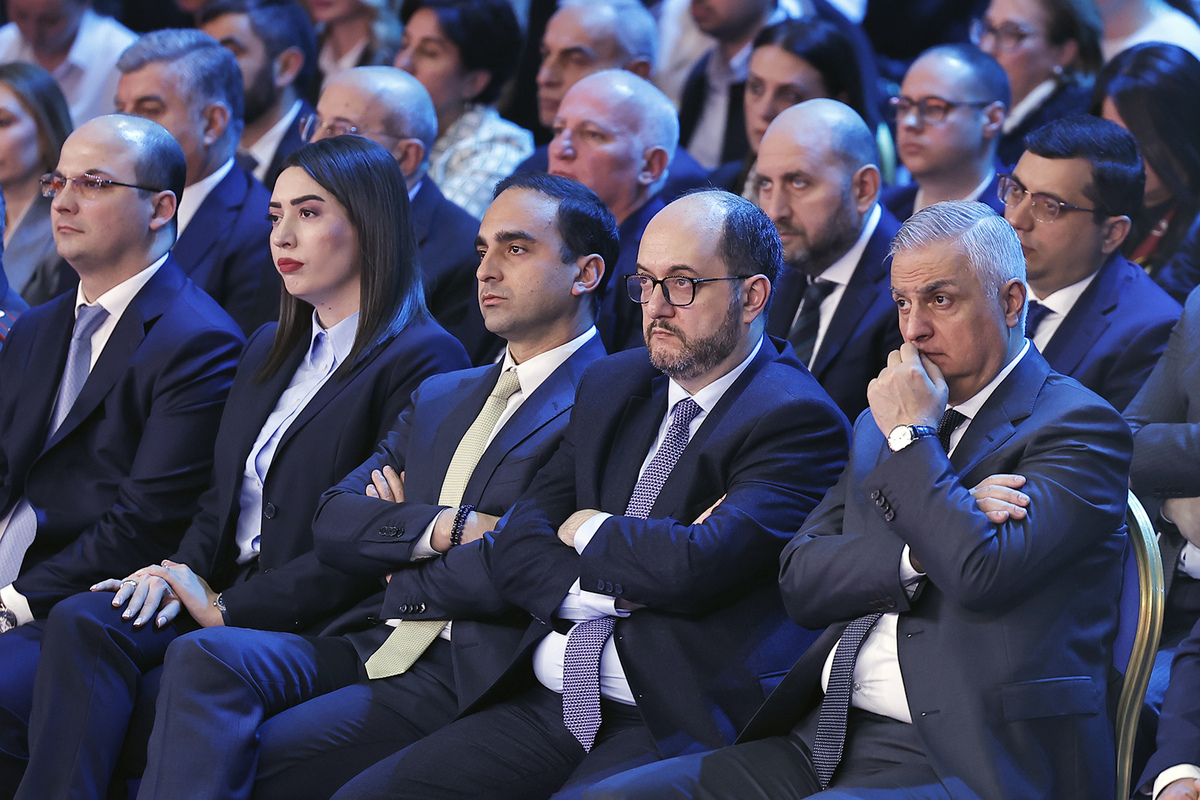
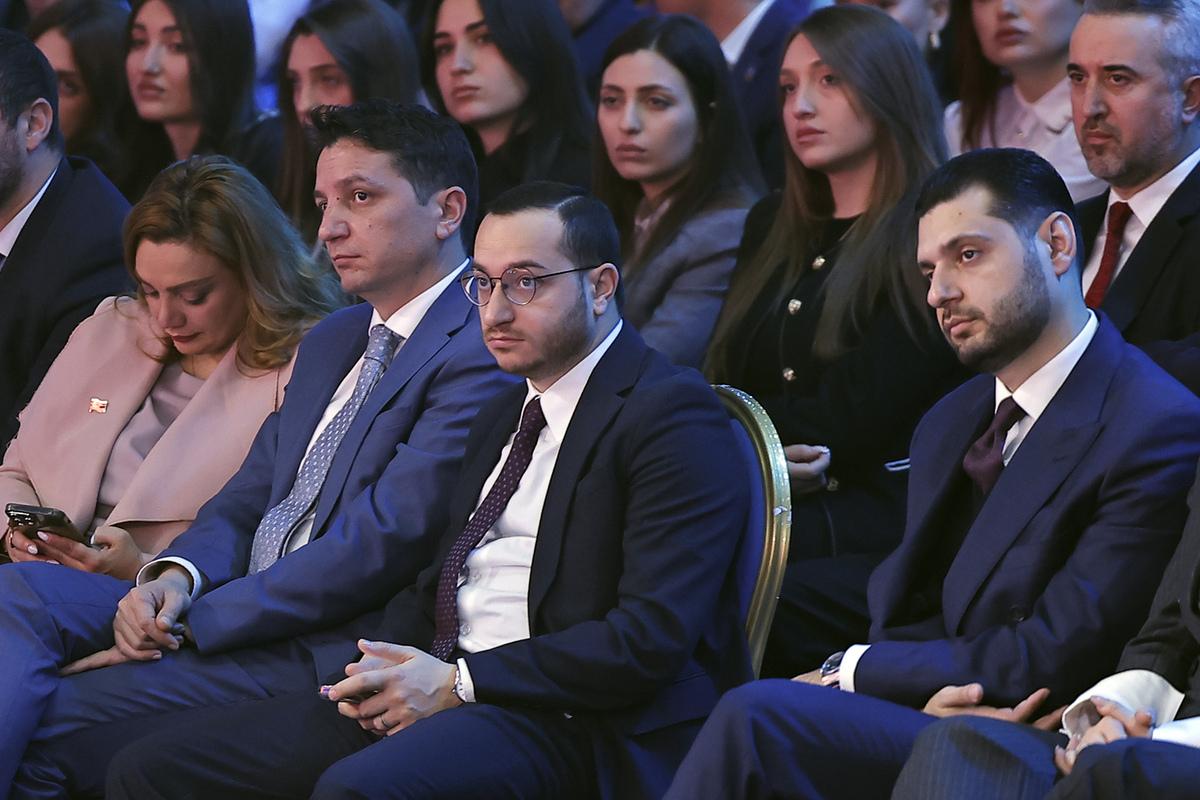
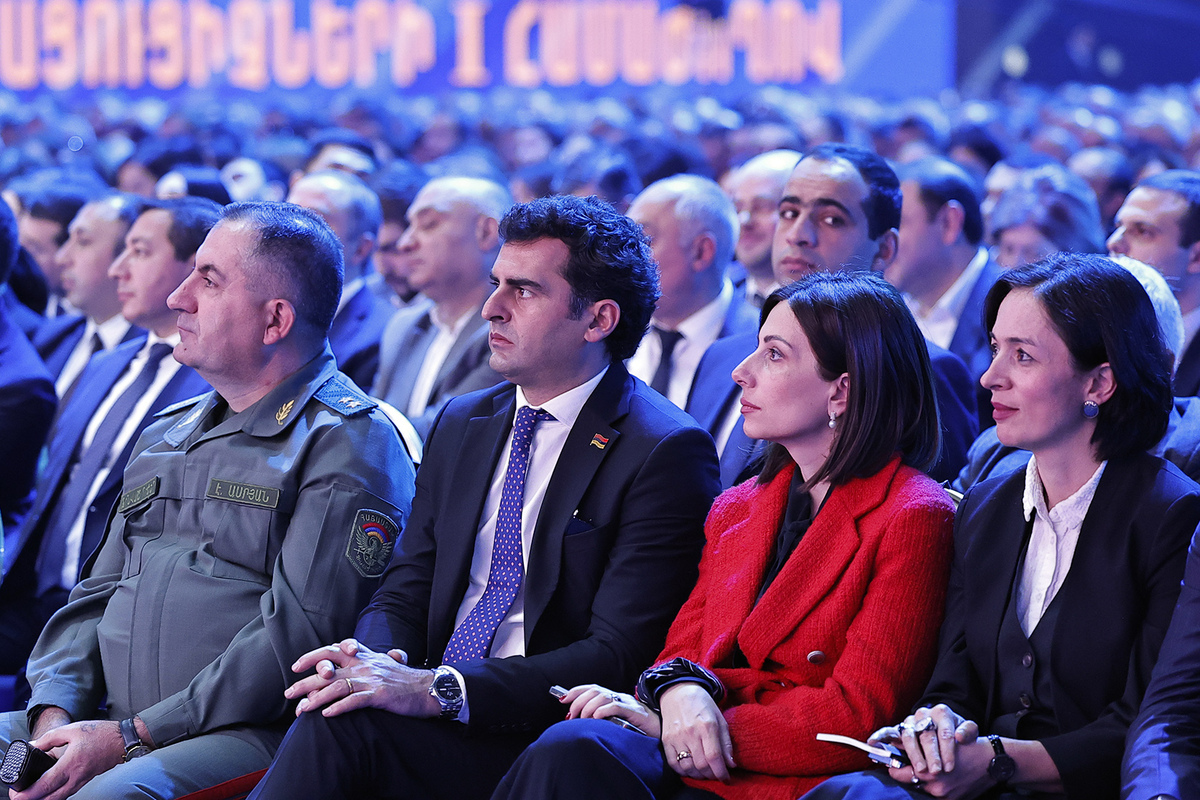
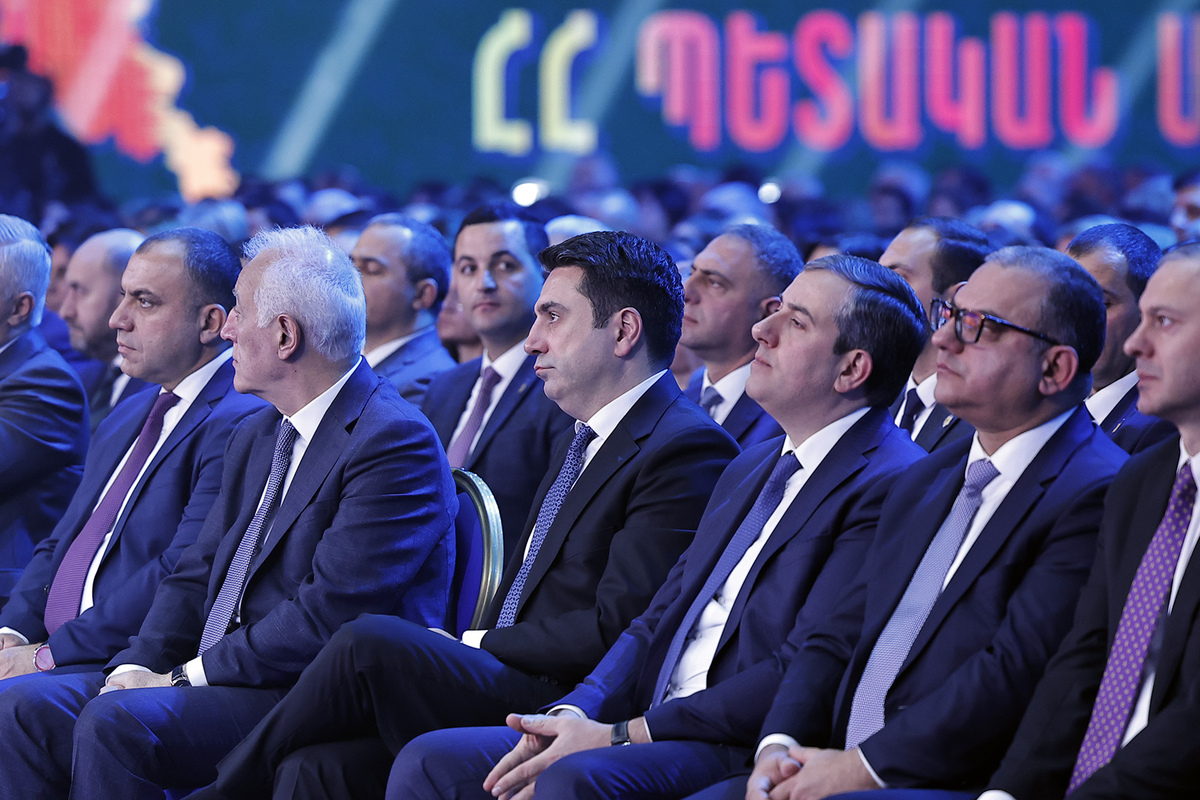
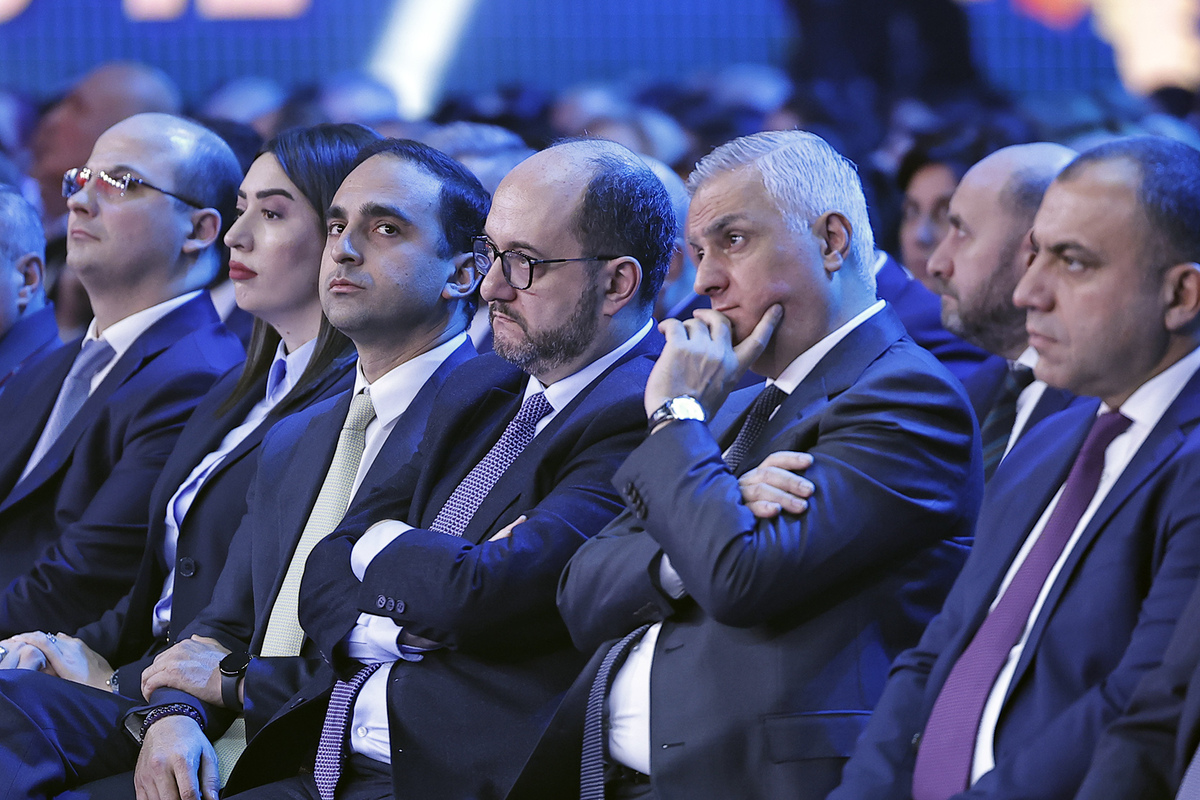
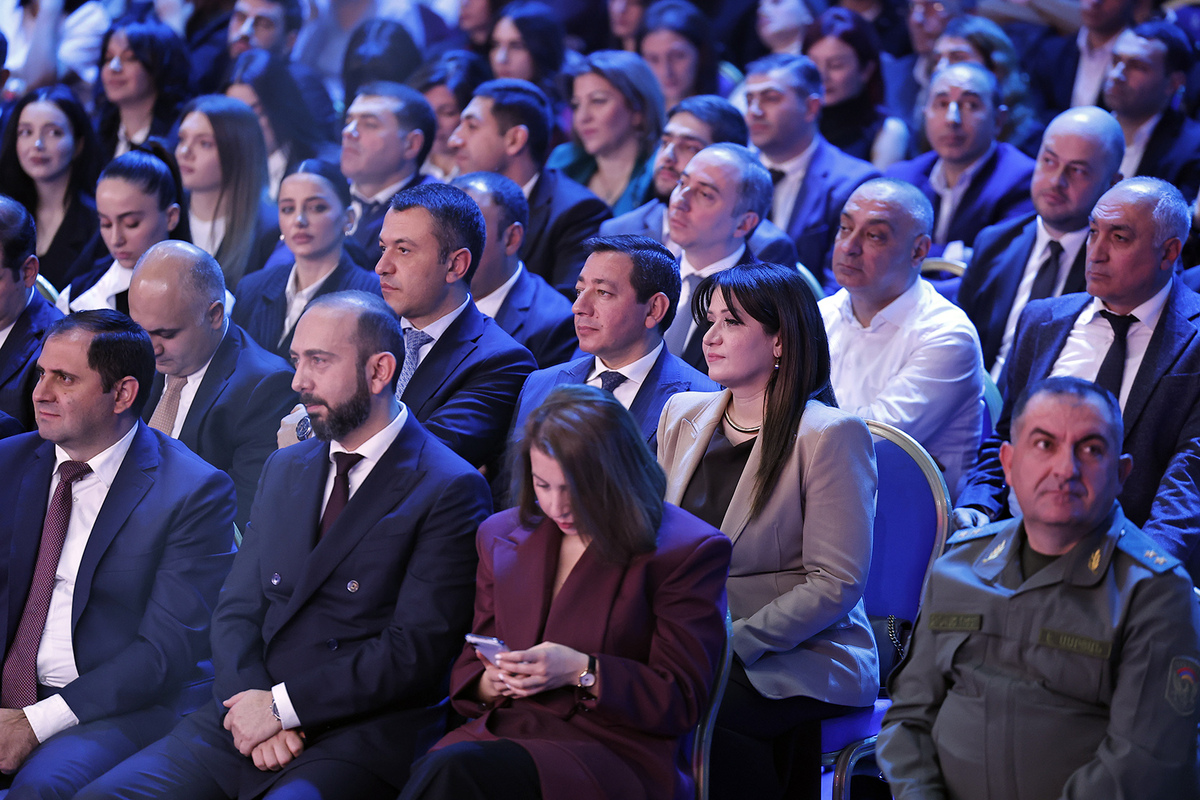
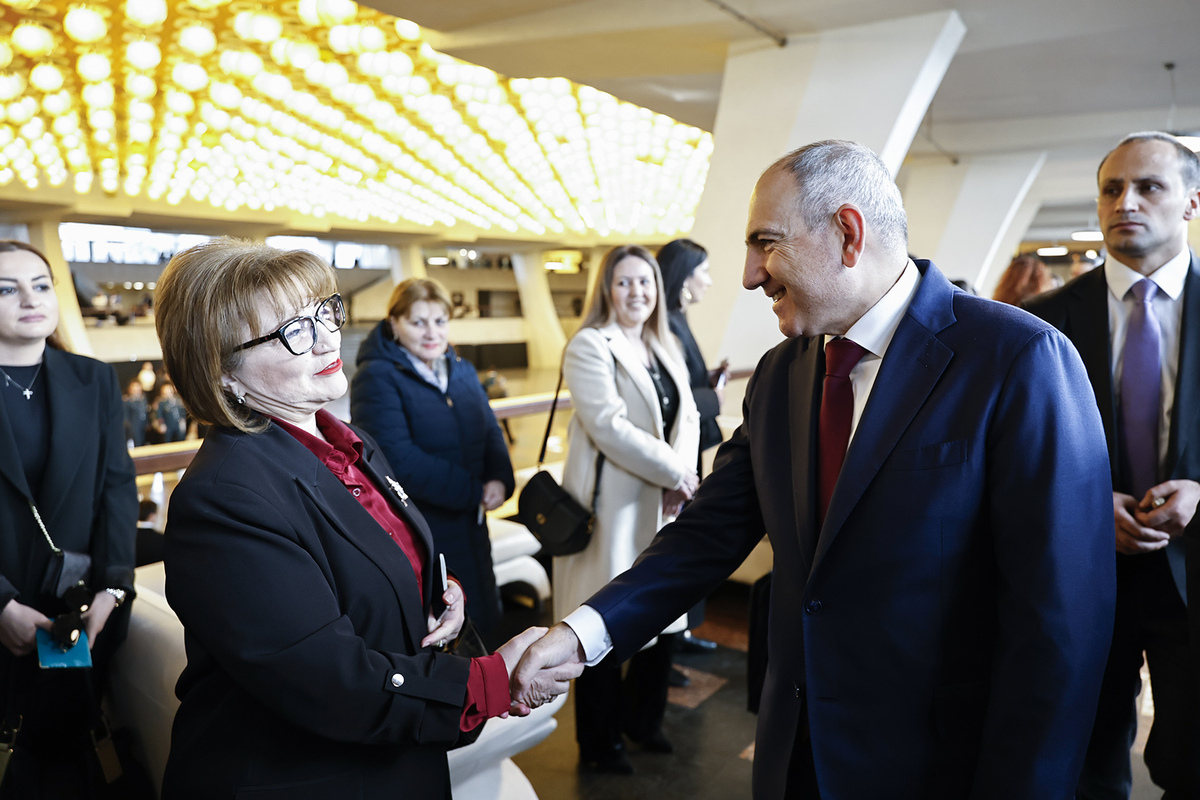
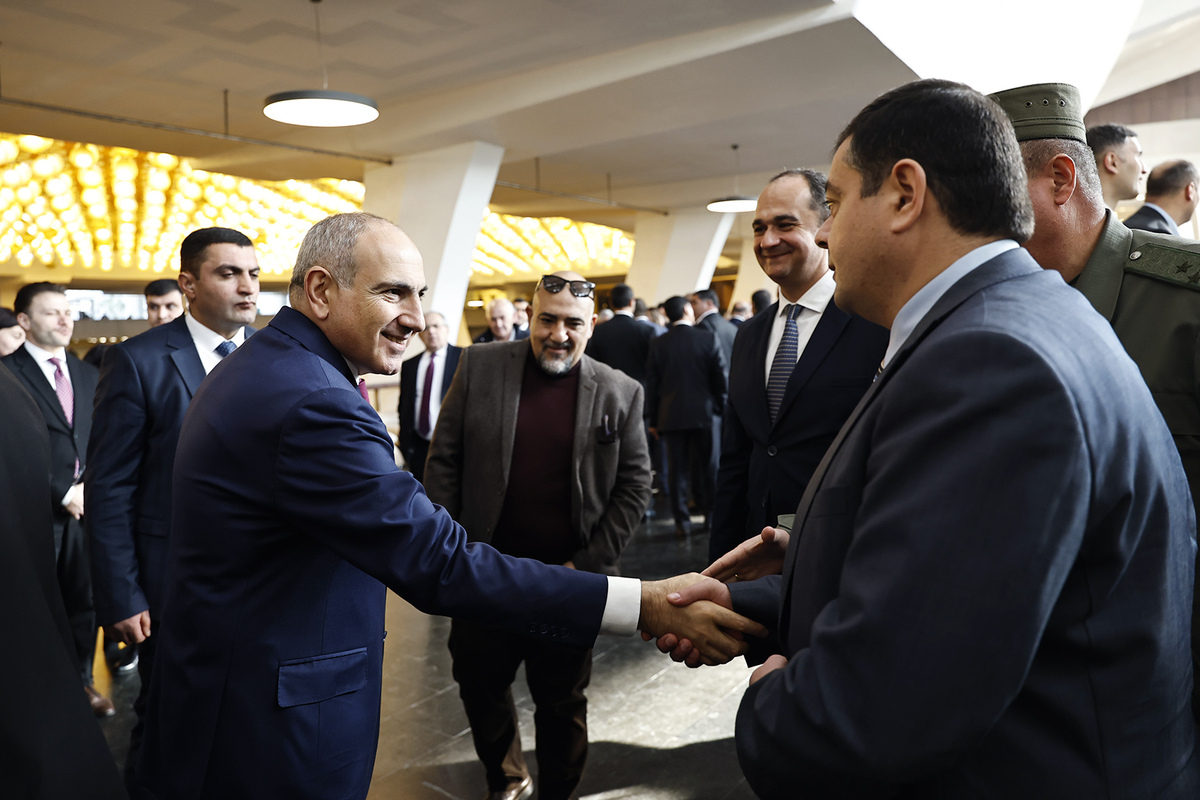
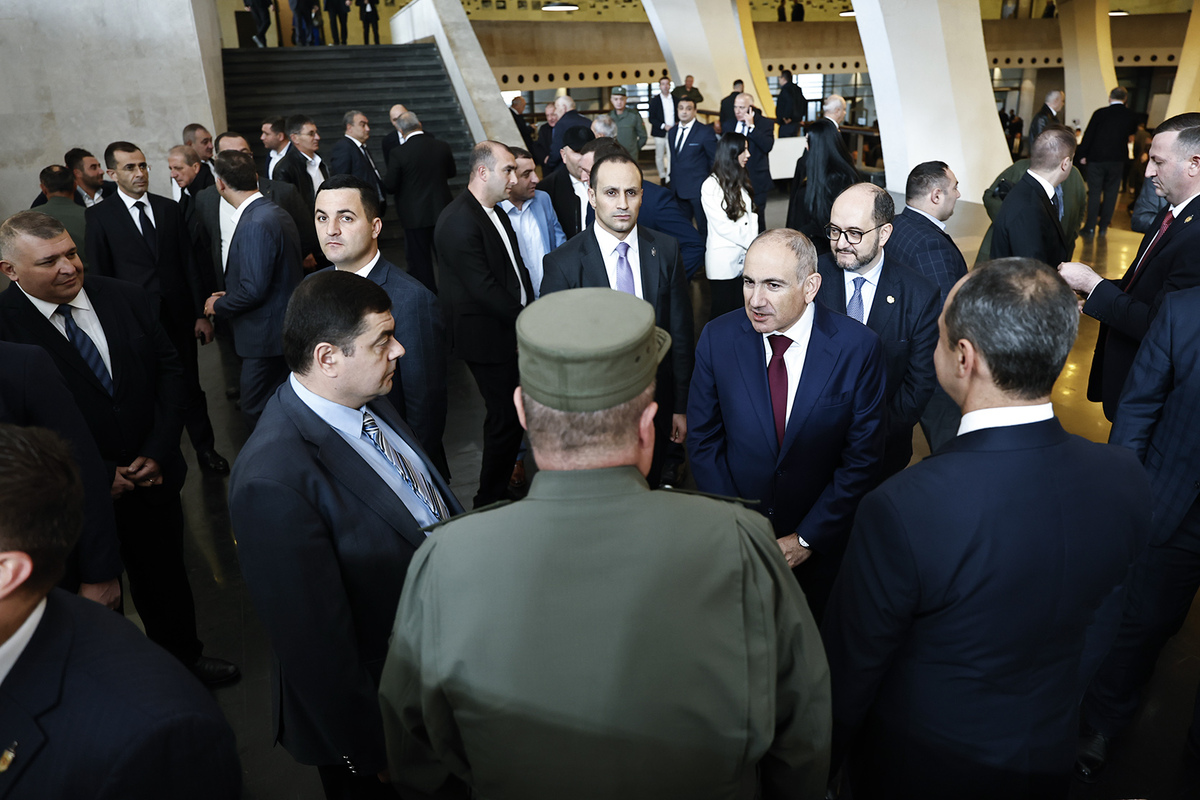
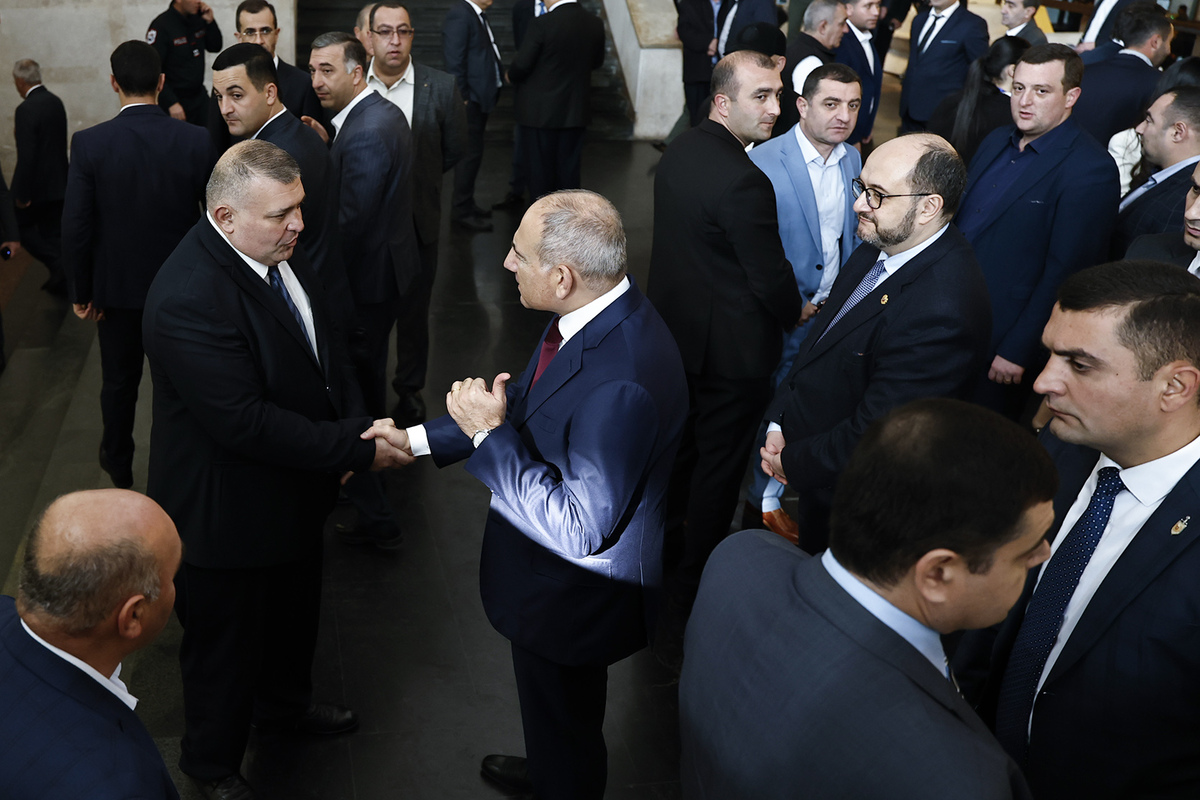
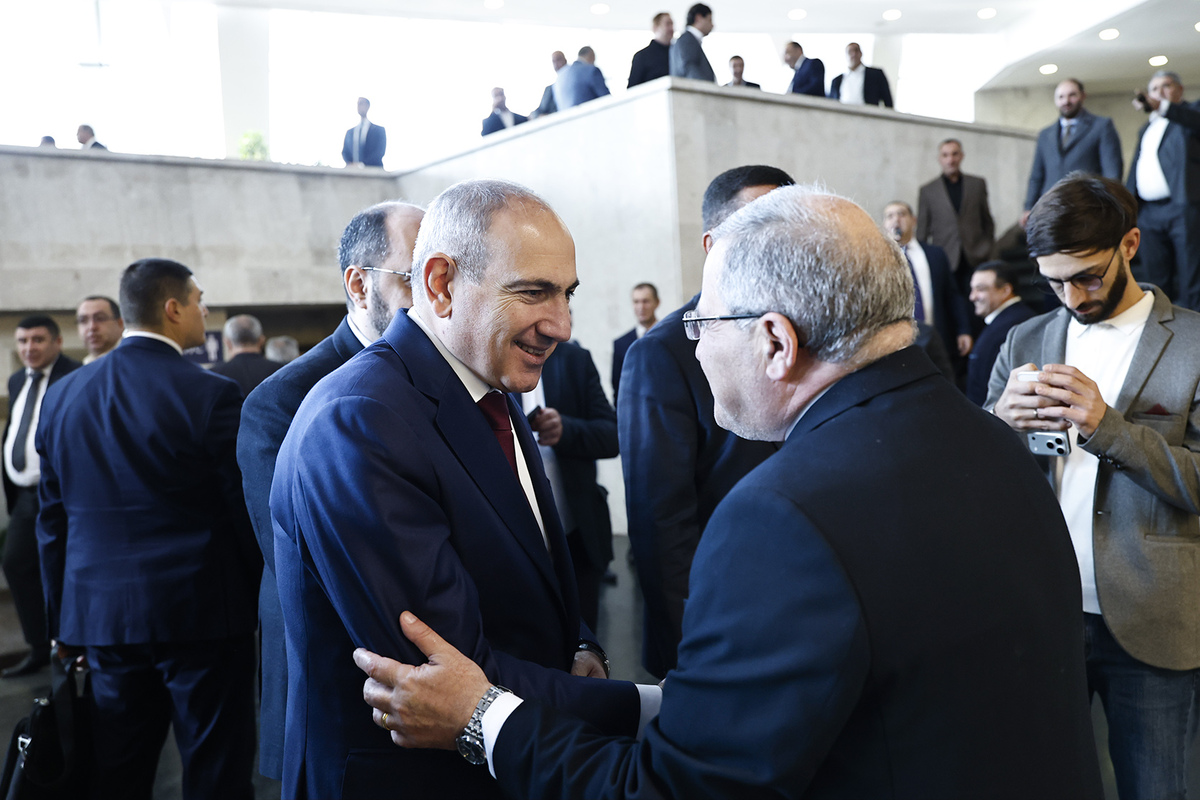
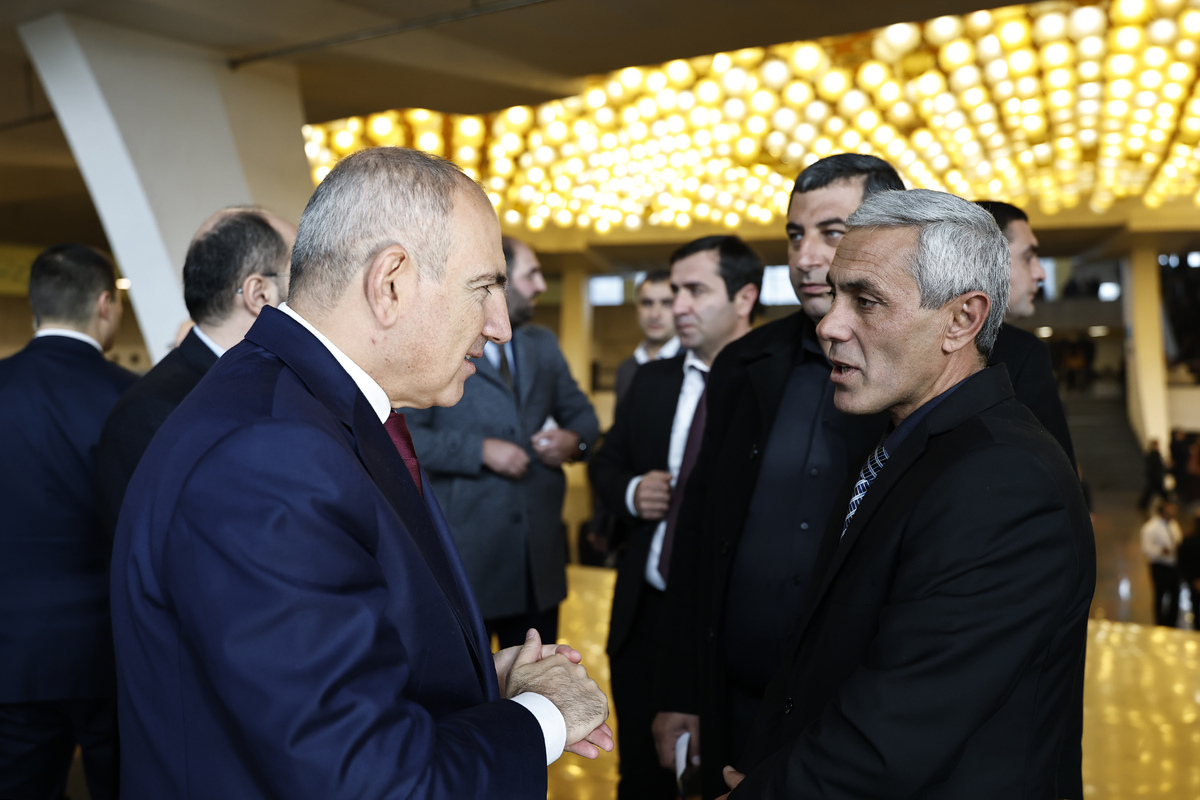
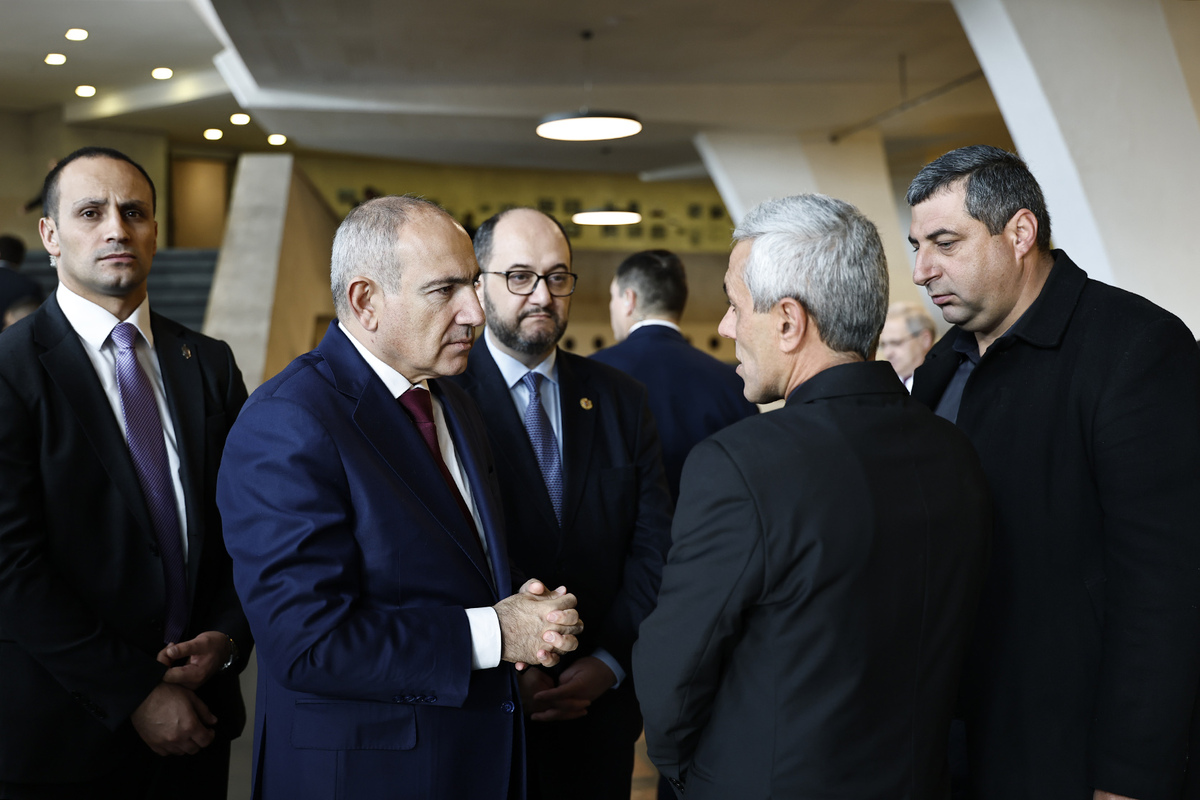
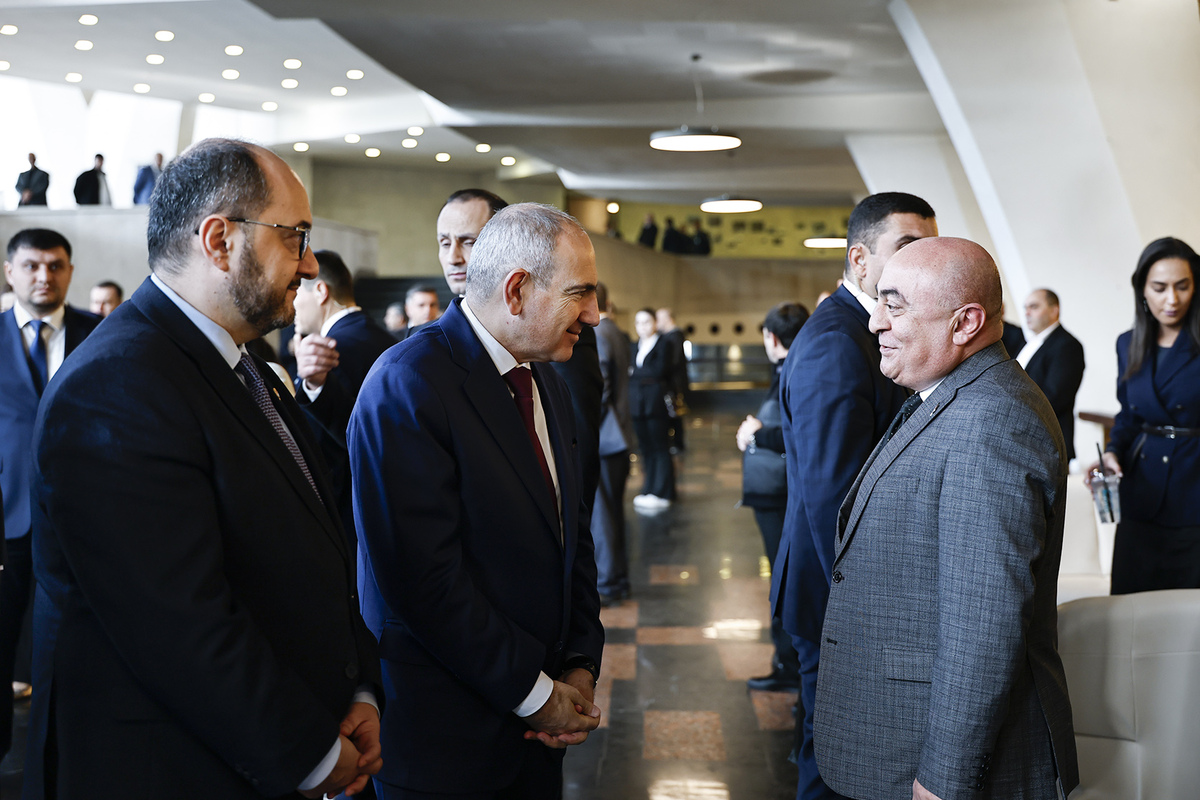
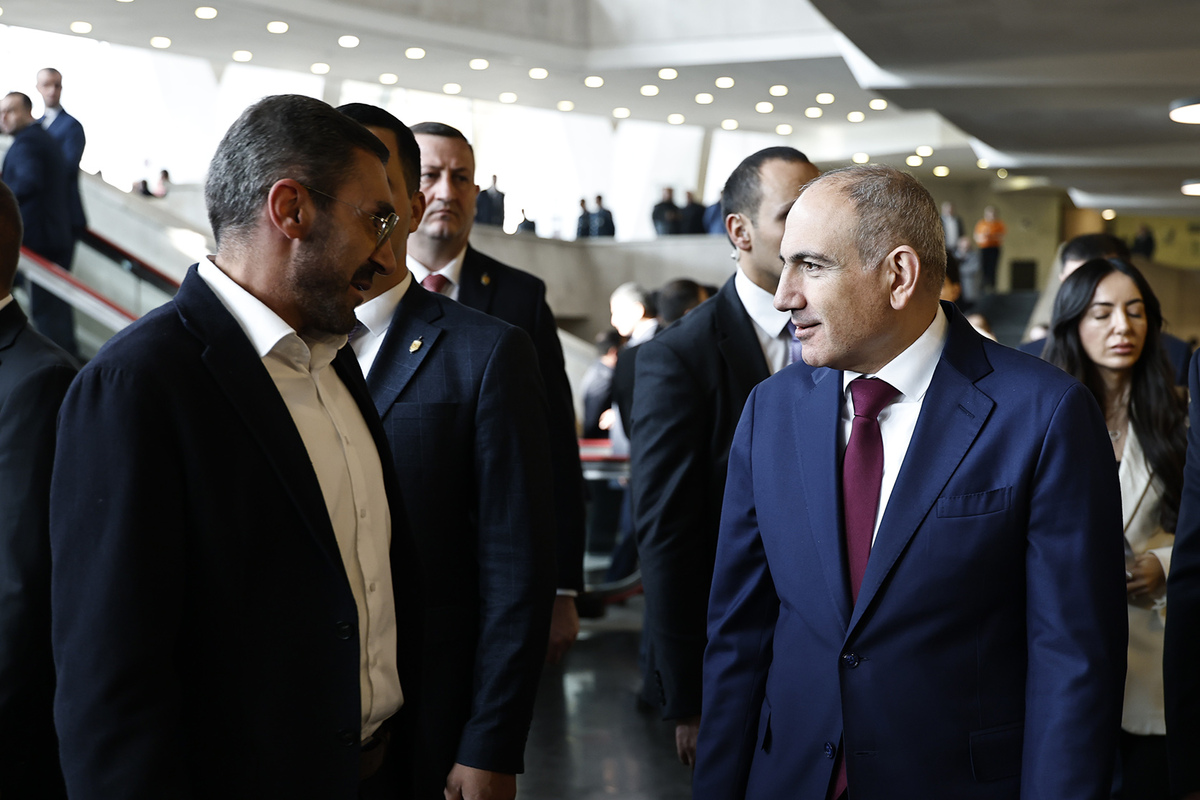
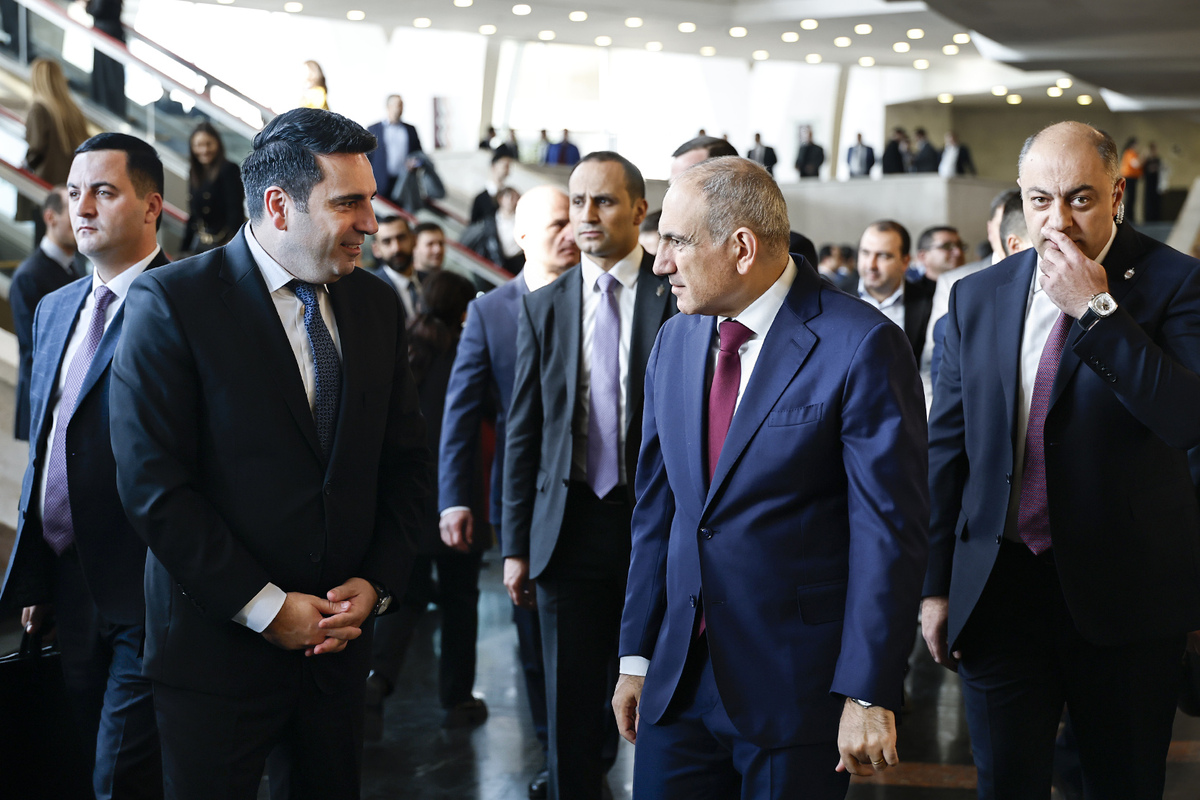
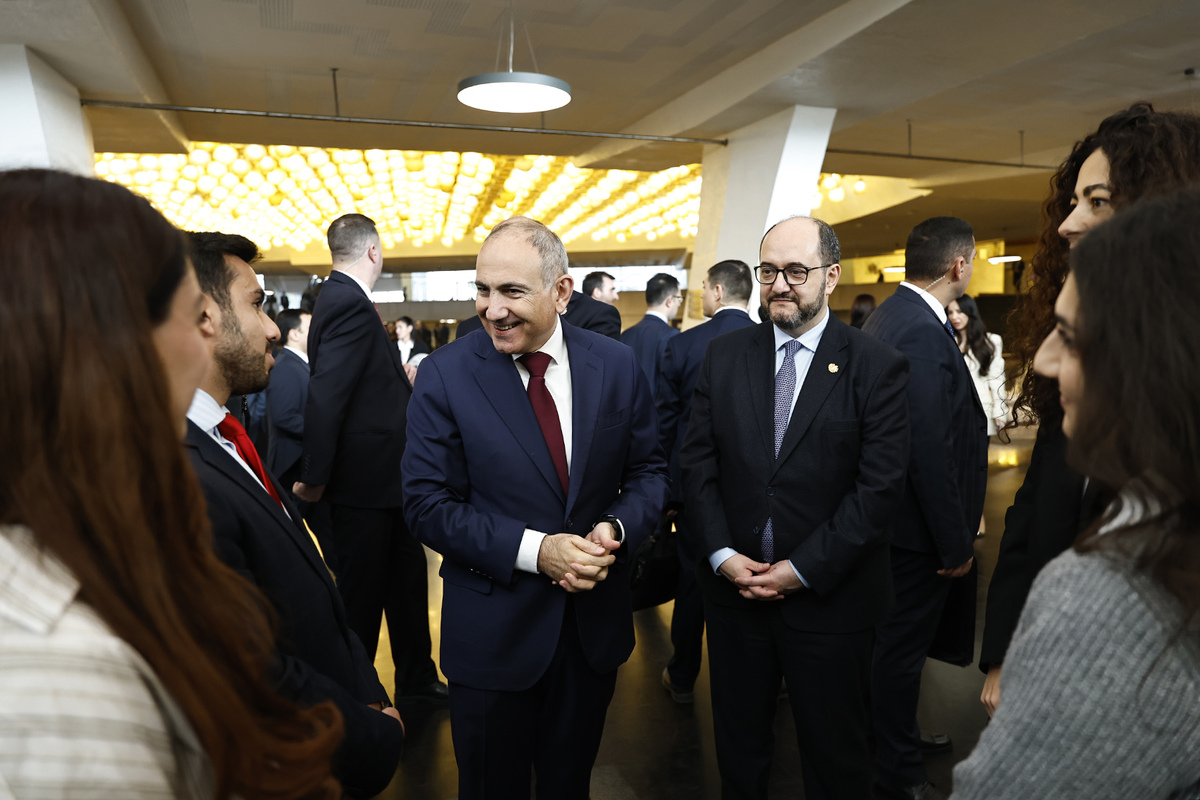
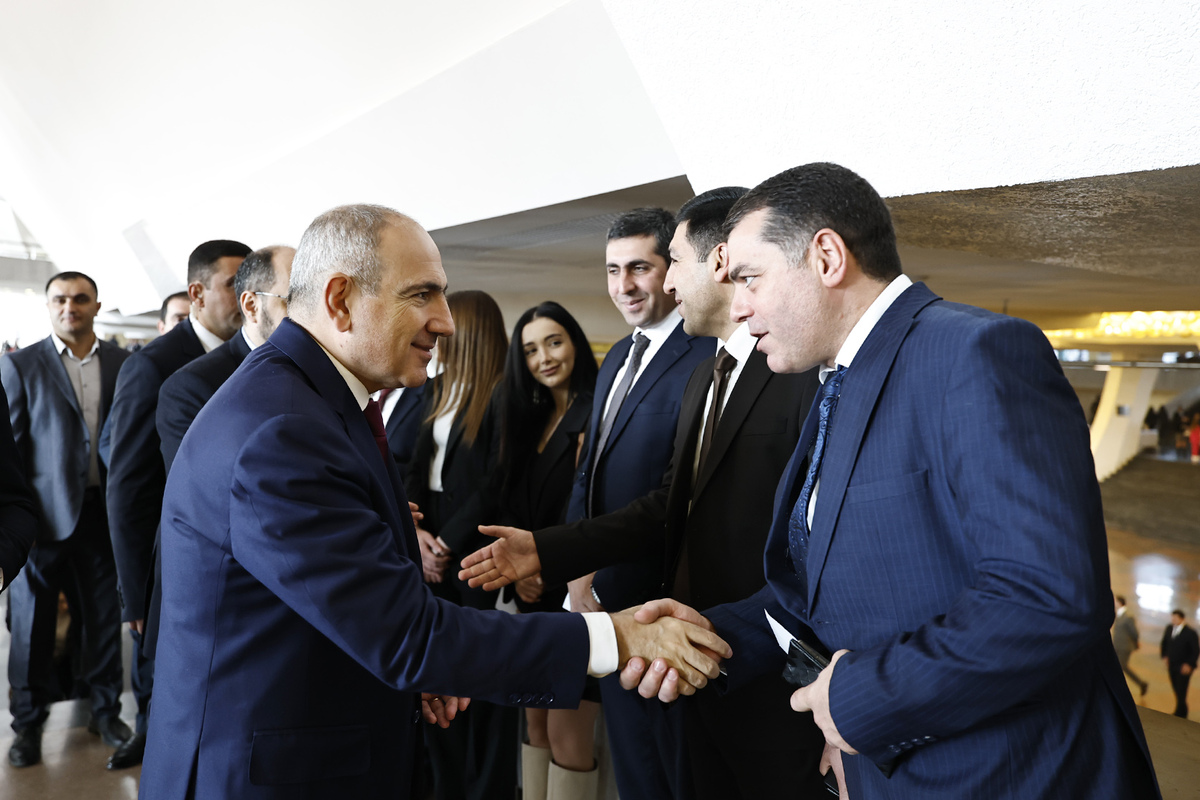
The first conference of representatives of state bodies of the Republic of Armenia was held at the Karen Demirchyan Sports and Concert Complex. The event was attended by President of the Republic Vahagn Khachaturyan, Prime Minister Nikol Pashinyan, President of the National Assembly Alen Simonyan, President of the Constitutional Court Arman Dilanyan, representatives of legislative, executive, judicial, law enforcement, territorial administration and local self-government, independent and autonomous bodies, special services, military personnel, police officers, rescuers, employees of educational, cultural, and healthcare institutions, students, pupils, more than 7 thousand people.
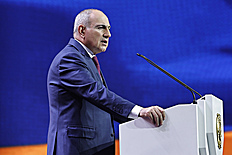
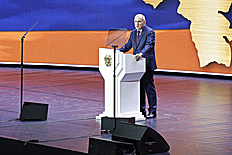
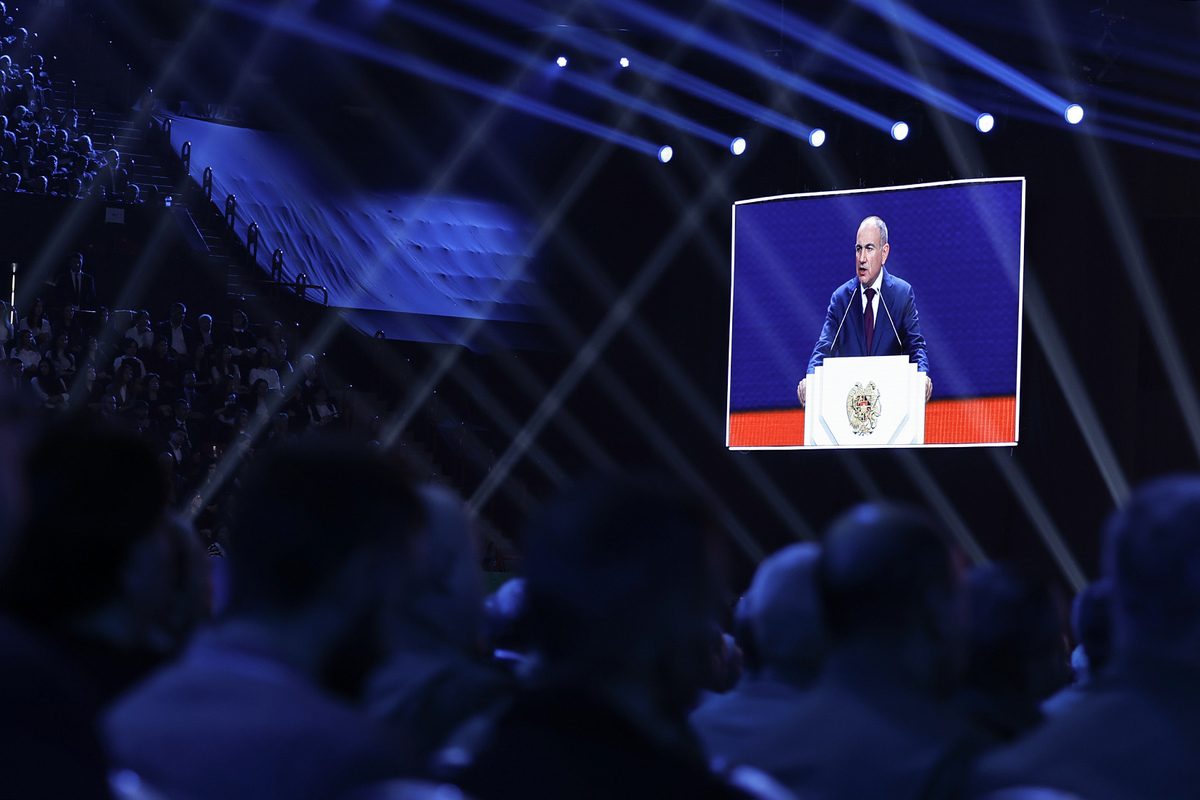
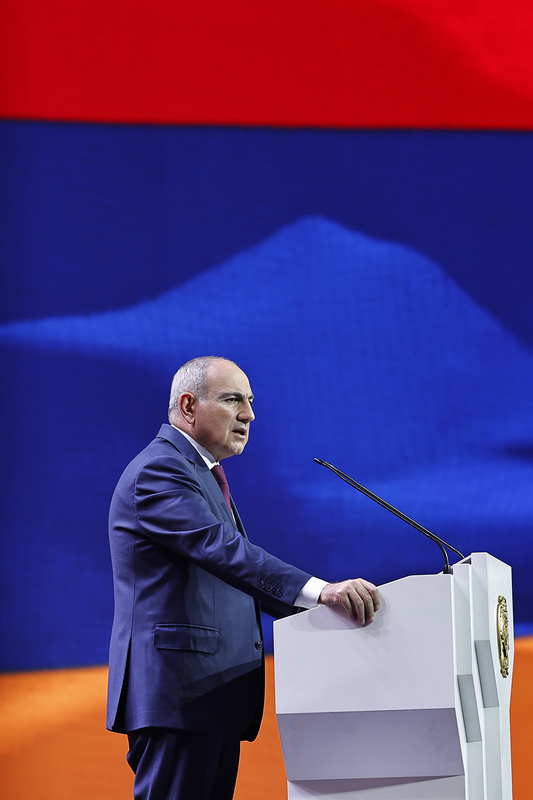
Prime Minister Pashinyan delivered a speech entitled “The Formula of the Perpetuation of the State,” in which, in particular, he noted:
"Honorable President of the Republic of Armenia,
Honorable President of the National Assembly,
Honorable President of the Constitutional Court,
Honorable representatives of the legislative, executive, judicial, law enforcement systems, territorial administration and local self-government, independent and autonomous bodies, special services, esteemed servicemen, police officers, rescuers, esteemed employees of educational, cultural, and healthcare institutions, dear students and pupils, dear people,
This conference of representatives of state bodies is the first in the history of Armenia. The conference itself is an expression of the revaluation of the role and significance of the state, the Republic of Armenia, an event aimed at emphasizing not only the importance, but also the vitality of the state for our people.
The public perception of the state largely depends on the public perception of the employees of state bodies, because it is through us that a citizen relates to his state, and his relations with the state are his relations with each of us, his relations with our collectivity.
In this context, all employees of all state bodies are a community. Despite the principle of separation of powers, employees of state bodies are interconnected by collective responsibility and their collective work predetermines the quality of the state, the quality of life of the state’s citizens and population, the quality of relations between the state and the citizen.
In this context, all employees of all state bodies are a single community. Despite the principle of separation of powers, employees of state bodies are interconnected by collective responsibility and their collective work predetermines the quality of the state, the quality of life of citizens and the population of the state, the quality of relations between the state and the citizen.
Therefore, state bodies, despite the division of labor and powers, do a lot of common work, and there is an important prerequisite for the effectiveness and awareness of the common work: ideology, a common ideology, a strategic general understanding of the state, without which the quality of work of any employee of the state system and any of its bodies, starting from the prime minister, continuing with a junior specialist in any ministry, cannot be proper.
Because work and its quality are not self-evident and their assessment depends on what problem you want to solve. Any work is a chain of micro-actions, but the micro-actions performed by each of us every day can be a common waste of time, resources, and energy if they are not consciously or subconsciously connected to a macro-goal, a big goal.
This applies especially to state bodies, because state bodies are the engine of the state, the wheels of the state, the steering wheel of the state and everything that ensures the course of the state. And therefore, state bodies, no matter how much they have functional and power divisions and differences, must be united by a certain rhythm of harmony, feeling and system, just as the brass, string, percussion sections of an orchestra are united independently, but with a certain rhythm of harmony, every instrument included in them, just as each member of the choir, being independent, is interconnected with the other and, ultimately, with the orchestra.
So what is the macro-goal of the work of state bodies of the Republic of Armenia, with which they should be related, with which daily micro-actions should be regulated. That macro-goal is to ensure the perpetualness of the state, the Republic of Armenia.
Our goal is for our state, the Republic of Armenia, to exist as such continuously for 50 years, 100 years, 150 years, 500 years, 1000 years and beyond. I understand, of course, that if the vision of having a state for 50-100 years according to our thinking formulas can still be perceived as a practical goal, talking about longer-term planning can itself cause bewilderment.
But if the vision of a state thousand years ahead obviously cannot form a plan for daily micro-actions, it can and should form the psychology and subconsciousness of daily practices. That is the factor and environment that the state should and can turn into a way of thinking, a national way of thinking in us and for us.
The vision of a state thousand years ahead is a tool for deeply and completely realizing the value of our actions today and the time we live, because today is the most important period for the next thousand years, the most important moment, without which the next thousand years cannot exist. The future cannot exist without today, that is why the future is today.
Psychology and mentality are important, but they must also have daily practical tools for implementation and realization. What are the practical tools, with which we must pave the way for the implementation of our thousand-year plan?
Honorable President of the Republic of Armenia,
Honorable President of the National Assembly,
Honorable President of the Constitutional Court,
Honorable representatives of state bodies, distinguished guests, dear people,
Legitimacy should be the starting point of our relations. This, by the way, applies to both foreign and domestic relations, policies and decisions. Legitimacy is the infrastructure that not only paves the way for relations between states, that is, between two states, between people and people, that is, between two peoples, between a state and a person, but also this same factor provides mechanisms for ensuring security, protection.
Legitimacy, therefore, is the most important tool for ensuring the security of both a person and a state, an essential environment for ensuring security. Acting on the basis of legitimacy, if does not guarantee, at least significantly increases the level of security and safety, both for a person and a state, and legitimacy is one of the most important factors that should serve the agenda of the perpetuality of our state.
Therefore, being legitimacy-based and strengthening the foundations of legitimacy in the Republic of Armenia should be an ongoing agenda of state and public life, and our legitimacy should be integrated with global legitimacy trends, global legal order, and developments in global legitimacy in order to be in sync.
Our legitimacy in foreign relations, therefore, stems from the UN Charter and the 1991 Alma-Ata Declaration.
Internal legitimacy, in turn, has one source, and that source is the founder of the state, the people of the Republic of Armenia and their free expression of will.
Dear representatives of state bodies, dear people,
What I am saying is an ordinary text. For lawyers and those with long-term experience of service in state bodies, it is just a textbook truth. But let me express my conviction that the failure to identify the cornerstones of legitimacy, and not building the state on this consciousness and rock, is the source of all our problems, and thus, also an essential and most important prerequisite for the solution of all our problems.
Legitimacy does not solve all problems by itself, but creates an infrastructure and formulas for the solution of all problems. Let's at least consider what relationship legitimacy has with solving external security problems.
For many years, for example, we have had significant restrictions in our relations with various countries in the military-technical sphere. Many countries have simply refused to sell us weapons and equipment, and the cornerstone of such a position was the belief of these countries that we could use the acquired weapons and equipment outside the internationally recognized, sovereign territory of the Republic of Armenia. Now we do not have such restrictions, and the reason for this is that we place all foreign relations on the basis of 1991 Alma-Ata Declaration, and on the basis of the legitimate task of protecting the internationally recognized territory of the Republic of Armenia.
Legitimacy, I want to emphasize again, does not guarantee security, but first of all it provides a higher level of security and a lower level of vulnerability and provides access to many modern means and technologies for ensuring security.
To put it more simply, legitimacy itself reduces the likelihood of appearing in a state of war, but on the other hand, it makes it possible to significantly, many times increase defense capabilities, because no one can ever question the right of any state to defend its internationally recognized territorial integrity. And this understanding increases the possibilities of acquiring weapons and equipment, access to defense technologies many times.
This same formula is also applicable in other areas of foreign relations, as well as in terms of serving internal agendas. This can be considered an essential and vital part of the state and state hygiene.
It is with this in mind that I consider it fundamental to strengthen our internal legitimacy, which should be expressed by adopting a new Constitution.
Why and how is this agenda important? Because of the same legitimacy. The feeling that the citizens of the Republic of Armenia feel alienated from the legal order established in the Republic of Armenia does not abandon us. Laws, regulations, and the legal system are often perceived by us as an inconvenience and an obstacle, as something alien and unfamiliar, rather than a vital necessity. Of course, sometimes poor quality of regulations and laws can and does play a role in this, but the point at this moment is not about this, but about the alienation with which we often treat legal order and state order.
I have addressed the socio-psychological and historical layers of this topic in my speeches on the ideology of the “Real Armenia” and my conclusion is that our historical perception and experience is that the law, the legal order are rules of living imposed on us by others, and this has indeed been the case for most of the last 500 years of our history, when the rules of our life were determined by foreign states, where we were subjects, and not in the status of citizens with rights.
This feeling of alienation and detachment of citizens from the legal order, and thus also from the state, is the most serious, but significantly underestimated, even unnoticed danger threatening the internal security of our state, its perpetuality agenda.
It seems that this feeling should have been overcome with the formation of our independent state, but the fact remains that it has not been overcome at all, and this is perhaps visible to employees of state bodies in their daily work. So what is the reason for the existence of this phenomenon after 34 years of independence?
The reason is clearly and unequivocally that in 1995 and after that, the citizen of the Republic of Armenia did not have the feeling that the legal order established in the country by the Constitution stems from him, from his will, that he is the source of that legal order, because the feeling and conviction that the results of the 1995 and subsequent constitutional referendums were questionable were significantly stronger than the public confidence in the official results of the constitutional referendum.
And it turned out that the rules of life for the citizen were again determined by others, and not by the citizen himself. The Constitution, dear guests, is the agreement of citizens about the rules of their life, the rules of citizen-citizen, citizen-state relations. And those rules will work effectively if they truly are and become the agreement of citizens, and that is possible only if those rules are truly accepted, confirmed by the truly free expression of the will of the people.
And these rules will work effectively if they really exist and become the agreement of citizens, and this is possible only if these rules are really adopted, confirmed by the truly free expression of the will of the people.
This is why the organic constitutional process, the result of which will be the adoption of a new Constitution by the free expression of the will of the people, is extremely important from the point of view of the perpetuality and security agenda of our state. This is important for strengthening the emotional connection between the state and the citizen, for creating an emotional connection between the legal system and the citizen, and today this connection is either weak or non-existent only and only because the citizen does not feel the organic connection of the established legal system with him, the citizen does not feel that the legal system emanates from him, that he is the one who gave birth to that legal system.
Critics will say that the majority of citizens do not read the draft Constitution in any way or do not delve into its content. But let me note that a truly democratic process of a constitutional referendum, where a struggle will be waged for the support of every citizen, a real campaign waged for every vote, will provide citizens with maximum information and knowledge about the draft Constitution, its nuances and peculiarities.
To ensure an organic and emotional connection between a citizen and the legal system, it is not necessary for a citizen to master all the nuances of the constitutional process and content at the expert level. A person does not master all the biological nuances leading to the birth of his child at the expert level, but there is no stronger emotional connection and sense of responsibility than the emotional connection and sense of responsibility of a parent towards his own child.
Our political task is to create a similar emotional connection between the state and its founder, the legal system and its legitimate source, that is, the people, to establish a similar sense of responsibility, and this is possible only through the adoption of a new Constitution by the free expression of the will of the people.
Why a new Constitution and not constitutional amendments? Because this is a new political content for Armenia, a new consciousness, a new political and state doctrine, and as the New Testament says, new wine in new wineskins.
This new doctrine tells the citizen: “Love your state as you love yourself.” But the motto will remain a motto without the formation of an organic connection between the legal system and the citizen—conditionally speaking, without the biopolitical process that would create that connection. This is one of the key goals of the process of adopting the new Constitution.
The new Constitution must also solve another, conditionally saying, engineering problem. The Constitution must ensure the aerodynamics necessary for the long-term course of the state, again conditionally, and aerodynamics may suffer if the idea is not clear and unified as to what we want to have: a car, a missile, or a spaceship.
This is precisely why it is important that the referendum on the adoption of the new Constitution take place after the 2026 parliamentary elections. This is an opportunity for all forces to share their views and approaches related to the Constitutional agenda with the people first during the parliamentary election campaign, and already as a result of the elections, the position of the political majority, which will have received the vote of confidence of the people, will be decisive in the formation of the final draft of the Constitution.
Honorable President of the Republic of Armenia,
Honorable President of the National Assembly,
Honorable President of the Constitutional Court,
Honorable representatives of state bodies, distinguished guests, dear people,
The state is the greatest achievement of our people, the greatest and unsurpassable value. The state, its interests and permanence should become the highest consciousness, the national ideology in us. Our state is our identity, our identity is our state, and this is not just a slogan, but a key understanding of the history and genealogy of our people.
The state, yes, is a goal in itself. A higheest goal. But any goal is also a means to achieve a higher goal. The choice of this goal, by the way, is also a political issue, a matter of political choice, and our choice today is clear: the Republic of Armenia is a means to ensure the freedom, security, well-being, or in one word, happiness, of its citizens in its internationally recognized sovereign territory.
We must be super-focused on these three concepts: state, identity, happiness. These three concepts are at the same time both a goal and a means, which work in a spiral or spiral logic. The state is the highest goal and means for the preservation and development of our identity, our state and identity are the goal and at the same time the means for ensuring our freedom, well-being and security, or in one word, happiness. Happiness based on our state and identity is the ultimate goal and at the same time it is a means for achieving our other goal, which is to preserve and develop our identity, to ensure the development and s perpetuality of our state, to serve the interests of our state more effectively.
Dear guests, dear people,
Discussions about the theoretical foundations of the state, identity, freedom, and civil relations are not a common occurrence in our country, and today I also want to record this as a problem that needs to be resolved at the state level.
The conversation about the state, its theoretical and ideological foundations must be continuous in public, political, and state life, because without it it is impossible to be competitive in a constantly and rapidly changing world.
But the discussion of theories is not just an exercise of thought, but a guideline for all our practical decision-making. And in order to become such, theories must be discussed, interpreted, understood, and clarified, become concrete projects and programs subject to implementation, routines of everyday life, so that today we can be in the future and not in the past.
Man is the highest value, the state must serve man. This is an axiomatic slogan that has been talked about among us thousands of times. This thesis or slogan is not even a subject of discussion, and no one can question that thesis.
The issue lies elsewhere: how should the state serve man, how should man being the highest value be expressed? Our answer to this question is expressed in the following slogan: the state should strengthen man, man should strengthen the state. This, in turn, needs additional interpretation: how should the state strengthen man and how should man strengthen the state?
We are convinced that the only reliable way to strengthen man is education. Education at all levels and education as a lifelong process.
Education that begins in kindergarten, continues with school, college and/or university, post-secondary education, training, non-formal education, tools for continuously increasing competitiveness in the labor market.
I consider it relevant to repeat: if previously we also had a strategy for the education sector among others, if later education became a priority for us among other strategies, now education itself is our strategy for all sectors.
Our strategy in overcoming poverty is education, because the fundamental cause of today's poverty in Armenia is the low level of competitiveness of people living in poverty in the labor or economic activity market.
And the low level of competitiveness is associated with unequal access to education or educational gaps of people living in poverty.
That is why the “300 Schools, 500 Kindergartens” program is of strategic importance. It is the most ambitious of the programs we are implementing, because it determines the fate of not only each child, but also our state. Now we are completing the “300 Schools, 500 Kindergartens” program, and we have already started the program for the next 300 schools and kindergartens. The construction of 50 of the next 300 schools, and the location of the others is in progress.
The kindergarten will not only introduce children to the preschool stage of education, but will also provide young mothers with an opportunity to have a path to education and work. Also, with this target group in mind, we should develop the college, dual, and non-formal education system in the regions, while also promoting the inclusion of the private sector in the provision of educational programs as much as possible.
The system of social credits of universal declaration for educational expenses also has this goal, and we must continuously work on increasing its effectiveness.
The culmination of our strategy is the Academic City, which will undoubtedly be a powerful gravitational center for the further development of the Republic of Armenia. A person is strong with his education, there is no other way to strengthen a person than through education, and therefore, the state's strategy for strengthening a person is through education.
And how should a person strengthen the state?
A person must turn the education received with the support of the state into, as economists like to say, added value. The education received with the support of the state must be used to create added value.
The education received by a future businessperson should turn into economic growth and growing revenues for the state budget, the education received by future teachers and other future employees in the education sector should result in a higher level of the education system, the education received by a future scientist should become scientific achievement and innovation, the education received by a future medical worker should become more effective healthcare, the education received by a future state official should become better quality management and a more favorable economic environment, and so on. This list can be continued endlessly. The connection of future lawyers, the connection of their education with justice and fairness, the connection of the education of a future police officer with law and order, the maintenance of public order and the fight against crime, and so on.
It is also very important that state bodies specify the target of their work in their activities. What is that target, after all? That is, what do state bodies work for?
The systemic target of the work of state bodies is the state interest, serving the state interest, and as I have had the opportunity to say several times, the state interest is economic development.
Why is the state interest of the Republic of Armenia economic development? Because a person is the highest value and being the highest value of a person can be realized only in an environment of economic development. It is impossible to ensure human well-being without economic development, it is impossible to ensure human security without economic development, it is impossible to ensure human health without economic development, it is impossible to ensure human education without economic development, it is impossible to ensure human rights without economic development, it is impossible to ensure human freedom without economic development.
Of course, this text can also be read in reverse order, but the essence of the issue does not change from this.
Because, for example, external security is an economic factor. Ensuring the security of the country means ensuring the possibility of normal economic activity in the territory of the country, which in turn increases state revenues, which in turn increases the level of security, which in turn increases the possibilities of economic activity. Moreover, by external security we should mean not only the army, but also the diplomatic service, the National Security Service, the Foreign Intelligence Service and other structures. By security we should understand not only external, but also internal security, starting with the fight against crime. By the way, the criminal subculture is a significant factor hindering economic development.
The rule of law, energy, the financial and banking system, roads, agriculture, healthcare and so on - all these are security factors.
A person, ensuring his rights, economic development are part of a cycle, the starting point of which is even difficult to fix. But the key task of state bodies is to ensure the most effective and smooth course of this cycle. And this realization is essential for our daily work and for ensuring its effectiveness.
In this context, I want to emphasize two pecularities. Establishing an organic connection between the legal system and the people will contribute to the fact that state bodies perceive each citizen as a direct employer. In other words, we should all increasingly perceive the citizen as an employer, because that is the case. The strategy of legitimacy will help establish a more just state, because the safest, most effective and fair mechanism for choosing between two equal employers, that is, the opposing expectations of citizens, or for making a decision on the expectations of a citizen is legitimacy, that is, legality.
And education will help us to be able to adopt laws and regulations that serve a person and not torture him, legality should be logical, serve life and development, and not the other way around.
By the way, we very often do not have the strength to admit that one of the key reasons for the existence of laws and regulations that inhibit development are the gaps in our educational system.
There are many cases when state bodies sincerely want to do something good, but do not know how. And what happens is what the late Russian Prime Minister Chernomyrdin once so eloquently put it: "We wanted to do better, but it turned out as usual."
This is actually a very serious problem. Initially, a person is driven to work in the public sector by the desire to be part of reforms, to contribute to the development of the state, to serve the public and the state.
But purposefulness and creativity sometimes fade very quickly in the state system, because motivational systems for education and self-improvement do not always work in state bodies, and state offices sometimes become environments for simply adapting and doing nothing.
And this is also because it is becoming increasingly difficult for state bodies to compete with the private sector to attract the best employees, and many government employees are frustrated and are starting to consider working in the private sector.
It should be said directly that one of the reasons for this is the low remuneration in the state sector compared to the private sector. Yes, we have provided partial solutions in a number of state bodies, but in general, the problem continues to exist.
I must admit directly that the topic of increasing remuneration in state bodies is a political issue that has two sides. The first side is that we all understand the need to increase the competitiveness of state bodies in the labor market.
On the other hand, the political authorities are cautious of the step of increasing remuneration in state bodies, first of all, for fear of political shaming, there is such a new term, that is, political embarrassment. Because in such cases, the first reaction of the public is the following: there are so many social problems in the country, and you still want to increase the remuneration of employees of state bodies, that is, officials?
This is a vicious circle, because the solution to social, economic and other problems in the country is linked with the efficiency of the work of state bodies and officials. The effectiveness of the work of state bodies depends on the motivation of its employees to educate themselves, learn more, master more and take on greater responsibility, and this, in turn, depends on motivational systems, including salaries and other social guarantees. This is also a factor that determines how much and to what extent work in state bodies is attractive for high-quality specialists. Moreover, I am talking about both high-quality specialists currently working and those who could come to work.
Let's face it and admit it directly: who suffers the most from the low salaries of state employees? Unequivocally and undoubtedly, first of all, the citizen. Because due to the environment described above, he receives poor-quality decisions, poor implementation of even good decisions, corruption risks, and disdain. In connection with all this, of course, ideological work can and should be carried out to strengthen the moral imperatives of state employees, but it will be ineffective if it is not accompanied by motivational systems, and these nuances must be faced not only by political authorities, but also by society in general.
We will continue to move forward on the path of increasing the attractiveness of work for state bodies and increasing the attractiveness of work in state bodies, because this is one of the important components of our state-centered strategy.
In the near future, we will adopt the “Pilot Program for Performance Assessment in the Direction of Government Priorities and Incentives”, the purpose of which is to test the system of salary indexation based on results. One of the important features of this program is that we will create mechanisms to direct a certain part of the additional salary to improving the education of a state employee, which will inevitably increase the quality of work of state bodies.
Within the framework of public administration reforms, we will consistently work towards creating an inclusive, competitive, excellence-promoting working environment in state bodies, and the introduction of the above-mentioned system has this very goal.
I would also like to say that I am proud to note that as a result of the reforms we have implemented, today in Armenia a teacher, who is also a public employee, can receive a salary of 700 thousand drams, and an ordinary soldier, who is also an employee of a state body, can receive a salary of 700 thousand drams.
In response to my statement, there are teachers who are spreading denials, saying, "It's not true, I am a teacher and I receive a salary of 75 thousand drams." But this, among others, refers to the same agenda - the educational agenda, and is also a consequence of not passing voluntary certification. We, pay attention, are not saying that all teachers receive a salary of 700 thousand drams, we are saying that a teacher can receive a salary of 700 thousand drams, and we are saying this because there are such teachers in Armenia today.
The goal of this discourse and policy is to introduce the correct system of personal motivations, so that a teacher, a military man, an employee of state bodies, through self-improvement, has effective motivations to achieve a higher level of education and professionalism.
Some try to look for negative connotations in our focus on education, trying to present that we consider the people of our country to be uneducated. As in any country, so in our country, of course, there is illiteracy.
But as in any country, so in our country, there are many, tens of thousands, hundreds of thousands of educated people, but there is no one, there is not at least one person who knows everything.
There is no such individual who knows everything and, therefore, anyone has a place to know something, we just need to create motivation for as many people as possible to do so. And this is the responsibility of the Government.
In this context, I consider it important to return to the expression “Man is the highest value”. What is the average Armenian perception of this expression?
The average perception of this expression in the Republic of Armenia as follows: “A person is the highest value, and the state must take care of a person.” This is true, and as I have already said, there is no objection to this and cannot be.
But if a person is the highest value for the state, as I have already said, that is so, that same person must be the highest value for himself. If the state must take care of a person, that same person must also take care of himself.
Otherwise, it is difficult to imagine how the state should take care of a person if a person refuses to make efforts to take care of himself, starting with his attitude towards a healthy and active lifestyle, his relations with the law, his relations with neighbors and the environment, and finally, the imperative to engage in his own education.
I also accept that this is a consciousness with which we must educate ourselves from kindergarten, from school, that is why our program of "300 schools, 500 kindergartens" is the first among priorities. But we, adults, cannot go back and start from shaping our thinking in the kindergartens we built ourselves.
Therefore, we must instill this awareness in ourselves today so that we can instill it in our children. And this task first of all concerns the employees of state bodies, because they are in one way or another an example for our children, and not only for children.
I want to emphasize that the state, statehood, citizenship are also educational topics, and I am not sure that we have reached the necessary level in teaching these topics in our educational programs and practice. Our educational system should focus the gaze of our pupils and students on the agenda of strengthening the sovereignty and independence of the Republic of Armenia, its legitimacy, state interests.
This agenda in general should become the basis of public solidarity and unity, which we have been talking about for so long and so fruitlessly in the Republic of Armenia.
Why is it still not possible to form public solidarity and unity in the Republic of Armenia? Because we have not understood the reality that to ensure public solidarity and unity, aerodynamics is also needed, conditionally speaking. Opposing and mutually confronting opinions about the long-term vision of the state cannot become the basis for public solidarity. Public solidarity can be formed when there is a common understanding of the long-term vision of the state, and the debate is about the ways and methods of implementing that strategy or the most effective application of those methods.
And we must make the state, its being an absolute value, its agenda for perpetuality based on legitimacy and education, the practical meanings of man being absolute value, the basis and support of our public solidarity.
Honorable President of the Republic of Armenia,
Honorable President of the National Assembly,
Honorable President of the Constitutional Court,
Honorable representatives of the legislative, executive, judicial, law enforcement systems, territorial administration and local self-government, independent and autonomous bodies, honorable representatives of the special services, honorable servicemen, police officers, rescuers, honorable employees of educational, cultural, and healthcare institutions, dear students and pupils, dear people,
I have already emphasized that this first conference of state bodies is unprecedented in our reality. But we must also answer the question, why is it taking place now?
Since independence, the Republic of Armenia has lived in conditions of an existential crisis. In September-November 2020, amid the COVID pandemic and war, that crisis reached its peak, putting our state on the brink of losing independence, sovereignty, identity, and existence.
But today, we have not only overcome the crisis, but also brought ourselves and our state out of the impasse, opening up unprecedented prospects for independence, sovereignty, security, and prosperity.
This happened first of all thanks to the sacrifices of our martyrs, and I did not miss any opportunity to kneel before them and bow before their families.
The overcoming of the existential crisis also happened thanks to the state-centered instinct of our people, for which I have had many occasions to thank our people.
But the overcoming of the crisis also happened thanks to the steadfastness of our state bodies.
In an environment of uncertainty and doubts, the state could have collapsed from within, but the state bodies of the Republic of Armenia remained steadfast, becoming one of the cornerstones on which the Republic of Armenia and its people relied in difficult times, and I would like to thank all the employees of the state bodies of the Republic of Armenia for this.
Thanks to these efforts, we have reached a point where we can say that Armenia is currently experiencing the most promising period in its last 500 years of history: Ensuring the existence of the Republic of Armenia in the next 500 years is more realistic and practical than ever, and in order to realize this historical opportunity, it is necessary to be guided by the following fundamentals formulated above:
First: The state is the highest achievement of the Armenian people, its highest value and supreme goal.
Second: The supreme goal of the state’s existence is to ensure the security, freedom, well-being, or happiness to put in a word, of its citizens within its internationally recognized sovereign territory.
Third: To achieve this goal, the state must strengthen the person, who in turn must strengthen the state.
Fourth: To solve this task, when developing policies, institutions should be guided exclusively by the state interest, which is economic development.
Fifth: The state should be based on the principle of legitimacy in all its external and internal relations.
The application of these five simple principles, dear guests, and the derivation of all our policies and decisions in all our spheres from these principles will ensure not only the existence of our statehood, but also its development in the coming centuries.
This is not only a problem for which we have never had a solution, but also a goal that has never been formulated within us. This is why the time in which we live is historic, this is why the mission before us is historic.
This is why our achievements, which we have achieved by going through hell, are epoch-making and these achievements need protection.
Today, the Republic of Armenia is a state more than ever, more independent than ever, more sovereign than ever, and we are closer than ever to our goal of making our state an instrument of our security, freedom and well-being, that is, happiness.
We have an opportunity to achieve this goal and not only maintain, but also develop this state of affairs in the coming centuries, such as we have never had before. It is this opportunity that must be under the protection of all of us and, first of all, the people of the Republic of Armenia and its officials, that is, state bodies. And this is the key goal and message of this conference. My call and request to all of you is to take this message and turn it into the psychology and consciousness of everyday work. The ideology of everyday work.
Glory to the martyrs and long live the Republic of Armenia”.
The Prime Minister then answered questions from those present, which related to the digitalization process in the public administration system, the TRIPP project, reforms in the education sector, and other topics.
A panel discussion was also held with the participation of the President of the Republic and Cabinet members.